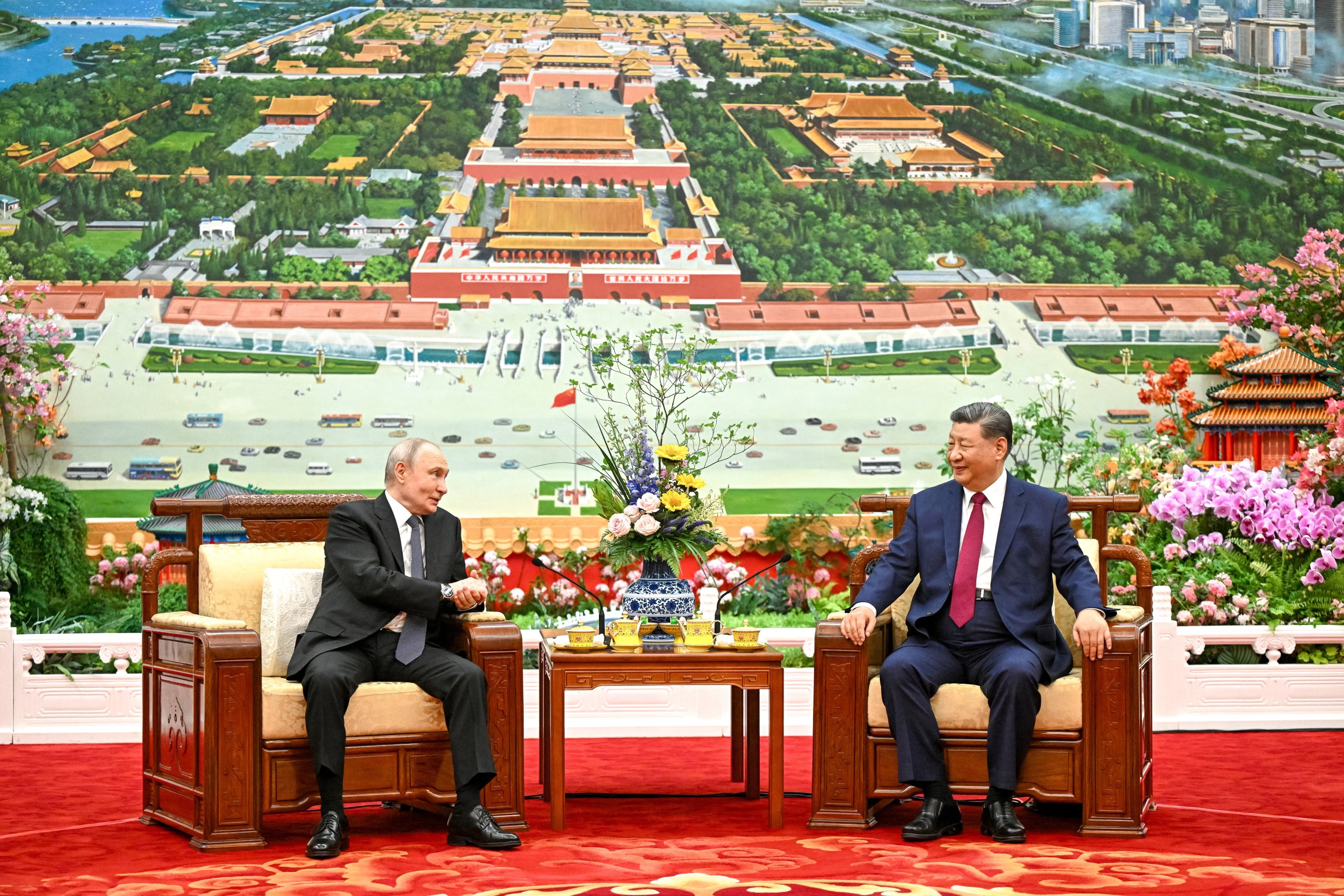
Everything may have looked similar on the surface. U.S. President Donald Trump and Russian President Vladimir Putin, only days apart, walked across the same ceremonial carpets in Beijing, greeted by the same smiling children and surrounded by nearly identical state protocol. Naturally, this invites comparisons, yet the symbolism behind the two visits could not have been more different.
A situational G2
During Trump’s summit with Chinese President Xi Jinping, the American delegation appeared impressed by the discipline and confidence of Chinese diplomacy. Both sides reaffirmed their commitment to continued economic interdependence and emphasized the importance of maintaining a constructive strategic relationship. Trump also highlighted commercial gains, including the sale of Boeing aircraft and agricultural exports, despite continuing disagreements over several geopolitical crises, particularly the future of the war involving Iran.
Despite everything, many observers concluded that Trump’s visit produced little tangible progress in U.S.-China relations. Washington and Beijing still lacked a shared vision of international order, and their positions on regional conflicts, such as the Iran war, remained deeply divided. Yet this interpretation overlooks a more significant development: Both powers increasingly recognize that coexistence is more profitable than other options.
Trump openly praised Xi as a strong leader, while Xi argued that the “great rejuvenation of China” and Trump’s “Make America Great Again” agenda could coexist. This is not a traditional rule-based partnership, nor is it a fully consensual global order. Instead, it was as if a signal that a functional form of G2 politics could be emerging, based on pragmatic coexistence between the world’s two largest economies’ megaprojects for gaining wealth.
However, immediately after Trump returned to Washington, he signalled renewed willingness to escalate military pressure on Iran. China reacted differently by hosting Russian President Vladimir Putin. During the opening moments of the Xi-Putin meeting, Xi stressed the need for a sustainable cease-fire.
This divergence highlighted an important reality: despite improving communication between Washington and Beijing, China and Russia continue to share concerns about American unilateralism and military interventionism. Beijing and Moscow aimed to demonstrate that world politics remains too complex to be reduced to a purely G2 framework.
Stability first approach
The meeting between Trump and Xi created anxiety in Moscow, which once occupied the position of Washington’s primary strategic rival during the Cold War. In this sense, the timing of Putin’s visit was highly symbolic.
Before arriving in Beijing, Putin released a video message emphasizing that Russia-China friendship extends beyond personal ties between leaders. Indeed, contemporary diplomacy often appears highly transactional, shaped by the personalities of figures such as Trump, Putin and Xi. However, Sino-Russian relations rest on a much deeper institutional foundation.
One of the official purposes of Putin’s visit was to commemorate the 25th anniversary of the Treaty of Good-Neighborliness and Friendly Cooperation signed in 2001. That agreement became the cornerstone of the modern strategic partnership between Moscow and Beijing.
When the 2001 treaty was signed, Moscow and Beijing were already concerned about the consequences of American unilateralism, whether expressed through military intervention or economic pressure. Both feared that Washington might attempt to limit their strategic influence by destabilizing regions critical to their interests. Consequently, Russia and China gradually developed mechanisms of mutual political and economic support designed to withstand future American pressure. Over the past two decades, numerous bilateral memorandums and economic agreements have reinforced this framework, producing what both sides now describe as a “comprehensive strategic partnership.”
Importantly, this partnership does not amount to a formal military alliance. Rather, it reflects a shared understanding of global affairs and a commitment to preserving each other’s strategic stability. Moscow and Beijing frequently describe their relationship as a “partnership without limits,” signalling that it should not be confused with temporary tactical rapprochements between China and the U.S.
The unique feature of Russia-China relations lies not simply in economic interdependence. Russia and China also share extensive geographical connections stretching from the Arctic to the Asia-Pacific. Both governments increasingly view the stability and well-being of the other as essential to their own long-term security and prosperity. This “stability first” approach has strong realist foundations.
Asymmetric, beneficial trade
Many reports surrounding Putin’s visit focused on the growing asymmetry in economic relations between Russia and China. However, it is important to emphasize that, despite this imbalance, the relationship remains mutually beneficial for both sides.
Western sanctions imposed after the Ukraine war pushed Moscow to rely more heavily on Chinese trade, investment and technology. While Russia has lost significant access to European markets and technological know-how, Chinese products have become increasingly visible across Russian markets. On the other hand, China has become a critical consumer of Russian energy exports. Western governments, especially the U.S., have repeatedly pressured Beijing to halt trade with Russia, arguing that such cooperation undermines sanctions and indirectly supports Moscow’s military capabilities, especially in the Ukraine war. Nevertheless, little appears to have changed. China continues purchasing Russian oil and gas while maintaining technology transfers that remain strategically valuable for Moscow. The warm rhetoric exchanged between Trump and Xi did not alter the practical realities of Sino-Russian cooperation.
For years, analysts debated whether Russia and China would eventually emerge as strategic rivals across regions such as the Arctic, Central Asia, the Russian Far East and the Pacific. Both countries possess ambitious regional strategies and long-term interests in trade, infrastructure and security, creating the potential for competition as their influence expanded.
However, recent developments in energy cooperation suggest a different trajectory. Moscow increasingly appears willing to integrate its territory into China’s long-term energy security strategy. Russia offers China several important advantages, including relatively cheap energy supplies, flexibility in alternative payment mechanisms and secure overland transportation routes that avoid vulnerable maritime chokepoints such as the Strait of Hormuz. In this context, many analysts expected renewed momentum behind the Power of Siberia II pipeline project, which would transport large volumes of Russian gas to China through Mongolia.
Although negotiations over the pipeline have stalled because of pricing disputes, the broader strategic logic behind the project remains strong. Instability surrounding Middle Eastern energy supplies has only increased the appeal of reliable land-based energy corridors linking Russia and China. At the same time, Chinese investments in the Russian Far East are creating new forms of economic interdependence that further reinforce political cooperation. While Moscow may remain cautious about expanding Chinese influence in the region, it appears to view projects such as Power of Siberia II as a way to balance this growing presence by ensuring continued Russian strategic relevance and access.
Key term: multipolarity
Although the “partnership without limits” remains short of a military alliance, Russia and China continue expanding military interoperability through softer mechanisms such as joint exercises and naval patrols. These confidence-building measures are essential because both countries maintain major conventional forces and advanced defence industries.
Still, their interests are not perfectly aligned. Moscow and Beijing do not agree on every regional issue, and neither side wishes to become strategically subordinate to the other. Precisely because differences exist, the steady development of military trust since 2001 has become strategically significant.
Therefore, perhaps the most important outcome of Sino-Russian cooperation is the promotion of multipolarity. Initially, this concept emerged as a form of soft balancing against American unilateralism. Over time, however, it evolved into a broader governance vision that includes not only great powers but also influential middle powers capable of shaping regional orders.
This is where China faces a delicate balancing act. As Trump and Xi increasingly acknowledge the practical realities of a G2-style relationship, Beijing must reassure partners such as Russia that it still supports a genuinely multipolar system rather than a rigid hierarchy dominated by Washington and Beijing alone.
Putin’s visit, therefore, served multiple diplomatic purposes. It reinforced the image of Beijing as a central actor in global diplomacy while simultaneously allowing China to reaffirm its commitment to multipolarity alongside Russia. For now, Chinese diplomacy appears capable of balancing these two ambitions: acting both as one pillar of an emerging G2 and as the leading advocate of a more multipolar international order.
Whether those two roles can coexist indefinitely remains uncertain. Yet at present, Beijing continues to manage the contradiction with remarkable diplomatic flexibility.
The views and opinions expressed in this article are solely those of the author. They do not necessarily reflect the editorial stance, values or position of Daily Sabah. The newspaper provides space for diverse perspectives as part of its commitment to open and informed public discussion.
DAILYSABAH
هلدینگ کاسپین استانبول | خرید ملک در ترکیه | صرافی معتبر ایرانی در ترکیه | خرید و فروش طلا در ترکیه | مهاجرت به ترکیه | واردات و صادرات در ترکیه | نیازمندیهای ترکیه | اخبار ترکیه | اخبار جهانی | توریست ایران | خدمات توریستی در ایران | تورهای گردشگری ایران | هلدینگ اول | خدمات کاریابی و فریلنسری و شغل | مرجع اطلاعات ایران (همه چیز در ایران) | کیف پول و خدمات مالی و پرداخت یار | اخبار ایران | تابلو زنده قیمت ارز در ترکیه و استانبول | صرافی آنلاین ترکیه | قیمت طلا و نقره در ترکیه | سرمایه گذاری در ترکیه | جواهرات در ترکیه | نرخ لحظه ای ارزها در استانبول | قیمت دلار امروز در ترکیه | قیمت دلار استانبول امروز | قیمت لحظه ای دلار | اخبار روز ترکیه استانبول | اپلیکیشن ISTEX | اپلیکیشن قیمت لحظه ای دلار و یورو و لیر و ارزها در ترکیه
About the Author