
The horrific terrorist attack on the Islamic Centre of San Diego in California has been reported by many news outlets over the past few days. Yet as the story travelled across screens and news feeds, something more subtle unfolded: the language of reporting. Some outlets spoke of “teen suspects” and “three deceased” rather than murdered worshippers or a terrorist attack on a mosque. Words matter. They shape sympathy, urgency, and influence how violence is understood. Too often, the vocabulary of terror and extremism appears unevenly distributed; sharpened for some perpetrators but softened for others.
There is a growing sense that the world is slipping backwards – not through dramatic rupture, but through the steady normalisation of hate, the coarsening of public discourse and politicians increasingly fuelling division and racism.
Across the world, anti-Muslim abuse has risen sharply: mosques vandalised, women in hijabs assaulted, online spaces saturated with hate, and far-right marches openly calling for the eradication of Islam. Yet such incidents rarely command sustained outrage. They appear briefly before disappearing into the churn of the news cycle.
In the US, the presidency of Donald Trump has normalised policies such as the “Muslim ban”,which barred travel to the US for 90 days from seven predominantly Muslim countries, embedding suspicion within immigration systems.
Across Britain and Europe, parties such as Reform UK, the National Rally and Alternative for Germany have built political capital by framing Islam as incompatible with national identity.
In India, under Narendra Modi, anti-Muslim sentiment has increasingly moved from the fringes towards the political mainstream. Inflammatory rhetoric, mob violence, discriminatory legislation and the growing marginalisation of Muslims are all evidence of a climate that has been encouraged and insufficiently challenged by political and international leadership. What emerges is not merely prejudice, but the normalisation of exclusion under the language of nationalism.
In China, the mass detention of Uyghur Muslims represents a more extreme form of state-led repression, widely condemned, yet met with limited sustained global action.
What unites these cases is simple: Muslim identity is treated not as a constituency to be included, but as a problem to be managed.
Recently, Britain’s Prince Harry condemned antisemitism and Islamophobia yet headlines overwhelmingly amplified his remarks on antisemitism while references to Islamophobia were often reduced to passing mentions, if acknowledged at all. The imbalance is insidious. More troubling still is how sections of the media shape perception through selective framing and omission. A recent arson attack was widely reported as targeting a “former synagogue”, implying antisemitism while omitting that it was the subject of a fundraising effort by local young Muslims, who had already put down a hefty deposit to tranform the building into a mosque and community centre.
The problem is not whether antisemitism or anti-Muslim hatred exist – both plainly do. It is that selective framing distorts public understanding, inflames tensions and ultimately makes both Jewish and Muslim communities less safe. Today, where perception increasingly shapes reality, omission can be as powerful as misinformation itself.
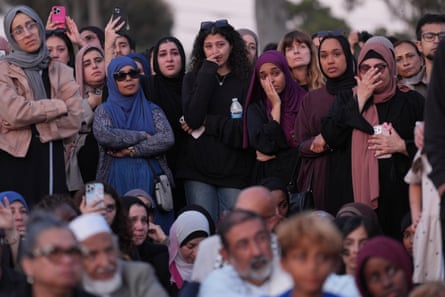
Since 9/11, global narratives around terrorism, migration and geopolitical conflict have associated Muslim identities with threat. Reinforced by political leaders, media and state policy, these narratives have reshaped public perception across continents. What began as a response to a moment has hardened into a permanent structure.
What distinguishes Islamophobia from other forms of racism is that it is rarely expressed in overtly racial terms. Instead, it is mediated through specific language, making it easier to defend and harder to challenge. The Trinidadian historian and writerCLR James argued that racism was not about attitudes, but systems of exploitation, while the psychiatrist Frantz Fanon showed it is produced by economic and political domination. Discrimination persists not because of what people believe, but because of how power is organised.
Arun Kundnani argues in his book, The Muslims Are Coming, that Islamophobia reframes Muslims as a “security problem”. That framing shapes governance, economies and international relations by determining who is trusted and whose rights are conditional.
The persistence of Islamophobia is sustained by a global hierarchy of empathy where not all forms of racism are treated equally. Some are recognised and unequivocally condemned; others are filtered through language of security, cultural tension or “failed integration”. Islamophobia occupies this ambiguous space; it is rarely defended openly but is rationalised in ways other prejudices are not.
The integration argument itself is deeply hypocritical. It is ironic that western politicians lecture migrants on integration while many US, British, and French “expatriate” communities across Africa, Asia, the Middle East and the Caribbean, all remain socially and culturally insulated. Exclusive compounds, British pubs, imported lifestyles and soaring real-estate prices often leave local populations economically displaced, yet this is rarely framed as a “failure to integrate”. The standard, it seems, only runs in one direction.
The costs of Islamophobia are far-reaching. Islamophobia fractures societies and feeds division. Muslims face barriers to jobs, capital and advancement, often hidden in hiring practices, wasting talent and weakening growth. Segregation in housing, education and public life breeds alienation while exclusion deepens inequality and social division. Edward Said warned in his book Orientalism that reducing people to objects of suspicion erodes the pluralism on which stable societies depend.
Media, technology and geopolitics intensify the issue. When Muslims are routinely associated with conflict and extremism, bias becomes normalised. Conflicts involving Muslim-majority countries are stripped of nuance and reduced to simplistic narratives of terrorism. Social media amplifies and accelerates the process, rewarding outrage and flattening complexity until prejudice begins to resemble common sense. These narratives do not remain confined to foreign policy. They seep into schools, workplaces and public debate, shaping how communities are perceived and treated. This is what makes Islamophobia so dangerous: it rarely announces itself as hatred yet shapes how millions think.
The same logic extends into global development, where resources shift towards surveillance of their citizens rather than inclusion. Muslim-majority countries are too often approached through a security lens of mistrust, with aid tied to counter-terrorism rather than long-term progress and development. The result is distorted policy, weakened partnerships and poorer cooperation at precisely the moment that shared crises – from the climate breakdown to immigration and global health demand the opposite.
Across liberal democracies and authoritarian regimes alike, Islamophobia has become a flexible political tool rooted in fear, misinformation and historical amnesia. Its defining feature is its permissibility, sustained through silence, selective outrage and institutional ambiguity. Yet its consequences are anything but ambiguous.
If development is to mean inclusion, equity and human flourishing, it cannot coexist with hierarchies of empathy that selectively recognise injustice. It cannot sustain a world in which some forms of racism are confronted unequivocally, while others are absorbed into the background as unfortunate but acceptable.
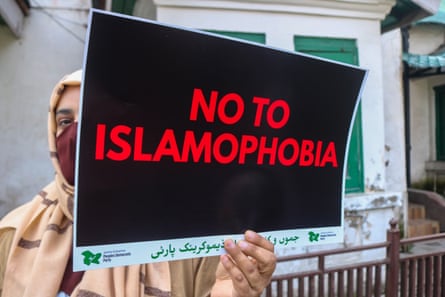
At a moment when Islam is framed as a source of division, it is worth recalling that on his pilgrimage to Mecca in 1964, Malcolm X encountered Muslims of all races, worshipping as equals together, an experience that transformed his understanding of race and human dignity. It revealed an Islam grounded not in fear, but universality, exposing the poverty of racial hierarchies and the distortions that sustain them.
As the writer and civil rights activist James Baldwin warned, “Not everything that is faced can be changed, but nothing can be changed until it is faced.” The challenge is not simply to acknowledge Islamophobia as prejudice, but to recognise its structural force embedded in governance, economics and the global order. Until that happens, it will remain what it has quietly become: the world’s most permissible prejudice, and one of its most consequential.
The Guardian wp:paragraph
هلدینگ کاسپین استانبول | خرید ملک در ترکیه | صرافی معتبر ایرانی در ترکیه | خرید و فروش طلا در ترکیه | مهاجرت به ترکیه | واردات و صادرات در ترکیه | نیازمندیهای ترکیه | اخبار ترکیه | اخبار جهانی | توریست ایران | خدمات توریستی در ایران | تورهای گردشگری ایران | هلدینگ اول | خدمات کاریابی و فریلنسری و شغل | مرجع اطلاعات ایران (همه چیز در ایران) | کیف پول و خدمات مالی و پرداخت یار | اخبار ایران | تابلو زنده قیمت ارز در ترکیه و استانبول | صرافی آنلاین ترکیه | قیمت طلا و نقره در ترکیه | سرمایه گذاری در ترکیه | جواهرات در ترکیه | نرخ لحظه ای ارزها در استانبول | قیمت دلار امروز در ترکیه | قیمت دلار استانبول امروز | قیمت لحظه ای دلار | اخبار روز ترکیه استانبول | اپلیکیشن ISTEX | اپلیکیشن قیمت لحظه ای دلار و یورو و لیر و ارزها در ترکیه
/wp:paragraph wp:paragraph /wp:paragraph
About the Author



