It was a warm morning in rural Virginia. I was cutting into a pile of downed logs – wild cherry, oak and black locust – left behind when a piece of land was cleared for a small house.
A young guy pulled up, stepped out of his truck and gave me a nod, the way people do out here. Chainsaws in hand, we quickly figured out we both knew the owner and had her permission to take the wood – me for our home and greenhouse, him for much the same. Then we got to it – work.
After an hour or so of cutting, splitting and loading firewood into my truck, I took a break. He came over to introduce himself.
He was a big guy, mid- to late-30s, in jeans, a T-shirt and a ballcap – a country boy used to hard work.
He told me his name. I did the same.
“Wait. Are you that fella running for Congress?” he asked.
When I said I was, he shook his head.
“If my buddies could see you out here, working your tail off like this, every one of them would vote for you!”
We stood around chatting about the state of our wood piles, and how much longer we would be firing up our stoves before spring.
He then mentioned needing to get home to talk to his teenage daughter. Her grades had been slipping.
“I’m pushing her to do better in school, to get her grades back up so she can go to college,” he said.
“I told her: ‘I don’t want you living under the thumb of some man!’”
And on that note, we shook hands and parted ways.
Two revelations: for me, that this fella, whom I had sized up as a good old boy, was a doggone feminist, doing all that he could to ensure that his daughter would be strong and independent, not beholden to “some man”.
For him, that a Democrat, a politician no less, would be busting his ass getting firewood, just like he did. And most of his buddies.
Moments like that make the political divide feel less inevitable, and more something built over decades of decisions that pushed people further apart. If there’s a way across it, it begins with an unflinching look at how it formed: decades of bipartisan decisions that left rural communities and working people behind.
It’s not a story many on the left are eager to confront. But without it, nothing else holds.
The politics of being dismissed
I ended up losing that congressional race. But it forced me to rethink a lot of what I thought I knew about voters like him, and about where we’ve gone wrong.
Virginia’s ninth congressional District, where I ran in 2018, had long been politically competitive, even slightly Democratic. Running as one wasn’t a political death sentence.
The “fighting ninth”, as it’s often called, was represented by Democrat Rick Boucher from 1982 to 2010. Known as a friend of working people – farmers, coalminers, small business owners – he focused relentlessly on using federal resources to build prosperity, helping constituents navigate everything from Black Lung benefits to small business loans.
But over time, rural Americans didn’t just experience different problems, they began living in different economic worlds. When I launched my campaign, our reality had already been fraying at the seams for a long time. The “trickle down” economics unleashed by Ronald Regan in 1981, in combination with the investor-driven trade policies of the ensuing four decades, made people in the top 0.1% fabulously wealthy.
During the same period, Republican and Democratic administrations alike punted antitrust enforcement, crushing family farms and independent businesses and facilitating extreme corporate concentration. To top it off, changes in labor law and enforcement made it easier for large corporations to crush union drives and punish or fire the workers leading them, helping drive private-sector unionization down from more than 30% to single digits.
Winners and losers: that’s what decades of bad policies in trade, antitrust and economic development have led to, as author Michael Sandel has pointed out.
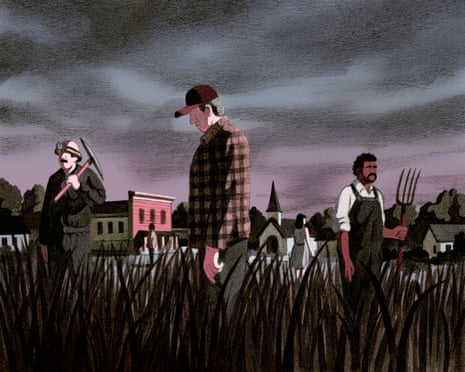
The result: large swaths of workers, farmers and rural communities have lost, while urban and suburban Democrats have been more likely than us to accumulate wealth. And losers always resent winners.
When most liberals think of elites, they picture Wall Street executives and corporate CEOs. But where I live, the term reaches further – to academics, media figures and professionals who are seen as talking a lot but not understanding much, have never worked with their hands, and scold people for their supposed backwardness or tell them they “vote against their own interests”.
Sometimes, it also extends to economists, health officials or other policy experts who aren’t always right. Bill Clinton promised that Nafta would create 1m net new jobs within five years of its passage. How should the workers who saw their textile mill close in North Carolina, or their auto parts plant leave Michigan for Mexico, feel towards the politicians who made it happen?
Or what of the people in Appalachia, who were assured by health professionals more than two decades ago that OxyContin was completely safe and non-addictive, only to see an opioid epidemic ravage their communities?
Anti-elitism here isn’t just about taking on the oligarchs. It’s about rejecting a professional class that many believe has helped sustain a system rigged against them.
After Trump’s second victory in 2024, a Stony Brook University professor, Musa al-Gharbi, summed it up like this: “When we look at education and income simultaneously, it becomes even clearer that Democrats have become the party of elites. The class composition of the Democratic and Republican parties has basically flipped over the last 30 years.”
Rebuilding trust
Three days after my election loss in 2018, I had car trouble on my way back from Christiansburg, Virginia.
The repair shop nearby was big, so much so that they called your name over an intercom when your vehicle was ready. After my name was called, the mechanic who had worked on my car told me that he had followed my campaign and liked what he had heard about me.
“But,” he said, “I could never vote for a Democrat.” Words I’d heard dozens of times during my campaign.
Democrats just couldn’t be trusted, even when the betrayal of rural America – and working people more broadly – was bipartisan. So why has the GOP fared so much better with these voters?
Clearly there’s a significant segment of Trump voters motivated by some combination of racism, homophobia and anti-immigrant hostility. But that explanation alone cannot account for the fact that an astounding 37% of working-class voters of color moved towards Republicans from 2012 to 2024; or that 13% of 2012 Obama supporters – nearly 9 million people – voted for Trump in 2016.
What moved many of these voters to the GOP was that they felt seen and heard by some of its leading figures. Rightwing populists spoke directly to the millions whose jobs and communities had been shredded, telling them that they were right to be angry, right to rage against a rigged system that had failed them.
Democrats, by contrast, largely dismissed their concerns or scolded them for “voting against their own interests”.
But during my campaign, I saw glimpses of what is possible when trust is built – when people feel respected by your words and deeds.
There was the Wise county coalminer’s widow who admonished me after a town hall meeting – “don’t you change a word you’re saying!” – because, she said, I talked plainly and “not like a politician”. This was high praise, coming from a person who made clear that she did not trust politicians.
There was Dwayne, a very religious and conservative farmer, who had been a local county Republican party chair. He showed up at my campaign office in Abingdon, pledging to support me because he believed that I understood first-hand the challenges farmers face. We’ve remained friends ever since.
There was a group of workers, abruptly let go when a local manufacturing plant shut down without warning. Most of them had worked at the plant for 20 years or more but were now jobless with no pension or retirement package to cushion the blow.
They were surprised and grateful that I met with them to see how we might secure the severance pay they were entitled to, even as the incumbent congressman told them there was nothing he could do. (In addition to lifting up their plight through my campaign, we connected them to a local attorney, a Democrat, who took their case. Two years later, they won their class action lawsuit for compensation.)
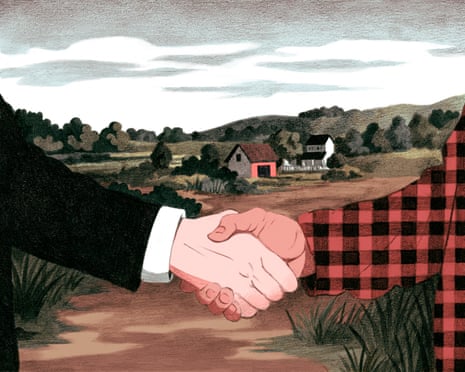
And there was Lou, the Republican county supervisor who publicly spoke in support of my candidacy at a community gathering even as she acknowledged that “we don’t agree on everything.” She made it clear that she trusted me to do the right thing, citing years of work we had done together. While locally focused, our efforts had also included advocacy for state and federal policies that enabled community-led solutions to problems.
I had proof: trust enables collaboration and political shifts. However, it also revealed the deep and widespread mistrust of Democrats and the left.
This “good news/bad news” reality led me to contact three writers whom I did not know, but whose books had provided real insights into the rural urban divide: Katherine Cramer, author of The Politics of Resentment, Arlie Hochschild, author of Strangers in Their Own Land, and Erica Etelson, the author of Beyond Contempt.
The four of us started talking in 2020, diving a bit deeper into understanding the divide and what to do about it. Those conversations gave birth to the Rural Urban Bridge Initiative, to better understand why the left had lost millions of working and rural folks, and what we must do to rebuild trust and overcome what divides us.
We believe that progressives, liberals and Democrats must do three things to overcome polarization.
They must learn to think differently
Thinking differently begins with the recognition that millions of rural and working-class people believe that the system is rigged against them, that the economy has failed them and the wider liberal culture despises them.
Whether or not we believe this to be true, it is our starting point. The Rural Urban Bridge Initiative (Rubi) provides training to Democrats and progressive groups that dives deeply into the underlying causes of this alienation and what we must do to overcome it.
Many people come into Rubi’s trainings trying to understand “why do these people vote against their own interests?”, but leave with a fundamentally different understanding of the problem and needed solutions.
Examining core assumptions we often make about rural people – their beliefs, motivations and priorities – is one tool that helps us think differently. An example of this is our misunderstanding of many rural people’s resistance to big, top-down programs that position the federal government as the solution to our problems. “We have to show them how our programs take care of them,” is a sentiment I often hear.
But most working folks don’t want the federal government to take care of them; they want the government to level the playing field by reining in big corporations and by investing in local communities so that they can solve their own problems.
They must learn to talk differently
Talking differently begins with talking less, listening more. Our own research and experience has shown how essential it is that this listening be done with respect and a desire to learn from people different from ourselves. This is true whether it is happening on the phone, at someone’s door during a political campaign, or in everyday conversations. Listening with respect opens doors.
To keep them open, we encourage people to adopt a few rural-friendly communications habits: first, get rid of the jargon and the esoteric language of politics, non-profits and movements. That terminology tends to confuse and alienate people outside our choir.
Second, speak clearly, plainly and as succinctly as possible. More words, whether written or spoken, usually confound the listener and dilute your message. Third, use concrete examples that illustrate the point you’re trying to convey, avoiding the tendency of many college-educated people to speak in the abstract. These communication habits are part of what Rubi calls “talking like a neighbor”, and they work.
They must act differently
We’ve had extraordinary results by focusing on organizing regular, collaborative group work that solves local problems and is not overtly political.
This can be deceptively simple – such as getting community members together from all political paths to pack and distribute food, pick up trash, install smoke alarms or cut and distribute firewood.
This kind of concrete, locally focused work changes the way rural liberals view their neighbors, and improves the view of Democrats among people in the countryside. It’s a critical step towards rebuilding trust and overcoming the divide. This Community Works strategy is one of the core elements of Rubi’s work and is proving to be a very effective approach to rebuilding trust. More on that in a future article in this series.
And while local action is key, policies matter too. The Rural New Deal, which we wrote with Progressive Democrats of America, provides a comprehensive, bottom up platform to build rural prosperity. It includes rebuilding small town centers, investing in rural healthcare, funding rural schools, dismantling monopolies, relocalize small town banks, and more.
There was nothing unusual about that morning, eight years back, cutting firewood, nor the fella I met while doing it. I’ve been lucky to live among hard working, plainspoken people much like him for more than 40 years. Country folks challenge our assumptions when they see that we’re willing to work side by side and show them some respect.
We can all do that, with or without a chainsaw. It’s the first step in finding the common ground we need to reclaim our nation for everyday people.
-
Anthony Flaccavento is a farmer in the Appalachian region of Virginia and co-founder and director of the Rural Urban Bridge Initiative, an organization dedicated to understanding and overcoming the rural urban divide
The Guardian wp:paragraph
هلدینگ کاسپین استانبول | خرید ملک در ترکیه | صرافی معتبر ایرانی در ترکیه | خرید و فروش طلا در ترکیه | مهاجرت به ترکیه | واردات و صادرات در ترکیه | نیازمندیهای ترکیه | اخبار ترکیه | اخبار جهانی | توریست ایران | خدمات توریستی در ایران | تورهای گردشگری ایران | هلدینگ اول | خدمات کاریابی و فریلنسری و شغل | مرجع اطلاعات ایران (همه چیز در ایران) | کیف پول و خدمات مالی و پرداخت یار | اخبار ایران | تابلو زنده قیمت ارز در ترکیه و استانبول | صرافی آنلاین ترکیه | قیمت طلا و نقره در ترکیه | سرمایه گذاری در ترکیه | جواهرات در ترکیه | نرخ لحظه ای ارزها در استانبول | قیمت دلار امروز در ترکیه | قیمت دلار استانبول امروز | قیمت لحظه ای دلار | اخبار روز ترکیه استانبول | اپلیکیشن ISTEX | اپلیکیشن قیمت لحظه ای دلار و یورو و لیر و ارزها در ترکیه
/wp:paragraph wp:paragraph /wp:paragraph
About the Author