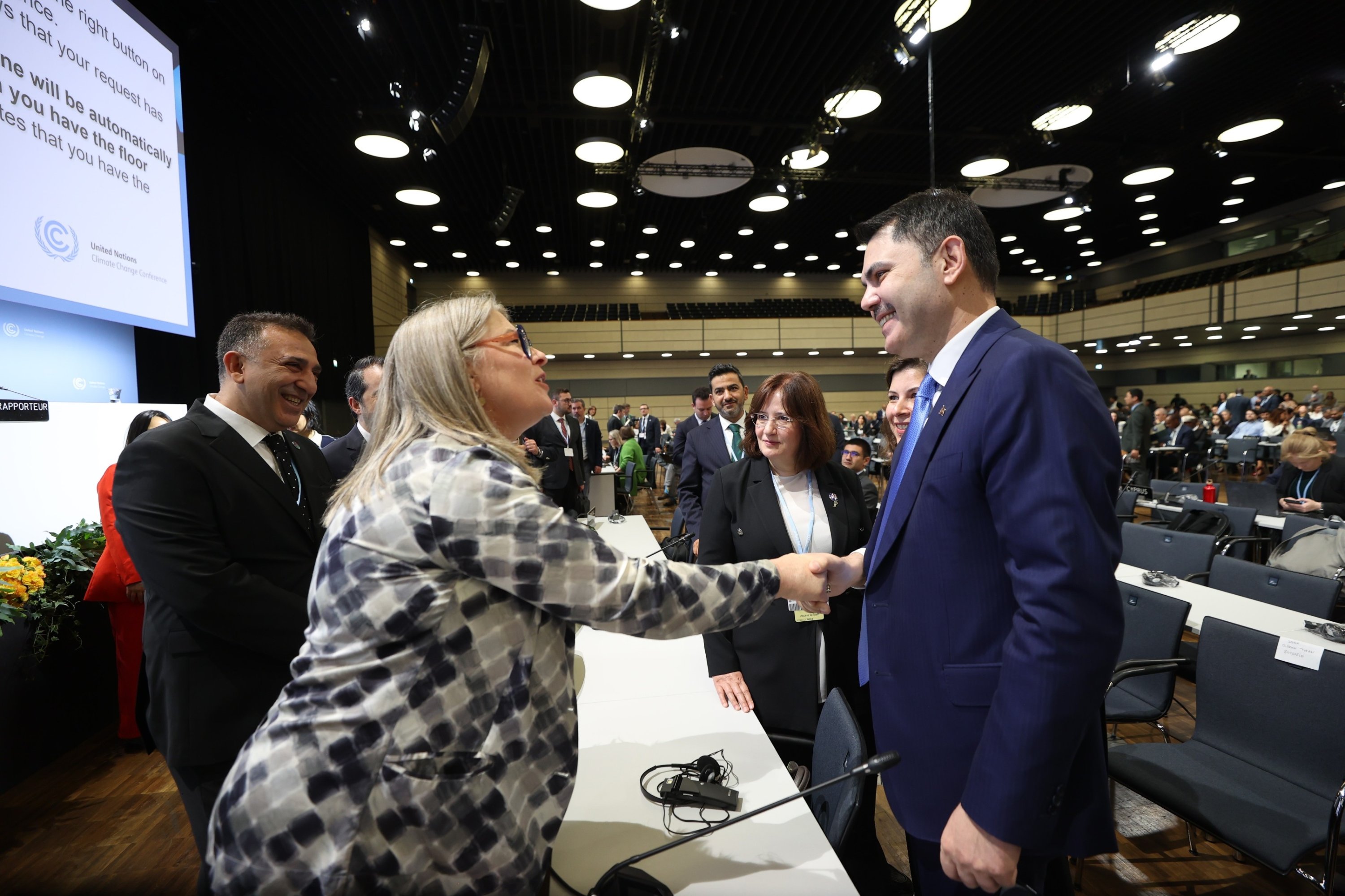
The oil crisis triggered by the conflict in the Middle East highlights the need to curb fossil fuel dependence and accelerate the clean energy transition, climate envoys said Monday at talks in Germany, held ahead of this year’s COP31 summit.
The Bonn climate conference – gathering negotiators ahead of the November summit in Turkey – kicked off as Iran and Israel launched new strikes at each other, rattling a fragile cease-fire.
U.N. climate chief Simon Stiell linked the push for faster climate action to deadly heatwaves, the looming impacts of the warming El Nino weather pattern and the war in the Middle East.
The war “causes immense human suffering and sparks a fossil fuel cost crisis that’s strangling economies everywhere,” Stiell said at the opening of the two-week conference.
“It’s crystal clear: continuing our fossil fuel dependency means continuing to import inflation and economic instability,” he said.
COP31 President and Environment, Urbanization and Climate Change Minister Murat Kurum said the world was facing several simultaneous crises and volatile energy markets.
“These developments highlight the risk of relying on fossil fuel imports and the need to accelerate the clean energy transition,” Kurum said.
Türkiye will host COP31 in the Mediterranean resort of Antalya, while Australia will lead the negotiations under a compromise that the two countries struck to end a battle over who would host the annual summit.
Australian Climate Minister Chris Bowen, who is presiding over the COP31 negotiations, told the Bonn conference that the world was experiencing “the worst energy crisis in our history.”
“Crises like this – in a highly contested, uncertain geopolitical environment – will become more frequent, not less. More unpredictable, not less. Worse, not better,” he said.
“Accelerating the energy transition will ease shocks to our energy systems,” Bowen said, calling for “more clean energy, more electrification, less dependence on fossil fuels.”