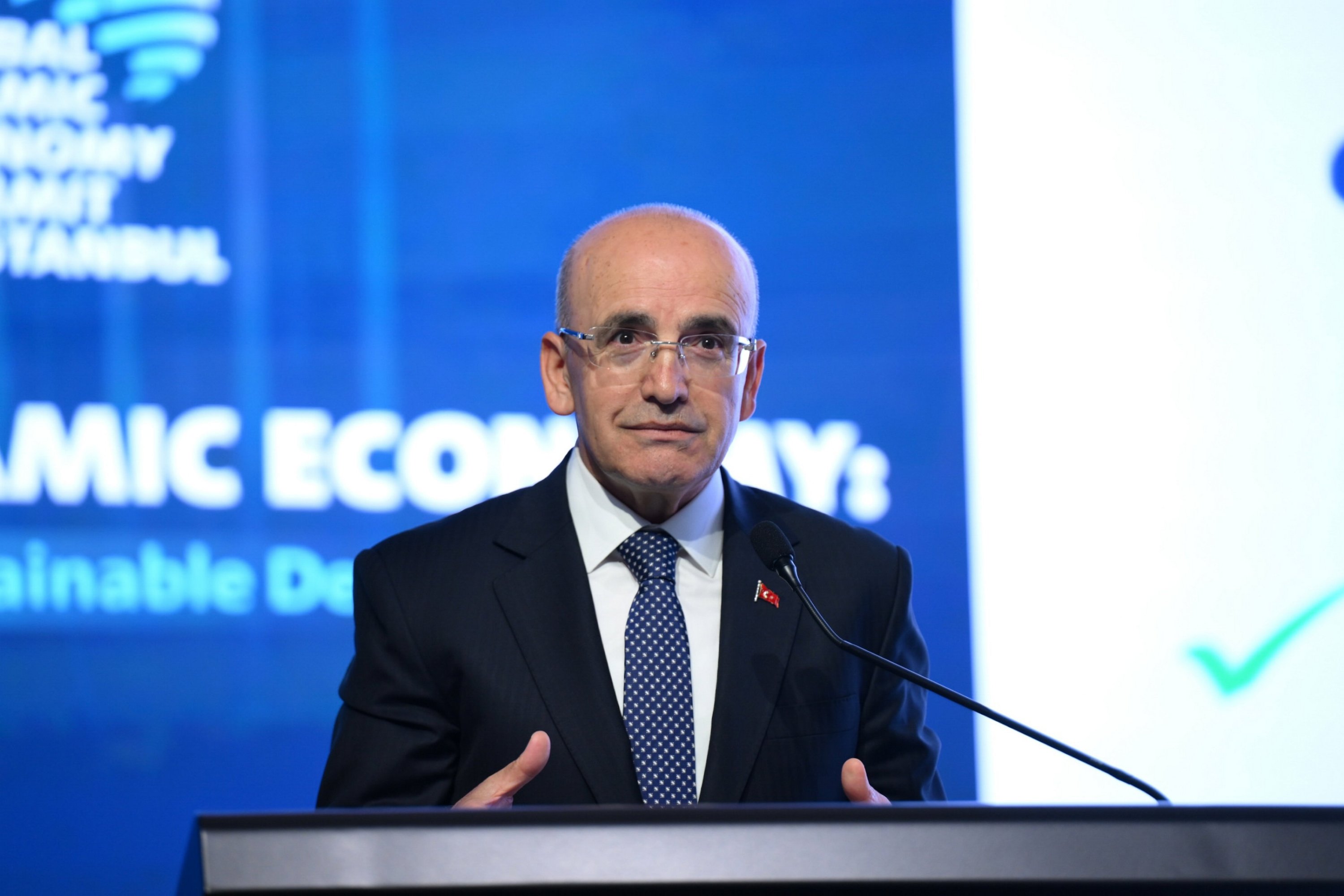
Türkiye is working on new measures to reduce financing costs for businesses, and authorities are considering mechanisms to partially offset borrowing costs through the budget, Treasury and Finance Minister Mehmet Şimşek said Monday.
Şimşek said the government could not fully absorb all financing costs but was examining models that would cover part of the cost above inflation without undermining the country’s disinflation strategy.
“Of course, it is not possible for us to fully cover all borrowing costs. However, we are working on models that would compensate part of the cost above inflation through the budget, to a certain extent and without disrupting the (medium-term) program’s balance,” he told the private broadcaster CNN Türk.
Şimşek said the government was making intensive efforts to ease financing constraints facing the real sector, highlighting export rediscount loans currently offered at interest rates of around 23.9%, well below the annual inflation rate.
“We will continue these supports and even increase them. We will not stop here. When conditions allow, we will lower financing costs further,” he said.
The minister reiterated that inflation remains on a downward trajectory despite a challenging global environment, while warning that the Iran war has generated economic effects extending well beyond higher energy prices.
Last week’s data showed Türkiye’s inflation in May increased 32.6% from a year ago, slightly higher than expected and up from 32.4% in April.
That underscored fallout from the U.S.-Iran war, which has effectively shut the key Strait of Hormuz, sending global energy prices sharply higher.
According to Şimşek, the conflict has created supply shocks across a range of strategic commodities, including oil, natural gas, chemicals, fertilizers, helium and raw materials used in semiconductor production.
He said rising energy prices were creating cost pressures across sectors ranging from textiles and footwear to agriculture, adding that lower fertilizer use could reduce agricultural productivity and place additional upward pressure on food prices.
Tighter global financial conditions, weaker demand
Şimşek also warned that tighter global financial conditions and weaker demand in some export markets could weigh on economic activity.
The minister said current oil price levels, when combined with secondary effects, were generating at least 5 percentage points of additional inflationary pressure.
“If inflation was expected to be 21%, it could be 26%,” he said.
The Central Bank of the Republic of Türkiye (CBRT) raised its year-end interim inflation target to 24% from 16% last month.
Şimşek stressed he does not attribute deviations from inflation targets solely to external shocks and acknowledged the role of domestic structural factors.
He said the government’s economic program remains focused on restoring macroeconomic stability through disinflation, fiscal discipline and a sustainable current account balance.
Türkiye’s foreign exchange reserves have risen to a level sufficient to cover roughly five months of imports, he noted, emphasizing the importance of reserve accumulation in a region exposed to geopolitical risks.
Şimşek added that Türkiye would be among the countries benefiting most if energy markets normalize following an eventual end to the conflict.
Türkiye has spent approximately $1.1 trillion on oil and natural gas imports over the past 23 years, which the minister said meant lower energy prices would rapidly feed into lower inflation.
Housing, food, transport key to cost-of-living fight
Şimşek said the fight against the cost of living remains centered on housing, food and transportation, which account for around 67% of average household spending and as much as 77% for lower-income households.
To curb housing inflation, he pointed to efforts to expand housing supply, including the delivery of 500,000 homes in 2023 earthquake-hit regions and plans to hand over another 120,000 units this year.
While rent inflation in the quake zone has fallen to around 20%, nationwide rent inflation remains just below 50%, he said.
With new social housing projects and public-supported investments, Şimşek said he expects annual rent inflation to decline to between 30% and 35% by the end of the year.
He also highlighted ongoing efforts to increase agricultural production through organized farming zones and greenhouse investments, while reducing food losses throughout the supply chain.
The minister said the effects of these structural measures would become more visible within the next two to three years.
Şimşek also referred to recently unveiled new incentives to attract investment, capital and skilled workers.
He cited corporate tax incentives for production-oriented investments, transit trade, service exports and qualified service centers as part of efforts to position Türkiye as a regional hub.
DAILYSABAH
هلدینگ کاسپین استانبول | خرید ملک در ترکیه | صرافی معتبر ایرانی در ترکیه | خرید و فروش طلا در ترکیه | مهاجرت به ترکیه | واردات و صادرات در ترکیه | نیازمندیهای ترکیه | اخبار ترکیه | اخبار جهانی | توریست ایران | خدمات توریستی در ایران | تورهای گردشگری ایران | هلدینگ اول | خدمات کاریابی و فریلنسری و شغل | مرجع اطلاعات ایران (همه چیز در ایران) | کیف پول و خدمات مالی و پرداخت یار | اخبار ایران | تابلو زنده قیمت ارز در ترکیه و استانبول | صرافی آنلاین ترکیه | قیمت طلا و نقره در ترکیه | سرمایه گذاری در ترکیه | جواهرات در ترکیه | نرخ لحظه ای ارزها در استانبول | قیمت دلار امروز در ترکیه | قیمت دلار استانبول امروز | قیمت لحظه ای دلار | اخبار روز ترکیه استانبول | اپلیکیشن ISTEX | اپلیکیشن قیمت لحظه ای دلار و یورو و لیر و ارزها در ترکیه
About the Author