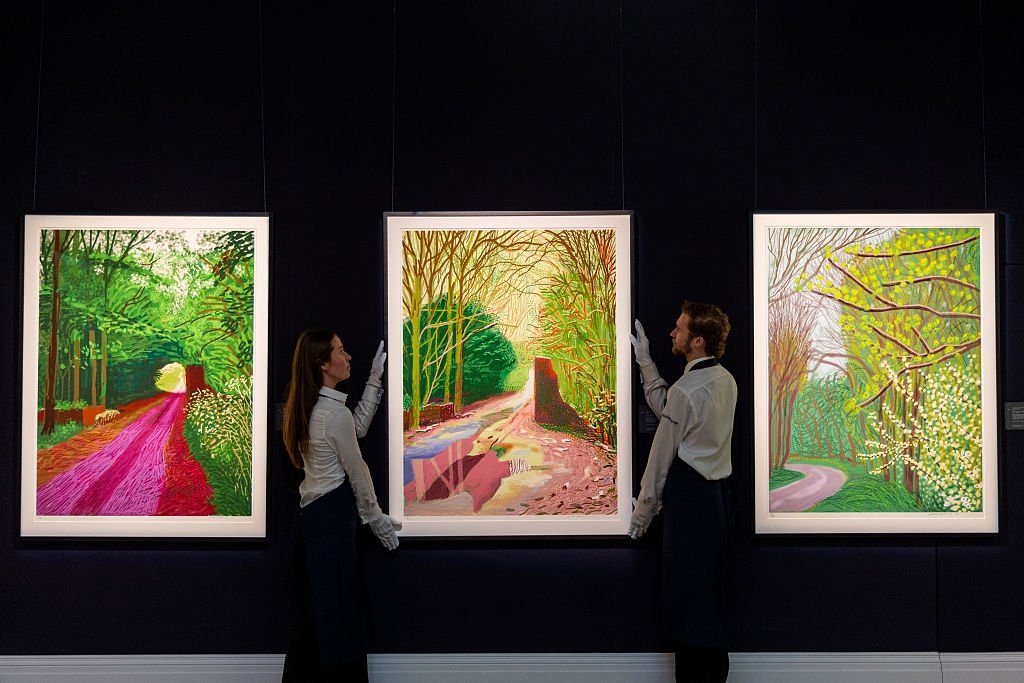
Some artists merely earn a place in art history. Others become part of our visual memory. David Hockney belongs to the latter category. Show one of his famous swimming pool paintings to almost anyone today, and chances are they will feel they have seen it before. Perhaps in a museum, perhaps in a book, perhaps in one of the countless images that have circulated through the digital world for years. Hockney’s universe has quietly embedded itself into our collective visual culture.
That bright California light, those geometric surfaces, those swimming pools that appear motionless yet somehow carry an unmistakable emotional charge. Hockney’s paintings have become part not only of art history but also of the way we see. And perhaps this is precisely where his appeal begins: His works feel deeply familiar, yet explaining why they feel so familiar is never easy.
David Hockney was born in Bradford, U.K., in 1937. He grew up in a modest working-class family. His father was an accountant and also a committed pacifist whose anti-war beliefs gave him a particularly distinct worldview. Growing up in an environment where thinking differently was considered perfectly normal would later shape Hockney’s relationship with art. After all, he was never simply a painter. He became an artist almost obsessed with understanding how seeing itself works.
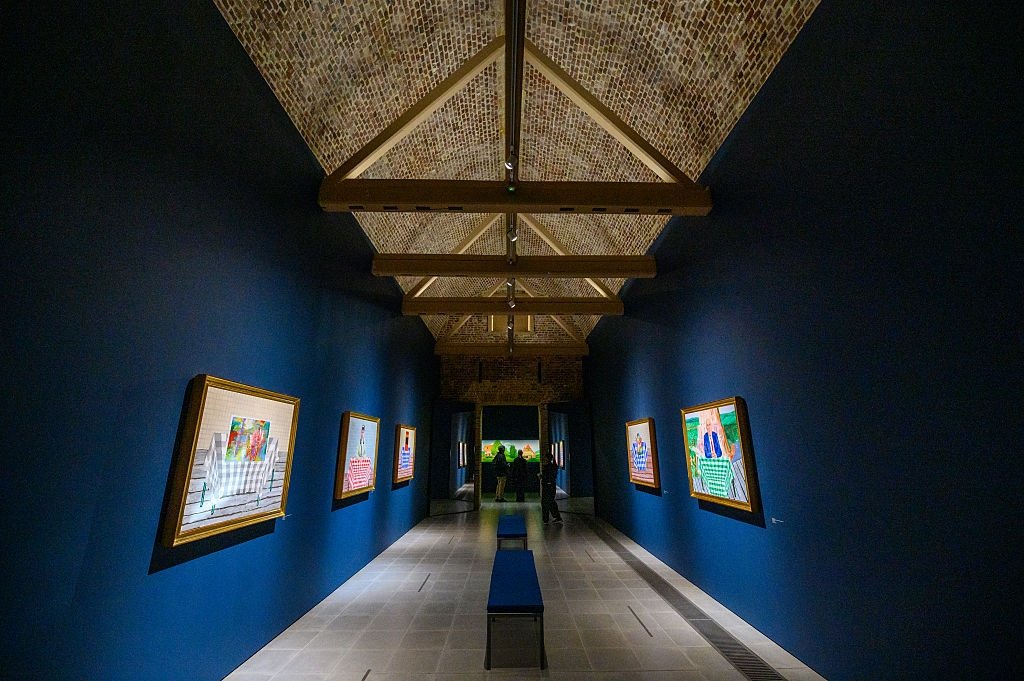
Even when he first began studying art, the traditional academic approach felt restrictive to him. It is well known that he once refused to take the written examination required for graduation from art school. To Hockney, art was not something that could be explained theoretically. It was something to be experienced. This attitude remained unchanged throughout his career. What one senses throughout his entire body of work is not an aggressive desire to break rules, but rather a quiet determination to demonstrate that it is possible to look at the world differently.
His move from London to Los Angeles in the early 1960s would become one of the most significant turning points of his career. It was there that Hockney’s visual language truly emerged. Los Angeles was not simply a city for him; it was an atmosphere. Encountering California’s light after the grey skies of England completely transformed his understanding of colour. Swimming pools, modernist villas, palm trees and sharp shadows – the visual world we now associate so strongly with Hockney was largely born during this period.
Yet it would be a mistake to read Hockney’s paintings simply as “beautiful” or “pleasant.” The sense of calm they initially evoke often transforms into something more complex within seconds. This is particularly evident in his swimming pool paintings. “A Bigger Splash” (1967) is one of the finest examples. At first glance, nothing dramatic appears to be happening: a modern house, a still swimming pool and a splash left behind by something that has entered the water. Yet it is precisely that splash that makes the painting unforgettable. The event itself remains invisible; only its trace remains.
For this reason, Hockney’s paintings have always felt simultaneously calm and slightly uncanny to me. His pool paintings are filled with an overwhelming silence. Human figures are often absent or emotionally distant. Everything appears perfect, yet within that perfection there is a subtle sense of emptiness. Perhaps this is why Hockney continues to feel so contemporary. Modern life often looks exactly the same: flawless surfaces concealing a loneliness that is difficult to articulate.
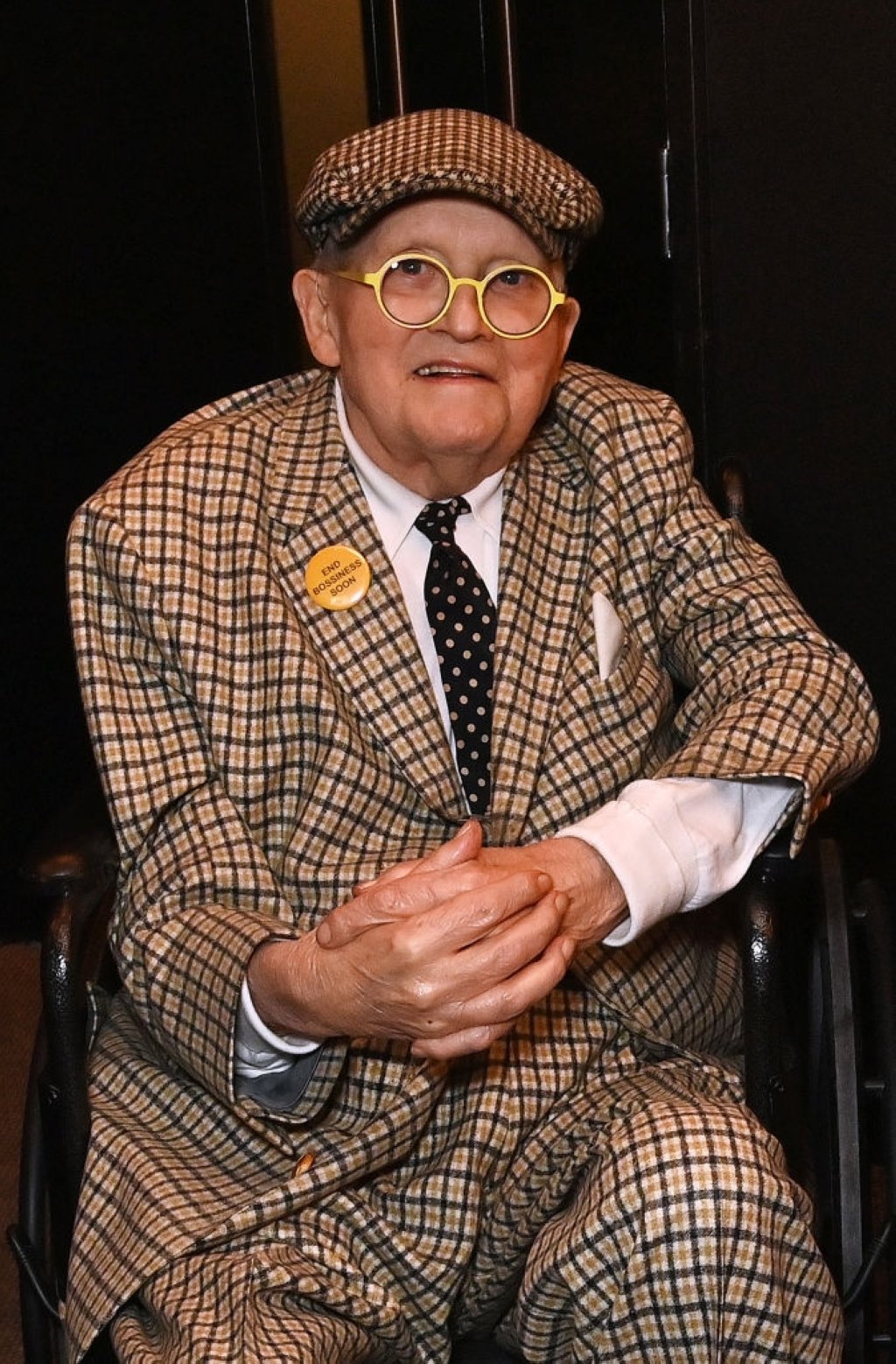
To say that Hockney’s greatness lies solely in his use of color or his compositional mastery would be insufficient. His real subject is seeing itself. Hockney does not view the world from a single perspective. In fact, he often consciously rejects classical perspective. In his view, the human eye never sees from only one angle. As we move through a room, we observe it from multiple viewpoints, incorporating time itself into the image.
This idea is particularly evident in the photographic collages he created during the 1970s. In his celebrated “joiner” series, he fragments time instead of freezing a single moment. A face appears simultaneously from several different angles. A space is constructed not from one fixed viewpoint but from the memory of a moving eye. While these images may initially appear fragmented, they are in fact far closer to the way the human mind actually works.
Perhaps this is where Hockney’s greatest achievement lies: He does not distort reality. He reconstructs it.
His relationship with color is therefore never purely aesthetic. Those bright blue swimming pools and intense oranges are not simply there to look beautiful. They create emotional atmospheres. Looking at Hockney’s California paintings, one feels warmth but also distance. His figures rarely touch one another. Even when they inhabit the same space, they often seem to exist in entirely separate worlds.
Hockney’s personal life is closely connected to this recurring tension between distance and intimacy. The fact that he was one of the first major artists to live openly as a gay man was particularly significant in the context of the 1960s and 1970s. Hockney’s work does not strive to be political; it strives to be honest. Perhaps this is why it continues to feel remarkably current today.
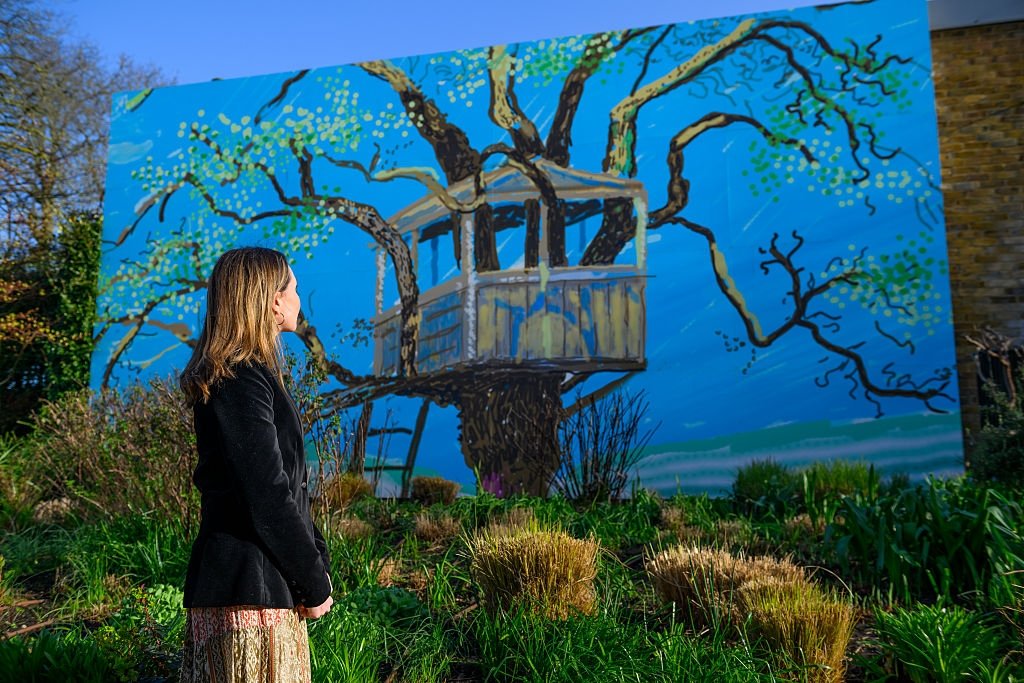
Another fascinating aspect of David Hockney’s career is his relationship with technology. While many artists become increasingly protective of their established methods as they age, Hockney has done precisely the opposite. He creates drawings on an iPad, works with digital tools, and continues to explore new ways of seeing. His landscapes of the Yorkshire countryside reveal an artist whose visual language has become simultaneously simpler and more concentrated over time.
Now approaching his late 80s and still actively producing work, Hockney is widely regarded as one of the most important living artists. In 2018, his iconic 1972 painting “Portrait of an Artist” (Pool with Two Figures) sold for $90.3 million at Christie’s, setting what was then the record for the highest auction price ever achieved by a work by a living artist. Yet it is impossible to explain Hockney’s significance solely through market value. His place in art history was established long before his works reached such figures. Over a career spanning more than half a century, Hockney has moved fluidly between painting, photography, printmaking, and digital media, continually questioning not only what we see, but how we see.
And perhaps that is why, when we look into a Hockney swimming pool, we see far more than water. Light, silence, solitude and time come together on the same surface. These paintings, which appear deceptively simple at first glance, continue to live somewhere in the mind long after we have seen them. Because Hockney does not show us a new world. He reminds us why the one we already inhabit is still worth looking at.
DAILYSABAH
هلدینگ کاسپین استانبول | خرید ملک در ترکیه | صرافی معتبر ایرانی در ترکیه | خرید و فروش طلا در ترکیه | مهاجرت به ترکیه | واردات و صادرات در ترکیه | نیازمندیهای ترکیه | اخبار ترکیه | اخبار جهانی | توریست ایران | خدمات توریستی در ایران | تورهای گردشگری ایران | هلدینگ اول | خدمات کاریابی و فریلنسری و شغل | مرجع اطلاعات ایران (همه چیز در ایران) | کیف پول و خدمات مالی و پرداخت یار | اخبار ایران | تابلو زنده قیمت ارز در ترکیه و استانبول | صرافی آنلاین ترکیه | قیمت طلا و نقره در ترکیه | سرمایه گذاری در ترکیه | جواهرات در ترکیه | نرخ لحظه ای ارزها در استانبول | قیمت دلار امروز در ترکیه | قیمت دلار استانبول امروز | قیمت لحظه ای دلار | اخبار روز ترکیه استانبول | اپلیکیشن ISTEX | اپلیکیشن قیمت لحظه ای دلار و یورو و لیر و ارزها در ترکیه
About the Author