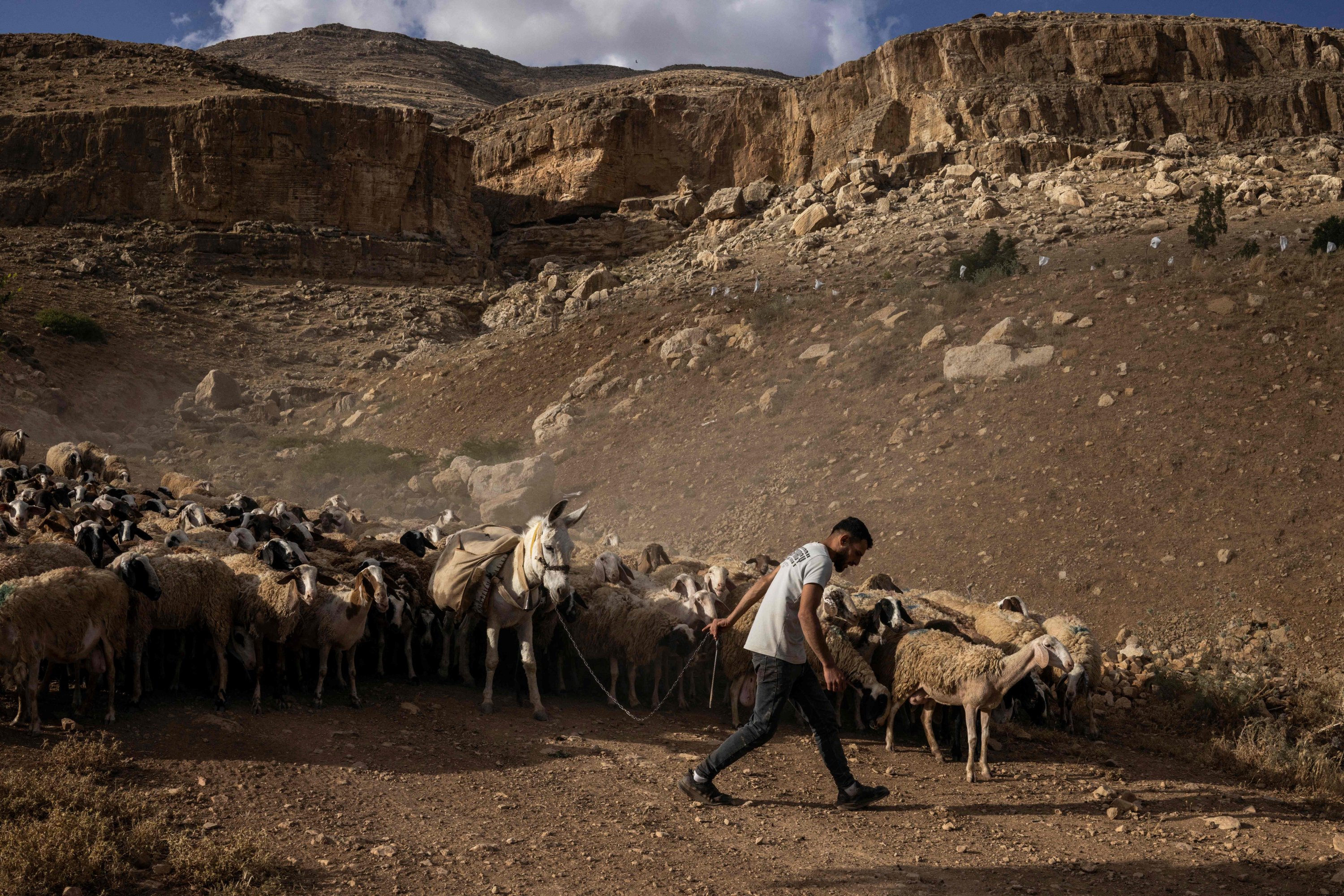
Fields are drying up and livestock are going thirsty in the occupied West Bank after Israeli construction destroyed crucial irrigation systems on an agricultural plain near northern Tubas, according to local farmers.
Three farmers said the Israeli army had, for several months, been building a 22-kilometer military road linking the villages of Ein Shibli and Tayasir.
The construction work destroyed their water pipes that watered their fields and livestock.
They complained that the Israeli army often prevents them from accessing their land and had installed a metal barrier restricting movement.
The military said the work in the area was part of a project responding to a “clear security necessity.”
But Palestinian farmers said the measures had only compounded their suffering.
“Since February, we have been suffering from water shortages. We are unable to irrigate our crops and unable to access our land,” one of the farmers, Saleh Hamdan, told Agence France-Presse (AFP).
“If there is no water, there are simply no farmers left,” he continued, displaying dried-up bunches of grapes.
At the scene, an AFP journalist saw damaged water irrigation pipes as well as bulldozers parked near the farmer’s land.
‘Prison’
“We are suffering above all from the lack of water for our livestock,” Lofti Bani Odeh, another farmer from the same area, said.
According to Odeh, water supplies to farmers were cut when the army began work on the road.
In December 2025, Israeli authorities issued military requisition orders covering more than 1,000 dunams (about 100 hectares) in the governorate, according to a report by the National Bureau for the Defense of Land and Resistance to Settlement Activity, a body affiliated with the Palestine Liberation Organization (PLO).
The road project, dubbed “Scarlet Thread” by the army, was reportedly suspended in late January 2026 by an interim order from Israel’s Supreme Court.
In March, the court authorized the project to resume, citing an “urgent security necessity.”
“Any farmer who tries to access his land here is arrested, assaulted and humiliated” by Israeli soldiers, said another farmer, Dirgham Basharat.
Unable to provide water and fodder for his animals, he said he felt as though he was “in a prison.”