Türkiye completed its longest and fastest metro line on Friday with the opening of the final section of the project that further expands Istanbul’s rail transport network and strengthens links between the city center and its main airport.
President Recep Tayyip Erdoğan attended the inauguration of the 22-kilometer (13.7-mile) Halkalı-Arnavutköy section, the last phase of the project.
That brings the total length of the fully underground Gayrettepe-Istanbul Airport-Halkalı line to 69 km.
The metro line will operate at speeds of up to 120 km per hour, making it Türkiye’s fastest metro route and one of the longest underground airport metro connections in the world.
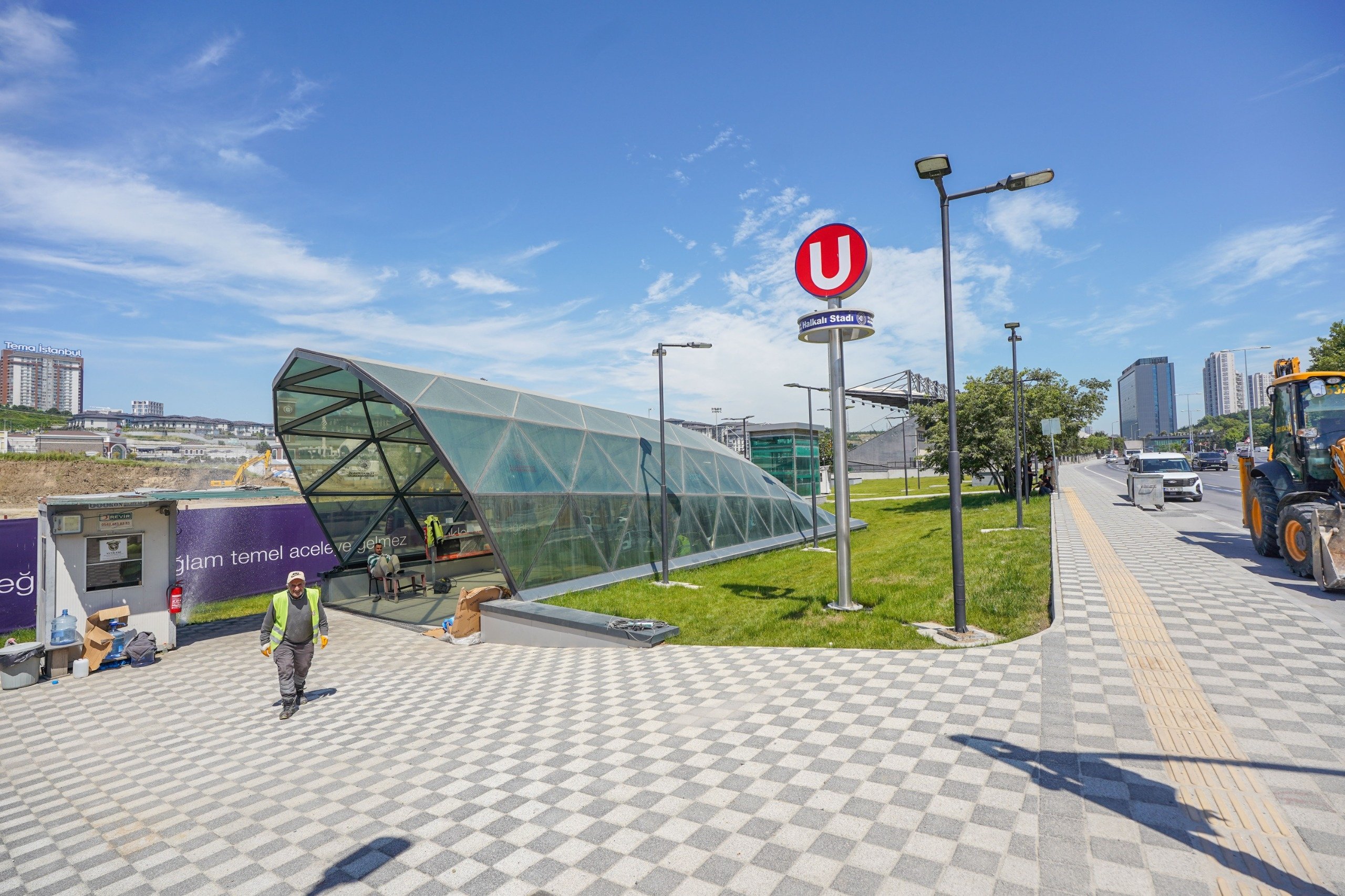
The newly opened section includes five stations: Ibn Haldun University, Kayaşehir, Olimpiyatköy, Halkalı Stadium and Halkalı.
With the addition of these stations, around 1.5 million residents in Istanbul’s Başakşehir and Küçükçekmece districts will gain direct rail access to both the city center and Istanbul Airport.
The route is integrated with several major transportation networks.
At Halkalı station, passengers can connect to the Marmaray commuter rail system running beneath the Bosporus, high-speed rail services, the Halkalı-Bahçeşehir suburban line and the Yenikapı-Kirazlı-Halkalı metro line.
Additional transfers are available to the M3 metro line at Kayaşehir, the M9 line at Olimpiyatköy and the future M7 extension at Halkalı Stadium.
According to the Transport and Infrastructure Ministry, travel times on the completed route will be significantly reduced, with journeys between Halkalı and Istanbul Airport taking around 30 minutes and trips between Halkalı and Gayrettepe lasting 57 minutes.
The line also incorporates Türkiye’s first domestically developed railway signalling system, produced by defense electronics company Aselsan.
The network will operate using a fully automated driverless system. Of the 25 train sets deployed on the route, 15 were manufactured to fully driverless standards.
The government estimates that the project will generate total economic benefits of 935 million euros (nearly $1.1 billion) by 2043 through time savings and lower road maintenance and operating costs.
Officials project that reduced traffic congestion alone will save travellers approximately 117 million hours over the period.