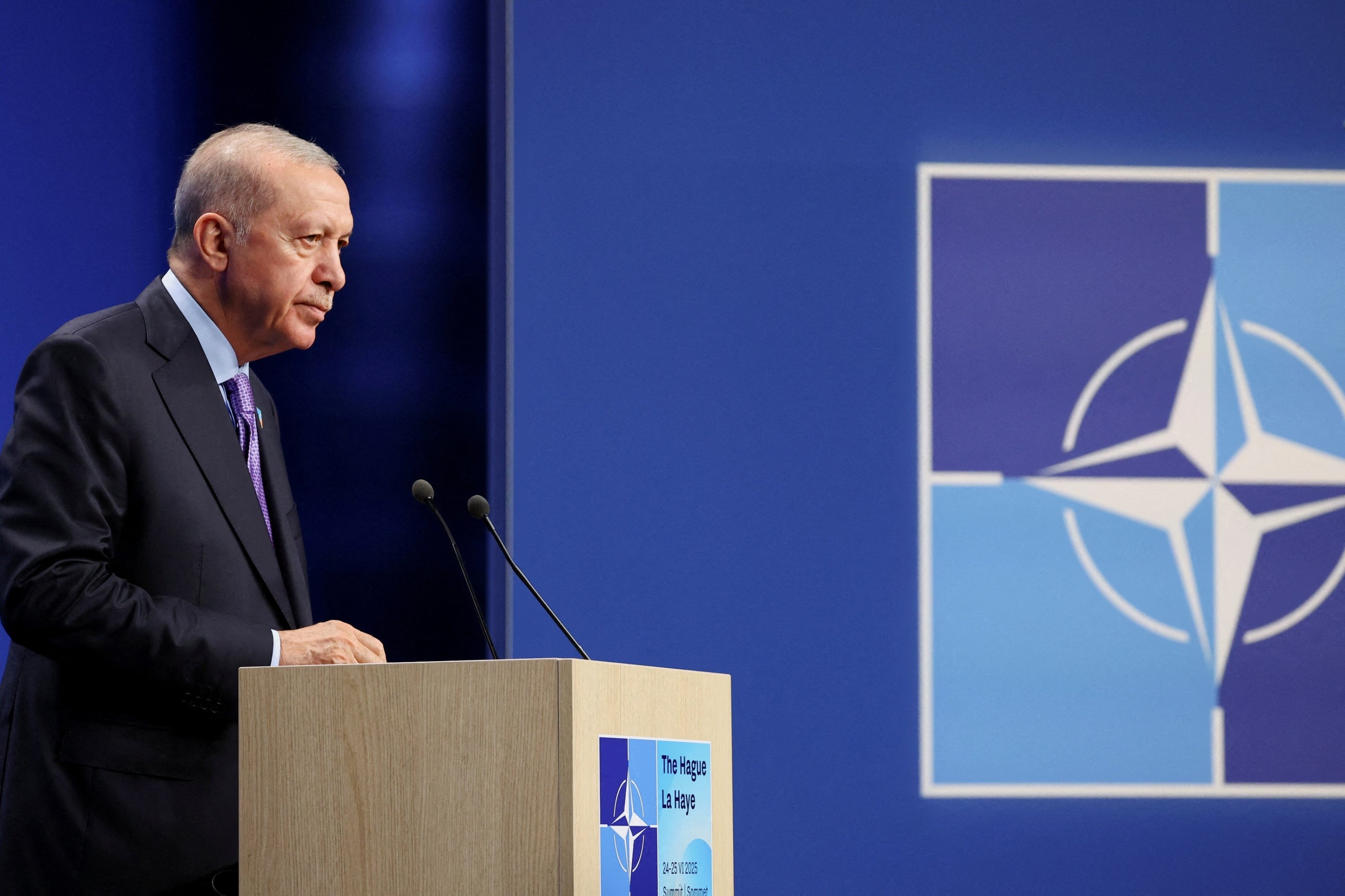
Türkiye is preparing to host a NATO Leaders Summit for the second time. Following the summit held in Istanbul in 2004, the eyes of the world will once again turn to Türkiye, this time to the capital Ankara on July 7-8.
Ankara has completed all preparations as host and is now awaiting the arrival of world leaders. One of the most important guests will undoubtedly be U.S. President Donald Trump. The summit, which U.S. Secretary of State Marco Rubio described as “the most important summit in history,” will mark Trump’s first visit to Türkiye as president.
Held against the backdrop of tensions between Tehran and Washington, the ongoing Russia-Ukraine war, and disagreements within the alliance, the summit is expected to highlight Türkiye’s role as a key actor capable of bridging divisions among transatlantic partners through its defence industry capabilities and diplomatic experience.
How much has changed?
The Strategic Concept adopted at the 2022 Madrid Summit was widely seen as one of NATO’s most significant transformation documents since the end of the Cold War.
The document identified Russia as a direct and immediate threat, while for the first time China’s rise was incorporated into NATO’s security agenda as a major strategic challenge. These developments signalled a revitalisation of the alliance. Furthermore, Finland and Sweden’s accession to NATO amid the new security environment created by the Ukraine war strengthened both the alliance’s deterrence and credibility.
However, much has changed in the four years since then. NATO remains a powerful military alliance today, but whether it is as united and confident as it was in 2022 is a matter of debate. At that time, Russia and China were largely viewed as common threats by member states. Today, those perceptions are increasingly diverging.
A fractured vision
The U.S. is no longer focused solely on Europe; its priorities are shifting more toward the Western Hemisphere, China, and the Asia-Pacific region. Europe, meanwhile, continues to view Russia as its primary security concern. Southern European countries are increasingly preoccupied with migration and instability, while some allies place greater emphasis on artificial intelligence and cybersecurity. This diversity of priorities makes it more difficult for NATO to formulate a common strategic vision.
Moreover, the most fragile link in transatlantic relations today may not be Russia or China, but rather America’s own domestic political transformation.
Trump and the transactional alliance
With Trump’s return to the White House for a second term, Washington’s approach toward NATO has once again become a subject of intense debate. Under the banner of “America First,” Trump has pursued a foreign policy that prioritizes security while moving away from liberal internationalism. His administration has focused on preserving American power and demanding greater burden-sharing from allies.
The burden-sharing disputes that frequently emerged during Trump’s previous presidency have led some to perceive the alliance less as a collective defence pact and more as a transactional arrangement resembling a business agreement.
Another issue that strained relations between the U.S. and its allies was the war involving Iran. In the early stages of the conflict, Trump appeared determined to act independently. As the situation evolved, he sought greater NATO support – a request that received a lukewarm response. Trump’s warning that “the alliance faces a difficult future if members do not help reopen the Strait of Hormuz” triggered fresh tensions. Germany and the United Kingdom openly criticized the remarks. Several alliance members, including Spain, refused to allow their air bases to be used for operations related to strikes against Iran.
No longer defined by blocs
Many of NATO’s challenges stem not only from disagreements between America and Europe but also from deeper structural changes. Today’s world is no longer bipolar as it was during the Cold War. Nor does it resemble the unipolar environment of the 1990s.
Some analysts describe the current international system as multipolar, others as multi-centred, while some argue it is increasingly defined by networks and interconnected relationships. In such an environment, building long-term alliances based on shared values and common interests has become more difficult than ever. Power is no longer distributed solely through military strength but also through economic and technological influence.
The Cold War-era perception of a common ideological enemy has disappeared. As a result, maintaining permanently aligned interests has become nearly impossible. This reality places long-standing institutions such as NATO in a constant state of existential reflection.
Türkiye’s moment
The significance of the Ankara Summit for Türkiye becomes clear in this context. The United States’ calls for burden-sharing and a reduction of its security commitments in Europe have compelled European countries to pursue greater strategic autonomy. Within this framework, Türkiye has emerged as a central actor, contributing directly to NATO’s deterrence and Europe’s military capabilities through its growing domestic defense industry.
In recent years, Türkiye has made significant advances in defense production. Its constructive relations with regional countries have strengthened its credibility among transatlantic partners. As the only country able to bring Russia and Ukraine to the same negotiating table, Türkiye has distinguished itself through active diplomacy across the Caucasus, the Balkans, Africa, and the Far East.
The messages delivered in Ankara will therefore carry weight beyond NATO’s internal debates. They may also provide important clues about whether a new chapter is beginning in Türkiye’s relations with the West.
The views and opinions expressed in this article are solely those of the author. They do not necessarily reflect the editorial stance, values or position of Daily Sabah. The newspaper provides space for diverse perspectives as part of its commitment to open and informed public discussion.
DAILYSABAH
هلدینگ کاسپین استانبول | خرید ملک در ترکیه | صرافی معتبر ایرانی در ترکیه | خرید و فروش طلا در ترکیه | مهاجرت به ترکیه | واردات و صادرات در ترکیه | نیازمندیهای ترکیه | اخبار ترکیه | اخبار جهانی | توریست ایران | خدمات توریستی در ایران | تورهای گردشگری ایران | هلدینگ اول | خدمات کاریابی و فریلنسری و شغل | مرجع اطلاعات ایران (همه چیز در ایران) | کیف پول و خدمات مالی و پرداخت یار | اخبار ایران | تابلو زنده قیمت ارز در ترکیه و استانبول | صرافی آنلاین ترکیه | قیمت طلا و نقره در ترکیه | سرمایه گذاری در ترکیه | جواهرات در ترکیه | نرخ لحظه ای ارزها در استانبول | قیمت دلار امروز در ترکیه | قیمت دلار استانبول امروز | قیمت لحظه ای دلار | اخبار روز ترکیه استانبول | اپلیکیشن ISTEX | اپلیکیشن قیمت لحظه ای دلار و یورو و لیر و ارزها در ترکیه
About the Author