Archaeologists in eastern Türkiye are analyzing human remains recovered from what they believe is a Seljuk martyr cemetery that could be linked to the 1071 Battle of Manzikert, a pivotal medieval conflict that opened much of Anatolia to Turkish settlement.
The skeletons, unearthed during ongoing excavations near the town of Malazgirt in Muş province, are undergoing anthropological examination and ancient DNA analysis as researchers seek to determine the identities of those buried there and whether they were connected to one of the most consequential battles in Middle Eastern and Byzantine history.
The excavation is part of the Malazgirt Battlefield Identification, Historical and Archaeological Survey Project, launched in 2020 by Türkiye’s Culture and Tourism Ministry in partnership with the Ahlat Museum Directorate and Muş Alparslan University.
A multidisciplinary team of archaeologists, anthropologists, historians and art historians is excavating a site in the Afşin neighborhood, about 7.5 kilometers (4.7 miles) from Malazgirt, where researchers are investigating whether a Seljuk-era cemetery is linked to the Battle of Manzikert.
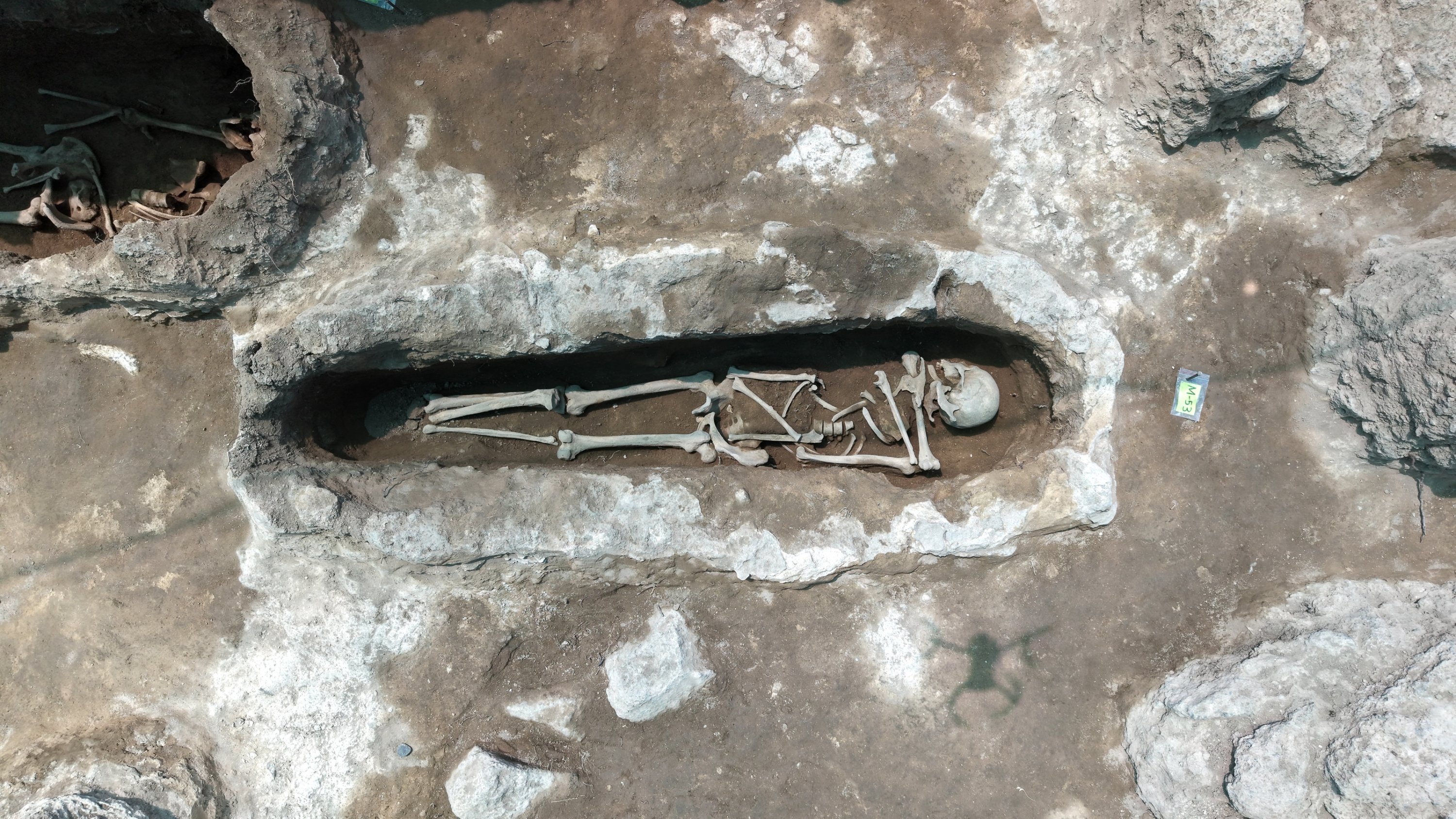
This season, excavators have identified 18 graves. The team first documents the graves’ perimeter stones and headstones before carefully removing basalt cover stones buried 80 to 110 centimeters (31 to 43 inches) below the surface. Beneath them are rock-cut burial chambers carved into the bedrock.
The skeletal remains are transported to Hacettepe University’s Laboratory of Human Behavioral Ecology and Archaeometry, where professor Ali Metin Büyükkarakaya is examining them to determine age, sex, possible causes of death and signs of disease. The remains are then sent to the Anthropology Laboratory at Muş Alparslan University’s Center for Seljuk and Manzikert Studies for ancient DNA analysis.
Excavation director Muhammed Dolmuş said radiocarbon dating of samples recovered from graves previously excavated at the site places the burials within the period of the Battle of Manzikert.
“Based on these findings, we expanded the excavation area,” Dolmuş said. “During work carried out in 2022, 2023 and 2024, we uncovered 52 graves. All of them follow Islamic burial traditions and about 40% belong to young adult males.”
Fieldwork resumed in June, and archaeologists have so far uncovered 18 additional adult burials within a 10-by-10-meter (33-by-33-foot) excavation area, he said.
Dolmuş said adult graves typically contain between four and seven basalt cover stones. Once these are removed, archaeologists expose burial chambers carved approximately 40 centimeters (16 inches) into the caliche bedrock.
“Anthropologists document every stage of the excavation before the skeletons are removed and transferred to laboratories for detailed analysis,” he said.
Project coordinator Mehmet Sait Sütcü said radiocarbon testing of skeletons recovered in previous excavation seasons dated them to the 11th and 12th centuries, consistent with the Seljuk period.
The newly excavated remains will first be cleaned and prepared at Muş Alparslan University before undergoing anthropological examination at Hacettepe University. They will then return to Muş Alparslan University’s Ancient DNA Laboratory for genetic testing.
Researchers aim to excavate approximately 100 graves during the current phase of the project.
“Once the analyses are complete, we hope to establish scientifically how this cemetery is connected to the Battle of Manzikert,” Sütcü said.
He said archaeologists switch to fine tools and small brushes once they reach the burial chambers. Each skeleton is photographed, digitally mapped and thoroughly documented before being removed for laboratory study. After the scientific analyses are completed, the remains will be reburied in their original graves.
Anthropologist Mevhibe Elvan Öztürk said the team works carefully to preserve any evidence of injuries that may have resulted from combat.
“We excavate the skeletons with great precision because any trauma related to warfare could provide valuable evidence,” Öztürk said. “In the laboratory, each bone is cleaned, arranged in anatomical order and examined. Preliminary reports document the individual’s age, sex and any pathological findings or injuries, particularly those affecting the skull or other bones that may be associated with battle.”
DAILYSABAH
هلدینگ کاسپین استانبول | خرید ملک در ترکیه | صرافی معتبر ایرانی در ترکیه | خرید و فروش طلا در ترکیه | مهاجرت به ترکیه | واردات و صادرات در ترکیه | نیازمندیهای ترکیه | اخبار ترکیه | اخبار جهانی | توریست ایران | خدمات توریستی در ایران | تورهای گردشگری ایران | هلدینگ اول | خدمات کاریابی و فریلنسری و شغل | مرجع اطلاعات ایران (همه چیز در ایران) | کیف پول و خدمات مالی و پرداخت یار | اخبار ایران | تابلو زنده قیمت ارز در ترکیه و استانبول | صرافی آنلاین ترکیه | قیمت طلا و نقره در ترکیه | سرمایه گذاری در ترکیه | جواهرات در ترکیه | نرخ لحظه ای ارزها در استانبول | قیمت دلار امروز در ترکیه | قیمت دلار استانبول امروز | قیمت لحظه ای دلار | اخبار روز ترکیه استانبول | اپلیکیشن ISTEX | اپلیکیشن قیمت لحظه ای دلار و یورو و لیر و ارزها در ترکیه
About the Author