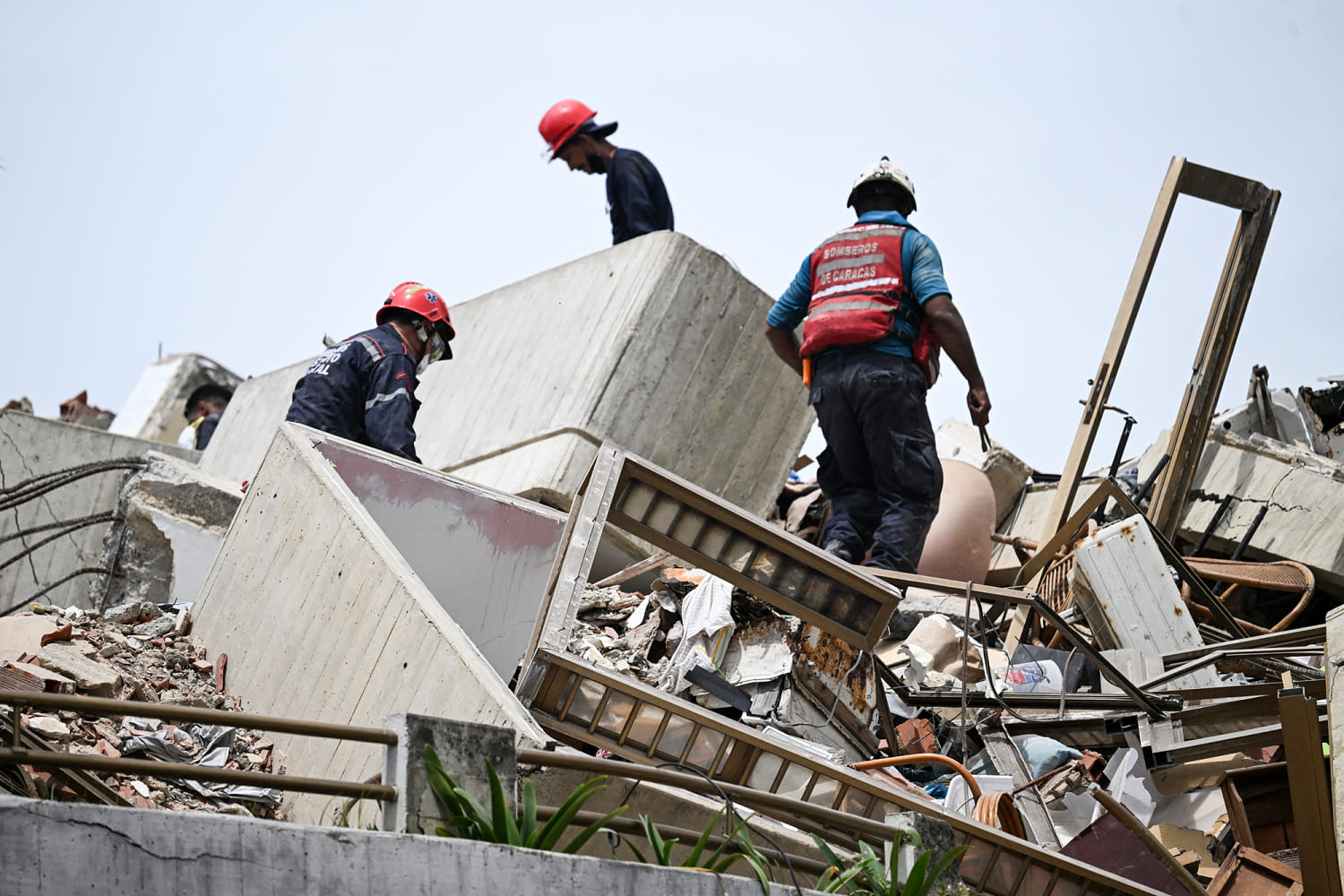
Venezuelans are assessing the vast scale of their losses 12 days after powerful twin earthquakes killed at least 3,535 people, injured many more and left behind immense destruction.
On Sunday evening, hundreds of people gathered in the cities of Caracas and Maracaibo to hold vigils in the name of those who have died and the tens of thousands who remain missing. At the Central University of Caracas, attendees lit up white candles and placed them on the ground, creating the shape of the South American nation.
Vigils like this have been taking place across the country over the past week, as a collective sense of grief begins to settle in after search-and-rescue efforts transitioned from saving trapped survivors to retrieving bodies from the rubble. Venezuelan acting President Delcy Rodríguez declared seven days of “national mourning” on Tuesday.
That grief is now crossing borders as Venezuelans abroad demand answers and push to find their missing loved ones. Two cousins, one in Spain and another in Orlando, Florida, have been using social media to request help finding their grandparents, Pedro Veloz Medina and Alejandrina Ramírez de Veloz, who lived in a seven-story building in the hard-hit town of Caraballeda.
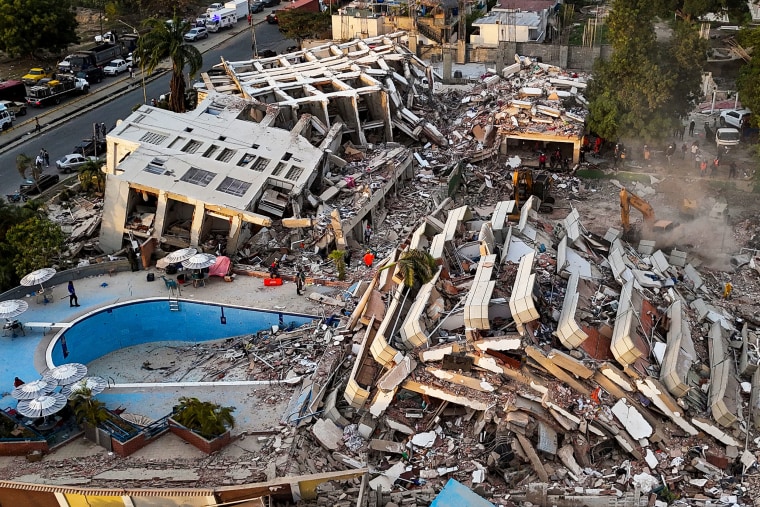
Valeria Veloz, who lives in Spain, said on Instagram that the family is looking for a crane and other heavy machinery after international rescue workers who assessed the damage of the collapsed building told them they would need to lift 10 large plates of concrete to try to find their grandparents.
Speaking to NBC News from Orlando, Pedro Veloz said that “without the crane, how the building collapsed, it will be impossible to be able to move everything as we should.”
Ryan Ash, a rescuer from the Pennsylvania-based organization Chazak Rescue, has been in Venezuela working overnight shifts to recover bodies from the wreckage.
“It’s a lot of hard work digging through the rubble in the middle of the day. It’s very hard to keep working in the hot sun. So, we started doing that at night and sleeping during the day,” Ash told Noticias Telemundo.
On Sunday, Rodríguez created a new military unit to oversee emergency and disaster management as Venezuelans embark on a long road to rebuild a nation already beset with political and economic crises. After years of strained public services, supply and food shortages and poverty, nearly 8 million people were already in need of humanitarian assistance before the earthquakes hit.
Venezuelan authorities have said more than 850 buildings were damaged or collapsed, though satellite data from NASA suggests the number of destroyed buildings is closer to 59,000, including hospitals and schools.
With more than 17,000 left homeless after the earthquakes, over the weekend the Venezuelan government began rebuilding efforts in Brisas de Maiquetia, a state-based residential complex in La Guaira.
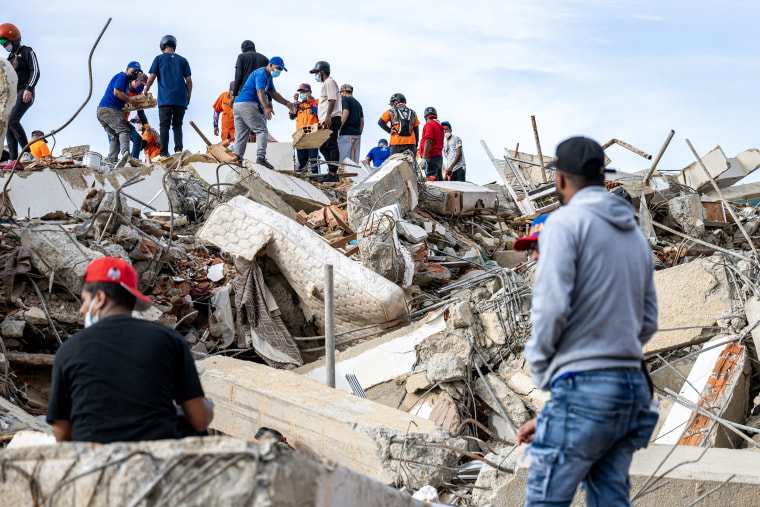
“They told us the reconstruction work will be finished in around three months or even sooner,” Ester Birrier, an evacuated resident, told The Associated Press. “They promised to hand over the apartments once reconstruction is completed, and our building was the first one to start reconstruction.”
Medical and health care professionals working under precarious circumstances are caring for the tens of thousands of people who have been injured and are hospitalized.
Clínica Alfa, the only private health clinic still operating in La Guaira, has been operating with limited personnel after it lost six of its doctors and five staff members to the earthquakes, according to owner Massimiliano Luca. They rely on donated supplies and medication to treat those in need as the country’s already fragile health care system is overwhelmed by the disaster.
“Health conditions are worsening,” Raxmara Godoy, a doctor in La Guaira who has been working as a volunteer, told Noticias Telemundo. She added that the risk of infectious diseases flaring in the disaster zone will likely continue to increase.
With a cast on her left foot and crutches, Fabiana Blanco, a 12-year-old who spent 30 hours trapped in debris, is recovering from the injuries she suffered on her legs and back.
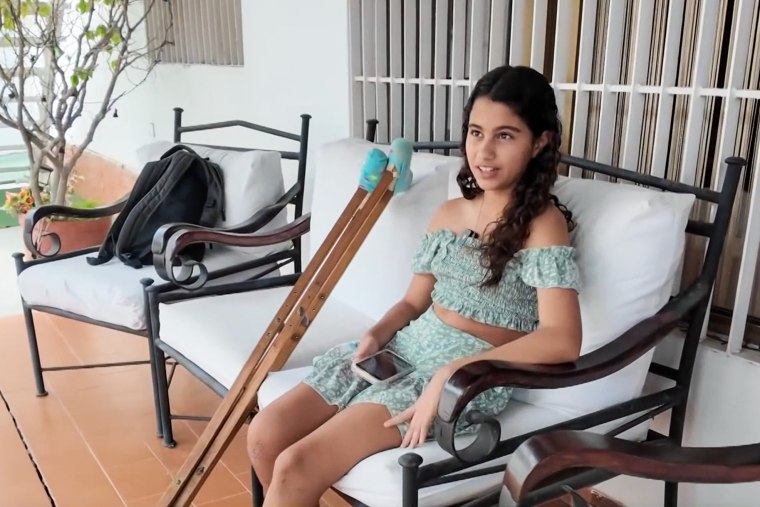
“The important thing is that I’m alive,” she told Noticias Telemundo. Pointing to her injuries, she said in Spanish, “These will remain as a memory — a battle scar — because not only did I suffer, but I also did everything possible to get out.”
While the earthquakes’ death toll remained in the low thousands Monday, the U.S. Geological Survey estimates the final death toll will most likely be between 10,000 and 100,000 based on the level of devastation.
A decisive factor determining how much higher that number could go hinges on Venezuela’s ability to care for its injured and sick survivors, said Rafael Velasquez, the emergency response team leader at the International Rescue Committee, a humanitarian aid organization assisting Venezuelans affected by the earthquakes.
“When the spotlight goes somewhere else, we can see those numbers of affected people, of impacted people, of injured people, of deaths continue to increase because there’s no health system standing,” Velasquez told NBC News.
Nicole Acevedo reported from New York City, Erika Angulo from Miami and Damiá Bonmatí from La Guaira, Venezuela.
NBC News Top Stories wp:paragraph
هلدینگ کاسپین استانبول | خرید ملک در ترکیه | صرافی معتبر ایرانی در ترکیه | خرید و فروش طلا در ترکیه | مهاجرت به ترکیه | واردات و صادرات در ترکیه | نیازمندیهای ترکیه | اخبار ترکیه | اخبار جهانی | توریست ایران | خدمات توریستی در ایران | تورهای گردشگری ایران | هلدینگ اول | خدمات کاریابی و فریلنسری و شغل | مرجع اطلاعات ایران (همه چیز در ایران) | کیف پول و خدمات مالی و پرداخت یار | اخبار ایران | تابلو زنده قیمت ارز در ترکیه و استانبول | صرافی آنلاین ترکیه | قیمت طلا و نقره در ترکیه | سرمایه گذاری در ترکیه | جواهرات در ترکیه | نرخ لحظه ای ارزها در استانبول | قیمت دلار امروز در ترکیه | قیمت دلار استانبول امروز | قیمت لحظه ای دلار | اخبار روز ترکیه استانبول | اپلیکیشن ISTEX | اپلیکیشن قیمت لحظه ای دلار و یورو و لیر و ارزها در ترکیه
About the Author