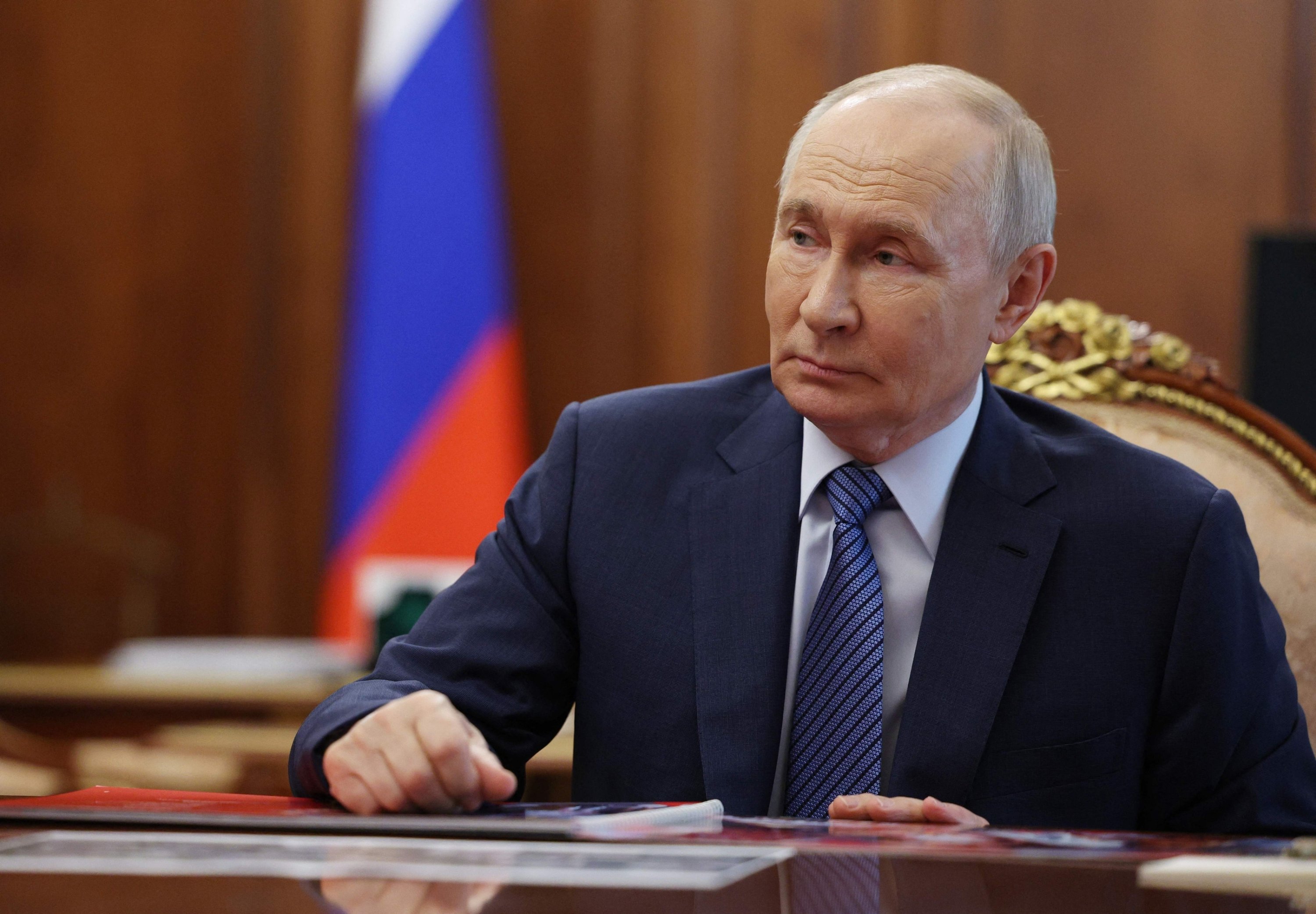
Russian President Vladimir Putin is rejecting renewed calls to negotiate an end to the war in Ukraine and is instead preparing for possible military escalation, according to sources close to the Kremlin, despite U.S. President Donald Trump’s insistence that a peace deal may be within reach.
Three people familiar with the Kremlin’s internal discussions told Reuters that recent Ukrainian drone attacks targeting Russian oil refineries, ports and fuel storage facilities have hardened Putin’s position, convincing him that Russia must intensify the war rather than seek compromise.
The conflict, now in its fifth year, has reached another critical juncture as diplomatic efforts continue alongside increasingly destructive attacks on both sides.
Two of the sources, who spoke on condition of anonymity because of the sensitivity of the matter, said Putin is more likely to expand military operations than agree to a ceasefire. One source, who regularly meets with the Russian leader, described the likelihood of escalation in the coming months as “high.”
The sources’ assessment contrasts sharply with Trump’s recent optimism.
Speaking Monday, Trump said Putin wants the war to end and claimed a resolution is “closer than people realize.” The U.S. president held separate phone calls with Putin and Ukrainian President Volodymyr Zelenskyy last week before meeting Zelenskyy during the NATO summit in Ankara on Wednesday.
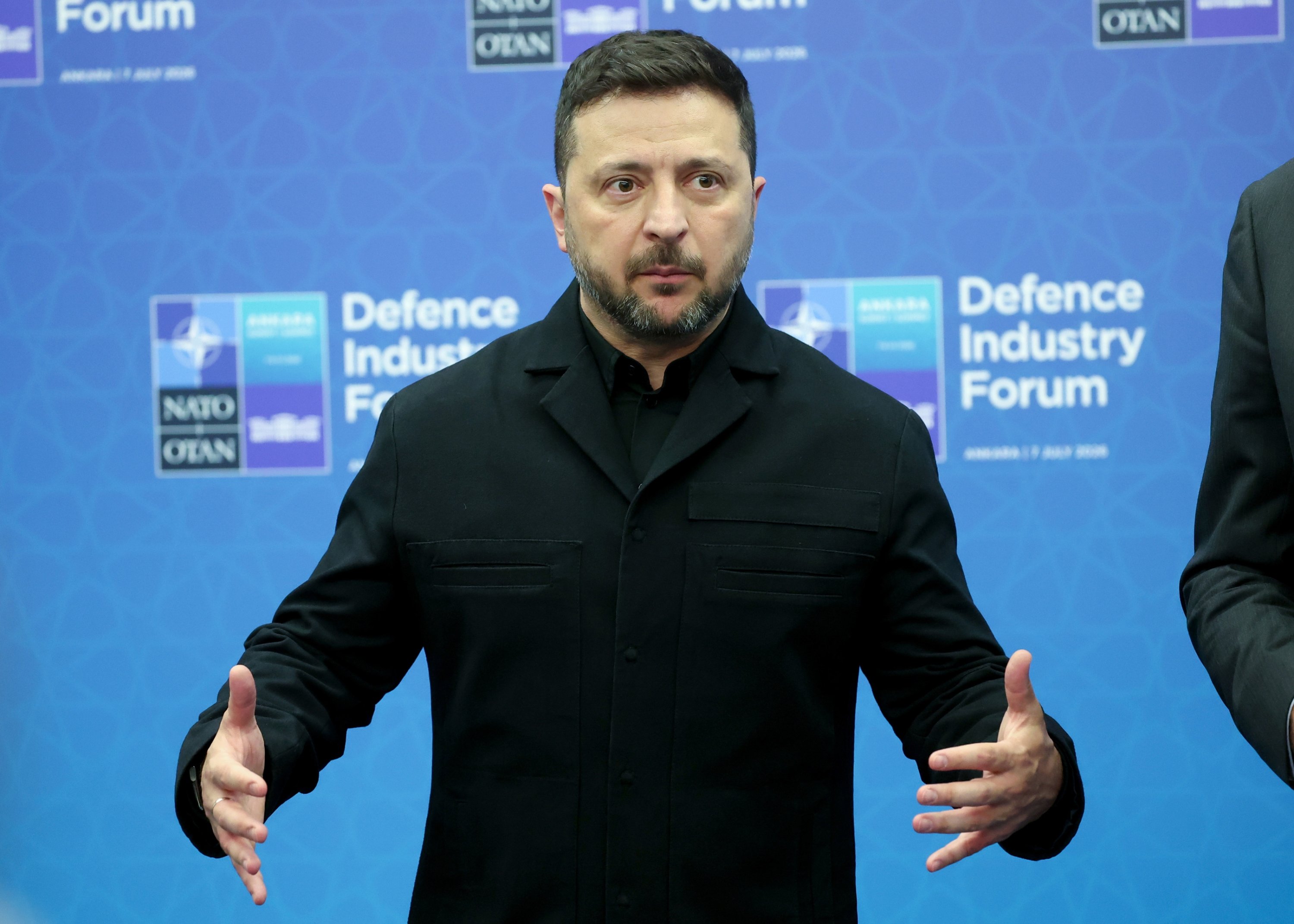
Following their meeting, Zelenskyy said the two discussed “ideas to bring peace closer.”
The White House has not commented on the Reuters report.
Putin focused on Donbas
According to one source, Putin has become increasingly determined to achieve one overriding military objective: capturing the remainder of Ukraine’s eastern Donbas region.
The source said Putin recently dismissed advisers who suggested freezing the conflict along the current front lines through a ceasefire, insisting Russia should continue fighting until it secures full control of Donbas.
A second source said the Kremlin believes Russian forces will eventually achieve that objective despite the slow pace of recent battlefield gains.
Putin publicly rejected Zelenskyy’s proposal in June for a direct meeting and ceasefire, signaling little interest in negotiations under current conditions.
Responding to Reuters, Kremlin spokesman Dmitry Peskov said Russia remains open to a peaceful settlement but insisted Moscow is capable of continuing what it calls its “special military operation.”
“Russia is ready for a peaceful resolution but has enough capability to act independently and continue the special military operation,” Peskov said.
A senior Ukrainian official, responding on behalf of Zelenskyy’s office, disputed Moscow’s claims, saying Ukrainian intelligence has consistently concluded that Putin is preparing for additional military offensives rather than peace talks.
The official added that Kyiv is monitoring preparations for possible new operations inside Ukraine and even potential future attacks beyond Ukraine’s borders.
Growing fears of wider escalation
Military analysts warn that any major escalation could significantly expand the scope of the conflict.
Some Russian military commentators have openly discussed strikes against European targets, including NATO military installations in the Baltic states and Romania.
Such attacks would carry enormous risks because NATO’s collective defense clause considers an attack on one member state an attack on the entire alliance.
Jack Watling, a military expert at the Royal United Services Institute in London, said Russia may not necessarily seek a direct war with NATO but could instead launch limited attacks designed to expose divisions within the alliance.
“The Russians would not be aiming for a war with NATO,” Watling said.
“But it could be used to divide NATO over how to respond.”
Watling also suggested heightened tensions with NATO could help Putin justify politically unpopular measures at home, including a broader military mobilization.
Western analysts believe Russia may ultimately require another large-scale draft of fighting-age men if it hopes to conquer the remainder of Donbas, a move Putin has largely avoided since ordering the full-scale invasion in 2022.
Ukrainian strikes increase pressure
Ukraine’s increasingly sophisticated long-range drone campaign has intensified pressure on Russia in recent months.
Repeated attacks on refineries, ports and fuel depots inside Russia and Russian-occupied territory have caused fuel shortages and brought the war’s economic consequences directly to Russian civilians.
Although Putin continues to enjoy relatively high approval ratings, recent polling indicates his popularity has fallen to its lowest level since the invasion began.
Western governments argue Ukraine has gained momentum and continue urging tougher economic sanctions aimed at forcing Moscow toward negotiations.
Instead, one Kremlin source said Ukraine’s recent successes have only strengthened Putin’s resolve.
According to the source, the Russian president has become angrier and more determined to respond with overwhelming force.
Russia has already launched two massive drone and missile attacks on Ukraine during the past week, including strikes on Kyiv that killed dozens of civilians.
Moscow maintains the attacks targeted military infrastructure.
Last week, Putin told senior military commanders that Ukraine’s attacks on Russian energy facilities justified expanding Russia’s territorial ambitions beyond Donbas by creating what he described as a larger “security zone” along the border.
Russian officials discuss broader campaign
Public discussion of escalation has also emerged within Russia.
Former Russian Defense Ministry official Andrei Ilnitsky argued in a June 29 newspaper column that Russia’s next phase of the war could begin with coordinated strikes on roughly 30 major Ukrainian industrial facilities, including steel plants and the strategically important port of Odesa.
He further suggested Russia could eventually target NATO bases in the Baltic states and Romania, as well as European facilities producing long-range drones and missiles for Ukraine.
Asked about the article, Peskov did not endorse the proposals directly but said Russia must strengthen its security in response to what he described as Europe’s growing militarization.
Costly war grinds on
Despite Russia’s numerical advantage, the ground campaign has slowed considerably.
Ukraine’s extensive use of drones has complicated Russian offensives along the roughly 745-mile (1,200-kilometer) front line, turning much of the fighting into a prolonged war of attrition.
Russian forces continue to push toward the eastern city of Kostiantynivka, one of Ukraine’s key defensive strongholds in the Donetsk region.
On July 3, Putin claimed Russian troops had captured the city, a claim immediately denied by Ukrainian officials.
According to a recent estimate by the Center for Strategic and International Studies, roughly 2 million soldiers have been killed, wounded or gone missing since Russia launched its full-scale invasion in 2022, including approximately 1.4 million Russian troops. Neither Moscow nor Kyiv regularly releases official casualty figures.
One Kremlin source said Putin views complete control of Donbas as a matter of principle and believes Russia must achieve a clear battlefield victory before seriously considering negotiations.
“He needs some kind of victory,” the source said.
Kremlin says Putin remains open to Trump
Despite rejecting immediate peace negotiations with Kyiv, the Kremlin insists Putin remains willing to continue direct dialogue with Trump.
Speaking Thursday, Peskov said the Russian president remains “always happy” to speak with the U.S. leader, even after an anticipated follow-up phone call failed to take place.
“Mr. Trump was apparently very busy after all the contacts in Ankara, so no one called yesterday,” Peskov told reporters.
He said both leaders continue to maintain a “truly constructive dialogue” despite their differences.
“President Putin is open to dialogue,” Peskov said.
The comments followed Trump’s meeting with Zelenskyy and other NATO leaders in Ankara, where the U.S. president said both Putin and Zelenskyy ultimately want to end the war.
Trump also said Washington would be prepared to “close the skies” over Ukraine as part of future security guarantees if necessary and indicated the United States could license Ukraine to manufacture Patriot missiles domestically.
Peskov responded by saying the United States continues supplying Ukraine with weapons and military technology, adding that Moscow has “no rose-colored glasses” about Washington’s role.
At the same time, he acknowledged that the Trump administration continues to pursue diplomatic efforts.
“Unlike other countries involved in this conflict, the U.S. remains committed and continues to try to somehow facilitate the peace process,” Peskov said.
However, he argued that increasing military assistance to Ukraine would only prolong the conflict and force Russia to expand what it calls a protective buffer zone.
“Escalatory actions will in no way contribute to the peace process,” Peskov said.
DAILYSABAH
هلدینگ کاسپین استانبول | خرید ملک در ترکیه | صرافی معتبر ایرانی در ترکیه | خرید و فروش طلا در ترکیه | مهاجرت به ترکیه | واردات و صادرات در ترکیه | نیازمندیهای ترکیه | اخبار ترکیه | اخبار جهانی | توریست ایران | خدمات توریستی در ایران | تورهای گردشگری ایران | هلدینگ اول | خدمات کاریابی و فریلنسری و شغل | مرجع اطلاعات ایران (همه چیز در ایران) | کیف پول و خدمات مالی و پرداخت یار | اخبار ایران | تابلو زنده قیمت ارز در ترکیه و استانبول | صرافی آنلاین ترکیه | قیمت طلا و نقره در ترکیه | سرمایه گذاری در ترکیه | جواهرات در ترکیه | نرخ لحظه ای ارزها در استانبول | قیمت دلار امروز در ترکیه | قیمت دلار استانبول امروز | قیمت لحظه ای دلار | اخبار روز ترکیه استانبول | اپلیکیشن ISTEX | اپلیکیشن قیمت لحظه ای دلار و یورو و لیر و ارزها در ترکیه
About the Author


