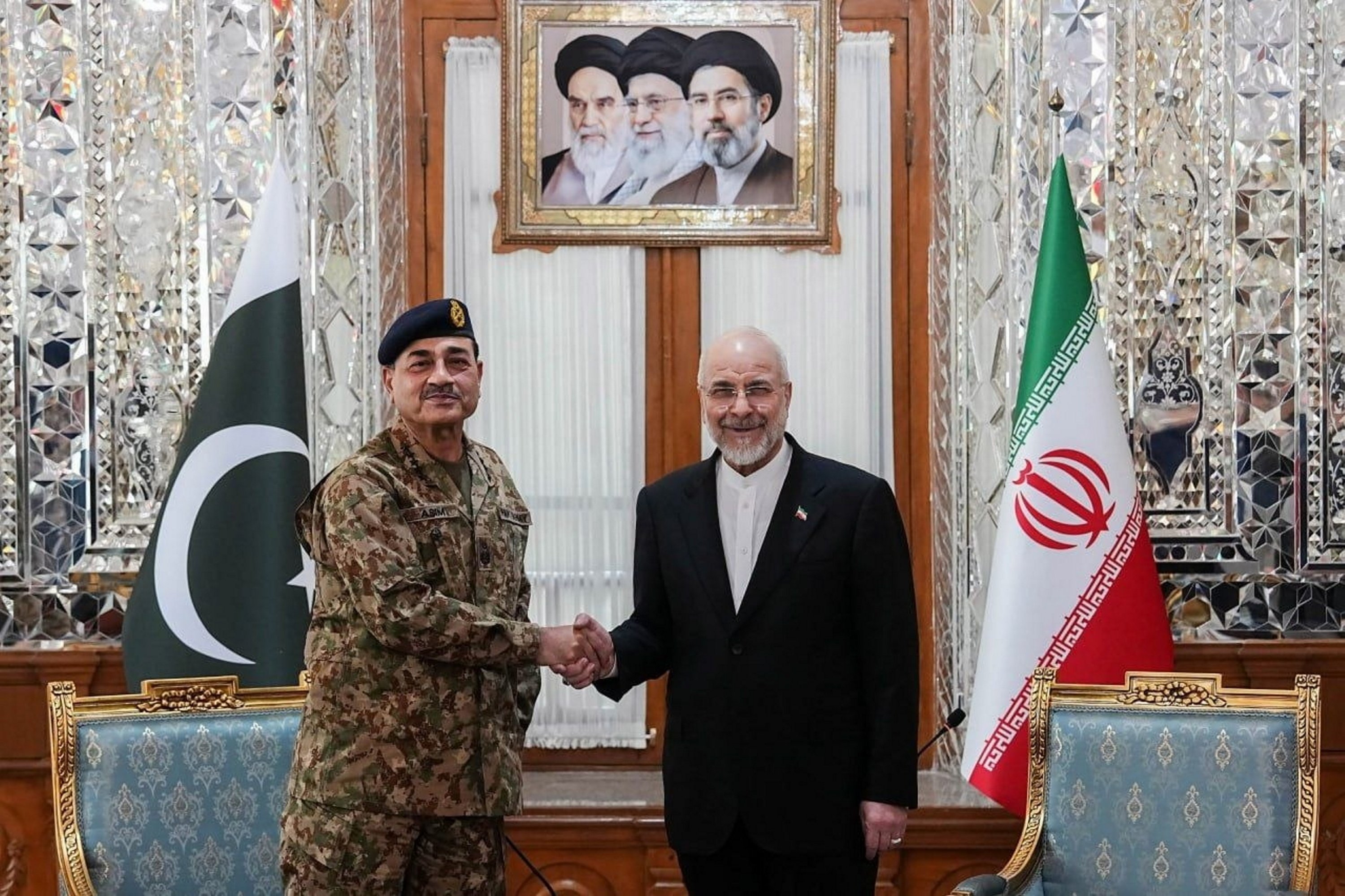
The head of Pakistan’s armed forces met Iranian officials in Tehran Thursday, including senior negotiators, as efforts intensify to arrange a new round of U.S.-Iran peace talks that could again be hosted in Islamabad.
Iranian state television showed Field Marshal Asim Munir meeting Iran’s speaker of parliament, Mohammad Bagher Ghalibaf, who led the Iranian delegation at the first U.S.-Iran meeting in Pakistan last week, which ended without a deal.
Earlier, in Washington, White House Press Secretary Karoline Leavitt had told reporters that further talks “would very likely” be in the Pakistani capital. “Those discussions are being had,” Leavitt said, and “we feel good about the prospects of a deal.”
Pakistani Foreign Ministry spokesperson Tahir Andrabi said no date had been set for the next round of talks.
“Our role as a mediator and facilitator did not stop when the Islamabad talks, this last round, concluded – it continued,” he said.
The optimism came on the back of Pakistan Prime Minister Shehbaz Sharif’s four-day diplomatic blitz, with the leader meeting Wednesday with Saudi Arabia’s Crown Prince Mohammed bin Salman.
U.S. Vice President JD Vance, who led the first round of talks, has said Iran is being offered a “grand bargain” to end the six-week war with Israel and the United States and address the decades-old dispute over Tehran’s nuclear program.
Israeli Prime Minister Benjamin Netanyahu said Israel and the United States have “identical” goals – enriched material removed from Iran, elimination of enrichment capability and reopening the Strait of Hormuz.
The strait, through which one-fifth of the world’s crude oil normally flows, has been choked by Iranian forces since the U.S.-Israeli offensive began and is now the focus of the U.S. blockade.
Optimism about an accord in the conflict sent share prices higher on Wall Street, with the major stock indices finishing at records Wednesday, while crude prices dropped.
‘Zero ships have broken through’
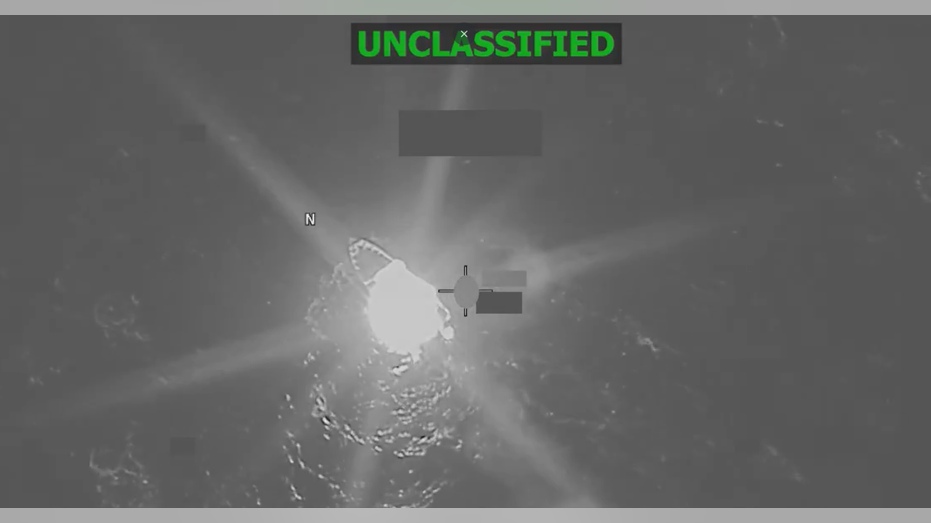
Washington has sought to turn the screws on Tehran with a blockade of its ports, with U.S. Central Command claiming to have “completely halted economic trade going into and out of Iran by sea.”
CENTCOM said it had turned back 10 vessels that tried to sail out of Iranian ports during the first 48 hours of the blockade and “zero ships have broken through.”
According to recent maritime tracking data, the picture in the Strait of Hormuz was less clear-cut, and Iran’s Tasnim news agency reported shipping had continued from southern Iran.
The head of Iran’s military central command center warned that a U.S. failure to lift the blockade would constitute “a prelude” to violating the two-week cease-fire struck on April 8.
Keeping up the pressure, the United States slapped fresh sanctions on Iran’s oil industry Wednesday, which Treasury Secretary Scott Bessent said targeted “regime elites.”
Unless Washington relents, Iran’s armed forces “will not allow any exports or imports to continue in the Persian Gulf, the Sea of Oman and the Red Sea,” Ali Abdollahi said.
The military adviser to Iran’s Supreme Leader Mojtaba Khamenei also warned that Iran would sink American ships in the strait if the United States decides to “police” the key shipping channel.
“These ships of yours will be sunk by our first missiles,” Mohsen Rezaei, a former commander-in-chief of Iran’s Revolutionary Guards who was named as a military adviser by Khamenei last month, told state TV.
No nuclear weapons
Trump has insisted that any deal with Iran must permanently bar the Islamic Republic from acquiring a nuclear weapon.
He launched the war on Feb. 28, claiming that Tehran was rushing to complete an atomic bomb, an assertion not backed by the U.N. nuclear watchdog.
Washington has reportedly sought a 20-year suspension of Iran’s uranium enrichment programme, while Tehran has proposed suspending nuclear activity for five years – an offer U.S. officials rejected.
Tehran insists its nuclear program is for civilian purposes and its Foreign Ministry said Wednesday that Iran’s right to enrich uranium was “indisputable,” although the level of enrichment was “negotiable.”
The latest signals on the U.S.-Iran talks came with Israel and Lebanon reportedly agreeing to open direct negotiations after their first high-level face-to-face meeting since 1993 took place Tuesday in Washington.
Israel’s Prime Minister Benjamin Netanyahu will speak to Lebanese President Joseph Aoun, one of his ministers said Thursday, in what would be a historic first.
The Israeli minister for innovation, science and technology, Gila Gamliel, confirmed the talks after Trump said the pair would speak Thursday.
But Aoun did not confirm the call, and, in a statement from his office, stressed the importance of a agreeing a ceasefire as a starting point for negotiations.
DAILYSABAH
هلدینگ کاسپین استانبول | خرید ملک در ترکیه | صرافی معتبر ایرانی در ترکیه | خرید و فروش طلا در ترکیه | مهاجرت به ترکیه | واردات و صادرات در ترکیه | نیازمندیهای ترکیه | اخبار ترکیه | اخبار جهانی | توریست ایران | خدمات توریستی در ایران | تورهای گردشگری ایران | هلدینگ اول | خدمات کاریابی و فریلنسری و شغل | مرجع اطلاعات ایران (همه چیز در ایران) | کیف پول و خدمات مالی و پرداخت یار | اخبار ایران | تابلو زنده قیمت ارز در ترکیه و استانبول | صرافی آنلاین ترکیه | قیمت طلا و نقره در ترکیه | سرمایه گذاری در ترکیه | جواهرات در ترکیه | نرخ لحظه ای ارزها در استانبول | قیمت دلار امروز در ترکیه | قیمت دلار استانبول امروز | قیمت لحظه ای دلار | اخبار روز ترکیه استانبول | اپلیکیشن ISTEX | اپلیکیشن قیمت لحظه ای دلار و یورو و لیر و ارزها در ترکیه
About the Author