We arrive at an apartment building in the back alleys of Cairo’s Nasr district. Despite all of life’s hardships, the Ramadan decorations hanging at the entrance herald a sense of hope for the future.
We are greeted by the father of the household, Mr. Abdurrahman. We learn that they moved to Egypt in April 2024, leaving their parents and siblings behind, and that he worked as a nurse while they were in Gaza. He answers our questions with such short, one-sentence replies that we are forced to ask him to elaborate.
“I can only tell you this much. If I say more, I’ll break down,” he said. We fall silent.
His wife, Nadin, said, “I want to speak,” and we listened to her.
“We lost our home and our car in the bombing. The hospital where my husband worked is gone, too. There was no water, no electricity, no gas. Whenever we had money, I could only buy baby formula. I went hungry, but I made sure my daughters were fed. All my cousins were martyred, every single one…”
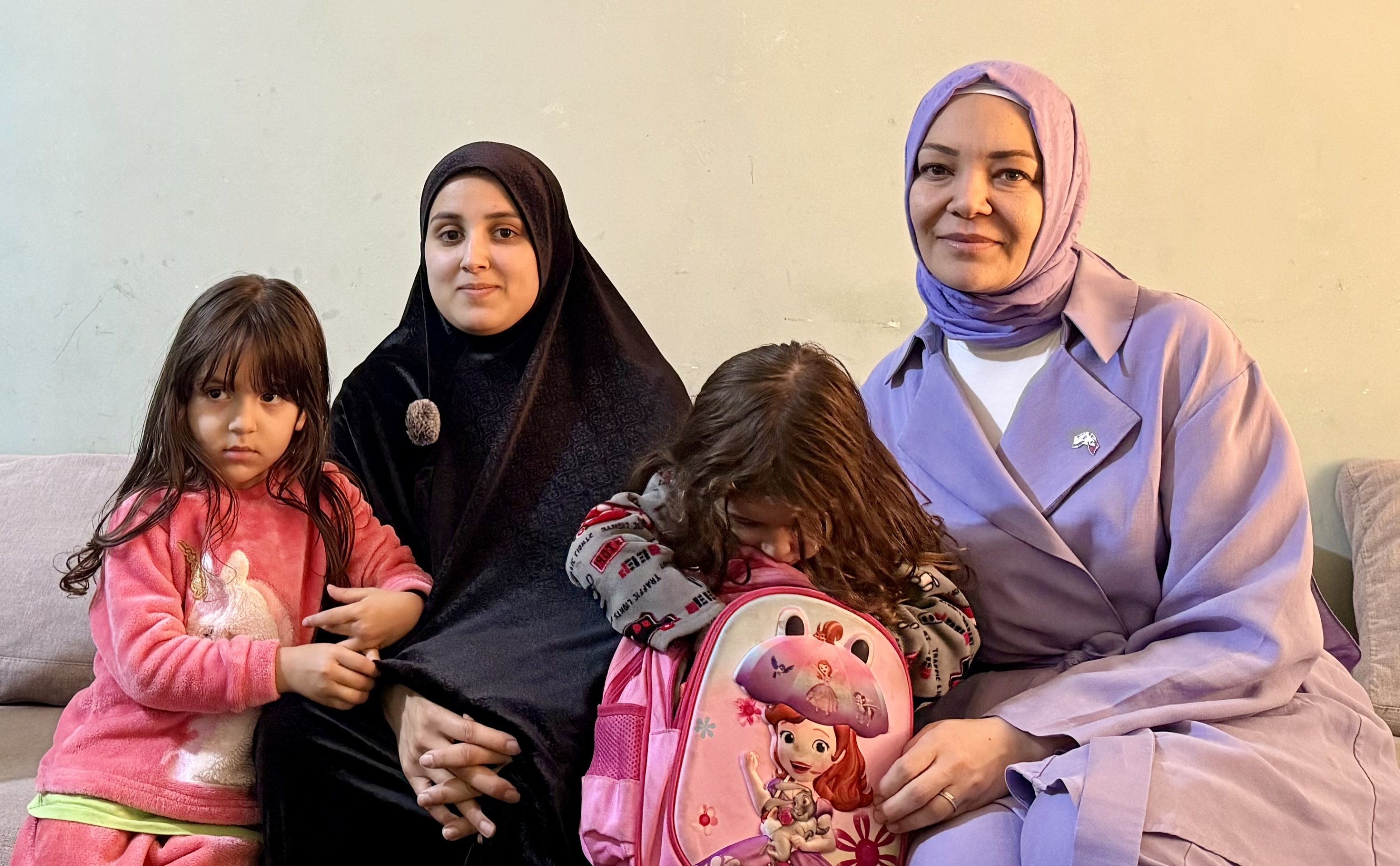
She pauses here for a moment, then continues, pointing to her twin daughters sitting by her side: “I couldn’t get pregnant for five years. The bombings started right after they were born.”
“They are the reason I came here,” she said, “Conditions may still be tough, but they’re 3 years old now, and I have to provide them with a good life,” she added.
As she sees us off, we hug, and she points to her husband, saying, “See, I spoke better than him, didn’t I?” successfully dispelling the sadness in the room in an instant.
Mother, daughter, two keys
We move to another household. Mrs. Maryam is 43 years old. She has five daughters and one son. She describes how, while they were living a decent life by Gaza’s standards, they suddenly became homeless and had to struggle to survive while sharing a house with 40 people. Her eyes drift to a distant point as she describes the fearful nights they, especially their young children, spent together, huddled under a single blanket.
“I used to think, ‘If martyrdom is our fate, let’s be together,’” she said.
Then she tells of how 27 of her neighbors were martyred. “Melek was one of them. She was my closest friend. We’d been together since childhood. My happiest memory was her birthday, when they invited me to their home. We had so much fun that day,” she said.
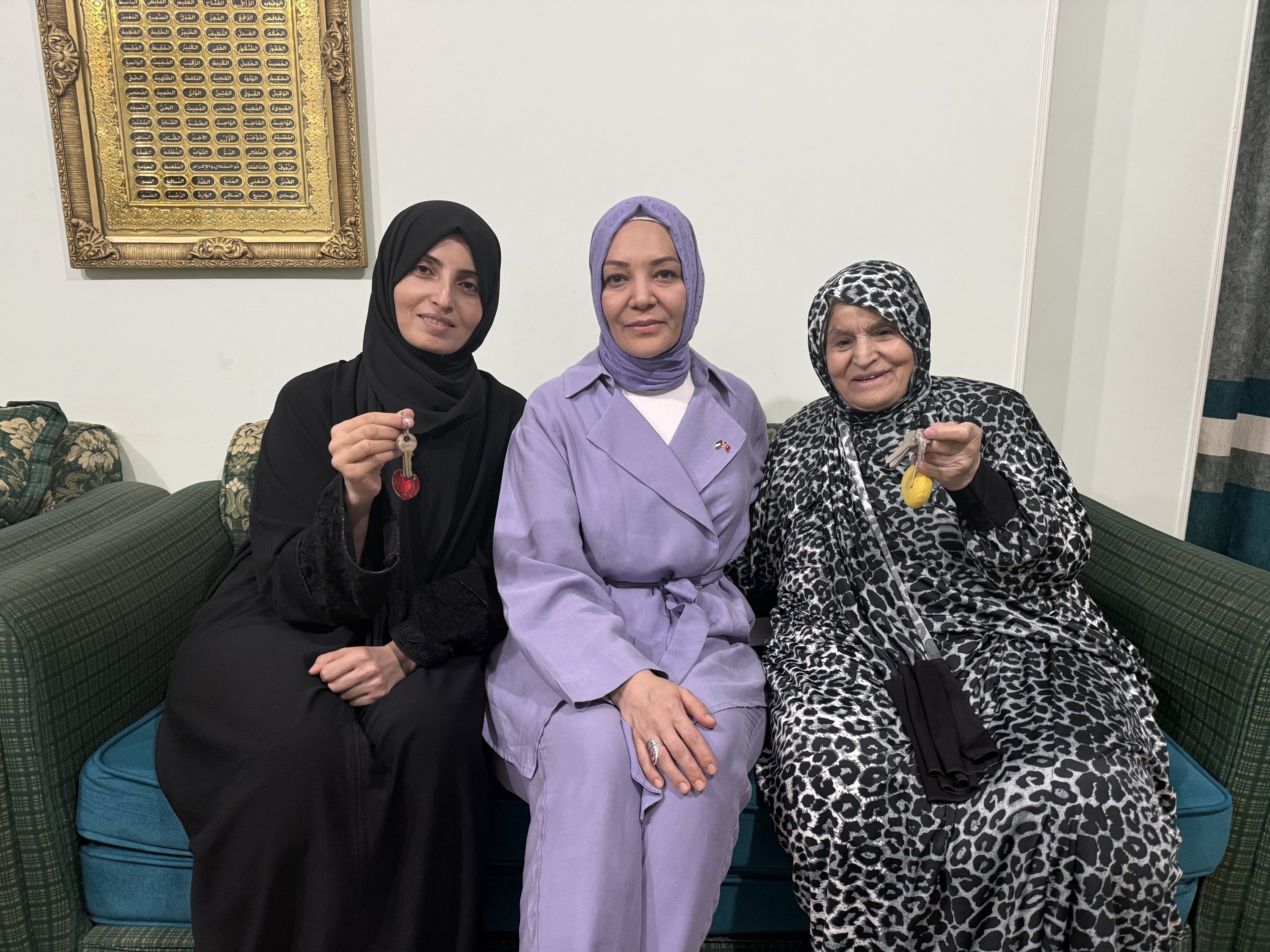
As she smiles through her pain, an elderly woman enters the room with a cane in her hand.
Her name is Zaynab, she is Maryam’s mother. She is Zaynab of Yafa. She was only 2 years old when she was forced to leave the home where she was born during the Nakba.
“At 80, they made me a refugee again,” she says. “But this time, I hid the key to my home,” she added.
Mrs. Zaynab may not have been in this world longer than Israel, but we want to see the key that will be passed down to one of her 19 grandchildren.
Maryam said, “I hid my key too.” And so, with these two keys, which are symbols of hope for a nation, we immortalize this moment.
The views and opinions expressed in this article are solely those of the author. They do not necessarily reflect the editorial stance, values or position of Daily Sabah. The newspaper provides space for diverse perspectives as part of its commitment to open and informed public discussion.
DAILYSABAH
هلدینگ کاسپین استانبول | خرید ملک در ترکیه | صرافی معتبر ایرانی در ترکیه | خرید و فروش طلا در ترکیه | مهاجرت به ترکیه | واردات و صادرات در ترکیه | نیازمندیهای ترکیه | اخبار ترکیه | اخبار جهانی | توریست ایران | خدمات توریستی در ایران | تورهای گردشگری ایران | هلدینگ اول | خدمات کاریابی و فریلنسری و شغل | مرجع اطلاعات ایران (همه چیز در ایران) | کیف پول و خدمات مالی و پرداخت یار | اخبار ایران | تابلو زنده قیمت ارز در ترکیه و استانبول | صرافی آنلاین ترکیه | قیمت طلا و نقره در ترکیه | سرمایه گذاری در ترکیه | جواهرات در ترکیه | نرخ لحظه ای ارزها در استانبول | قیمت دلار امروز در ترکیه | قیمت دلار استانبول امروز | قیمت لحظه ای دلار | اخبار روز ترکیه استانبول | اپلیکیشن ISTEX | اپلیکیشن قیمت لحظه ای دلار و یورو و لیر و ارزها در ترکیه
About the Author