Sam Bishop is 26 years old and lives in Worcester, Massachusetts. He has red hair, a quiet voice – and, legally speaking, he does not exist.
There is no document anywhere that proves Sam was born.
Sam was born at home in Keene, New Hampshire. There was no doctor or nurse. No midwife either. His parents, whom he describes as drug users and anti-government extremists, were opposed to government documentation. No birth certificate was ever filed.
Without that single piece of paper, obtaining any other official identification becomes impossible.
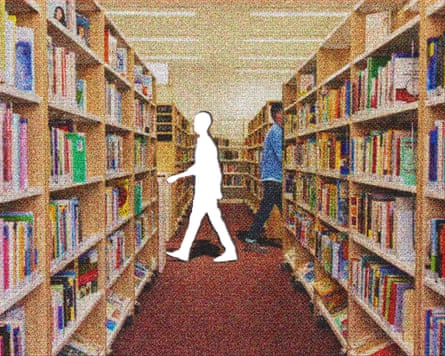
Without it, Sam cannot obtain a Social Security number, a driver’s license, a passport or even a basic photo ID. He can’t open a bank account, get a credit card, or buy health insurance. He cannot pass a background check to rent an apartment or get a job. He can’t earn a GED, enrol in college or even get a library card.
His world has shrunk accordingly. Sam can’t own a car. He can’t call an Uber. He can’t board a plane or leave the country, and most interstate buses and trains are off limits.
In a nation built on paperwork, mobility and proof, Sam is trapped.
He has spent years contacting dozens of lawyers, state and federal agencies, social workers, non-profits, and elected officials – all without success.
Sam is not alone. Hundreds, and possibly thousands, of people throughout the US are “unregistered Americans”. All are stuck in bureaucratic limbo, barred from ordinary life.
Sam’s predicament has a name: evidentiary statelessness – the condition of being a citizen without the documents to prove it.
In New Hampshire, an adult seeking a birth certificate for the first time must submit at least three documents that establish their name, birth date, place of birth and parents. Those documents can include elementary school records or medical records from childhood.
Sam has neither.
“They home schooled me. They’re anti-vaxxers. They didn’t want to take me to a doctor,” he said.
His parents gravitated toward off-grid communities that shared their worldview: that the US government is illegitimate, that official documentation should be rejected, and a constellation of conspiracy theories associated with the “sovereign citizen” movement.
The state will accept a sworn statement from a parent as partial proof, but Sam doesn’t know where they are or if they are still alive. He hasn’t heard from them since he was kicked out of the house a decade ago.
He grew up an only child. His parents were estranged from any relatives and lived an unstable nomadic life, moving frequently and living wherever they could – trailer parks, long-stay motels, squatting in abandoned homes.
Sam says his mother struggled with an untreated mental illness, while his father had an explosive temper. He remembers ending up in strangers’ homes, surrounded by adults nodding off on the couch. He was abused in ways that he struggles to speak about today.
When he was 16, a dispute with his father escalated. Sam says his father pulled out a gun, pressed it to his head and told him that if he ever saw him again, he would kill him.
Sam walked out the door into the chilly evening air, with no money and only the clothes on his back, and hitchhiked to Detroit. For a time, he was homeless. Using a computer at a local library, he found someone on Craigslist willing to rent him a spot in an illegal rooming house. There, a roommate with a gambling addiction manipulated him into handing over more and more of his hard-earned cash.
After eight months of scraping together odd jobs found online or through word of mouth, Sam had saved enough to leave. He eventually made his way back east and found a room to sublet in Worcester, about an hour outside Boston. That was seven years ago.
In the years since, Sam has tried to track his parents down. Private investigators turned up nothing. His lawyer, Hector Pineiro, joined the search, also without success.
Sam then contacted a genealogist and took a DNA test in hopes of finding extended family. Nothing surfaced.
He combed through police records in the towns where he had lived growing up. Again, nothing.
In my reporting for this story, I was also unable to locate Sam’s parents. A nationwide search of prison inmate records was another dead end.
As far as anyone can tell, they have vanished: off the grid and untraceable.
I met Sam in Boston this past July. In person, he is earnest and talkative; his thoughts tumble out so quickly he cuts himself off mid-sentence, eager to make his next point.
We got into a rental car and started the drive to Grafton, a rural town in western New Hampshire. He hoped someone there would remember his parents.
Grafton, population 1,835, is known for being the site of the failed Free State Project in the early 2000s. The project was an effort by libertarians to move en masse, outnumber the locals, and slash taxes and regulations to create a limited government utopia for freedom-loving people.
For several years, the project drew all types: libertarians of every stripe, off-grid survivalists, anti-government extremists, sex offenders, drug legalization advocates and back-to-the-earth hippies. Among them was the Bishop family, with seven-year-old Sam in tow. Maybe, he thought, there was some trace of his childhood left behind.
Grafton is easy to miss: a handful of houses, a red-roofed fire station, dense forest on all sides. When we arrived, the town was setting up for its Fourth of July celebration, held a week late to save money on fireworks.
At the local library, two older women were eager to help. We were eventually pointed toward John Babiarz, the former Grafton fire chief and a two-time Libertarian candidate for governor. A local for more than 30 years, he knows nearly everyone and was one of the architects of the Free State Project.
We sat down in the back of the fire station and leaned in to talk over the hum of an industrial fan. As Sam explained his predicament, Babiarz looked intrigued.
“Do you pay taxes?” Babiarz asked.
“No,” Sam said, explaining he can’t legally work or file IRS paperwork.
Babiarz paused, his eyes lighting up. “You’re completely off-grid! There’d be people that would kill for that privilege,” he said.
“Oh,” Sam replied, “OK.”
“My friend, you’re a man without a country. That’s beautiful,” Babiarz said earnestly. “You don’t have to pay Social Security, Medicare, whatever. There are people who strive for that kind of lifestyle.”
Sam stared back at him.
“But if you don’t want that,” Babiarz then rushed to say, “I can understand that too.”
Babiarz quizzed Sam about his parents, then said he didn’t remember them. He suggested we try a man called Rich Angell, adding with a smile that Angell “would be willing to talk”.
We found him at the recreation field, drinking beer and listening to live music. He couldn’t remember Sam’s parents, but explained his views on birth certificates, which he said turn people into “corporations owned by the government”.
Social Security numbers were described as “not necessarily the number of the beast, but certainly a number of the beast”. He had stopped using his years ago and never replaced his driver’s license after losing the original.
As for the Federal Reserve, and taxes: he would gladly abolish both.
Angell turned to Sam.
“If I was in your shoes,” he said, “my number one order of business would be to worry about how to keep that situation.”
Across the country, more children could soon grow up at risk of never having their birth registered.
One factor is the rise of “freebirth”, a movement in which women choose to give birth outside the medical system, usually at home and without a doctor or midwife present.
Most women who choose unassisted home birth are not motivated by fringe ideologies, and otherwise lead ordinary lives. But since the Covid-19 pandemic, sovereign citizen ideas have begun circulating in parts of the community, drawing in families who home school and are skeptical of mainstream medicine.
The overlap is not accidental. Sovereign citizen ideology views the US government as an illegitimate corporation – and a birth certificate as a contract transferring ownership of a baby to the state.
Nikki is a former “freebirth coach” and she is intimately familiar with those ideas. (She is identified by her first name only because she fears professional repercussions.) After training to become a certified nurse-midwife, she grew disillusioned with conventional medicine and began working with women who wanted to give birth outside the medical system.
Back then, she described herself as “super extreme, outside of the system”, presenting freebirth as the only way to welcome a baby.
Over time, however, she said she witnessed tragedies in the community, including babies dying because women “didn’t have any knowledge of things like newborn resuscitation” or avoided prenatal care.
(A year-long Guardian investigation into the Free Birth Society, a group promoting unassisted birth, has linked its ideology to numerous baby deaths around the world.)
Those experiences brought Nikki “back into reality”, she said. She still calls freebirthing a “wonderful thing” – she freebirthed both of her own children – but believes there must be a “realistic conversation about the risks”. She has since left freebirth coaching and is now training to become a licensed midwife.
Since Covid, Nikki said, declining trust in hospitals and health authorities, amplified by social media, has made freebirth “trendy”, drawing thousands of women into online communities.
She also described freebirthing as a potential catalyst for women to begin “questioning things” – “the first step of women raising their children outside of the system”.
Within some freebirth groups, the logic can veer into conspiracy territory. Some parents believe a birth certificate makes a baby property of the state, in effect “signing their child away”. A Social Security number, she said, is sometimes described as turning people into “collateral for the national debt” – reducing them to “tax cattle”.
Nikki acknowledged that reliable sources supporting those claims are hard to find. In her own research, she said, she has yet to locate official statements from the US government affirming them.
As we drove back empty-handed to Worcester that night, Sam told me about what happened after he escaped his abusive home.
In 2017, he was living on his own and decided he needed his birth certificate.
One official told him to talk to an immigration attorney. The immigration attorney said he needed a family law attorney. The family law attorney sent him to a probate attorney. The probate attorney said he needed an immigration attorney.
Around and around he went, finding no solution.
The ordeal has taken its toll. He struggles to make at least $80 a day – what he needs to pay rent and bare-bones necessities – endlessly searching for jobs that pay under the table. He has severe insomnia, sleeping only a few hours a night. A free dental clinic told him his teeth looked “twice the age they should be”, likely due to prolonged stress. His blood pressure is way too high. He’s restless and will pace around whatever room he’s in.
Friends who have known Sam for years in Worcester described him as remarkably caring, generous, hardworking. But also overwhelmed. He’s prone to panic attacks: “my whole chest, everything just gets really tense,” he said. It becomes difficult for him to breathe, and the tension grows until it’s “almost like a physical pain”.
He tries to move past it by keeping himself busy, which is why he is always working or volunteering, sometimes late into the night.
One evening, Sam showed me a small independent community center and lending library he helped a friend set up next to a car mechanic’s shop. While giving me a tour of the cramped space, Sam was on two separate virtual meetings for local advocacy organizations, alternating between each one and burning through his prepaid phone data he buys from Walmart (he can’t get a phone contract without ID). Later, a local school board campaign that he volunteers with needed his help on a paid project.
He agreed and said he would work on it later that night. It was 8pm. He still had plans to volunteer at a food distribution site for the local homeless at 10, something he does most weeks.
Watchdog groups estimate that several hundred-thousand people in the US are sovereign citizens. The movement has no central leadership. Instead, it operates through a loose network of self-appointed gurus, each selling their own mix of conspiracy theories, pseudo-legal documents and tactics – often for substantial fees.
Those tactics are now appearing in freebirth spaces.
In September, a sovereign citizen influencer who goes by the name Veda Ray appeared on the popular Free Birth Society Podcast. On her website, she teaches mothers how to “have babies out of the system” and “say no to birth certificates and SSNs”.
Her online guides cost between roughly $200 and $7,000. She promotes her products using a mix of self-empowerment language – “First step is committing yourself to your truth” – and fear, warning that “certain three-letter agencies can come take your baby”. (Veda Ray declined to be interviewed for this piece.)
Ray and others now promote a newer tactic embraced by some sovereign citizen gurus: obtaining a passport.
A prominent sovereign citizen figure, Bobby Lawrence, began encouraging his followers to apply for “non-citizen national” passports in 2021. Such passports are rare and typically only issued to residents of two US territories: American Samoa and Swains Island.
“They believe that this passport certifies them as a non-citizen of the United States, thereby removing them from their ‘corporate citizenship’,” said Christine Sarteschi, a professor at Chatham University who studies sovereign citizens.
In reality, these applicants who think they are applying for a special passport are issued a standard US passport, no different in legal status from any other citizen’s. But many sovereign citizens still believe theirs carries special legal meaning or power, “not fully appreciating or knowing that it does no such thing”, Sarteschi said.
If a parent succeeds in getting their baby a passport rather than a birth certificate, that child will have proof of their citizenship and a shot at a normal life. But advocates and academics are worried that these movements are spreading and will create more unregistered Americans.
“My concern is that the numbers [of unregistered Americans] will grow as these kind of fringe movements become more and more common and accepted,” said Betsy Fisher, a law professor at the University of Michigan who has written about unregistered Americans.
It seems likely that some parents will believe the sovereign citizen conspiracy and then either opt to not get their child a passport or be unable to afford the fees.
Samantha Sitterley, an attorney with United Stateless, an advocacy organization, told me that parents who choose to keep their children entirely out of the system create stateless people.
“They believe that they’re doing their children a favor,” she said. “But not having a legal identity is torture.”
During my reporting, I found several other unregistered Americans. Most live quiet, parallel lives alongside the rest of us, keeping their status to themselves.
There’s the Jackson brothers in Idaho – Matthew, Tim and Benjamin. All three were born at home. Their parents never registered their births because they “didn’t like the government, and they wanted to do their best to keep us protected”, Matthew said.
And there’s Abigail Colón, a mother of two who lives in Augusta, Georgia. Her parents embraced sovereign citizen beliefs when she was young, leaving her without a birth certificate or any records to prove her existence.
Each one feels trapped without the documentation they need to build a normal life.
Abigail wants a driver’s license so she can take her kids to the playground and pediatrician. Matthew wants to travel, meet new people or even get married one day, but he feels stuck living in a camper van near his dad’s place in Lowman, Idaho, a rural town with a one-room schoolhouse and a population of 44.
(After my recent reporting on Abigail’s predicament, Colorado changed its regulations which may make it possible for her to eventually get a birth certificate.)
Every unregistered American I spoke to has spent years trying to find a workaround, but their options vary by state and depend heavily on what proof they or their family can scrape together.
Larissa Mak lives with her mom, stepfather and younger siblings outside Portland, Oregon. She was born in her mother’s apartment in Florida, without a midwife or doctor. Now in her mid-20s, she loves to bake, play video games and listen to true crime podcasts. She hopes to move into her own place, get a job at a bakery and earn her GED. But without a birth certificate or ID, she has spent her entire adult life wondering whether those things will ever be possible.
Her mother’s reasons for not registering her birth are unclear. Growing up, Larissa says her mom avoided questions about her missing documents. She was home schooled and rarely saw a doctor – except once as a baby, when a hospital misspelled her name on the paperwork.
In late December, Larissa woke in the middle of the night and checked her phone. An email from the US state department said her passport application had been approved. After years without documentation, she was no longer an unregistered American.
Larissa had spent seven months working with an attorney from United Stateless, submitting to the passport agency “everything I could proving I am who I am”, she said.
She sent sworn statements from her mother and stepfather, a 2010 census record, and a letter from Florida confirming she had no birth certificate. When that wasn’t enough, she submitted her mother’s passport, a half-dozen affidavits from friends and family, a chronological photo album documenting her life and a list of every place she had lived.
Still, the agency needed more proof.
Finally, the passport agency directed her to take a DNA test. She had already proved her mother was a US citizen; now she needed to prove she was her daughter. That did the trick.
Several days later, the passport arrived in the mail.
Holding it in her hands, Larissa took what she called “the deepest breath, the realest breath” she had ever felt. She thought back on all the years she had spent wondering if she would ever get proof of her existence – and the chance at a normal life.
She started to cry. As soon as the local office opened after the holidays, she signed up to get her GED.
Not everyone is that lucky.
In late July, I spoke on the phone with a young man named Samuel Buffington, who called me from his local library. He was homeless and living on the streets of Dallas.
His parents, he said, were hyperreligious and fiercely conservative, hostile to the government and doctors. He and his older sister were born at home and kept “completely out of the system”. When he was three, his father went to prison.
Eventually, he asked his mom for help getting his birth certificate. “She would just constantly stall, didn’t want to deal with it, or was actively working against me,” Buffington said.
In 2019, when he was 20, his mother left him behind in an apartment in Texas and moved to Denver. She died in 2022. Buffington later stayed with a friend, but the arrangement fell apart and he eventually ended up in a homeless shelter.
Without the traditional documents needed to prove his birth, Buffington filed a lawsuit against the state agency that issues birth certificates – without a lawyer.
In 2022, he won. Afterwards, the court staff would not let him get a copy of the judicial order recognizing his birth because he did not have an ID to prove who he was. He eventually got his estranged older sister, who now has her own ID, to come vouch for him.
Despite his win, Buffington is still fighting to get his Social Security number so he can get a job and pay taxes. He doesn’t have a car, a home or any money. He’s trapped in a cycle where his lack of income, education, family support and SSN make it extraordinarily difficult to begin building a normal life. He said his predicament has been “the most grueling situation you can possibly imagine”.
On our way back from Grafton that evening, Sam and I spoke to Dave Riley, a local libertarian activist. He was out of town at the time but called us from the “authoritarian dystopia” of Colorado. He has extensive connections to the libertarian community in Keene, where Sam was born, but couldn’t help us find Sam’s parents.
Riley is skeptical of sovereign citizens, and said their ideas are “wishful thinking”. But when it comes to government documents, he is conflicted.
“That’s why I don’t have kids,” he told us. “I wouldn’t want to even start walking down that ethical minefield,” of deciding whether to register their birth or get them an SSN.
Sam’s story isn’t all that surprising to him. He’s known “happy middle class, upstanding” people who decided against registering their child’s birth.
“New Hampshire is a good place to be for operating that way, without papers,” Riley said. “Just doing your thing, getting paid cash or bitcoin or whatnot.”
But Sam doesn’t want to live in New Hampshire, or anywhere, without a legal identity.
“I just want to be able to have a normal life,” he said. “Just be able to drive, and just have a bank account, and just have a normal job. I really don’t feel like that’s asking for much.”
The Guardian wp:paragraph
هلدینگ کاسپین استانبول | خرید ملک در ترکیه | صرافی معتبر ایرانی در ترکیه | خرید و فروش طلا در ترکیه | مهاجرت به ترکیه | واردات و صادرات در ترکیه | نیازمندیهای ترکیه | اخبار ترکیه | اخبار جهانی | توریست ایران | خدمات توریستی در ایران | تورهای گردشگری ایران | هلدینگ اول | خدمات کاریابی و فریلنسری و شغل | مرجع اطلاعات ایران (همه چیز در ایران) | کیف پول و خدمات مالی و پرداخت یار | اخبار ایران | تابلو زنده قیمت ارز در ترکیه و استانبول | صرافی آنلاین ترکیه | قیمت طلا و نقره در ترکیه | سرمایه گذاری در ترکیه | جواهرات در ترکیه | نرخ لحظه ای ارزها در استانبول | قیمت دلار امروز در ترکیه | قیمت دلار استانبول امروز | قیمت لحظه ای دلار | اخبار روز ترکیه استانبول | اپلیکیشن ISTEX | اپلیکیشن قیمت لحظه ای دلار و یورو و لیر و ارزها در ترکیه
/wp:paragraph wp:paragraph /wp:paragraph
About the Author