
Türkiye’s policy agenda is increasingly being shaped by a growing concern over how the digital world is influencing children, prompting a coordinated push toward tighter regulation of online platforms and content.
Recent developments, particularly following recent school attacks in Kahramanmaraş, southern Türkiye, and Şanlıurfa, southeastern Türkiye, have accelerated work on a new social media regulation package, intensifying political momentum around digital child safety.
Speaking following a Cabinet meeting in Ankara on Monday, Erdoğan stated that children are now spending significantly more time in digital environments than with their families, warning that this imbalance is reshaping social and developmental patterns at an early age. “Today, the time our children spend with their parents is less than the time they spend in the digital world,” he stated.
He also raised concerns over the impact of repeated exposure to violent content across digital platforms and traditional media, arguing that such exposure can increase the risk of behavioral imitation among young audiences. “The way violent incidents are presented and repeatedly shown in media can increase imitation risks, especially among children,” Erdoğan said.
Beyond content-related risks, Erdoğan outlined plans to strengthen Türkiye’s cyber governance capacity, including expanded monitoring mechanisms and more coordinated institutional response structures. He said the government aims to reinforce cyber units and improve early-warning systems designed to detect and address online risks before they escalate.
On Tuesday, Nationalist Movement Party (MHP) Chair Devlet Bahçeli warned about the growing influence of digital platforms on children, describing the situation as a “digital siege” on the country’s future.
Speaking at his parliamentary group meeting, he said social media platforms, messaging applications, and online games are exposing children to harmful content, including aggressive language, behavioral risks and psychological pressure.
He stressed that online environments are now directly shaping childhood development and should be treated as a national policy priority. “Our future is under a digital siege,” he said, emphasizing the urgency of addressing the issue.
Bahçeli also argued that education and school safety can no longer be separated from digital risks, calling for a broader and more comprehensive strategy to protect children from uncontrolled online exposure.
Online safety agenda
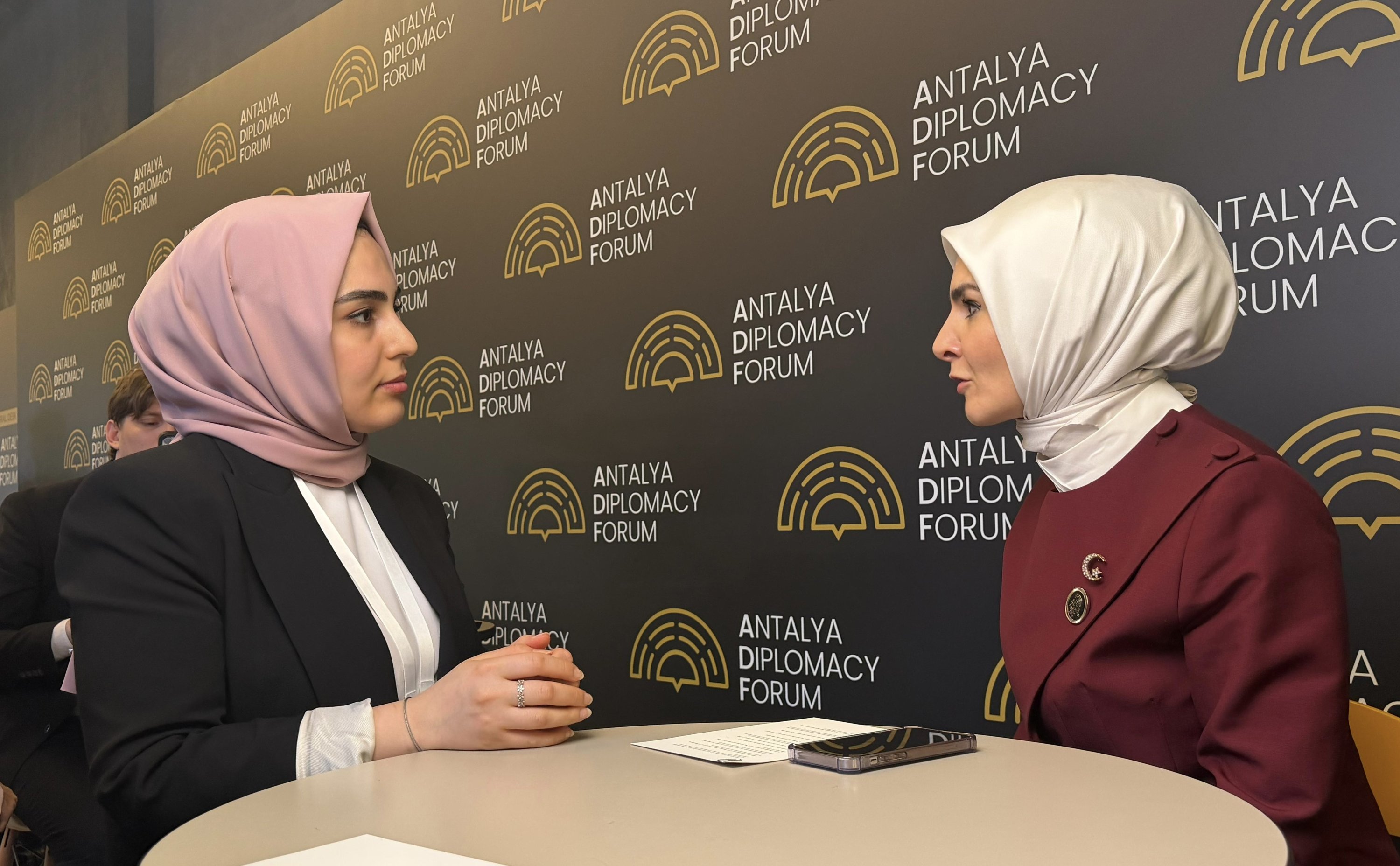
Speaking to Daily Sabah during the Antalya Diplomacy Forum on Sunday, Family and Social Services Minister Mahinur Özdemir Göktaş said Türkiye is advancing what she described as a “family diplomacy” framework through international engagement.
“We are acting on the diplomacy of family,” she said, noting that the approach places families at the center of Türkiye’s social policy and international cooperation efforts.
She pointed to global regulatory shifts, referencing Australia’s decision to restrict social media use for those under 16. Göktaş said there is increasing global alignment on the issue. “Globally, we have a mindset about it. We are thinking about this, how to deal with this,” she said.
Emphasizing that the government is not opposed to technology, she stressed the need for safeguards for children. “Technology is evolving. Children are born in a technological age. We are not against technology, but we want to protect children from the risk of some digital tools,” she said.
She confirmed that a legislative proposal is currently under discussion in Parliament to restrict social media use for children under 15. Göktaş noted that the framework was developed after reviewing international examples while tailoring it to national needs. “We analyzed the global model, and now we developed our own model,” she said, adding that she expects it to pass “in the next few days.”
Reiterating the policy’s objective, she said: “Children are our future. And we need to protect them from all kinds of risks.”
She warned about the broader impact of digital exposure, including addiction and health concerns. “With the development of technology, children are facing some other risks, like social media addiction, not only for children, of course,” she said, adding that, “Sometimes adults are also confronting issues with social media.”
She stressed urgency in addressing the issue. “If we do not do something today, we may be too late tomorrow,” she said.
Concluding her remarks, she emphasized that steps have already been taken. “We took action, and we wanted to resolve this issue and to take action in our country and to protect our children,” she said.
Child protection law
The planned legislation, currently under parliamentary review, seeks to establish a regulated digital framework for minors in Türkiye, with a core focus on limiting social media access for users under the age of 15 through enforceable age-based restrictions.
Officials say the proposal is aimed at strengthening child protection in the digital space, particularly against misinformation, harmful content, and online exploitation. It is also being positioned within a wider policy approach that prioritizes family structures and children’s psychological well-being in an increasingly digital environment.
A key feature of the draft is mandatory age verification for social media platforms. Companies would be required to introduce reliable identity and age-check systems, potentially linked to official digital identity infrastructure, to prevent underage account creation and ensure ongoing compliance.
The framework also includes stronger data-sharing obligations. Platforms would be expected to cooperate with relevant authorities by helping identify underage users and flagging suspicious or non-compliant accounts more effectively.
Alongside legal requirements, authorities are planning technical safeguards. These include filtering systems designed to limit exposure to harmful content before it spreads widely, as well as measures aimed at reducing circumvention through tools such as VPNs.
When passed, the legislation would mark a significant tightening of Türkiye’s digital rules for children, in line with a broader global shift toward stricter platform responsibility and age-based access controls.
In Türkiye, reports show that children’s attention spans have declined by around 30% over the past decade, falling to an average of just eight seconds, with the trend being linked to increased digital exposure and fast-paced online content.
Online games can be just as influential on children’s mentality as social media, particularly in a negative context. Many platforms now function not only as entertainment spaces but also as communication hubs, where children interact with other players in real time. This social layer can expose them to group dynamics that are not always safe or appropriately moderated, raising additional concerns around online safety and behavioral influence.
A pilot study published in Addicta: The Turkish Journal on Addictions, an academic journal of the Turkish Green Crescent (Yeşilay), examines children’s video gaming behavior and its impact on parents in Türkiye.
Conducted with families in Istanbul, the study finds that children spend an average of 1.58 to 2.36 hours per day playing video games, indicating regular daily engagement across primary and secondary school age groups.
Conducted among parents in Istanbul, Türkiye, the research shows that children spend an average of 1.58 to 2.36 hours per day engaged in video gaming, indicating a stable pattern of daily usage across both primary and secondary school age groups.
Despite these moderate exposure levels, between 20% and 37.5% of parents still report concerns, viewing their child’s gaming behavior as potentially problematic, underscoring a growing perception gap between usage time and parental concern.
DAILYSABAH
هلدینگ کاسپین استانبول | خرید ملک در ترکیه | صرافی معتبر ایرانی در ترکیه | خرید و فروش طلا در ترکیه | مهاجرت به ترکیه | واردات و صادرات در ترکیه | نیازمندیهای ترکیه | اخبار ترکیه | اخبار جهانی | توریست ایران | خدمات توریستی در ایران | تورهای گردشگری ایران | هلدینگ اول | خدمات کاریابی و فریلنسری و شغل | مرجع اطلاعات ایران (همه چیز در ایران) | کیف پول و خدمات مالی و پرداخت یار | اخبار ایران | تابلو زنده قیمت ارز در ترکیه و استانبول | صرافی آنلاین ترکیه | قیمت طلا و نقره در ترکیه | سرمایه گذاری در ترکیه | جواهرات در ترکیه | نرخ لحظه ای ارزها در استانبول | قیمت دلار امروز در ترکیه | قیمت دلار استانبول امروز | قیمت لحظه ای دلار | اخبار روز ترکیه استانبول | اپلیکیشن ISTEX | اپلیکیشن قیمت لحظه ای دلار و یورو و لیر و ارزها در ترکیه
About the Author