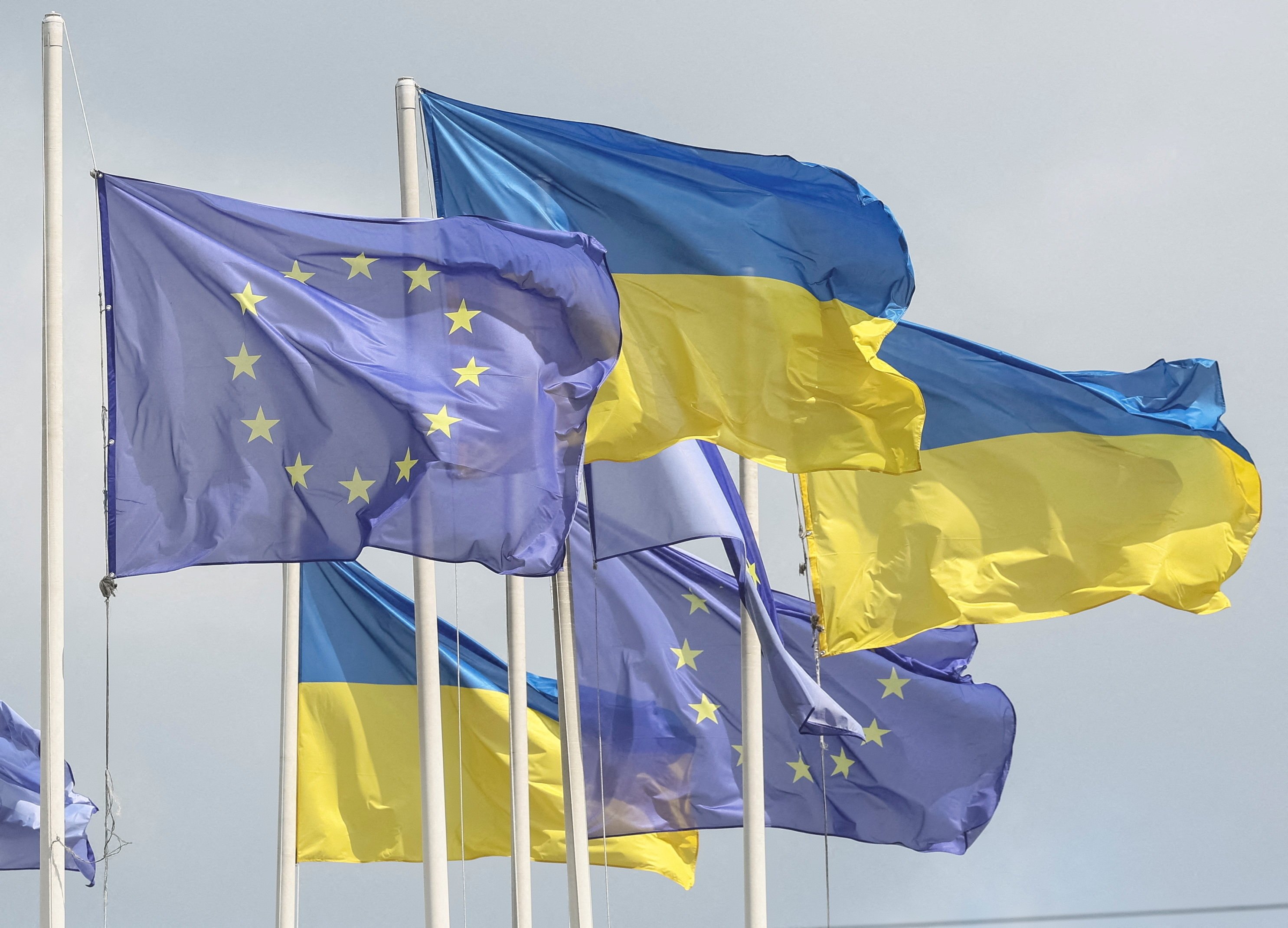
EU member states agreed Wednesday to release a €90 billion ($106 billion) financial package for Ukraine and adopt fresh sanctions on Russia after Hungary dropped its months-long opposition.
The funding is intended to cover Ukraine’s most urgent economic and military needs and enable the country to continue its defensive struggle against Russia.
In addition, EU ambassadors also agreed to the bloc’s 20th package of sanctions on Russia, which aims to put further economic pressure on Moscow.
“The unblocking is the right signal under the current circumstances,” Ukrainian President Volodymyr Zelenskyy wrote on X.
“Russia must end its war. And the incentives for that can arise only when both support for Ukraine and pressure on Russia are sufficient,” he said.
“It is important that the European support package becomes operational swiftly,” he said.
The new loan for Ukraine had been caught up in a dispute between Kiev and Budapest over halted Russian oil deliveries to Hungary and Slovakia via the Druzhba pipeline that runs through Ukraine.
On Tuesday, Zelenskyy said that the pipeline had been repaired and can resume operations.
Wednesday’s decision is to be formalized through approvals in writing from each of the bloc’s 27 capitals, which is scheduled to be completed on Thursday, the Greek Cypriot EU Presidency said.
Should no oil arrive in the European Union by then, Budapest or Bratislava could theoretically halt the approval process.
In a promising sign, Hungarian sources said the Druzhba pipeline resumed operations on Wednesday.
“According to the information available to us, oil flow through the Druzhba pipeline resumed today at 11:35 am [0935 GMT] from Belarus towards Ukraine,” the Hungarian Minister for EU Affairs, János Bóka, wrote on his Facebook page.
Russian crude oil is expected to arrive in Hungary either later on Wednesday or by Thursday morning at the latest, Bóka said. Another branch of the Druzhba pipeline also transports oil to Slovakia.
Outgoing Hungarian Prime Minister Viktor Orbán had accused Ukraine of blocking the resumption of Russian oil supplies via the Druzhba pipeline for political reasons ahead of Hungary’s parliamentary elections on April 12, which he lost decisively.
Kiev rejected the allegation, saying the pipeline required repairs following Russian airstrikes in January.
The pipeline runs from Russia through Belarus and Ukraine to Hungary and Slovakia.
The loan will be financed through jointly issued EU bonds on capital markets and backed by available headroom in the bloc’s long-term budget.
The European Commission hopes to disburse the first tranche of €45 billion by the end of June, with a further €45 billion to follow next year.
Ukraine will only be required to repay the loan if Russia makes compensation payments for the damage caused once the war has ended.
An agreement also provides for Russian assets frozen in the EU to be used for repayment should Moscow fail to pay compensation for war damage.
From the €90 billion to be made available to Ukraine, one-third is earmarked for budgetary support while two-thirds, or €60 billion, is intended for defence-related expenditure.
The military equipment procured with the funds is to come primarily from Ukraine or the EU.
Ukraine is only to use the money to purchase military equipment in countries outside Europe if the required equipment is either not available at all or not available in a timely manner in either Ukraine or the European market.
This allows funds to be used for systems deemed irreplaceable, such as Patriot air defence system from the United States.
Under the new sanctions, EU companies are to be prohibited from repairing Russian refineries damaged by Ukrainian attacks. Additional measures target Russia’s liquefied natural gas (LNG) exports.
Sanctions are also to be imposed on companies that support the Russian defence industry.
The proposals include further trade restrictions aimed at cutting Russia’s revenues by up to €570 million per year, including EU import bans on metals, chemicals and critical raw materials.
However, no final agreement was reached on a comprehensive ban on maritime services linked to the transport of Russian crude oil, largely due to concerns from countries such as Greece over the competitiveness of their shipping sectors.
Existing restrictions apply only to vessels and companies that breach the Western price cap on Russian oil, covering services such as insurance as well as technical support including maintenance and repair.
German Foreign Minister Johann Wadephul welcomed the end of Hungary’s blockade of the aid package.
“Hungary is back in the European family and we can send a clear signal of support to Ukraine,” he said in Berlin before departing for Ireland.
Pressure on Russia can now be increased with the 20th sanctions package, he added. “If Russia weighs up its options and realizes the costs this war is inflicting on the country itself, then it is a wise decision to show willingness to negotiate now.”
DAILYSABAH
هلدینگ کاسپین استانبول | خرید ملک در ترکیه | صرافی معتبر ایرانی در ترکیه | خرید و فروش طلا در ترکیه | مهاجرت به ترکیه | واردات و صادرات در ترکیه | نیازمندیهای ترکیه | اخبار ترکیه | اخبار جهانی | توریست ایران | خدمات توریستی در ایران | تورهای گردشگری ایران | هلدینگ اول | خدمات کاریابی و فریلنسری و شغل | مرجع اطلاعات ایران (همه چیز در ایران) | کیف پول و خدمات مالی و پرداخت یار | اخبار ایران | تابلو زنده قیمت ارز در ترکیه و استانبول | صرافی آنلاین ترکیه | قیمت طلا و نقره در ترکیه | سرمایه گذاری در ترکیه | جواهرات در ترکیه | نرخ لحظه ای ارزها در استانبول | قیمت دلار امروز در ترکیه | قیمت دلار استانبول امروز | قیمت لحظه ای دلار | اخبار روز ترکیه استانبول | اپلیکیشن ISTEX | اپلیکیشن قیمت لحظه ای دلار و یورو و لیر و ارزها در ترکیه
About the Author