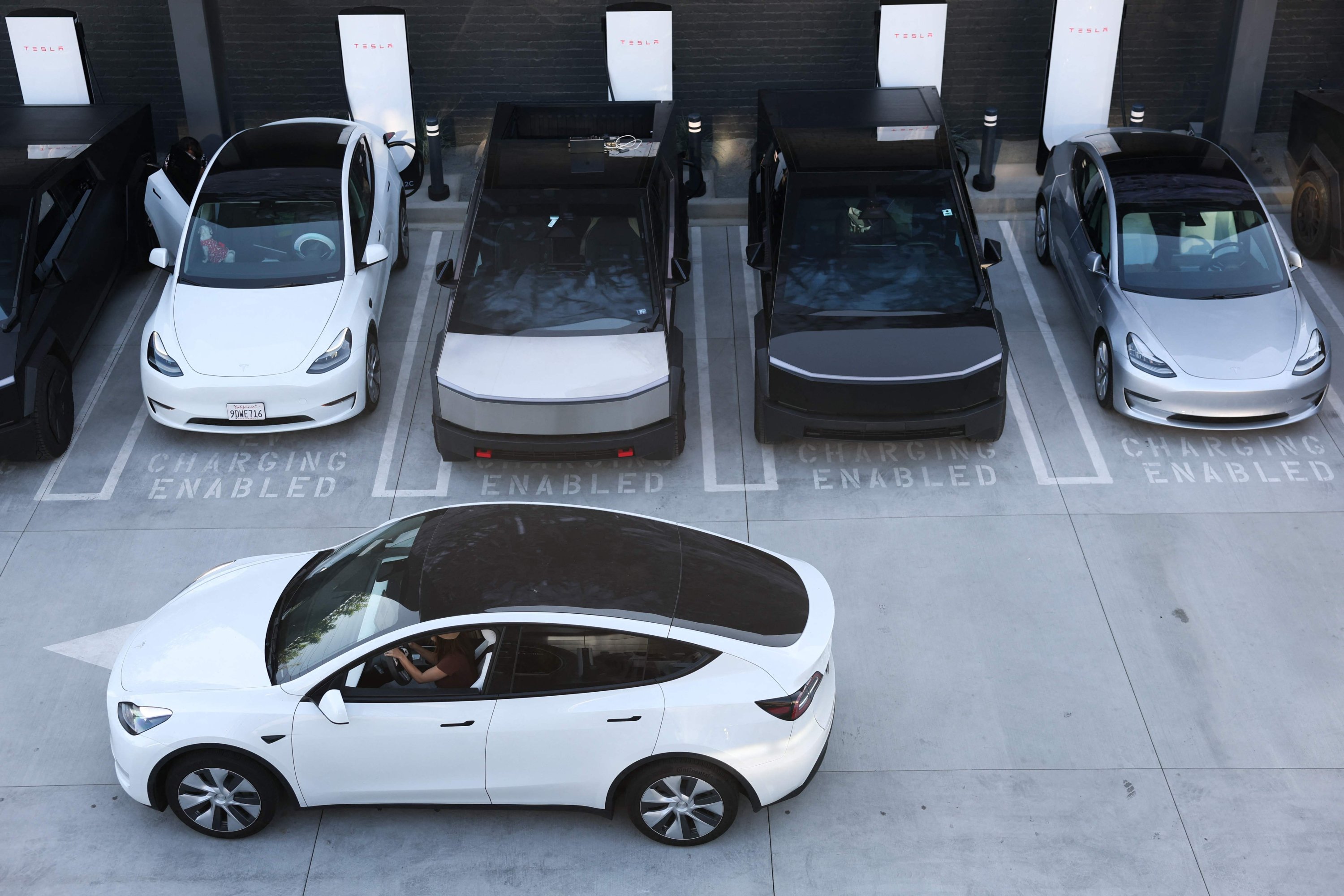
Tesla sharply increased its spending target to over $25 billion for the year, as CEO Elon Musk ramps up investments in artificial intelligence, robotics, and chip technology, decisions he described as “well justified” in pursuit of strong long-term revenue growth.
The EV maker’s investors took a more skeptical view, pushing its stock down 2.4% after these remarks on a post-earnings call with analysts on Wednesday.
The shares had risen as much as 4% after the bell as Tesla reported positive free cash flow in the first quarter.
“We are going to be substantially increasing our investment in the future,” Musk said.
“You should expect to see a very significant increase in capital expenditures that are, I think, well justified for a substantially increased future revenue stream.”
“Tesla is not alone in this,” he added, noting big capex plans at top tech companies.
Tesla is in the middle of one of the most expensive bets in its history. Musk pivoted the electric vehicle maker’s focus to building artificial-intelligence-powered self-driving cabs and humanoid robots, and much of Tesla’s $1.45 trillion market cap rests on that vision.
The company in January had forecast more than $20 billion in capital expenses for 2026. Last year, it spent $9 billion.
“We are in a very big capital-investment phase, which is going to start now and would last a couple of years,” Tesla CFO Vaibhav Taneja said, adding that the company will record negative free cash flow for the rest of 2026.
Tesla records unexpected cash surplus
In the first quarter, Tesla recorded positive free cash flow of $1.44 billion, compared with estimates for a cash burn of $1.43 billion, according to data compiled by LSEG.
First-quarter profit topped Wall Street targets, in a sign that the electric vehicle maker was holding the line on costs in a difficult global environment. Tesla’s capital expenditures in the quarter were about 40% below what analysts, on average, were expecting.
The Austin, Texas-based automaker reported revenue of $22.39 billion for the three months ended March 31, compared with analysts’ average estimate of $22.6 billion, according to data compiled by LSEG.
Robotaxi and Cybercab
Investors have increasingly turned their attention to Musk’s push into self-driving technology and robotics, seeking clearer evidence that the autonomy narrative is shifting from promise to commercial reality.
Tesla said it was gearing up to start volume production of its Cybercab, a fully autonomous vehicle without a steering wheel or pedals, this year. The company had said in January that the production ramp would start in the first half.
Musk said on Wednesday that initial production of Cybercab would be slow, but he expected that to gather pace toward the end of this year.
Tesla started rolling out its Model Y robotaxis in Dallas and Houston, it said on Saturday, marking further expansion of its nascent service in the U.S. since its Austin launch last year.
Preparations are underway to expand the service to five other cities in Arizona, Florida and Nevada, and Musk said on Wednesday he expects the service in a dozen or so states by the end of this year.
That expansion was to take place in the first half of the year, according to plans laid out in January, though the company has previously missed similar timelines.
Dutch vehicle authority RDW has notified the European Commission of its plan to seek European Union-wide approval for the Full Self-Driving software system, the regulator said earlier this month.
Vehicle sales rise amid pressure
Tesla delivered fewer vehicles than Wall Street expected in the first quarter, but deliveries were up 6.3% from a year earlier, when protests against Musk’s far-right politics had weighed on demand.
Analysts have cut their estimates for annual deliveries, with some expecting a drop this year.
“We saw continued growth in demand for our vehicles in markets in APAC and South America, while also seeing a rebound of demand in both EMEA and North America,” Tesla said in a statement.
Tesla’s core automotive business has come under pressure as competitors introduce newer models, often at lower price points. The expiration of a U.S. electric-vehicle tax incentive has added to the strain.
Tesla is developing an all-new, smaller, cheaper electric SUV, with plans to start production in China and potentially expand production to the U.S. and Europe, Reuters has exclusively reported.
The project remains in the early stages of development and is not expected to reach production in the near term.
Tesla’s energy generation and storage unit has emerged as a key bright spot, buoyed by sustained demand for grid-scale batteries that support renewable energy and help stabilize electricity networks.
DAILYSABAH
هلدینگ کاسپین استانبول | خرید ملک در ترکیه | صرافی معتبر ایرانی در ترکیه | خرید و فروش طلا در ترکیه | مهاجرت به ترکیه | واردات و صادرات در ترکیه | نیازمندیهای ترکیه | اخبار ترکیه | اخبار جهانی | توریست ایران | خدمات توریستی در ایران | تورهای گردشگری ایران | هلدینگ اول | خدمات کاریابی و فریلنسری و شغل | مرجع اطلاعات ایران (همه چیز در ایران) | کیف پول و خدمات مالی و پرداخت یار | اخبار ایران | تابلو زنده قیمت ارز در ترکیه و استانبول | صرافی آنلاین ترکیه | قیمت طلا و نقره در ترکیه | سرمایه گذاری در ترکیه | جواهرات در ترکیه | نرخ لحظه ای ارزها در استانبول | قیمت دلار امروز در ترکیه | قیمت دلار استانبول امروز | قیمت لحظه ای دلار | اخبار روز ترکیه استانبول | اپلیکیشن ISTEX | اپلیکیشن قیمت لحظه ای دلار و یورو و لیر و ارزها در ترکیه
About the Author