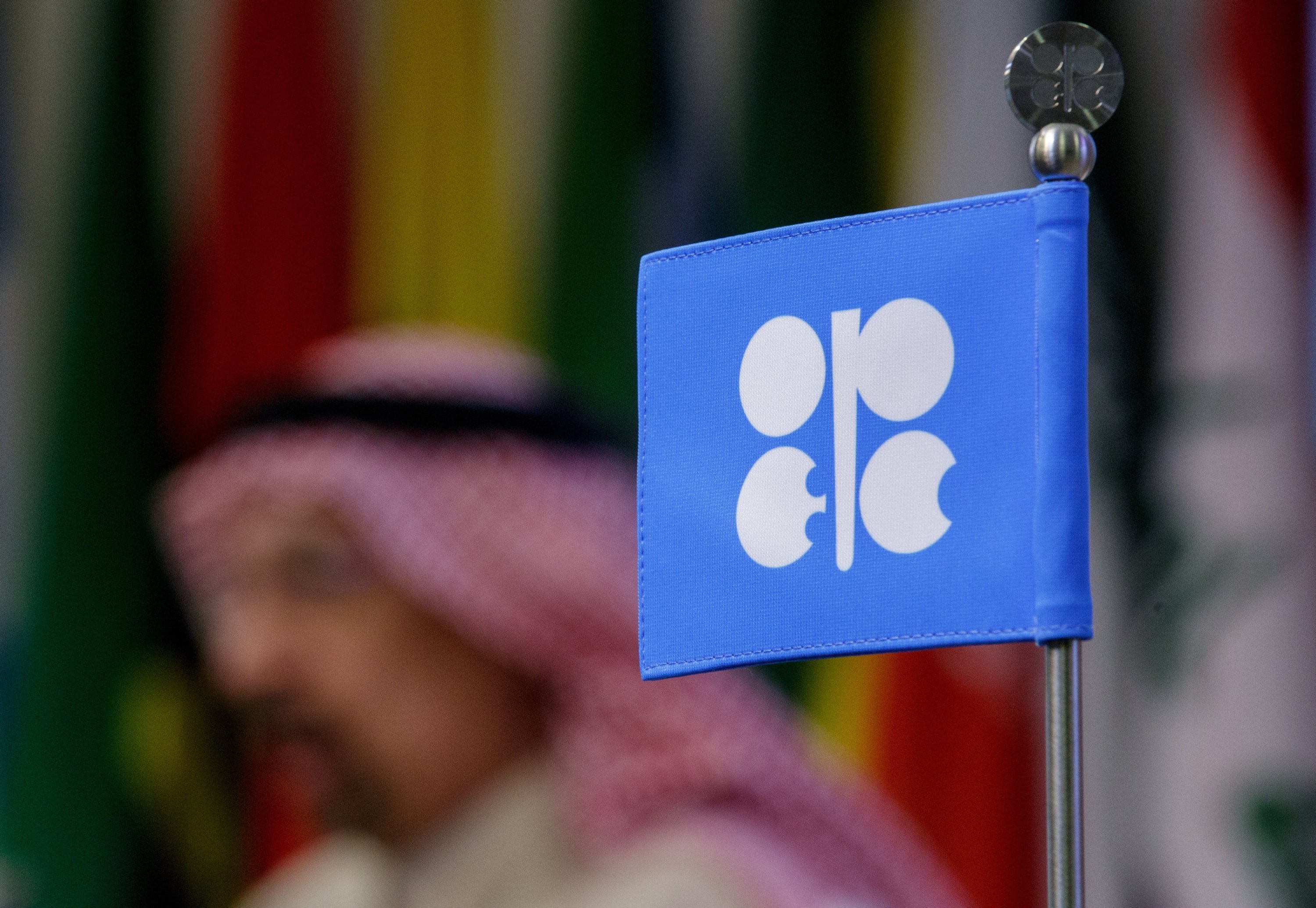
The decision announced by Abu Dhabi on April 28, that the United Arab Emirates (UAE) will end its membership in the Organization of the Petroleum Exporting Countries (OPEC) and OPEC+ on May 1 after nearly six decades, will be analyzed first through the lexicon of energy markets. The political stakes, however, lie at a different level of analysis.
The exit removes the last economic-institutional setting in which Saudi and Emirati delegations were procedurally compelled to negotiate a measurable public outcome together. It confirms the terminal phase of an erosion in which the operative coordinating mechanisms of the Gulf have receded into ceremonial functions, while the substantive coordination they once underwrote has migrated to bilateral channels or dissolved altogether.
The institutional identity of the OPEC has too often been read as an extension of the Gulf Arab bloc, with its membership stretching from Caracas to Tripoli to Tehran. The Gulf-Arab states have always constituted a working minority within it. The institutional vehicle of the Gulf states has always been the Gulf Cooperation Council (GCC), whose erosion was cemented this week by the Jeddah Consultative Summit. The bloc convened to project unity against Iranian aggression, yet a $130 billion annual defense budget and the Unified Military Command produced no functional collective response.
The operative regional air and missile defense architecture continues to run through U.S. Central Command’s (CENTCOM) bilateral integration with each member. Riyadh has activated its September 2025 Strategic Mutual Defense Agreement with Pakistan, while Abu Dhabi remains quietly embedded in Israeli sensor and interceptor systems through the same American backbone.
Comparison to Qatar
Some may point to the 2019 precedent of Qatar’s withdrawal. That exit neither ruptured the Gulf nor disturbed cartel equilibrium in a major sense, beyond a brief adjustment cycle. Many believe informal coordination will simply substitute for the institutional negotiation now missing.
This counterargument underestimates the asymmetries that distinguish the present case. The first asymmetry concerns Qatar’s marginal oil position at the time of its exit, which stands in sharp contrast to the Emirati departure framed by Sultan al-Jaber, head of the Abu Dhabi National Oil Company, as “a sovereign decision in line with the UAE’s long-term energy strategy, true production capability, and national interest.”
Such language codifies the move within the very vocabulary of autonomy that the producer hierarchy of the cartel was designed to subordinate.
The OPEC sustained a procedural arrangement in which Riyadh operated as the senior producer and Abu Dhabi as the consequential second voice in the Middle East. This arrangement served as the relational form through which Gulf hydrocarbon governance had been organized since the late 20th century. The exit reads most coherently as a refusal of that hierarchy, which clarifies why informal channels cannot reproduce what has been forfeited.
For the smaller capitals of the peninsula, the new Gulf poles of Riyadh and Abu Dhabi have created a new dynamic. Hedging between the two major producers now acquires both higher legibility and lower diplomatic cost. Muscat’s long-standing non-alignment posture approximates the regional default, while Kuwait occupies the most structurally awkward position, since its OPEC compliance has historically tracked Saudi preferences with a regularity that now reads as exposure rather than alignment.
Market-share conversion
The consequence will be reflected in the market structure. Emirati production of roughly 3 million barrels per day is set against an Abu Dhabi National Oil Company capacity target of 5 million by 2027 and against Saudi sustained capacity above 12 million barrels per day. The resulting configuration is one in which Riyadh retains the structural weight to absorb the move without immediate price disruption, while losing the institutional discipline through which its seniority had previously been exercised.
The Iranian dimension warrants framing with greater analytical care. Tehran’s engagement with Abu Dhabi runs through bilateral channels, Organisation of Islamic Cooperation (OIC) mechanisms, and Hormuz governance arrangements, none of which were ever routed primarily through OPEC’s technical sessions.
The conversion unfolds against a backdrop in which the U.S. now produces above 13 million barrels per day and supplies the demand security that erodes the cartel’s structural function in the Asian markets, which the Gulf has historically organized.
The ‘Gulf Moment’
The decade-long commentary organized itself around a “Gulf moment.” Within this framing, the Arabian monarchies acted as mediators in great-power conflicts, as investors in the artificial intelligence and semiconductor stack, and as architects of regional security arrangements from the Abraham Accords to the India-Middle East-Europe Economic Corridor (IMEC). This narrative reflected, in significant part, an external projection that survived the contradicting evidence of the 2017 blockade and the divergent Yemen tracks.
The narrative endured because the analytic gain of treating the Gulf as a coordinated actor outweighed the cost of misrepresenting its internal heterogeneity. What the OPEC exit ends is the external plausibility of that account, rather than an underlying coordination that it never adequately described.
Three trajectories
Three trajectories warrant tracking, distinguished by the indicators that would link them within the coming year.
The most likely near-term outcome takes the shape of a managed split, in which the Saudi response migrates onto economic terrain rather than escalating diplomatically. This response would unfold through accelerated Vision 2030 implementation, intensified pressure on multinational regional headquarters to relocate from Dubai and Abu Dhabi to Riyadh, and pricing adjustments aimed at preserving market share in Asia. The discriminating signal would take the form of convergence or divergence in Saudi and Emirati public statements on Yemen’s post-conflict settlement.
A more disruptive scenario would see Riyadh attempt to discipline Emirati output through the market-share aggression last tested in the 2014-2016 cycle. The consequences would extend to the fiscal balances of Bahrain and Oman, as well as to the transfer flows on which Cairo and Amman have come to rely.
A third trajectory points toward a cascading exit in which Kuwait, rather than the more frequently nominated Iraq, follows Abu Dhabi within 12 to 24 months. Iraqi defection remains structurally constrained by Iranian leverage and by fiscal dependence on Saudi-coordinated price floors, whereas Kuwaiti production capacity and exposure to the Emirati precedent generate the structural conditions Iraq lacks.
Each trajectory converges on a conclusion that has by now become difficult to evade. The Gulf as a coherent geopolitical actor is giving way to the Gulf as a theater in which two middle powers pursue divergent strategies, surrounded by smaller capitals whose hedging postures are progressively normalized.
DAILYSABAH
هلدینگ کاسپین استانبول | خرید ملک در ترکیه | صرافی معتبر ایرانی در ترکیه | خرید و فروش طلا در ترکیه | مهاجرت به ترکیه | واردات و صادرات در ترکیه | نیازمندیهای ترکیه | اخبار ترکیه | اخبار جهانی | توریست ایران | خدمات توریستی در ایران | تورهای گردشگری ایران | هلدینگ اول | خدمات کاریابی و فریلنسری و شغل | مرجع اطلاعات ایران (همه چیز در ایران) | کیف پول و خدمات مالی و پرداخت یار | اخبار ایران | تابلو زنده قیمت ارز در ترکیه و استانبول | صرافی آنلاین ترکیه | قیمت طلا و نقره در ترکیه | سرمایه گذاری در ترکیه | جواهرات در ترکیه | نرخ لحظه ای ارزها در استانبول | قیمت دلار امروز در ترکیه | قیمت دلار استانبول امروز | قیمت لحظه ای دلار | اخبار روز ترکیه استانبول | اپلیکیشن ISTEX | اپلیکیشن قیمت لحظه ای دلار و یورو و لیر و ارزها در ترکیه
About the Author

