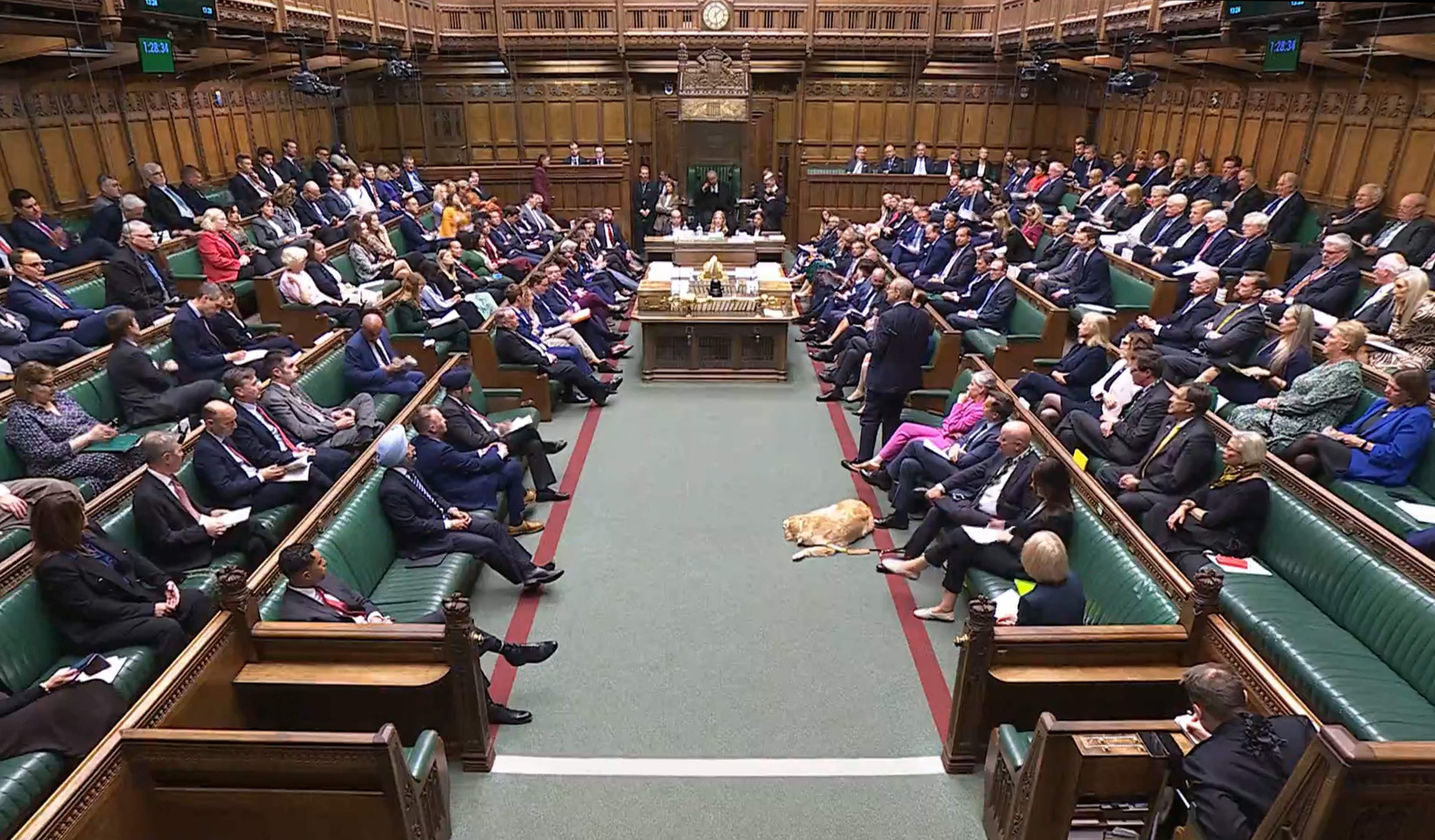
As King Charles makes his first state visit to Washington this week, the British government continues to face backlash at home over Prime Minister Keir Starmer’s ill-advised decision to appoint Peter Mandelson as ambassador to the United States. The Mandelson scandal, as it has come to be known, has thus far seen the sacking of multiple powerful men, one of whom was former Downing Street Chief of Staff Morgan McSweeney, who recently appeared before Parliament’s Foreign Affairs Committee to provide evidence for Mandelson’s security vetting. Earlier in February, McSweeney was made to resign over his recommendation of Mandelson for the role.
McSweeney told lawmakers that his recommendation was based on Mandelson’s potential usefulness through his close contacts across the Atlantic to secure a badly needed trade deal between the two countries. Whether those contacts, which were deemed so vital, included Palantir, with which the British government increased cooperation, possibly as a result of Mandelson’s personal efforts, was not among the questions McSweeney was asked, of course. However, his justification for the ultimate decision was striking enough on its own, for it invited further questions about the nature of those contacts that would apparently grant a man such an incredibly important job, despite the risks that naturally come with his shady dealings in the past, particularly those involving the disgraced “financier” Jeffrey Epstein.
Indeed, the entire Epstein saga itself ought to have been examined through such questions. Were the kinds of contacts Mandelson kept the same in nature as his rather close “contact” with Epstein, for example? Perhaps this was why McSweeney had a difficult time articulating exactly why he was so confident in Mandelson’s capabilities. Perhaps it was not about Mandelson the man, but the circle he represented, access to which was considered so vital to the prosperity of Britain. McSweeney was clear that he did what he did, believing it would serve the “national interest” and not any special interest.
The picture we have here provokes yet another question: Was it the absence of a Mandelson, then, that over the last few weeks has led to the supposed deterioration of the relationship between Britain and America? U.S. President Donald Trump’s dissatisfaction with Starmer’s stance on the Iran war has been unmistakable, yet no mention of Mandelson or Epstein was ever made by either side. At least not until the current British Ambassador to the United States, Christian Turner, who replaced Mandelson, “criticized America’s political system for failing to hold U.S. associates of the sex offender Jeffrey Epstein to account, saying it was ‘extraordinary’ that the scandal ‘hasn’t touched anybody’ in the U.S.” In leaked remarks revealed by Financial Times, Turner is reported to have lamented that “America’s only ‘special relationship’ is ‘probably Israel,’ not the UK.”
The British public is asked to accept, however, that if Mandelson’s relationship with Epstein implied anything at all in terms of national security, it could only be about Russia or Russian President Vladimir Putin, contrary to all evidence. Yet no “special relationship” has ever been sought with Russia by any British government, let alone Starmer’s, which has been extremely keen on taking a strong stance against “Putin’s Russia.” Then why would a political genius like McSweeney recommend Mandelson for the chief role in Britain’s relationship with America? Did he really not anticipate that appointing someone who might conceivably have ties to “Putin’s Russia” would not be particularly conducive to the goal of attaining the much-desired special relationship status?
All one has to do is really look at how America chooses its partner for a special relationship. Whatever the criterion is, it must be well known to Mandelson and Israel alike, though it has certainly been known to many others as well, including Reform U.K. leader Nigel Farage, who is likely the next in line after Starmer for the premiership. Being connected to the wealthiest and “most powerful” men seems to be a prerequisite. What else? In his address alongside King Charles, Trump noted that “Americans have had no closer friends than the British” for they “hold the same values.” What values, other than those cherished most by the wealthiest and “most powerful” men, are there actually left that either side can rely upon to build a truly special relationship?
The views and opinions expressed in this article are solely those of the author. They do not necessarily reflect the editorial stance, values or position of Daily Sabah. The newspaper provides space for diverse perspectives as part of its commitment to open and informed public discussion.