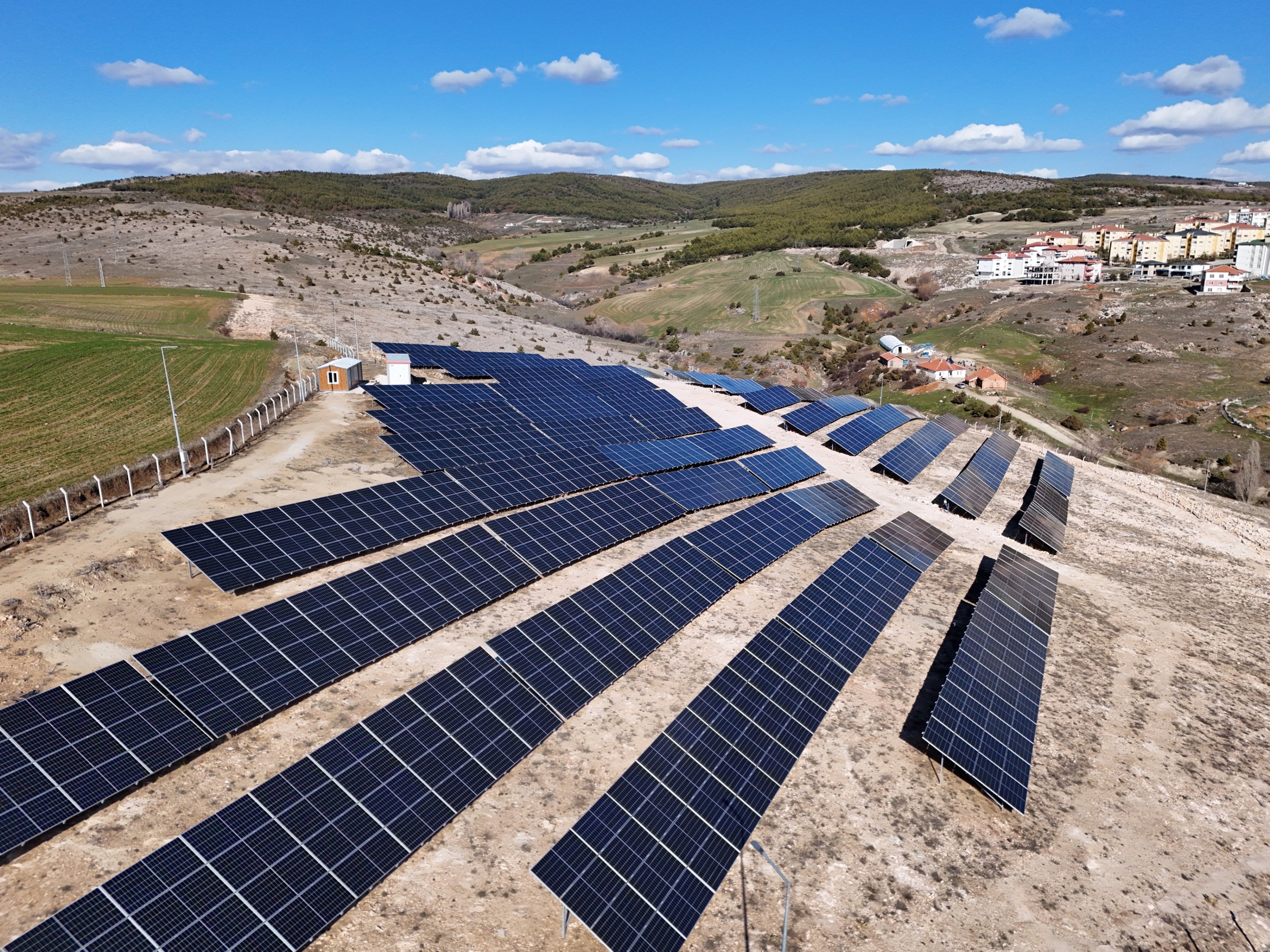
Record electricity generation from renewable sources in Türkiye has pushed wholesale power prices to historic lows, helping soften the impact of higher energy import costs linked to the Iran conflict.
Supported by strong investment and favorable weather conditions, renewable generation climbed to new highs in recent months, led by a sharp rebound in hydropower after last year’s drought and rising solar output.
Electricity producers say moderate demand from industry, one of the country’s largest power consumers, has coincided with strong hydroelectric output following a rainy winter, while higher solar generation in April further increased the number of hours during which electricity prices fell to zero.
Türkiye experienced its driest year in half a century in 2025, when hydropower’s share in electricity generation fell to as low as 16%. Following stronger rainfall this year, hydropower’s share rose to 36% in March and 42% in April.
Solar generation also increased significantly, with data from transmission operator Turkish Electricity Transmission Corporation (TEIAŞ) showing solar plants accounted for 12% of electricity generation in April, up from 5% in January.
The Energy and Natural Resources Ministry said in a bulletin published on Thursday ay that March saw an all-time high in renewable electricity generation, with roughly one-third of total output coming from hydropower and another third from solar, wind and other renewable sources.
Almost all of the 7 gigawatts (GW) of new installed electricity capacity commissioned in Türkiye in 2025 came from renewable energy sources, SHURA Energy Transition Center said on Friday.
Türkiye’s total installed electricity capacity reached 122.5 GW, with 62% of it consisting of renewable energy sources, it said. Installed capacity in solar and wind energy reached 40 GW.
Cornerstone of energy strategy
Renewables are seen as a cornerstone of Türkiye’s energy strategy because they help reduce the country’s structurally large energy import bill, a major contributor to the current account deficit.
Türkiye’s energy imports decreased by 5% last year to $62.5 billion, while the energy-related foreign trade deficit fell by 4% to $47 billion.
However, the growing share of solar power, which generates only during daylight hours, has created pricing distortions by increasing zero-price periods in the market.
According to calculations based on day-ahead market data from energy exchange operator Energy Exchange Istanbul (EPIAŞ), electricity prices were at zero for 95 hours in April, equivalent to 13% of the month, Reuters suggested.
By comparison, zero-price periods totaled only 43 hours combined in February and March, when high hydropower output alone was driving supply.
The increase in zero-price hours pushed average wholesale electricity prices sharply lower. The average electricity price in dollar terms fell 40% month-over-month and 64% year-over-year in April to $23.4 per megawatt-hour.
The level was below even April 2020 pandemic lows, when electricity prices had not fallen below $27 per megawatt-hour despite a collapse in industrial demand.
Data from Energy Exchange Istanbul also showed prices remained below $10 per megawatt-hour for more than half of April.
Low prices to persist
Although demand is expected to rise as temperatures exceed 25 degrees Celsius and cooling needs increase, sector representatives said low prices could persist through mid-year.
At a press event organized by the hydropower industry association Hydroelectric Power Plants Industrial Business Association (HESIAD), major energy producers said Türkiye’s grid increasingly depends on flexible resources such as hydropower and natural gas plants to balance intermittent solar and wind generation.
Hydropower plants can ramp output up or down quickly without increasing energy imports, unlike gas-fired plants, they noted.
HESIAD Chair Elvan Tuğsuz Güven said falling revenues despite high production were creating financial stress for operators.
“Prices are now forming below the system usage fees we pay, showing that our market has effectively entered a negative pricing era,” Güven said.
Industry calls for support mechanism
Akenerji CEO Hakan Yıldırım said Türkiye’s power investments over the past decade had focused heavily on intermittent sources such as solar and wind, while hydropower remained a strategic asset critical to system stability.
Yıldırım called for a support mechanism for hydropower during the high-generation, low-price February-May period.
Industry representatives proposed exempting hydropower plants from fixed transmission fees during low-price periods and introducing seasonal and hourly pricing mechanisms.
Executives also suggested including hydropower in Türkiye’s existing capacity mechanism, which currently supports natural gas and domestic coal plants.
The association additionally highlighted the potential of pumped-storage hydropower, which stores excess electricity by pumping water to elevated reservoirs and releasing it during periods of high demand.
According to preliminary studies by the State Hydraulic Works, Türkiye has 13.9 GW of pumped-storage hydropower potential, equivalent to around 11% of total installed capacity.
DAILYSABAH
هلدینگ کاسپین استانبول | خرید ملک در ترکیه | صرافی معتبر ایرانی در ترکیه | خرید و فروش طلا در ترکیه | مهاجرت به ترکیه | واردات و صادرات در ترکیه | نیازمندیهای ترکیه | اخبار ترکیه | اخبار جهانی | توریست ایران | خدمات توریستی در ایران | تورهای گردشگری ایران | هلدینگ اول | خدمات کاریابی و فریلنسری و شغل | مرجع اطلاعات ایران (همه چیز در ایران) | کیف پول و خدمات مالی و پرداخت یار | اخبار ایران | تابلو زنده قیمت ارز در ترکیه و استانبول | صرافی آنلاین ترکیه | قیمت طلا و نقره در ترکیه | سرمایه گذاری در ترکیه | جواهرات در ترکیه | نرخ لحظه ای ارزها در استانبول | قیمت دلار امروز در ترکیه | قیمت دلار استانبول امروز | قیمت لحظه ای دلار | اخبار روز ترکیه استانبول | اپلیکیشن ISTEX | اپلیکیشن قیمت لحظه ای دلار و یورو و لیر و ارزها در ترکیه
About the Author