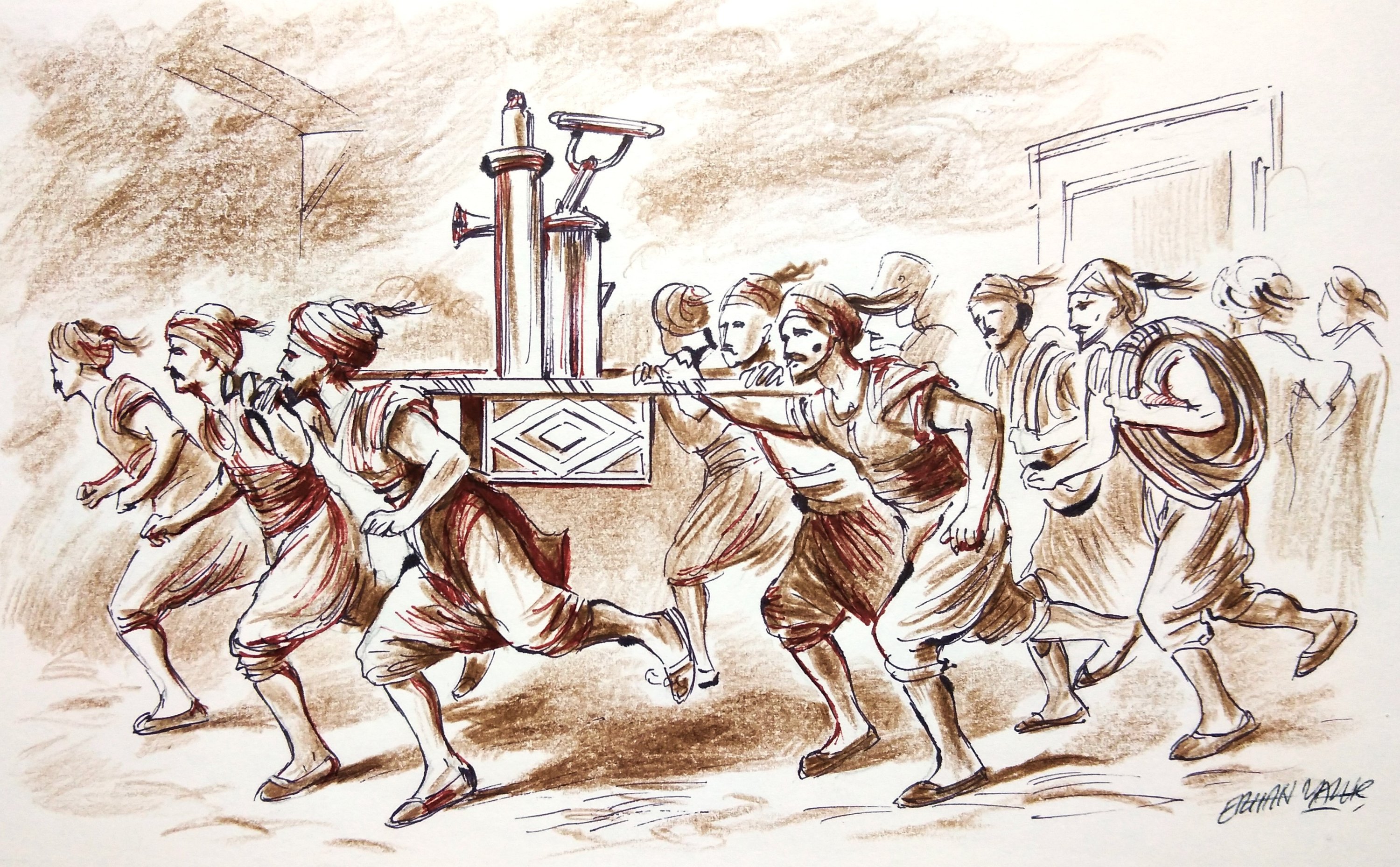
The Ottoman capital, Istanbul, was historically prone to devastating fires that periodically ravaged large sections of the city. One of the principal structural causes was the predominance of wooden housing, a consequence of both economic considerations and the need for flexibility in an earthquake-prone environment. While such construction reduced the risk of catastrophic collapse during seismic events, it significantly increased vulnerability to fire. In addition to accidental outbreaks, fires were at times deliberately set, as arson constituted a known tactic among rebels and dissident groups seeking to destabilize the capital.
Consequently, Istanbul experienced numerous large-scale conflagrations throughout the early modern period. A notable example is the great fire of 1660, which, according to Abdi Pasha, the court chronicler of Mehmed IV, destroyed an estimated 280,000 houses.
In the 18th century, fires continued to plague the Ottoman capital. In response, the Ottoman authorities sought more systematic measures and established the first organized fire brigade, known as the “Tulumbacı Corps.” The founder of this institution was Davud Ağa, commonly referred to as “Gerçek” (the “Real” or “Genuine”), a convert of French origin who played a key role in introducing more organized firefighting practices in Istanbul. Little is known, however, about the origins of this epithet or the circumstances under which he adopted it, as contemporary sources remain silent on whether it reflected a personal self-designation, an honorific bestowed by his contemporaries or a later historiographical attribution.
Early life of Davud Ağa
The early life of Davud Ağa remains obscure. From his pre-conversion years, only his Christian name, David, is known. According to his tombstone, he was a French engineer who later migrated to the Netherlands. It is possible that he was a French Protestant who fled the religious persecutions of Louis XIV, the so-called “Sun King.” At some point, he appears to have developed an interest in Islam, to which he eventually converted, arriving in Istanbul around 1715 or 1716 with a family of 10.
He may subsequently have offered his services to the Ottoman authorities, who accepted them, and he appears to have taken part in the 1715 Venetian campaign, where he demonstrated notable skill and diligence. During the campaign, he reportedly earned the praise of Ottoman commanders. Not all members of his family, however, seem to have shared his religious trajectory, as at least one of his sons converted to Islam only at a later date.
Firefighting formation
It appears that following the Venetian campaign, the newly converted Davud Ağa was appointed to a position in Istanbul, where he would leave a lasting mark. In 1718, the city suffered two successive fires, the first in the imperial armory and the second in the imperial arsenal. Two years later, in 1720, he again distinguished himself during a major fire at the Imperial Dockyard.
Davud Ağa reportedly succeeded in extinguishing these fires by means of a device he had devised, known as the tulumba (literally, “pump” or “pipe”). His success attracted the attention of the prominent reformist grand vizier of the Tulip Era, Nevşehirli Damat Ibrahim Pasha, who informed Ahmed III of the effectiveness of this new apparatus, emphasizing that only Davud Ağa possessed the expertise to operate it properly. Consequently, he urged the sultan to establish a new, organized fire brigade under Davud Ağa’s leadership.
Ahmed III accepted his grand vizier’s proposal, and 50 soldiers from the Janissary corps were assigned as firefighters. The former cadets’ barracks in Şehzadebaşı were also allocated to the new unit. Thus, the first organized fire brigade of the Ottoman Empire was established.
Urban transformation
From 1720 until his death in 1733, Davud Ağa continued to serve as the head of the brigade. This new organization functioned as part of the Janissary corps until 1826, when the corps was abolished. Nevertheless, through his efforts and institutional legacy, Davud Ağa contributed significantly to the protection of life and property in Istanbul. A new class of firefighters emerged, along with the practice and technology of the tulumba.
Overall, the establishment of the Tulumbacı Corps under Davud Ağa marked a significant step in the institutionalization of urban disaster management in 18th-century Istanbul. Emerging from a life shaped by trans-imperial mobility and religious conversion, from a French background, possibly forged in exile under the persecutions of Louis XIV, to his eventual adoption of Islam in the Ottoman capital, Davud Ağa embodied the broader patterns of technical transfer and personal reinvention that characterized the Tulip Era. His career thus reflects not only Ottoman administrative pragmatism and technological adaptation, but also the capacity of the empire to integrate converted expertise into durable urban institutions that reshaped the fabric of Istanbul.
The views and opinions expressed in this article are solely those of the author. They do not necessarily reflect the editorial stance, values or position of Daily Sabah. The newspaper provides space for diverse perspectives as part of its commitment to open and informed public discussion.
DAILYSABAH
هلدینگ کاسپین استانبول | خرید ملک در ترکیه | صرافی معتبر ایرانی در ترکیه | خرید و فروش طلا در ترکیه | مهاجرت به ترکیه | واردات و صادرات در ترکیه | نیازمندیهای ترکیه | اخبار ترکیه | اخبار جهانی | توریست ایران | خدمات توریستی در ایران | تورهای گردشگری ایران | هلدینگ اول | خدمات کاریابی و فریلنسری و شغل | مرجع اطلاعات ایران (همه چیز در ایران) | کیف پول و خدمات مالی و پرداخت یار | اخبار ایران | تابلو زنده قیمت ارز در ترکیه و استانبول | صرافی آنلاین ترکیه | قیمت طلا و نقره در ترکیه | سرمایه گذاری در ترکیه | جواهرات در ترکیه | نرخ لحظه ای ارزها در استانبول | قیمت دلار امروز در ترکیه | قیمت دلار استانبول امروز | قیمت لحظه ای دلار | اخبار روز ترکیه استانبول | اپلیکیشن ISTEX | اپلیکیشن قیمت لحظه ای دلار و یورو و لیر و ارزها در ترکیه
About the Author