Home – CBSNews.com
Add CBS News on Google
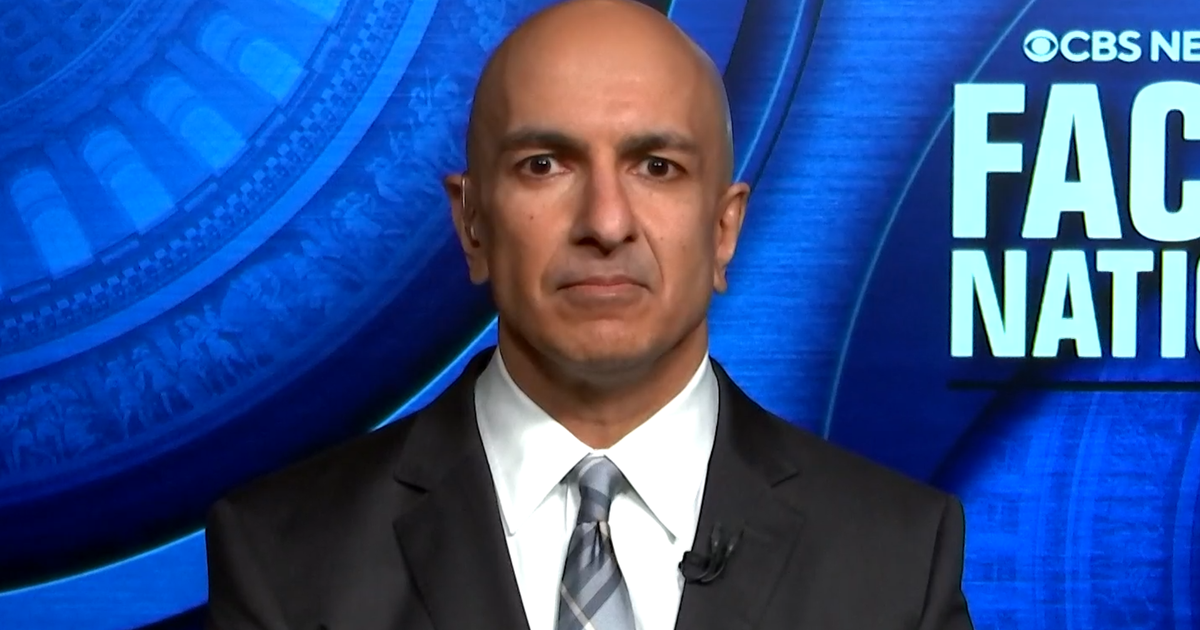
The following is the transcript of the interview with Minneapolis Fed president and CEO Neel Kashkari that aired on “Face the Nation with Margaret Brennan” on May 3, 2026.
MARGARET BRENNAN: We go now to Neel Kashkari, who is the President and CEO of the Federal Reserve Bank of Minneapolis. Good morning.
NEEL KASHKARI (President, Federal Reserve Bank of Minneapolis): Good morning, Margaret.
MARGARET BRENNAN: So, the Federal Reserve kept interest rates unchanged this past week, and on Wednesday, you were one of three regional presidents who indicated that future rate cuts may not be appropriate and a hike could even be in the cards. You- you dissented there- are you saying that the financial markets and the White House should no longer expect the Fed to cut rates?
KASHKARI: I think we all need to be open-minded about where interest rates are going, because there’s so much uncertainty coming out of the Middle East. You know, I think I’m very focused, and many of my colleagues are, what happens in Iran, how long the Strait of Hormuz is closed, and the longer it’s closed, the higher likely energy prices and fertilizer prices will go, the bigger impact it’s going to have on inflation here in America, and then we at the Fed have to take that on board. And so, I was simply saying that there’s so much uncertainty about the outlook in the Middle East right now, I don’t feel comfortable signaling that a rate cut is in the cards. You know, we might in the- in worse scenarios, we might have to go the other direction.
MARGARET BRENNAN: I know you were just listening to Kevin Hassett, the president’s economic adviser. He was not directly answering the question of what comes next, but he was painting a picture of continued tension. And I wonder now, since we’re in week 10 of this tension, however it’s defined, how are you going to be able to judge the inflation shock over the next few weeks until you get to that June meeting?
KASHKARI: Well, I’ll give you an example. So, the price effect, the energy effect and energy prices from the Iran conflict is already, by some measures, as big or larger than when Russia invaded Ukraine. So, it’s already having a big effect and we’re seeing it- you mentioned the PCE data- we’re already seeing it in the inflation numbers here at home. I talked to the CEO of a global company headquartered in Minnesota that has supply chains all around the world just last week, and they have estimated that even if the strait reopened today, it would probably take six months for their supply chains to return to something like normal. So I think for the Fed, we are going to have to watch what happens in the Middle East and the inflation data very carefully. That’s going to have to guide us. But if it’s a six-month process for inflation returning to normal, or something like normal, in the best-case scenario, I’m also very concerned about something that’s not the best-case scenario, and what that might do to prices here at home.
MARGARET BRENNAN: So, we’ll hear from Chevron CEO later in the program. He also talks about just the many, many factors that are likely to keep energy prices elevated for some time. In your letter that you published, explaining why you dissented, you also said the labor market has been in a quote, “low hire, low fire environment” for some time. Right now, we’re seeing some corporate layoffs underway, and I wonder what the dynamic is that you think is playing out now, and how the energy shock is going to play into it.
KASHKARI: Well, so far, recently, the labor market has shown some signs of stabilization. So if you look at unemployment claims and new- new unemployment claims, they’re very low. The unemployment rate has been at around 4.3%. It’s bounced around a little bit for the last six months, so it seems like mostly the labor market is moving sideways. But the bigger the inflation shock that comes out of the Middle East, the more that’s going to force Americans to cut back in their spending, because they have to pay for gas, for example, so they’ll cut back other spending. That can have a way of tamping down economic growth, that even could translate into some weakness in the labor market. So at this moment, the labor market seems like it’s okay, but if this conflict is prolonged, or if it gets much worse from here, then I think that could be a real downward shift to the growth trajectory to the U.S. economy, and it’ll be uneven on who gets affected by that unfortunately.
MARGARET BRENNAN: When you say prolonged, what do you mean by that? We’re in week 10.
KASHKARI: Well, I mean, could it go on for months? Could it go on for the end of the year? I just don’t know. I’m not a foreign policy expert, but we’re watching very carefully. And that you know, the challenge the Fed is facing right now is really about uncertainty of the outlook for inflation, which stems back to what happens in the Middle East, and it seems like there’s a great deal of uncertainty about the path ahead, from what I can read.
MARGARET BRENNAN: I want to ask you about what’s happening with the Fed as an institution. The Senate Banking Committee voted to advance Kevin Warsh’s nomination as Federal Reserve chair. He is expected to be confirmed in mid-May. During his testimony, he said the Fed has mishandled inflation over the past few years, and he said the Fed needs a quote, serious shaking up with a “good family fight.” Do you agree with that? There needs to be a good family fight and a change of how you do business?
KASHKARI: Well, I think we’re all looking forward to Kevin concluding his confirmation process, and we look forward to working with him and hearing his ideas. Some of the things that he’s talked about, I think we are- would welcome an examination of, how we communicate, this thing that we call the dot plot he’s talked about. I think many of us would like to examine that. There are things about the balance sheet and how we use the balance sheet. I think those are also- I think we would welcome a fresh examination of some of these policies. And so I think someone coming in and saying, hey, let’s reexamine how we use some of our tools, I think those are good discussions to have. I don’t think we’d be physically fighting I think that we’d have robust discussions over the benefits and the cost of these various tools, and I think that that would be worthwhile to have.
MARGARET BRENNAN: Or how you measure inflation?
KASHKARI: Well, I think that there are many different ways of measuring inflation. He has talked about in his confirmation hearing some of his preferred measures. We are always looking at different ways of measuring inflation, and in different moments, certain measures seem like they do a better job than others, and so I think we need to examine all of those options dispassionately and figure out what is the best measurement tool going forward.
MARGARET BRENNAN: Quickly, the national debt is now larger than the U.S. economy. It’s one- exceeds 100% of GDP going towards a record here. What risk does that pose?
KASHKARI: Well, no one knows. You know how big is the danger zone and when there’s going to actually trigger some kind of a crisis. If you look, I know you know this, if you look at the CBO’s forecast for where the debt is going, it’s absolutely headed to an unsustainable level. Ultimately, this is the job of our fiscal policymakers, Congress and the executive branch, to come together and put us on a- on a sound fiscal trajectory, which we’re not on right now. I don’t see an immediate crisis brewing, but at some point it’s going to be a problem, and ultimately our political system needs to address it.
MARGARET BRENNAN: Neel Kashkari, thank you for sharing your insight this morning, and we’ll be right back with a lot more Face the Nation. Stay with us.
wp:paragraph
هلدینگ کاسپین استانبول | خرید ملک در ترکیه | صرافی معتبر ایرانی در ترکیه | خرید و فروش طلا در ترکیه | مهاجرت به ترکیه | واردات و صادرات در ترکیه | نیازمندیهای ترکیه | اخبار ترکیه | اخبار جهانی | توریست ایران | خدمات توریستی در ایران | تورهای گردشگری ایران | هلدینگ اول | خدمات کاریابی و فریلنسری و شغل | مرجع اطلاعات ایران (همه چیز در ایران) | کیف پول و خدمات مالی و پرداخت یار | اخبار ایران | تابلو زنده قیمت ارز در ترکیه و استانبول | صرافی آنلاین ترکیه | قیمت طلا و نقره در ترکیه | سرمایه گذاری در ترکیه | جواهرات در ترکیه | نرخ لحظه ای ارزها در استانبول | قیمت دلار امروز در ترکیه | قیمت دلار استانبول امروز | قیمت لحظه ای دلار | اخبار روز ترکیه استانبول | اپلیکیشن ISTEX | اپلیکیشن قیمت لحظه ای دلار و یورو و لیر و ارزها در ترکیه
/wp:paragraph wp:paragraph /wp:paragraph
About the Author