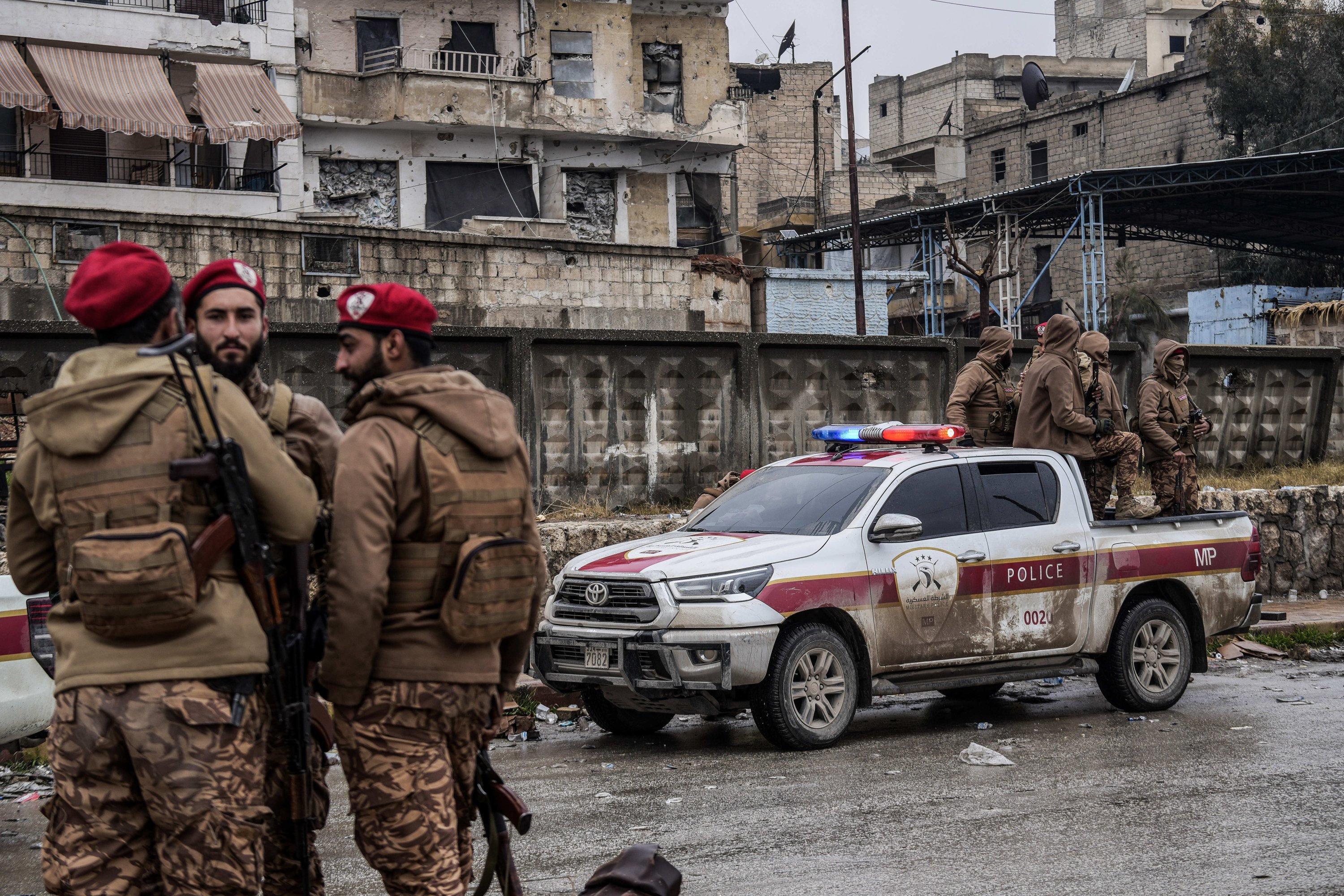
Syrian authorities said Tuesday they had arrested a Hezbollah-linked cell accused of plotting to assassinate government officials, a charge the Iran-backed Lebanese armed group dismissed as “false.”
The Syrian Interior Ministry said that it had conducted a “series of simultaneous security operations” in the Damascus countryside, Aleppo, Homs, Tartus and Latakia provinces.
It said the operations led to the “dismantling of an organized cell affiliated with the Hezbollah militia, whose members infiltrated Syrian territory after receiving intensive specialized training in Lebanon.”
Preliminary investigations revealed that the cell was planning “targeted assassinations against high-level government officials,” the ministry statement said, adding that they seized military equipment, including explosive devices and RPG launchers, among other weapons.
It published the pictures of 11 suspects, without specifying their nationalities, saying they included the official responsible for plotting and overseeing assassinations.
Hezbollah, meanwhile, issued a statement “categorically denying the false accusations from the Syrian Interior Ministry.”
“The repetition of these claims by Syrian security authorities despite our repeated declarations that Hezbollah has no presence inside Syrian territory… raises major questions,” the Iran-backed group said.
It added that it “suggests that there are those who seek to ignite tensions and strife between the Syrian and Lebanese peoples.”
Earlier on April 19, Syrian security forces had foiled a cross-border attack from its territory, allegedly planned by the ousted Bashar Assad regime’s remnants and cells linked to Iran-backed Hezbollah.
In a statement at the time, the Syrian Interior Ministry said security forces “arrested members of a sabotage cell” linked to Hezbollah and Assad remnants.
The ministry added that the cell “was working to carry out an attack from inside Syrian territory on targets outside the borders” from Quneitra province, which borders Israel.
Hezbollah was a key backer of longtime dictator Bashar Assad, playing a vital role in tipping the civil war in his favor in the years before he was ousted in December 2024.
Before that, Syria was a key conduit for the transfer of weapons from Iran to the Lebanese group.
Since Assad was toppled, Syria’s new authorities have repeatedly announced the foiling of plots to disrupt security that they have blamed on Hezbollah, which the group has denied.