Multilingual signs in most airports in the EU opt for English, but in Hungary, there is also Chinese, making it easy for migrant workers flying in to staff China’s first electric car plant in Europe – due to open in 2027.
The third language was introduced in 2019 as the recently ousted leader Viktor Orbán embarked on a “comprehensive strategic partnership” with China, positioning himself as its most reliable friend in Europe.
It won him a presidential visit from Xi Jinping in 2024 and billions of euros of investment from the Chinese car industry.
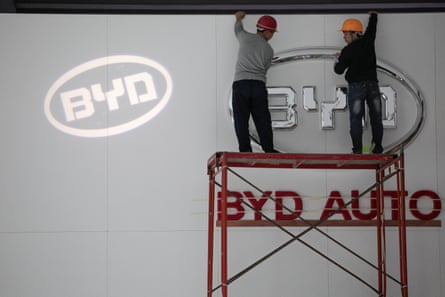
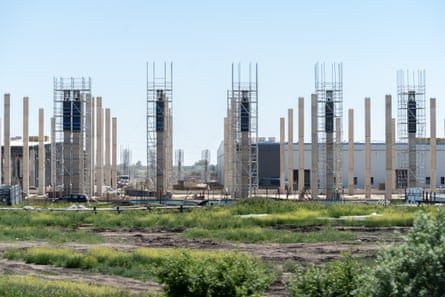
But the race to get Europe’s first Chinese electric vehicle (EV) factory, for the carmaker BYD, up and running in the city of Szeged, south of Budapest, is now mired in allegations of workers’ rights abuse.
A New York rights organisation, China Labor Watch (CLW), interviewed more than 50 migrant workers who point to a series of potential violations of EU labour laws, including incidences of seven-day working weeks, recruitment-related debt, excessive overtime and visa breaches among Chinese workers hired through subcontractors.
“Some employees choose to work seven days a week, but it’s not obligatory. Only those who come from China choose to,” says a Chinese man who asked to remain anonymous as he lights a cigarette in a car park close to BYD’s Szeged construction site.
Asked what conditions are like inside the site, a colleague replies: “Nothing out of the ordinary, when you’re a migrant worker.” His supervisors are very strict and living conditions are “quite harsh”, he says.
The European Commission said it was aware of the allegations and it had been told there was “a case pending before the Hungarian labour inspectorate” related to the claims.
Since the report, and a fatal incident in February confirmed by BYD, rumours about conditions on the site have been spreading around the city including talk, confirmed unofficially by one hospital doctor, of several migrant workers being treated for tuberculosis.
A London spokesperson for the Chinese car company confirmed there had been a death on 14 February in an accident in a “loading and crane operation carried out by one of our subcontractors”.
They said the “circumstances of the accident are currently under investigation and the exact cause has not been established”.
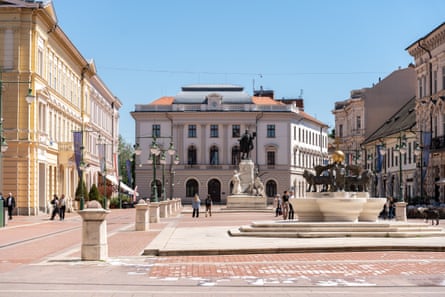
Some people in Szeged feel as if there are too many unanswered questions about how the factory operates. Many were also concerned about health risks.
“The first thing that comes to my mind is infrastructure changes; as far as to what extent environmental factors will be respected, how will this affect us?” Zita, 55, tells the Guardian on the main street. “As a resident of Szeged, I feel that there was not enough information.”
Orbán was ousted in last month’s general election and his successor, Péter Magyar, has promised to “review” another key Chinese plant in Hungary, a battery plant nearing completion three hours away in Debrecen. In that city there is disquiet over the impact of the factory, including the closure of a railway connection to enable land procurement by the Chinese battery company CATL.
The scale of the BYD $4.5bn (£3.3bn) investment in Szeged should be enough to transform a city in a country with an economy that has stagnated as Orbán’s rule exhausted its potential, says the Centre for Eastern Studies (OSW), a Warsaw-based thinktank.
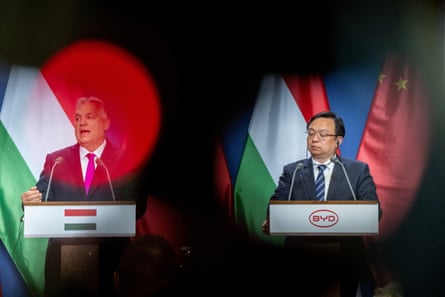
BYD plans to have about 10,000 workers producing a projected 300,000 cars a year, but the construction model involving migrant Chinese workers will be keenly watched elsewhere in Europe.
In the Spanish city of Zaragoza, CATL, in a joint venture with the multinational carmaker Stellantis, has already clashed with local leaders over plans to deploy 2,000 Chinese workers to build the factory.
CATL’s vice-president, Meng Xiangfeng, said last year that the company needed experienced technicians to build and fine-tune production lines, rather than there being a policy of not hiring locally.
But questions remain about pressure on housing and the quality of accommodation for migrant workers. Workers in Szeged told CLW of multiple dormitory buildings on the BYD site, six of which were fully occupied with about 450 people each, with an additional 1,000 staff offsite, bringing the total number of workers to 4,000.
Some staff reported working seven days a week “for full monthly cycles except when heavy rain temporarily halted construction”, which CLW says “may violate provisions of the Hungarian labour code”, as that also sets ceilings on overtime.
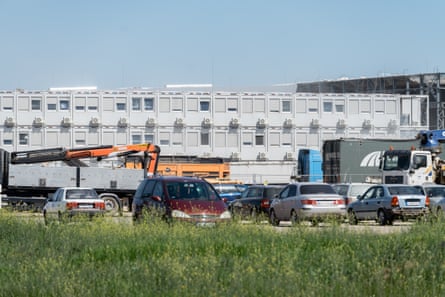
Those recruited through subcontractors also told how they had to pay fees of between £860 and £2,100 for the job. Those hired directly by BYD paid no fees, it said.
“For workers coming from low-income regions in China, these fees may constitute a substantial debt bondage,” says CLW, which has called on Hungary to “strengthen inspections and enforce labour and migration laws” at the plant.
It also called on BYD to eliminate recruitment fees, ensure transparent wages and uphold legal working hours. There could also be a question of age discrimination with subcontractors only offering jobs to applicants under 52.
No formal response has been received by Magyar’s incoming government, but the matter has been raised with the European Commission by three socialist and democrat MEPs, France’s Raphaël Glucksmann, Kathleen Van Brempt from Belgium and Hungary’s Klára Dobrev.
A spokesperson for the commission said it was aware of the allegations relating to labour rights violations at the BYD site, and added that under proposals in the European Union’s new “made in Europe” law, 50% of workers would have to be from the EU in electric vehicle manufacturing.
A spokesperson for BYD said it placed “highest priority on the protection of labour rights and the strict compliance with Hungarian and European laws and regulations”, adding it required “strict compliance” with relevant laws “for all relevant stakeholders, including all contractors, subcontractors and labour providers”.
The Guardian wp:paragraph
هلدینگ کاسپین استانبول | خرید ملک در ترکیه | صرافی معتبر ایرانی در ترکیه | خرید و فروش طلا در ترکیه | مهاجرت به ترکیه | واردات و صادرات در ترکیه | نیازمندیهای ترکیه | اخبار ترکیه | اخبار جهانی | توریست ایران | خدمات توریستی در ایران | تورهای گردشگری ایران | هلدینگ اول | خدمات کاریابی و فریلنسری و شغل | مرجع اطلاعات ایران (همه چیز در ایران) | کیف پول و خدمات مالی و پرداخت یار | اخبار ایران | تابلو زنده قیمت ارز در ترکیه و استانبول | صرافی آنلاین ترکیه | قیمت طلا و نقره در ترکیه | سرمایه گذاری در ترکیه | جواهرات در ترکیه | نرخ لحظه ای ارزها در استانبول | قیمت دلار امروز در ترکیه | قیمت دلار استانبول امروز | قیمت لحظه ای دلار | اخبار روز ترکیه استانبول | اپلیکیشن ISTEX | اپلیکیشن قیمت لحظه ای دلار و یورو و لیر و ارزها در ترکیه
/wp:paragraph wp:paragraph /wp:paragraph
About the Author