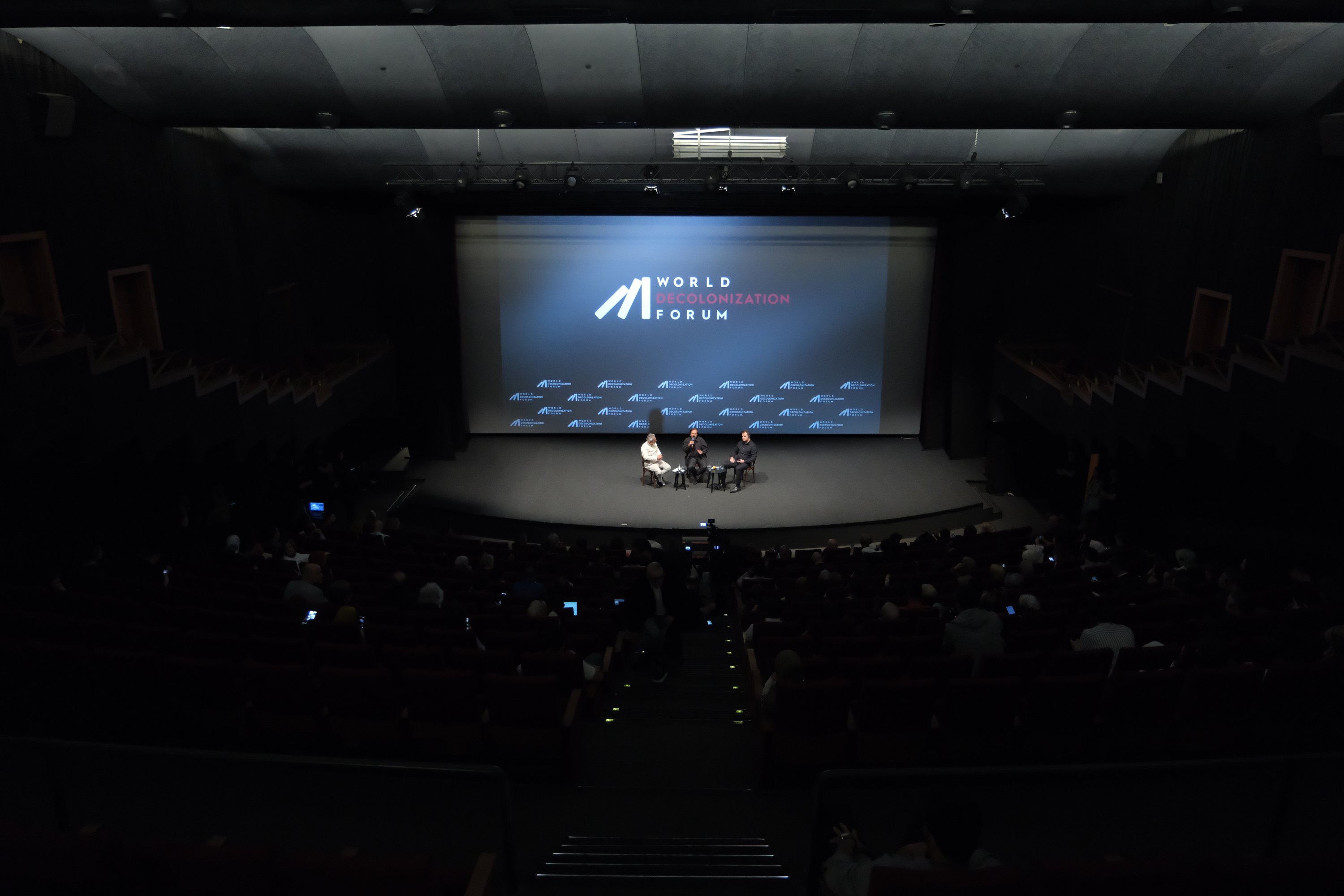
As part of the World Decolonization Forum, Decolonize Film Days opened at Atlas 1948 Cinema on Tuesday with screenings and discussions exploring colonialism, cultural identity and the role of cinema in shaping collective memory.
The event is being held within the framework of the forum hosted by Enstitü Sosyal, or the Institute Social, and NUN Education and Culture Foundation, which examines the historical legacy of colonialism and its lasting political, cultural and economic effects on societies around the world.
Bringing together filmmakers, producers and audiences, the two-day program features films that address displacement, assimilation, resistance and social inequality through stories from different countries and historical periods.
Films exploring identity, resistance
The opening day began with “Mud” by Derviş Zaim, a film set against the divided reality of Cyprus that examines memory, trauma and identity in the aftermath of political conflict.
The program continued with “Rabbit-Proof Fence” by Phillip Noyce, which tells the story of Aboriginal children forcibly separated from their families under Australia’s assimilation policies and “Sun Children” by Iranian filmmaker Majid Majidi, focusing on children struggling with poverty and child labor on the outskirts of Tehran.
Audiences also watched “Lion of the Desert” by Mustapha Akkad, which portrays Libyan resistance against Italian colonial rule.
Through the selection, the program draws connections between historical colonial practices and contemporary debates surrounding inequality, cultural erasure and representation.
‘Cinema creates memory, identity’
Following the screening of “Sun Children,” a panel titled “Decolonizing the Screen” brought together Majidi, producer Mehmet Bozdağ and filmmaker Faysal Soysal, who moderated the discussion.
The conversation focused on how cinema shapes cultural memory and how dominant film industries often reinforce Western-centered narratives through recurring images of the East as exotic, violent or victimized.
Speaking during the panel, Soysal emphasized cinema’s long-term influence on collective consciousness.
“Television does not create memory. You forget the things you see on television and move on. But cinema creates memory and identity,” Soysal said.
He added that authentic storytelling rooted in culture and human experience has a greater chance of enduring than productions built around imitation or short-term trends.
Majidi on identity-less storytelling
Majidi discussed the growing tension between artistic filmmaking and commercial pressures in the global film industry, arguing that cinema risks losing its cultural depth when ratings and profitability become the primary concern.
“Festivals are tools that keep the light of artistic cinema alive,” Majidi said, stressing the importance of supporting films that prioritize cultural and human values.
The Iranian director also criticized the increasing homogenization of television and cinema, saying audiences are becoming accustomed to superficial narratives disconnected from local realities.
Referring to some contemporary Turkish television productions, Majidi said many portray lifestyles and values that do not reflect everyday life or the country’s cultural traditions.
“Turkish culture contains love, sincerity and friendship,” he said. “But in many productions, people constantly betray or harm one another. The question is whether ratings should come at the cost of losing cultural values.”
Majidi also argued that popular cinema often reproduces political narratives that position the West as the universal savior.
“Even superhero films draw an image of a West that saves humanity,” he said, adding that cultural identity today is threatened not only through political domination but also through the erosion of memory and values.
Calls for authentic storytelling
Bozdağ focused on the cultural effects of colonialism and globalization, arguing that societies increasingly experience alienation through imported cultural norms and consumption habits.
“Colonialism captures our daily lives, music, traditions and culture,” Bozdağ said. “If we do not tell those clean stories, we will eventually lose ourselves.”
He also pointed to the effects of social media and rapidly consumed digital content on artistic production, saying literature, philosophy and cinema are all experiencing a decline in depth and originality.
The panel concluded with discussions on the need for stories grounded in local culture while still engaging with universal themes. Participants emphasized that cinema should not only function as entertainment, but also as a space for preserving memory, questioning dominant narratives and building cultural continuity.
DAILYSABAH
هلدینگ کاسپین استانبول | خرید ملک در ترکیه | صرافی معتبر ایرانی در ترکیه | خرید و فروش طلا در ترکیه | مهاجرت به ترکیه | واردات و صادرات در ترکیه | نیازمندیهای ترکیه | اخبار ترکیه | اخبار جهانی | توریست ایران | خدمات توریستی در ایران | تورهای گردشگری ایران | هلدینگ اول | خدمات کاریابی و فریلنسری و شغل | مرجع اطلاعات ایران (همه چیز در ایران) | کیف پول و خدمات مالی و پرداخت یار | اخبار ایران | تابلو زنده قیمت ارز در ترکیه و استانبول | صرافی آنلاین ترکیه | قیمت طلا و نقره در ترکیه | سرمایه گذاری در ترکیه | جواهرات در ترکیه | نرخ لحظه ای ارزها در استانبول | قیمت دلار امروز در ترکیه | قیمت دلار استانبول امروز | قیمت لحظه ای دلار | اخبار روز ترکیه استانبول | اپلیکیشن ISTEX | اپلیکیشن قیمت لحظه ای دلار و یورو و لیر و ارزها در ترکیه
About the Author