Donald Trump has said the US would be “probably satisfied” if it could reach an agreement with Iran that prevents Tehran from obtaining a nuclear weapon.
He added that he delayed planned strikes on Iran after a “very positive development” in talks, and that there was “a very good chance” they could reach a deal.
Asked at a healthcare affordability event at the White House about his Truth Social post earlier, Trump said:
I was asked by Saudi Arabia, Qatar, UAE and some others if we could put it off for 2 or 3 days, a short period of time, because they think that they are getting very close to making a deal. And if we can do that where there’s no nuclear weapon going into the hands of Iran, I think and if they’re satisfied, we will be probably satisfied.
“It’s a very positive development,” he said. “But we’ll see whether or not it amounts to anything. We’ve had periods of time where we had, we thought, pretty much getting close to making a deal and, it didn’t work out.”
The US president added:
We’re not going to let Iran have a nuclear weapon. So I was called by these three countries plus others, and they’re dealing directly with our people, and right now Iran.
And there seems to be a very good chance that they can work something out. If we can do that without bombing the hell out of them, I’d be very happy.
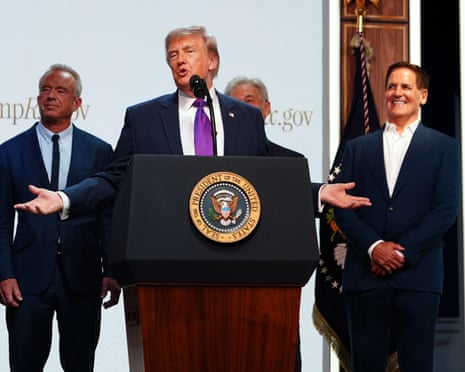
Looking more at the context of Trump’s announcement, he said he’d planned “a very major attack” but put it off – “for a little while, hopefully, maybe forever” – after US allies in the Gulf asked him to wait for two to three days because they felt they were close to a deal with Iran.
Trump has been threatening for weeks that the ceasefire reached in mid-April could end if Iran did not make a deal, with shifting parameters for striking such an agreement. Over the weekend he warned on social media: “For Iran, the Clock is Ticking, and they better get moving, FAST, or there won’t be anything left of them.”
The US president has repeatedly set deadlines for Tehran and then backed off, as the AP reports.
But he’s also previously indicated he would hold off on military action to allow talks to continue – only to turn around and launch strikes. That’s what happened at the war’s outset, when he ordered strikes in late February shortly after indicating he would let talks play out.
Trump said the current pause for negotiations was a “very positive development”, while acknowledging there were times in the past when a deal seemed close but nothing came of it.
“But this is a little bit different,” he said.
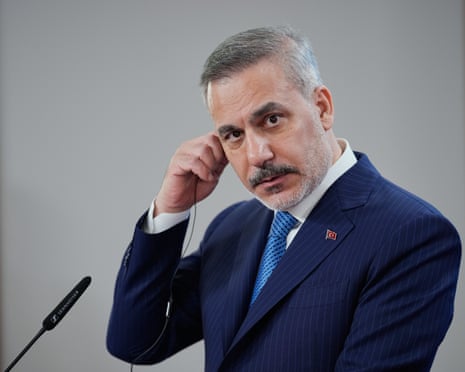
Before Donald Trump’s announcement he was holding off on attacking Iran, Turkey’s foreign minister said the immediate concern of the negotiations between the US and Iran was keeping the strait of Hormuz open, but that Iran’s nuclear program remained a central issue.
Speaking at a joint news conference with his German counterpart in Berlin, Hakan Fidan said much of Iran’s enriched uranium that could potentially be used for a nuclear weapon was buried under collapsed tunnels after attacks in June that the US launched with Israel. The US has said it is closely monitoring any movements around the stockpile.
“At present, there isn’t a situation that poses a real threat,” Fidan said on Monday, quoted by the AP. “But for this to continue, the parties must reach and conclude a nuclear negotiation among themselves.”
The Turkish minister said he believed Iran was not opposed in principle to complying with nuclear conditions, but added:
The question is what will be given in return, in what order, and under what conditions.”
With talks at a standstill last week, Iran’s foreign minister said on Friday that a lack of trust was the biggest impediment to negotiations.
Iran remained defiant in statements issued on state media after Donald Trump’s announcement he’d paused an attack on Iran, with Tehran warning the US and its allies against making any further “strategic mistakes or miscalculations” in striking Iran.
The Islamic republic also contended the Iranian armed forces were “more prepared and stronger than in the past”.
Iran’s top joint military command, Khatam al-Anbiya, said Iran’s armed forces were “ready to pull the trigger” if the US began new strikes, Iran’s Tasnim news agency reported.
“Any renewed aggression and invasion … will be responded to quickly, decisively, powerfully and extensively,” the Khatam al-Anbiya commander, Ali Abdollahi, was quoted as saying.
Oil prices and stock markets worldwide swung through a shaky Monday with uncertainty about what will happen with the Iran war.
The S+P 500 swivelled between gains and losses before finishing with a dip of 0.1% – its second loss since setting an all-time high last week – while the Dow Jones Industrial Average added 0.3% and the Nasdaq composite fell 0.5% after both indexes also yo-yoed, the AP reports.
Stocks moved in the opposite direction of oil prices, with the price for a barrel of Brent crude – the international standard – going from a high of $112 overnight to below $107 in the morning before turning back higher.
After settling at $112.10 per barrel, Brent’s price then fell back below $109 after Donald Trump said late in the day that he would hold off attacking Iran on Tuesday at the request of allies in the region, keeping alive hopes of a deal that would reopen the strait of Hormuz.
Just to recap on some important news from earlier, if you’re just joining us:
The US has announced another 30-day extension of a sanctions waiver allowing purchases of Russian seaborne oil to aid “energy-vulnerable” countries hit by the Iran war, reversing plans not to grant an extension.
Treasury secretary Scott Bessent said in a post on X that the Treasury was issuing the 30-day general license after a previous waiver lapsed on Saturday. This would allow temporary access to Russian oil and petroleum products stranded on tankers without violating severe US sanctions on Russian oil majors, he said.
Bessent, who last month told the Associated Press that no further extension of the Russian oil sanctions waiver was planned, on Monday said the measure would help reroute existing supply to countries most in need, allowing them to compete with China for previously sanctioned oil.
The action marks the second time the Treasury has allowed the sanctions waiver to lapse and subsequently extended it.
The Iranian proposal – as described to Reuters by a senior Iranian source – appeared similar in many respects to Iran’s previous offer, which Trump rejected last week as “garbage”.
It would focus first on securing an end to the war, reopening the strait of Hormuz – the vital energy supply route Iran has effectively blockaded – and lifting maritime sanctions.
Contentious issues around Iran’s nuclear programme and uranium enrichment would be deferred to later rounds of talks, the source said.
However, in an apparent softening of Washington’s stance, the senior Iranian source said on Monday that the US had agreed to release a quarter of Iran’s frozen funds – totalling tens of billions of dollars – held in foreign banks. Iran wants all the assets released.
The Iranian source also told Reuters that Washington had shown more flexibility in agreeing to let Iran continue some peaceful nuclear activity under supervision of the International Atomic Energy Agency.
The US has not confirmed that it agreed to anything in the negotiations.
Donald Trump’s social media post saying he had paused a planned attack on Iranat the request of Gulf leaders came after Iranian foreign ministry spokesperson Esmaeil Baghaei confirmed that Tehran’s views on ending the war had been “conveyed to the American side through Pakistan” but gave no details.
A Pakistani source confirmed that Islamabad had shared the latest peace proposal with Washington. But the source suggested progress had been difficult, Reuters is reporting.
The sides “keep changing their goalposts”, the Pakistani source said, adding: “We don’t have much time.”
Pakistan has conveyed messages between the US and Iran since hosting the only round of peace talks last month.
Donald Trump has said the US would be “probably satisfied” if it could reach an agreement with Iran that prevents Tehran from obtaining a nuclear weapon.
He added that he delayed planned strikes on Iran after a “very positive development” in talks, and that there was “a very good chance” they could reach a deal.
Asked at a healthcare affordability event at the White House about his Truth Social post earlier, Trump said:
I was asked by Saudi Arabia, Qatar, UAE and some others if we could put it off for 2 or 3 days, a short period of time, because they think that they are getting very close to making a deal. And if we can do that where there’s no nuclear weapon going into the hands of Iran, I think and if they’re satisfied, we will be probably satisfied.
“It’s a very positive development,” he said. “But we’ll see whether or not it amounts to anything. We’ve had periods of time where we had, we thought, pretty much getting close to making a deal and, it didn’t work out.”
The US president added:
We’re not going to let Iran have a nuclear weapon. So I was called by these three countries plus others, and they’re dealing directly with our people, and right now Iran.
And there seems to be a very good chance that they can work something out. If we can do that without bombing the hell out of them, I’d be very happy.
US Central Command has said its forces have “redirected” another commercial ship during its blockade of Iran’s ports.
Centcom added that it has “redirected” a total of 85 commercial vessels, and “disabled” four. The US blockade began on 13 April.
The International Atomic Energy Agency said on Monday it has been informed by the United Arab Emirates that off-site power was restored to Unit 3 of the Barakah nuclear power plant following the drone strike on Sunday.
Sunday’s drone strike caused a fire at an electrical generator outside the inner perimeter of the Barakah nuclear power plant, with authorities confirming that safety levels were unaffected and no radioactive material was released.
Further to our earlier post, Ireland’s president has urged world leaders not to “normalise war” or “slaughter” as she expresses concern for her sister who was on board a Gaza flotilla intercepted today by Israel.
On her first official visit to the UK, Catherine Connolly, went slightly off script at an event in the Irish embassy to express concern about wars currently tearing up the world order.
Normalising war is never acceptable, normalising slaughhter is never acceptable.
Earlier she met King Charles who “graciously and gratefully” received an invitation for a state visit to Ireland next year.
She spoke to guests at the Irish embassy in London of the need to always defend the values of an independent sovereign nation “by defending international law and the structures of the UN”.
She said Ireland “will not be silent when international law is treated as optional”.
She was asked by reporters about her sister Margaret who was on board the flotilla intercepted by Israeli forces off the coast of Cyprus.
“It’s quite upsetting and I’m also very worried about her,” she said.
“I’ve been very busy today … I haven’t really had a chance to get details in relation to my sister and indeed, equally importantly, her colleagues on the boat.”
Donald Trump has said he would “hold off” an attack on Iran scheduled for Tuesday at the request of Gulf leaders.
In a post on his Truth Social platform, Trump said “serious negotiations” are now underway with Iran and that Gulf states believed “a deal will be made”.
“This Deal will include, importantly, NO NUCLEAR WEAPONS FOR IRAN!” he claimed.
But, he added, Washington was ready for a “full, large scale assault of Iran, on a moment’s notice, in the event that an acceptable Deal is not reached.”
Here’s the full post:
I have been asked by the Emir of Qatar, Tamim bin Hamad Al Thani, the Crown Prince of Saudi Arabia, Mohammed bin Salman Al Saud, and the President of the United Arab Emirates, Mohamed bin Zayed Al Nahyan, to hold off on our planned Military attack of the Islamic Republic of Iran, which was scheduled for tomorrow, in that serious negotiations are now taking place, and that, in their opinion, as Great Leaders and Allies, a Deal will be made, which will be very acceptable to the United States of America, as well as all Countries in the Middle East, and beyond. This Deal will include, importantly, NO NUCLEAR WEAPONS FOR IRAN! Based on my respect for the above mentioned Leaders, I have instructed Secretary of War, Pete Hegseth, The Chairman of The Joint Chiefs of Staff, General Daniel Caine, and The United States Military, that we will NOT be doing the scheduled attack of Iran tomorrow, but have further instructed them to be prepared to go forward with a full, large scale assault of Iran, on a moment’s notice, in the event that an acceptable Deal is not reached.
The organisers of a flotilla of aid vessels bound for Gaza said on Monday that Israeli forces had intercepted 39 of their boats in the eastern Mediterranean, while the remaining ships were continuing to sail toward the enclave.
Earlier on Monday, Israel’s foreign ministry had said on X that it “will not allow any breach of the lawful naval blockade on Gaza”. Ships from the Global Sumud Flotilla had set sail for a third time on Thursday from southern Turkey, after earlier attempts to deliver aid to Gaza were intercepted by Israel in international waters.
Live video showed military vessels approaching the vessels on Monday.
“Military vessels are currently intercepting our fleet and (Israeli) forces are boarding the first of our boats in broad daylight,” the Global Sumud Flotilla initially said on X.
“We demand safe passage for our legal, non-violent humanitarian mission.”
The group said there were 426 people taking part in the 54-vessel flotilla from 39 countries. It named 44 Turks among those on the intercepted vessels, some 250 nautical miles (463 km) from Gaza.
The International Atomic Energy Agency said on Monday it has been informed by the United Arab Emirates that off-site power was restored to Unit 3 of the Barakah nuclear power plant following the drone strike on Sunday.
The drone strike caused a fire at an electrical generator outside the inner perimeter of the Barakah nuclear power plant.
Whilst authorities confirmed that safety levels were unaffected and no radioactive material was released, it came at an extremely tense moment in the sixth week of a ceasefire in the Iran war.
The US Treasury secretary, Scott Bessent said on Monday that the US will give a 30-day extension for countries to import Russian oil that is already in tankers at sea, a move that is meant to reduce the oil supply shortages caused by the Iran War.
The announcement marks a continued policy reversal by an administration that had previously said the sanctions on Russian oil would resume. Originally announced in early March, the temporary waiver on the sanctions was first renewed in April, two days after Bessent said at the White House that he had no plans to extend the sanctions relief.
The announcement comes after Bessent said that the waiver on Russian oil sanctions would lapse, a sign of the economic challenges created by the Iran war as shortages are pushing up prices.
Earlier on Monday, Donald Trump took to Truth Social to attack the US media over their coverage of his war on Iran.
He claimed that even if Iran completely surrendered, the “fake news media” would report that Tehran had won a victory over the US.
If Iran surrenders, admits their Navy is gone and resting at the bottom of the sea, and their Air Force is no longer with us, and if their entire Military walks out of Tehran, weapons dropped and hands held high, each shouting ‘I surrender, I surrender’ while wildly waving the representative White Flag, and if their entire remaining Leadership signs all necessary ‘Documents of Surrender,’ and admit their defeat to the great power and force of the magnificent USA, The Failing New York Times, The China Street Journal (WSJ!), Corrupt and now Irrelevant CNN, and all other members of the Fake News Media, will headline that Iran had a Masterful and Brilliant Victory over The United States of America, it wasn’t even close. The Dumacrats and Media have totally lost their way. They have gone absolutely CRAZY!!!
Ireland correspondent
Ireland’s president Catherine Connolly has expressed concern for her sister, Margaret, who was reportedly seized by Israeli forces from a Gaza flotilla.
Organisers of the Global Sumud Flotilla said on Monday that Margaret was on one of dozens of vessels intercepted around 70 miles off Cyprus, and that it had lost contact with those aboard.
In a prerecorded video that was released later on Monday Connolly, a medical doctor from Galway, said:
If you are watching this video, it means I have been kidnapped from my boat in the flotilla by the Israeli occupying forces, and I’m now being held illegally in an Israeli prison.
The Irish president said she was proud of her sister but worried. “It seems like this happened in international waters,” she told TG4, an Irish language station. “It’s quite upsetting, and I’m very worried about her, and I’m also very concerned about her colleagues on board.”
The president was speaking in London after meeting King Charles, who accepted an invitation to visit Ireland next year.
-
The US has put forward a temporary waiver of sanctions on Iran’s oil to agree to a peace deal and reopen the strait of Hormuz, Iran’s semi-official Tasnim news agency has reported. The offer has yet to be confirmed and would not be in place until a final agreement is reached between the two countries, it said, citing a source close to the negotiations.
-
Donald Trump has issued an extreme warning to Iran to quickly agree to a peace deal with the US or face devastation. As Washington struggles to break an impasse on ending the war, the US president said on his Truth Social platform on Sunday: “For Iran, the Clock is Ticking, and they better get moving, FAST, or there won’t be anything left of them. TIME IS OF THE ESSENCE!”
-
Iran’s Revolutionary Guards said Monday their forces had struck groups linked to the United States and Israel in the western Iranian province of Kurdistan, near the border with Iraq. In a statement carried by the ISNA news agency, the Guards said groups from “northern Iraq and acting on behalf of the US and the Zionist regime were attempting to smuggle a large shipment of American weapons and ammunition” into Iran.
-
Israeli strikes have killed more than 3,000 people in Lebanon since the start of the war between Hezbollah and Israel on 2 March, the health ministry said on Monday, after an 17 April ceasefire failed to stop the fighting. “The total cumulative toll of the aggression from 2 March to 18 May is now as follows: 3,020 martyrs and 9,273 wounded,” the ministry said, with 211 people aged 18 and under and 116 healthcare workers among the dead.
-
Iran’s top security body has announced the formation of a new body to manage the strait of Hormuz, which Tehran has effectively closed to countries it deems hostile to it – and wants to charge ships to traverse. On its official X account, the Supreme national security council shared a post for the Persian Gulf Strait Authority (PGSA) saying it would provide “real‑time updates on the Hormuz Strait operations and latest developments”.
-
Lebanese president Joseph Aoun said Monday that he would do the “impossible” in order to stop the war with Israel, after a ceasefire and direct talks between the countries failed to end the fighting. “The framework that Lebanon has set for the negotiations consists of an Israeli withdrawal, a ceasefire, the deployment of the army along the border, the return of the displaced, and economic aid,” Aoun said in a statement.
-
Gaza’s health ministry said in its latest update that at least six people were killed and 40 others injured in Israeli attacks across the territory over the past day. The health ministry says 877 people have been killed in Israeli attacks since the ceasefire in October 2025.
-
Iranian foreign minister Abbas Araghchi has posted to his Telegram account saying that he has held a phone conversation with his Saudi Arabian counterpart, Faisal bin Farhan al Saud, in which they discussed the latest “regional developments” and issues “related to the current diplomatic process” (between Tehran and Washington).
-
Iraq’s foreign ministry said Monday that the country’s air defence systems had not detected any drones launched from its territory toward Saudi Arabia. Late Sunday, Saudi Arabia said it had intercepted and destroyed three drones that entered from Iraqi airspace, adding that it “reserves the right to respond at the appropriate time and place.”
-
Oman’s foreign ministry has condemned the drone strike that caused a fire at the perimeter of UAE’s Barakah nuclear power plant on Sunday. In a statement shared to X, the ministry expressed its solidarity with the UAE but stressed that it rejected all “hostile and escalatory acts” as it urged for dialogue to address regional issues and called for international law to be respected by all parties.
-
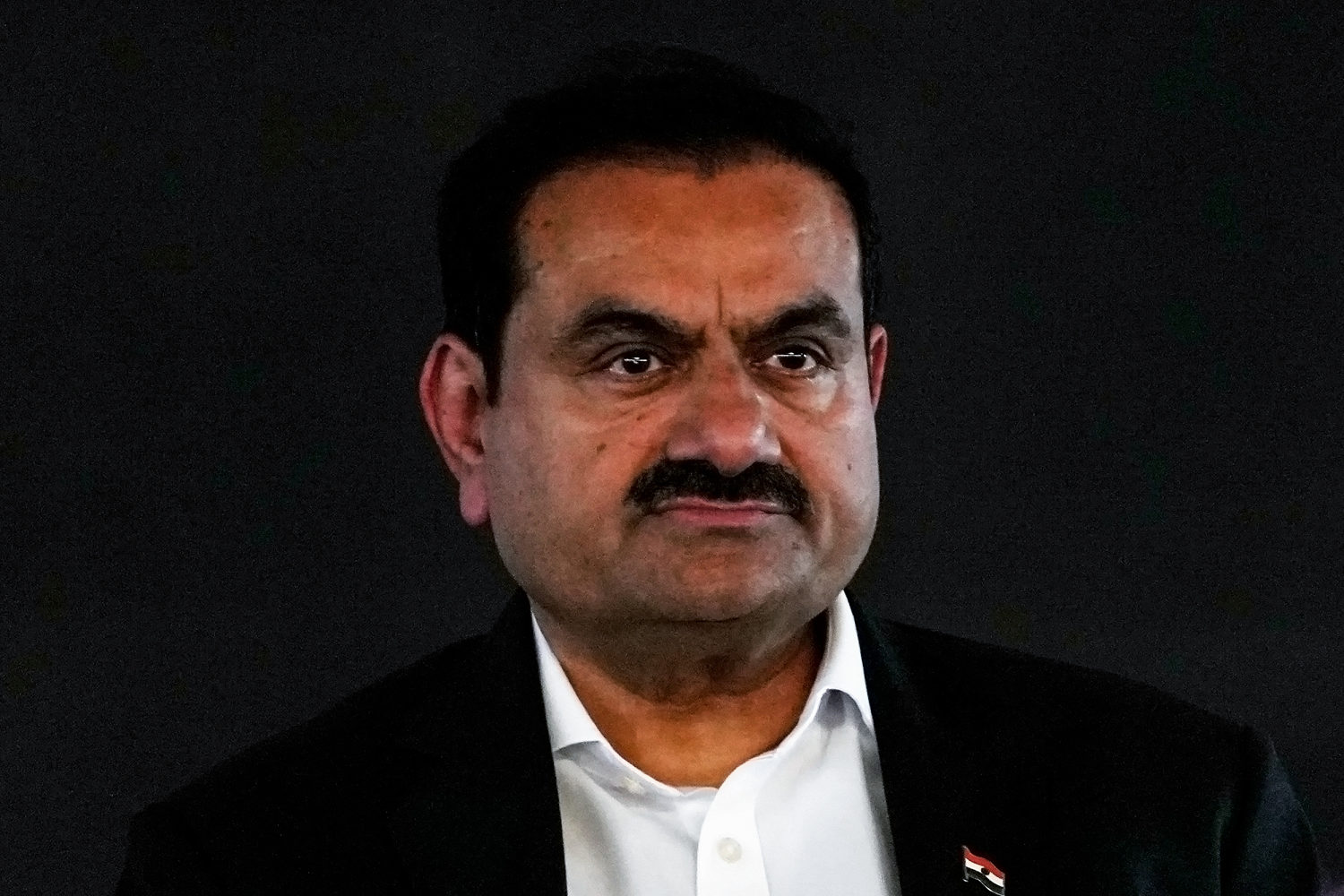
One of Indian billionaire industrialist Gautam Adani’s companies will pay the US Treasury $275 million to settle a probe into whether it violated US sanctions against Iran, the Treasury said in a statement on Monday. The US Treasury’s Office of Foreign Assets Control (OFAC) said the agreement had been reached with Adani Enterprises Limited (AEL), part of the billionaire’s sprawling conglomerate of companies.
-
Ryanair said it has “almost zero concerns” about its jet fuel supplies this summer amid fears over widespread cancellations linked to the Iran war but warned that holidaymakers booking their flights later this year could face higher fares. The budget airline’s chief executive, Michael O’Leary, said Europe had now found plenty of alternative sources of jet fuel, but persistent consumer uncertainty had led to lower summer bookings than usual, keeping fares down.
Could undersea cables – the sinews of the global internet – become the next frontier in the US-Israel war against Iran?
Last week, two Iranian state-linked media channels, Tasnim and Fars, suggested Iran could leverage its power over the strait of Hormuz, the 25-mile (40km) stretch between Iran and Oman, by charging US tech companies to use the internet cables that traverse the strait. Tasnim implied this could be a lucrative proposition, netting Iran hundreds of millions of dollars each year.
At least seven cables lie beneath the waters of the strait, many of them vital to the massive AI buildout under way in Gulf countries. But what exactly is Iran proposing, and is it a realistic course of action?
The Guardian wp:paragraph
هلدینگ کاسپین استانبول | خرید ملک در ترکیه | صرافی معتبر ایرانی در ترکیه | خرید و فروش طلا در ترکیه | مهاجرت به ترکیه | واردات و صادرات در ترکیه | نیازمندیهای ترکیه | اخبار ترکیه | اخبار جهانی | توریست ایران | خدمات توریستی در ایران | تورهای گردشگری ایران | هلدینگ اول | خدمات کاریابی و فریلنسری و شغل | مرجع اطلاعات ایران (همه چیز در ایران) | کیف پول و خدمات مالی و پرداخت یار | اخبار ایران | تابلو زنده قیمت ارز در ترکیه و استانبول | صرافی آنلاین ترکیه | قیمت طلا و نقره در ترکیه | سرمایه گذاری در ترکیه | جواهرات در ترکیه | نرخ لحظه ای ارزها در استانبول | قیمت دلار امروز در ترکیه | قیمت دلار استانبول امروز | قیمت لحظه ای دلار | اخبار روز ترکیه استانبول | اپلیکیشن ISTEX | اپلیکیشن قیمت لحظه ای دلار و یورو و لیر و ارزها در ترکیه
/wp:paragraph wp:paragraph /wp:paragraph
About the Author