The global economy is simultaneously undergoing two major transformations: the energy transition and the deepening of digitalization. Since both processes depend heavily on rare metals, a new geopolitical competition has emerged around these resources. This transformation has evolved beyond being merely a matter of conventional energy policy or mining strategy. It has become a comprehensive domain directly linked to technology, industry, defense and international power balances. Rare metals are no longer simply underground resources, but also the key to controlling global value chains.
In this context, the “Türkiye’s Critical and Strategic Minerals Report” prepared by our Ministry of Energy and Natural Resources is a highly significant and strategic document, as it places this global landscape into a quantitative and institutional framework specific to Türkiye.
The detailed criticality analyses conducted for 37 out of 63 candidate minerals demonstrate that Türkiye is directly affected across a broad spectrum, ranging from lithium and rare earth elements to gallium and germanium. In particular, the inclusion of minerals such as lithium, titanium, copper, aluminum, manganese and iron in the category of highly important critical minerals is especially noteworthy in terms of the energy transition and the defense industry. In addition, the classification of rare earth elements within the important critical minerals category underlines the supply risks that Türkiye is likely to face in the coming period.
At this very point, the truly critical question is this: Will Türkiye manage this process merely as a country possessing critical minerals, or will it transform into a strategic actor that integrates these resources with industry, technology and foreign policy?
The case of China is particularly instructive in this regard. China did not limit itself to being merely a producer of rare metals. It simultaneously developed refining, processing, high-tech manufacturing, patents, and research and development (R&D) capabilities. It attracted production facilities to the country, institutionalized technology transfer through joint ventures, and established a structure capable of controlling the entire supply chain.
Türkiye’s rare metals projection
From Türkiye’s perspective, the picture presented by the report offers a strong foundation for a strategic beginning. Holding a decisive position in the global market for certain minerals such as boron, placing many strategic minerals used in the defense industry on the national agenda, and announcing that a “Critical Minerals Strategy Document” will be prepared are all important milestones. Therefore, the real issue is not simply extracting minerals from beneath the ground, but determining what kind of value regime will be built above the ground.
For this reason, Türkiye’s rare metals projection should be shaped around three major turning points.
First, mining policy must cease to be an issue confined solely to the field of energy and natural resources and instead evolve into a coordinated framework integrated with industrial, university, defense and technology policies.
Second, rather than relying on a model based merely on the export of rare metals as raw materials, Türkiye should establish an industrial architecture aimed at refining intermediate products and high-value-added end products.
Third, the issue of environmental costs must be addressed. Unlike the West’s tendency to render such costs invisible, this field will not be sustainable unless a new production paradigm is developed that effectively manages water use, waste management and environmental impact.
On the other hand, Türkiye has crossed an important threshold in the defense industry over the past two decades, increasing its domestic production capacity to above 80% and transforming itself from a country that merely met its own needs into an actor capable of competing in international markets, developing products and exporting them. This momentum, achieved across a broad spectrum ranging from unmanned aerial vehicles (UAVs) and armored platforms to precision-guided munitions, radar systems and electronic warfare technologies, has largely been made possible by the expansion of domestic production capacity and the strengthening of system integration capabilities.
However, at the current stage, the sustainability of this success depends not only on the ability to develop platforms and software but also directly on the secure and continuous supply of the critical inputs upon which these systems rely, particularly rare metals and rare earth elements.
Rare metals in defense industry
For the defense industry, superalloys, metals resistant to high temperatures and pressure, elements with advanced magnetic and optical properties, and rare earth elements used in laser and sensor technologies constitute indispensable inputs. For this reason, global competition in the defense sector is increasingly being shaped by the security of rare metal supply chains.
The production of many critical systems depends on these metals, which may be small in quantity but possess exceptionally high strategic value. In this sense, rare metals form the invisible infrastructure of the defense industry. Elements such as neodymium, gallium, germanium, niobium and cobalt play critical roles in a wide range of applications, from missile systems and radar components to jet engines and electronic warfare equipment. The global concentration of the production and refining of these metals in a limited number of countries creates a serious strategic vulnerability for the defense industry. Recent supply restrictions, export controls and geopolitical tensions have made this vulnerability increasingly visible.
The momentum Türkiye has achieved in the defense industry is now entering a new phase. The issue is no longer merely developing systems, but establishing a supply and production architecture capable of securing the critical inputs of these systems over the long term. At the center of this architecture, two areas stand out prominently: boron and rare metals.
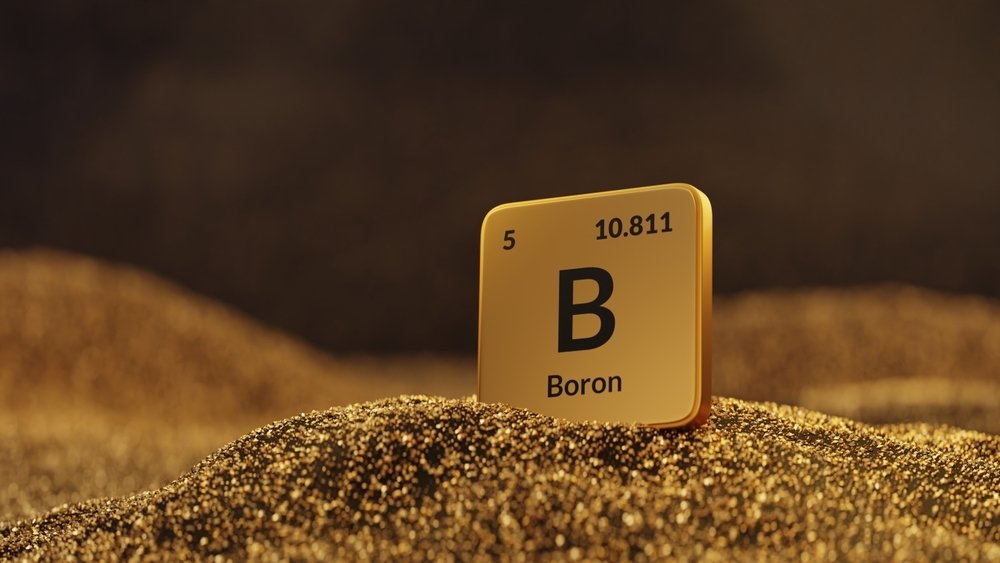
Boron is one of the strategic minerals in which Türkiye holds one of the strongest positions globally. Possessing a significant share of the world’s boron reserves provides Türkiye not only with an economic advantage, but also with a technological and strategic one. Boron and its derivatives are used in many areas of the defense industry, ranging from armor systems and rocket fuels to nuclear technologies and composite materials. Properties such as high durability, lightness, and heat resistance make boron indispensable for defense technologies. However, the strategic value of boron lies not merely in its extraction as a raw material, but in its integration into advanced material technologies.
The picture is more complex when it comes to rare metals. Although Türkiye possesses potential in certain groups of rare metals, the truly critical issue lies in the refining of these metals, their transformation into alloys and their production in the specific forms required by the defense industry. The production of many metals included in the strategic minerals lists of the Presidency of Defense Industries often occurs as a byproduct of other mining activities. This makes the production of rare metals a field that requires not only mining capabilities but also advanced technological expertise and sophisticated process knowledge.
Therefore, making the gains Türkiye has achieved in the defense industry sustainable requires a comprehensive approach in the fields of boron and rare metals. Such an approach must encompass an entire value chain extending from mineral extraction to the final components integrated into defense systems. Without strong coordination among universities, research centers, defense industry companies and public institutions, it will not be possible to establish this chain. Otherwise, even if Türkiye remains strong in platform development, it will continue to depend externally on critical inputs.
What can academy do?
The permanence of this transformation structurally depends on universities functioning as a strategic lever. Yet at this very critical juncture, it is evident that universities are not contributing sufficiently to the process and, to a large extent, have not even fully placed the issue on their agenda. However, the historical function of universities is not merely to transmit existing knowledge, but also to recognize newly emerging problem areas at an early stage, conceptualize these challenges, and generate meaningful knowledge for decision-makers. Fields such as rare metals, strategic minerals, defense industry supply chains, and the energy transition are now directly linked to national security, economic sovereignty, and technological competition. Despite this, it is difficult to argue that these issues have entered the core agenda of our universities in a comprehensive manner.
This situation is also clearly visible when one examines the academic work being produced in these fields. First, the quantity of research remains extremely insufficient. Topics such as rare metals, critical raw materials, defense industry inputs, and supply security have not evolved into sustained research programs within universities. Beyond scattered and often individual efforts, there is no institutionalized academic production pipeline in these areas. This indicates that universities still do not fully perceive the issue as a strategic matter.
The second, and deeper, problem concerns the quality of the existing work. A significant portion of current research remains disconnected from Türkiye’s concrete needs, often relying on repetitive literature reviews, failing to generate field data, and offering little contribution to policymaking processes. Summarizing global reports, superficially transferring foreign examples, or engaging in theoretical discussions detached from technical realities does not provide solutions to the complex challenges faced by decision-makers.
Yet it is precisely at this point that universities must assume responsibility. Fields such as rare metals and defense industry supply chains are not merely engineering problems; they are complex issues that simultaneously involve economic, environmental, foreign policy and security dimensions. The only institutions capable of managing this complexity are universities that can think interdisciplinarily, establish long-term research programs, and connect knowledge production with policymaking processes. Therefore, the sustainability of the transformation Türkiye has achieved in recent years ultimately depends on how universities position themselves within this process.
In conclusion, the global competition taking shape around rare metals presents Türkiye with both serious risks and historic opportunities. This field is no longer merely a matter of mining; it points to a strategic threshold directly connected to Türkiye’s model of industrialization, technological sovereignty, and international positioning. Possessing resources alone is no longer sufficient.
At this stage, boron and rare metals must be placed not only at the center of mining policies, but directly at the core of defense and technology policies. In an environment where global competition is becoming increasingly intense, the sustainability of strength in the defense industry depends on the secure, integrated, and high-value-added management of these critical inputs. What ultimately proves decisive is the institutional capacity, technological depth and long-term vision with which these resources are managed. Türkiye’s rare metals projection will ultimately be shaped by the answer it gives to precisely this question.
The views and opinions expressed in this article are solely those of the author. They do not necessarily reflect the editorial stance, values or position of Daily Sabah. The newspaper provides space for diverse perspectives as part of its commitment to open and informed public discussion.
DAILYSABAH
هلدینگ کاسپین استانبول | خرید ملک در ترکیه | صرافی معتبر ایرانی در ترکیه | خرید و فروش طلا در ترکیه | مهاجرت به ترکیه | واردات و صادرات در ترکیه | نیازمندیهای ترکیه | اخبار ترکیه | اخبار جهانی | توریست ایران | خدمات توریستی در ایران | تورهای گردشگری ایران | هلدینگ اول | خدمات کاریابی و فریلنسری و شغل | مرجع اطلاعات ایران (همه چیز در ایران) | کیف پول و خدمات مالی و پرداخت یار | اخبار ایران | تابلو زنده قیمت ارز در ترکیه و استانبول | صرافی آنلاین ترکیه | قیمت طلا و نقره در ترکیه | سرمایه گذاری در ترکیه | جواهرات در ترکیه | نرخ لحظه ای ارزها در استانبول | قیمت دلار امروز در ترکیه | قیمت دلار استانبول امروز | قیمت لحظه ای دلار | اخبار روز ترکیه استانبول | اپلیکیشن ISTEX | اپلیکیشن قیمت لحظه ای دلار و یورو و لیر و ارزها در ترکیه
About the Author