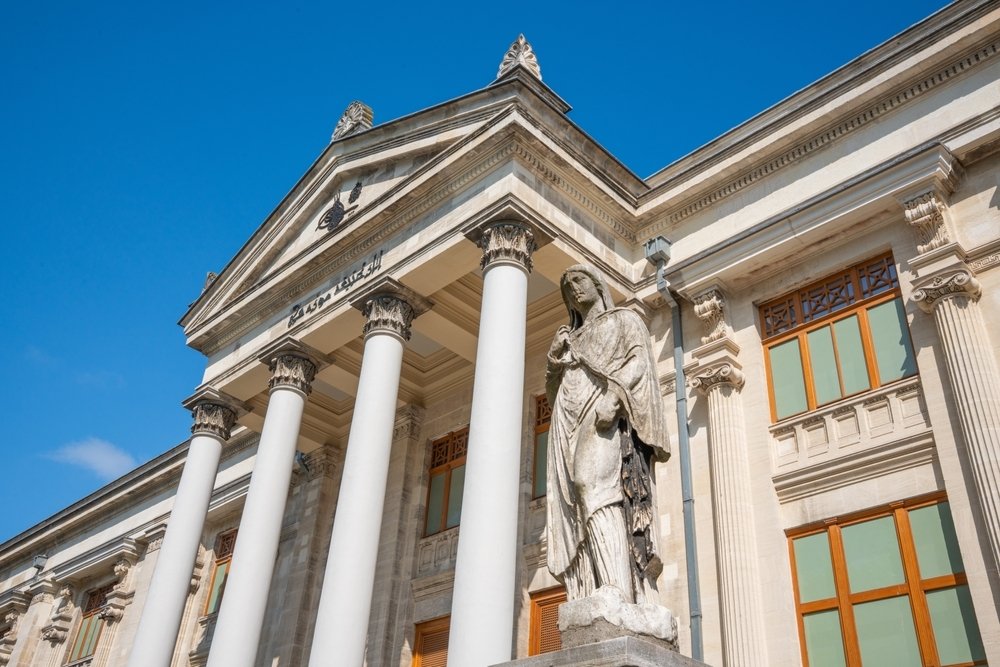
“The museum” is one of the most powerful spatial forms of the modern regime of knowledge. As indicated by the structure that Tony Bennett defines as the “exhibitionary complex,” a museum is not merely a space where objects are displayed, but also an apparatus of power in which knowledge is classified, visualized and legitimized.
In this context, the Istanbul Archaeological Museums are not only Türkiye’s oldest museum complex but also one of the epistemological turning points of Ottoman modernization. Viewed from today’s perspective, this ensemble – comprising the Archaeology Museum, the Museum of Ancient Orient and the Tiled Kiosk Museum – reveals not only the artifacts themselves, but also how a civilization perceived the world.
For this reason, it is more fruitful to interpret the Istanbul Archaeological Museums not merely as a “collection,” but as a “map of the mind.”
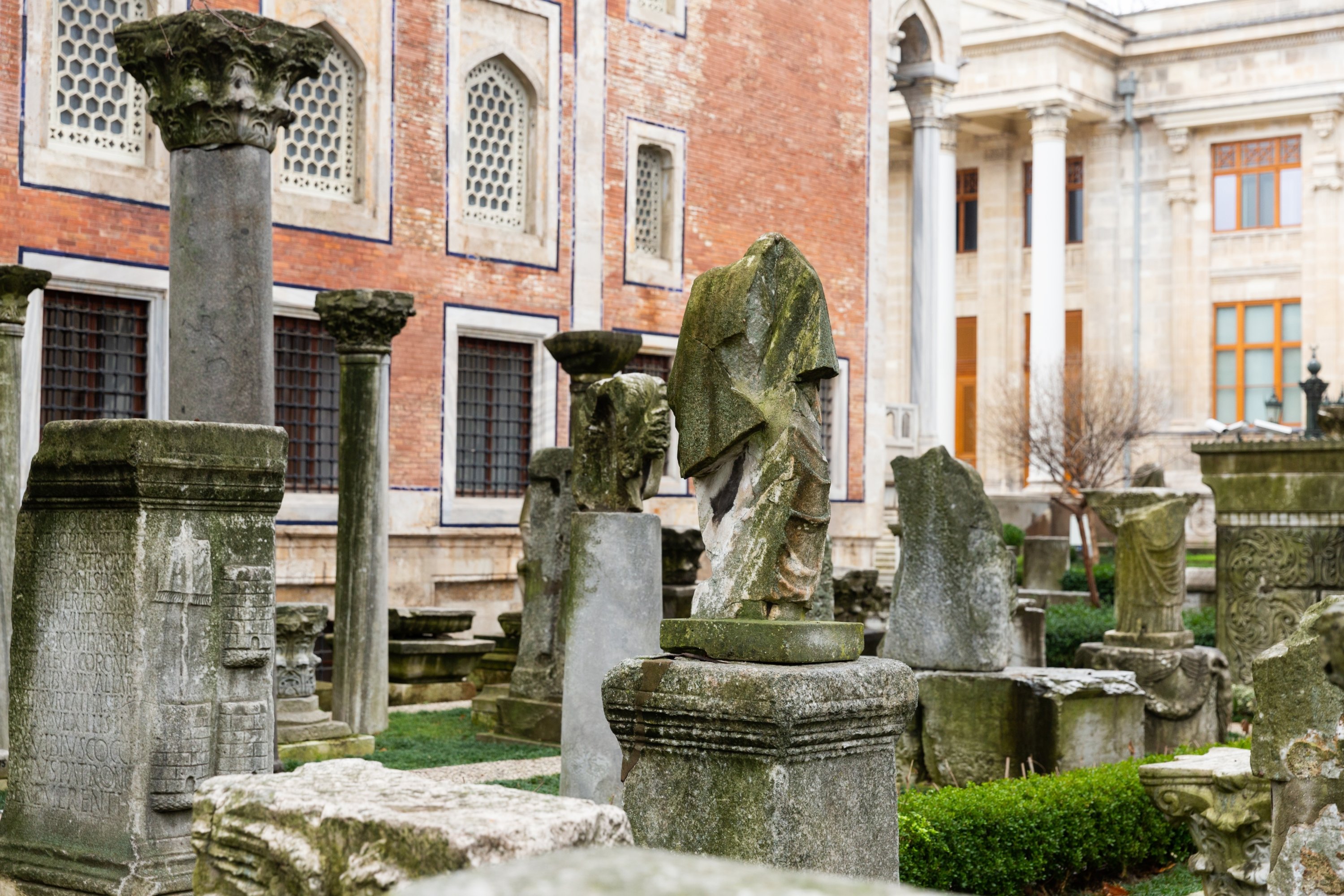
Empire’s oldest exhibition space
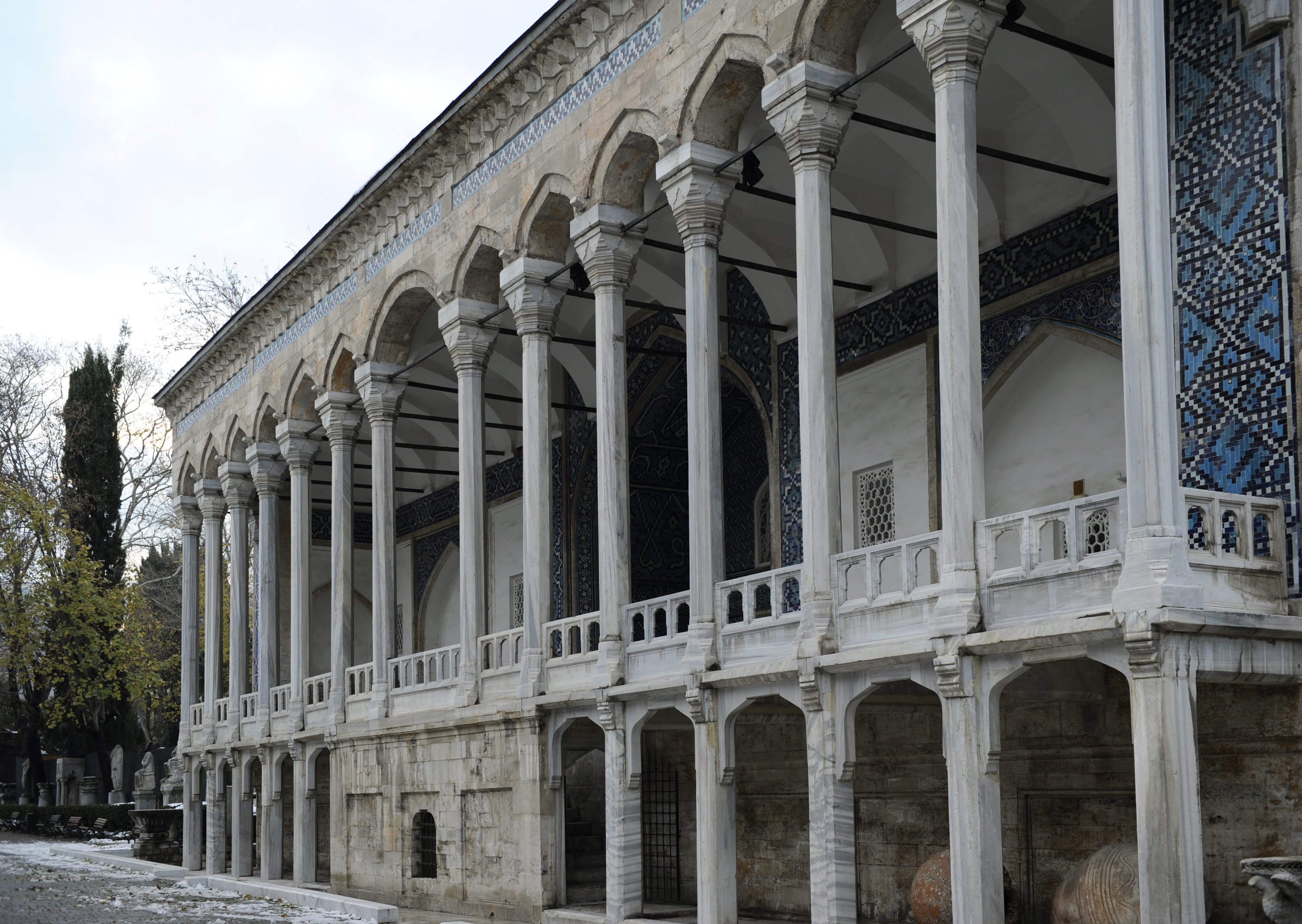
The oldest structure in the archaeology museum’s garden is the Tiled Kiosk. It was built in 1472 by Sultan Mehmed the Conqueror as a summer pavilion within the walls of Topkapı Palace. The structure, which bears traces of Seljuk architecture, was also known as “Sırça Saray” (“The Glass Palace”) and “Kasr-ı Kaşi” (“The Tiled Pavilion”) due to the tiles covering its interior and exterior surfaces.
Today, the Tiled Kiosk Museum displays approximately 2,000 works of Turkish-Islamic tile and ceramic art, spanning the period from the 11th century to the early 20th century. The aesthetic continuity between the Seljuk and Ottoman periods can be observed here within a chronological and regional framework.
This structure is one of the oldest architectural testimonies demonstrating that the Ottoman Empire was not merely a military or administrative power, but also a civilization that cultivated its own cultural memory.
From imperial museum to modern archaeology
The institutional origins of museology in the Ottoman Empire date back to the “Müze-i Hümayun” (“The Imperial Museum”), established in 1869. The first collections were housed in the Church of Hagia Irene, but the growing number of artifacts eventually rendered this space insufficient.
Consequently, the Tiled Kiosk from the period of Mehmed II, also known as Mehmed the Conqueror, was restored in 1880 and converted into a museum. However, the process acquired an entirely new dimension following Osman Hamdi Bey’s appointment as museum director in 1881.
Hamdi Bey is recognized not only as a museum director but also as the founder of modern archaeology in the Ottoman Empire. Through excavations ranging from Mount Nemrut to Lagina and from Boğazköy to Sidon, he mapped the archaeological landscape of the empire’s territories.
During the excavations he conducted in the Sidon region of Lebanon in 1887-1888, the Sidon Royal Necropolis was uncovered, and numerous significant artifacts – including the Alexander Sarcophagus – were brought to Istanbul. These discoveries established the Istanbul Archaeological Museums as a reference point not only regionally, but also on a global scale.
A new museum building was constructed across from the Tiled Kiosk Museum to house these artifacts. Designed by the renowned architect of the era, Alexandre Vallaury, the neoclassical structure was opened to the public in 1891.
A dialogue between East, West
This arrangement is not merely an architectural composition, but also a powerful intellectual encounter.
While the Neo-Classical archaeology museum building represents the West’s aesthetic language of classifying antiquity, the Tiled Kiosk directly across from it represents the continuity of Eastern and Islamic art.
This reciprocity tells us three things: First, there is an aesthetic synthesis in which East and West are not seen as disconnected but are instead conceived as existing side by side within the same space.
Second, the Tiled Kiosk serves as a historical memory space opening onto the Ottoman roots, the Seljuk and early Islamic aesthetics.
Third, the Archaeology Museum establishes a modern system of knowledge that systematically classifies the heritage of the ancient world (Greek, Roman, Egyptian, and Mesopotamian).
The courtyard between these two structures is, in fact, a dialogue of civilizations. One is a living aesthetic heritage, the other is cataloged history.
Regulation of Antiquities
Enacted in 1884, the Regulation of Antiquities established that ancient artifacts in Ottoman Empire were considered state property and prohibited their removal from the country.
This regulation was not merely a conservation law but also a centralization of cultural heritage. By bringing the historical layers within its own geography under control, the Ottoman Empire transformed them into a part of the state’s memory.
In this regard, Ottoman museology followed a different path from Western colonial museology: Not expansion outward, but concentration inward.
Map of power
The institutions that come to mind today when we speak of the world’s great museums – the British Museum, the Louvre and the Pergamon Museum – are not merely cultural centers.
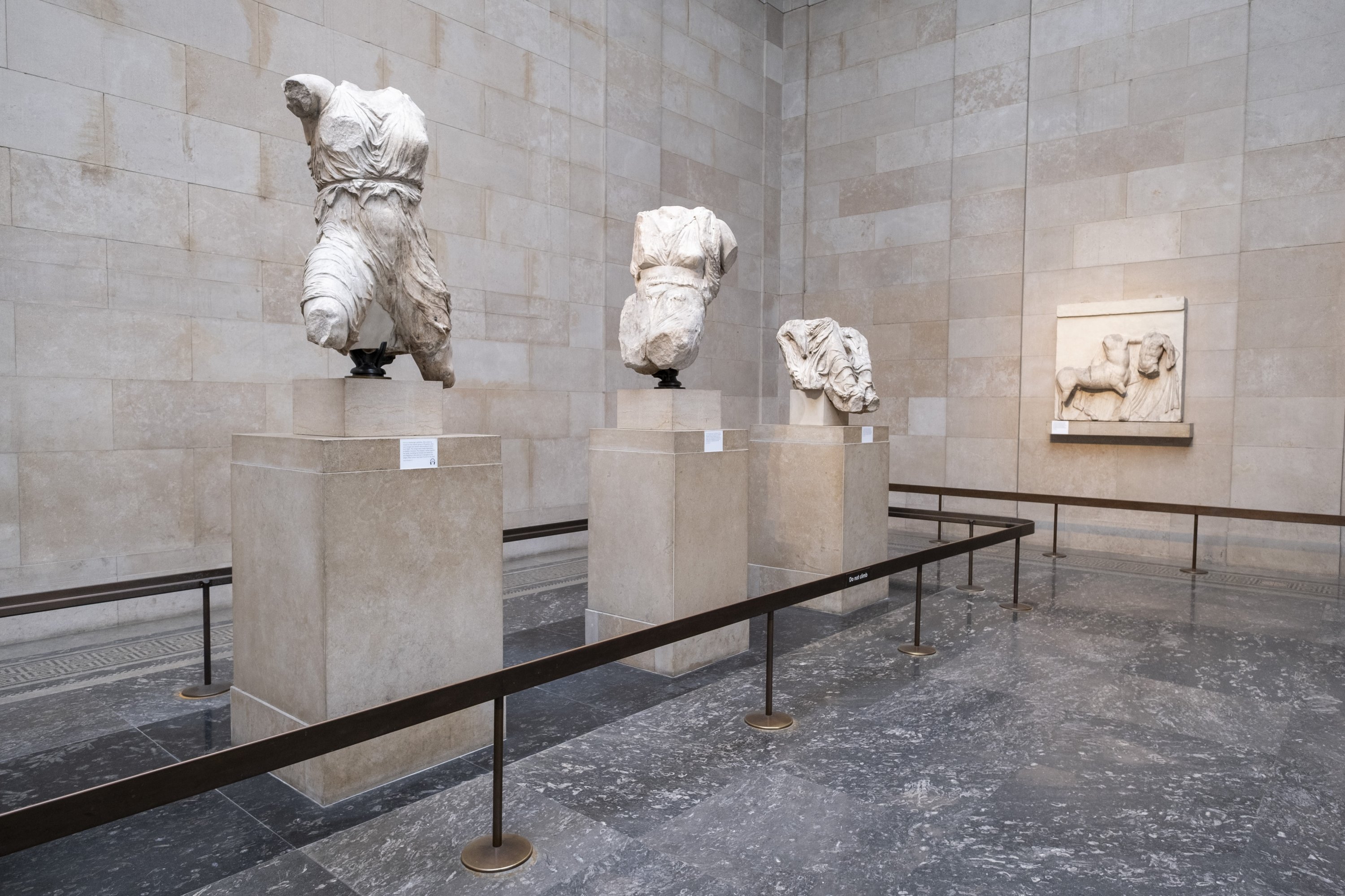
Historically, these museums have been shaped by artifacts from:
- Athens
- Egypt
- Mesopotamia
- North Africa
- Anatolia
For example, today the Alexander Sarcophagus is in Istanbul. However, it was found in Sidon, which is within the territory of modern-day Lebanon. Yet during the Ottoman period, this region was within the empire’s borders. Therefore, the artifact is not “acquired from abroad,” but rather part of an internal circulation within the empire.
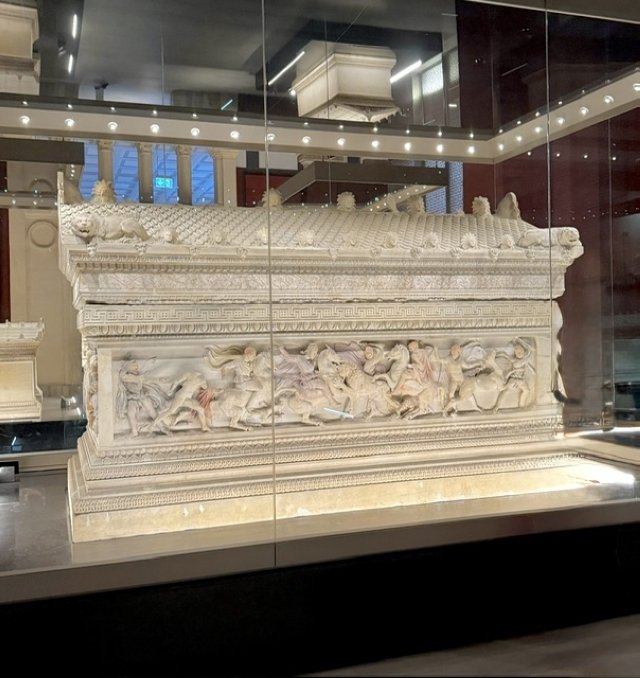
This distinction is critical for understanding the logic behind the formation of museums.
Desire to ‘collect the world’
In the 19th century, European empires sought to control not only territories but also knowledge. Maps were drawn, plants were classified, languages were cataloged and ancient artifacts were transported to central locations.
This process transformed the museum into an “archive of civilization.”
A visitor to London could see Egypt, Greece, Mesopotamia and Africa all under one roof. This situation articulated the following claim: “The world has opened up to us and we are the center that makes sense of it.”
For many years, the British Museum defined itself as a “universal museum.” However, this claim to universality was eventually criticized. Because the question of why “the universal” was constantly concentrated in the same center remained unanswered.
Visitor economy, exhibition value
Today, museums are not merely institutions that tell the story of history. They are also economic and cultural brands. The Louvre Museum is one of the clearest examples of this.
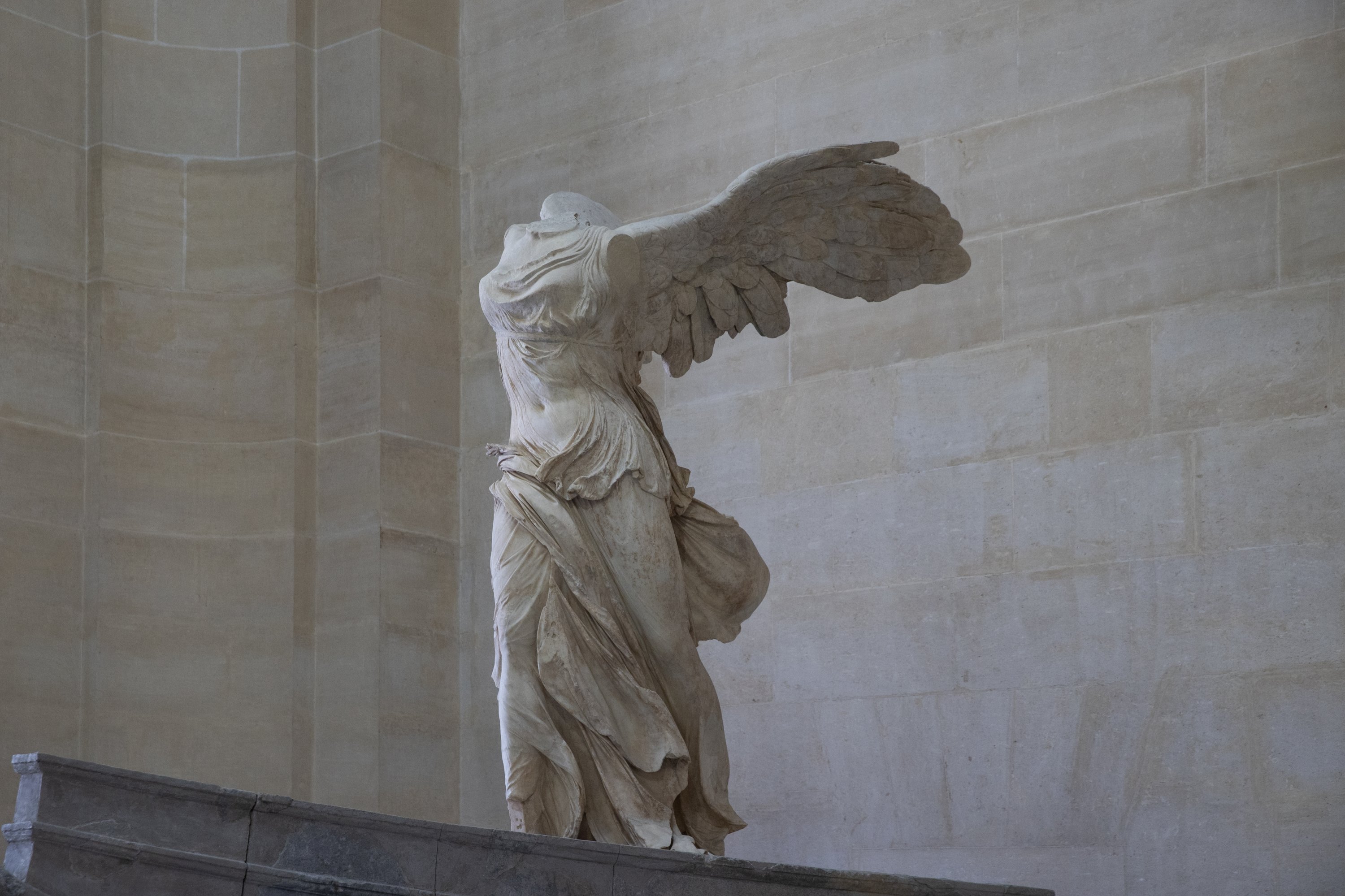
Works such as the Mona Lisa, the Rosetta Stone, or the Elgin Marbles are not merely objects of art history. They are also hubs of the global tourism economy.
This has transformed museums from cultural showcases into global attractions.
Representation, colonial mentalities
Frantz Fanon argues that colonialism does not merely seize land but also the mind and forms of representation.
From this perspective, museums in London, Paris and Berlin do not merely exhibit artifacts. They also determine who gets to narrate the world’s past.
Politics of history, time objects
For Achille Mbembe, a postcolonial thinker, colonialism is not only the control of land, but also the control of memory, objects and time.
In this sense, major museums do not merely exhibit the world. They also incorporate it into their own narrative system. To exhibit a civilization is to assume the right to represent it.
The Sarr-Savoy report, new debate
The Sarr-Savoy Report has made it clear that collections in European museums cannot be interpreted independently of the unequal power relations of the colonial era.
French President Emmanuel Macron’s speech in 2018 November in Africa and the subsequent repatriation process have elevated this debate to the level of official policy. According to the report, the issue is not merely the return of artifacts but the redistribution of cultural memory.
Not a memory, but a map of power
When I look at the Istanbul Archaeology Museums today in light of all these discussions and theoretical readings, what I see is that artifacts obtained from regions where the Ottoman Empire ruled – but without establishing a colonial system of domination and plunder – have been brought together at the imperial center. This situation is the exact opposite of the kind of cultural plunder or colonial spectacle encountered in the formation stories of many major museums in the West.
What I encounter here is neither a cultural export, nor an ideological tool aimed at shaping minds, nor a desire for coercive dominance over distant lands. On the contrary, what I see is how the past is collected, classified and reproduced within a central memory.
For this reason, the museum is not merely an aesthetic exhibition space. It is also a map where historical and political relationships become visible.
The discourse on decolonization gains meaning precisely at this point. The issue is not to erase this map entirely; rather, it is to be able to reread it with a more transparent, layered and critical eye.
And perhaps the most important question that still needs to be asked today is this: Does the future take shape within the language established by whoever narrates the past?
DAILYSABAH
هلدینگ کاسپین استانبول | خرید ملک در ترکیه | صرافی معتبر ایرانی در ترکیه | خرید و فروش طلا در ترکیه | مهاجرت به ترکیه | واردات و صادرات در ترکیه | نیازمندیهای ترکیه | اخبار ترکیه | اخبار جهانی | توریست ایران | خدمات توریستی در ایران | تورهای گردشگری ایران | هلدینگ اول | خدمات کاریابی و فریلنسری و شغل | مرجع اطلاعات ایران (همه چیز در ایران) | کیف پول و خدمات مالی و پرداخت یار | اخبار ایران | تابلو زنده قیمت ارز در ترکیه و استانبول | صرافی آنلاین ترکیه | قیمت طلا و نقره در ترکیه | سرمایه گذاری در ترکیه | جواهرات در ترکیه | نرخ لحظه ای ارزها در استانبول | قیمت دلار امروز در ترکیه | قیمت دلار استانبول امروز | قیمت لحظه ای دلار | اخبار روز ترکیه استانبول | اپلیکیشن ISTEX | اپلیکیشن قیمت لحظه ای دلار و یورو و لیر و ارزها در ترکیه
About the Author