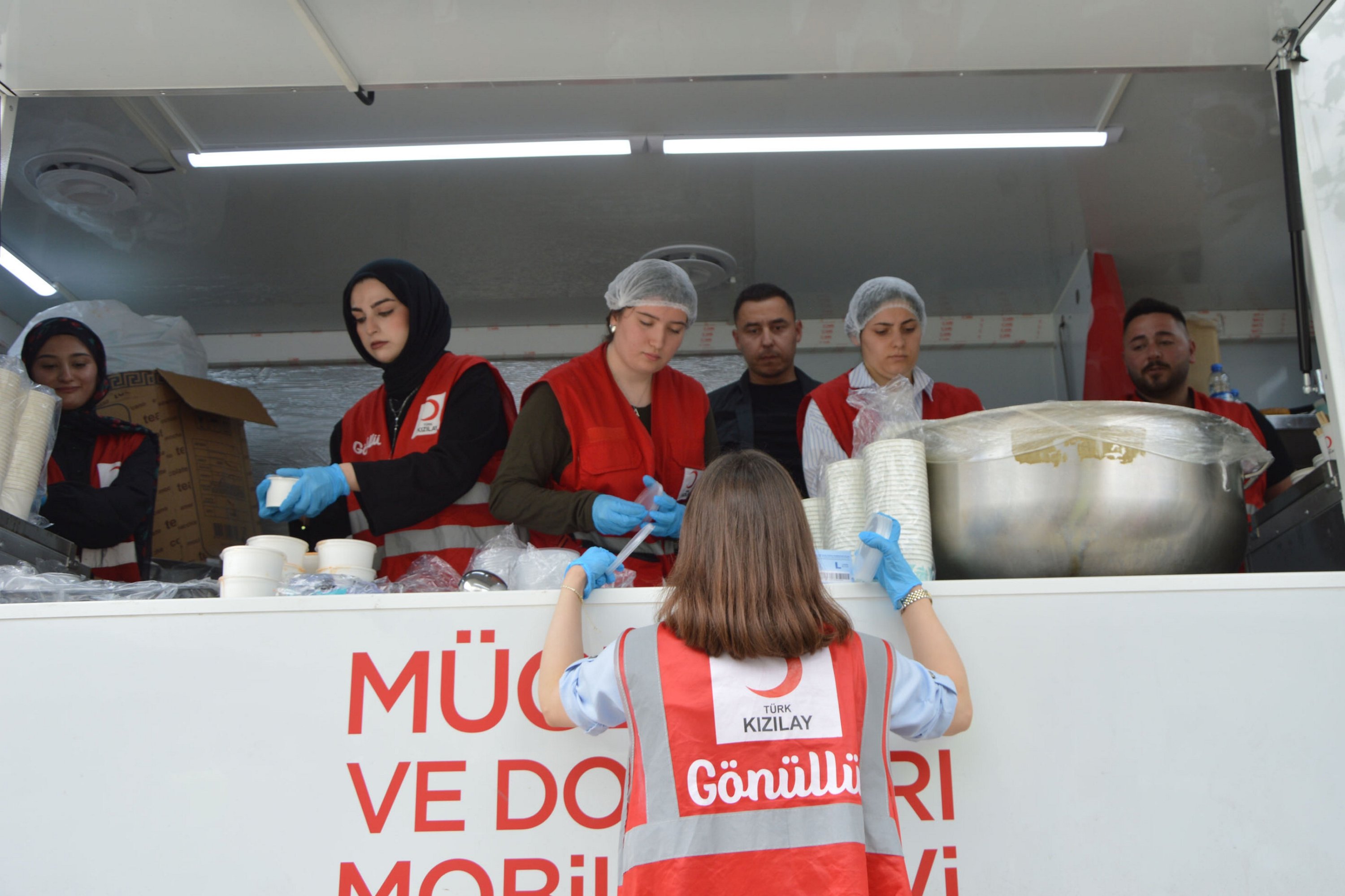
The Turkish Parliament is preparing to debate legislation that would formally redefine and strengthen one of the country’s oldest and most recognizable institutions: the Turkish Red Crescent.
Submitted to Parliament by deputies from the ruling Justice and Development Party (AK Party), the proposed Turkish Red Crescent Law seeks to codify the organization’s legal status, clarify its humanitarian mandate and expand operational tools designed to improve disaster response, health services and emergency coordination.
Supporters describe the legislation as a long-awaited modernization effort for an institution that has stood at the center of Türkiye’s humanitarian landscape for more than a century and a half.
Founded in 1868 during the late Ottoman era as the “Ottoman Society for Aiding Wounded and Ailing Soldiers,” Red Crescent emerged amid the empire’s wars and humanitarian crises. It later became part of the broader International Red Cross and Red Crescent Movement, evolving into the Turkish Red Crescent after the establishment of the republic.
Throughout its history, the organization has played a prominent role in some of Türkiye’s defining emergencies, from wartime relief and refugee assistance to earthquakes, pandemics and international humanitarian operations.
Its work became particularly visible during the 1999 Marmara earthquake, the Syrian refugee crisis and the devastating twin earthquakes of Feb. 6, 2023, which killed more than 50,000 people and displaced millions across southern Türkiye.
Beyond Türkiye’s borders, Red Crescent has increasingly emerged as a major humanitarian actor aligned with Ankara’s broader disaster diplomacy and aid outreach. The organization has delivered emergency assistance, food aid, shelter and medical support across conflict zones and disaster-hit regions stretching from Syria, Gaza and Afghanistan to Somalia, Pakistan and Ukraine.
Red Crescent has also maintained long-term humanitarian programs abroad, including refugee assistance, orphan support, health projects and Ramadan and Eid aid campaigns conducted through local partnerships and national Red Crescent societies.
The new proposal aims to place that role on firmer legal foundations.
At its core, the bill defines Red Crescent as Türkiye’s official national humanitarian society operating under the Geneva Conventions and the principles of the International Red Cross and Red Crescent Movement.
Expanding mission
According to the text submitted to Parliament, Red Crescent’s mission is to assist vulnerable populations without discrimination, prevent disease, improve health conditions and ease suffering during disasters, emergencies and wartime.
The proposal formally defines Red Crescent as Türkiye’s nationally recognized humanitarian society under the Geneva Conventions and grants it exclusive rights and responsibilities tied to those international obligations.
It also places legal protection over the organization’s name, flag and emblem, recognizing them as internationally protected symbols of neutrality and humanitarian aid.
Unauthorized use of Red Crescent symbols or branding would be prohibited except by institutions established under its authority, a move supporters say aims to prevent misuse and preserve the organization’s credibility at home and abroad.
The bill significantly expands Red Crescent’s operational mandate during crises. With coordination from relevant public institutions, the organization would be authorized to visit detention facilities and locations where prisoners of war or civilians are held, monitor humanitarian conditions, investigate missing persons, facilitate family communication and deliver aid.
It could also serve as an intermediary in prisoner exchanges and family reunification efforts.
To carry out such duties, Red Crescent would gain regulated access to necessary personal data through formal protocols with state institutions, limited strictly to authorized personnel and humanitarian purposes.
The proposal also allows the organization to access facilities sheltering disaster-affected or displaced populations to conduct humanitarian observation and reporting.
Another notable provision centralizes international humanitarian assistance. Under the bill, Red Crescent would become the sole authorized institution to receive and distribute financial and in-kind aid sent to Türkiye by the International Federation of Red Cross and Red Crescent Societies, the International Committee of the Red Cross and partner national societies, a framework supporters say would reduce fragmentation and duplication during emergencies.
New authorities
Perhaps the most consequential reforms involve procurement and disaster logistics.
The legislation classifies disaster preparedness systems, temporary shelter products, first-aid services and humanitarian logistics provided by Red Crescent and its affiliated enterprises as “strategic procurement.”
This would allow public institutions to source such services directly from Red Crescent without standard Public Procurement Law procedures, while still requiring transparency, oversight and efficient use of public resources.
Supporters say the change reflects lessons from recent disasters, where speed and supply security often proved more critical than lengthy procurement processes.
The proposal also strengthens institutional cooperation. Public agencies could allocate equipment and movable assets to the Red Crescent free of charge when deemed in the public interest, while social assistance data held by the Family and Social Services Ministry could be shared through protocols to help avoid duplication and reach vulnerable populations more effectively.
Financial and operational exemptions form another pillar of the bill. Medical and scientific equipment imported for humanitarian use would be exempt from customs duties, while several fees linked to public-service activities would also be waived.
Blood services, among the Red Crescent’s largest and most visible operations, receive particular attention. Under the proposal, the Social Security Institution (SGK) would directly reimburse the organization for blood products supplied to public hospitals and university health care providers.
The bill additionally extends monetary compensation to Red Crescent personnel actively working during wars, disasters and extraordinary situations, placing them alongside other frontline responders recognized under Turkish law.
The Red Crescent’s internal governance would continue to be regulated through a statute approved by the president, while the Turkish Civil Code and Associations Law would apply where the new legislation remains silent.
For supporters, the proposal represents more than an administrative update. They describe it as an effort to equip one of Türkiye’s oldest humanitarian institutions for an era marked by more frequent disasters, regional instability and increasingly complex aid operations.
If adopted, the law would provide Red Crescent with a clearer legal mandate, stronger operational tools and a more defined institutional role as Türkiye’s primary humanitarian responder.
DAILYSABAH
هلدینگ کاسپین استانبول | خرید ملک در ترکیه | صرافی معتبر ایرانی در ترکیه | خرید و فروش طلا در ترکیه | مهاجرت به ترکیه | واردات و صادرات در ترکیه | نیازمندیهای ترکیه | اخبار ترکیه | اخبار جهانی | توریست ایران | خدمات توریستی در ایران | تورهای گردشگری ایران | هلدینگ اول | خدمات کاریابی و فریلنسری و شغل | مرجع اطلاعات ایران (همه چیز در ایران) | کیف پول و خدمات مالی و پرداخت یار | اخبار ایران | تابلو زنده قیمت ارز در ترکیه و استانبول | صرافی آنلاین ترکیه | قیمت طلا و نقره در ترکیه | سرمایه گذاری در ترکیه | جواهرات در ترکیه | نرخ لحظه ای ارزها در استانبول | قیمت دلار امروز در ترکیه | قیمت دلار استانبول امروز | قیمت لحظه ای دلار | اخبار روز ترکیه استانبول | اپلیکیشن ISTEX | اپلیکیشن قیمت لحظه ای دلار و یورو و لیر و ارزها در ترکیه
About the Author



