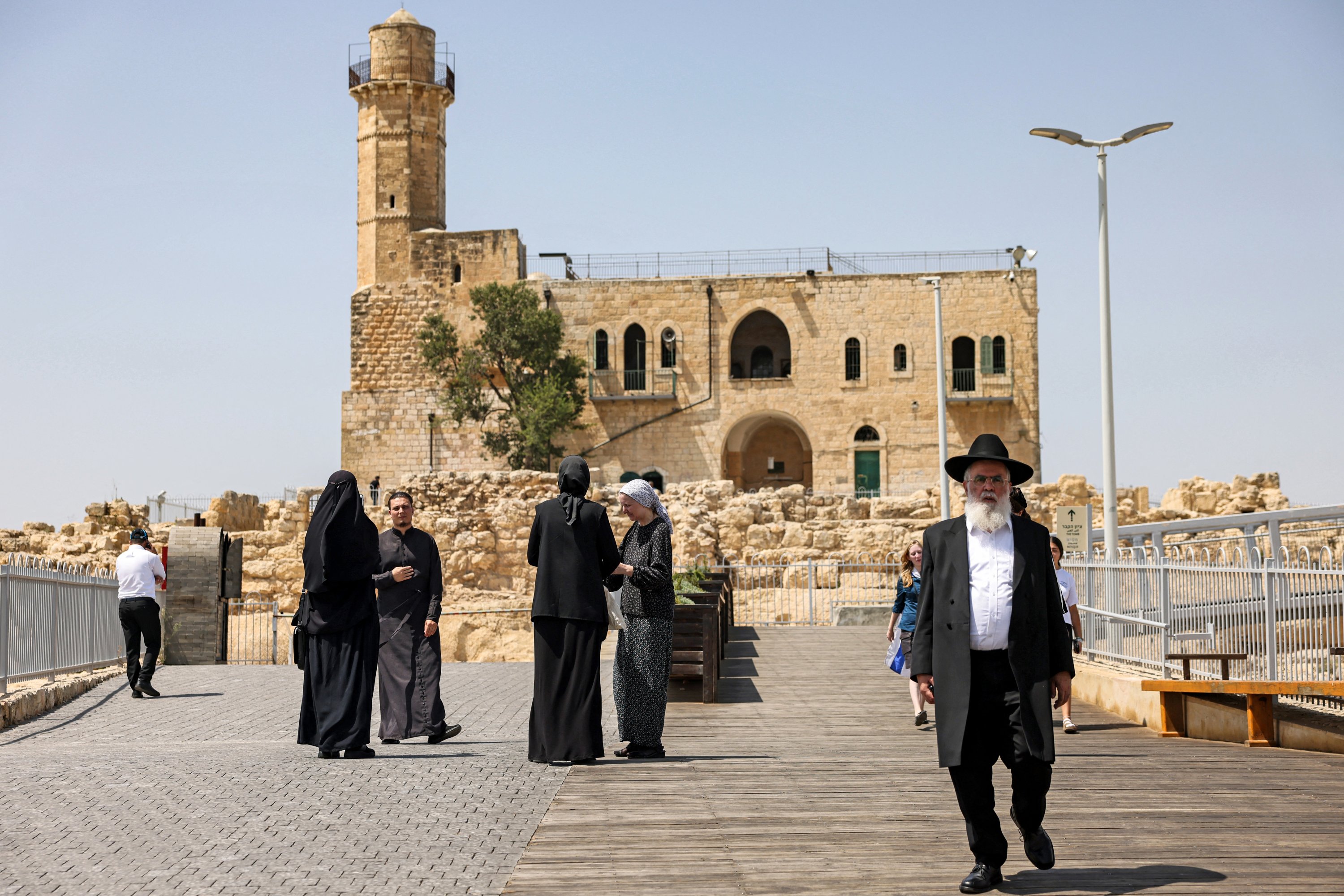
The Palestinian Authority condemned Israel’s decision to expropriate land near the Nabi Samuel area north of Jerusalem in the occupied West Bank, warning that the move threatens Palestinian religious and historical heritage around the site associated with the Biblical prophet Samuel.
“This confiscation is part of a policy aimed at suffocating the mosque and completely isolating it from its Palestinian surroundings, turning it into a Jewish archaeological site by force of arms,” the ministry said in a statement.
The site, known as Nabi Samuel, is believed in Christian, Jewish, and Muslim tradition to include the grave of the Biblical figure of prophet Samuel, and includes a mosque owned by Palestinian religious authorities, the Waqf.
“This marks the first time that the (Israeli) Civil Administration has expropriated a holy site owned by the Muslim Waqf in the occupied West Bank”, Israeli settlement watchdog Peace Now said in a statement.
According to the Israeli order, dated May 9 but published this week, the area for expropriation will include 109.79 dunams (roughly 11 hectares), including access roads, agricultural land, and a mosque.
The order says the decision was made “for the development and preservation of the archaeological site of the Tomb of the Prophet Samuel.”
Peace Now’s Yonatan Mizrahi pointed out that Israeli authorities had already taken over administration of much of the land by converting it into an Israeli national park in the 1990s, decades after demolishing a Palestinian village on the site.
“There was no need to decide about the expropriation of the land,” Mizrahi told AFP, while Peace Now denounced “the messianic agenda of the Israeli government.”
Israel has occupied the West Bank since 1967.
In 2025, Israel expropriated an area in the center of the Tomb of the Patriarchs in the southern West Bank city of Hebron, arguing the order concerned an open area intended for roofing works and not a religious structure.