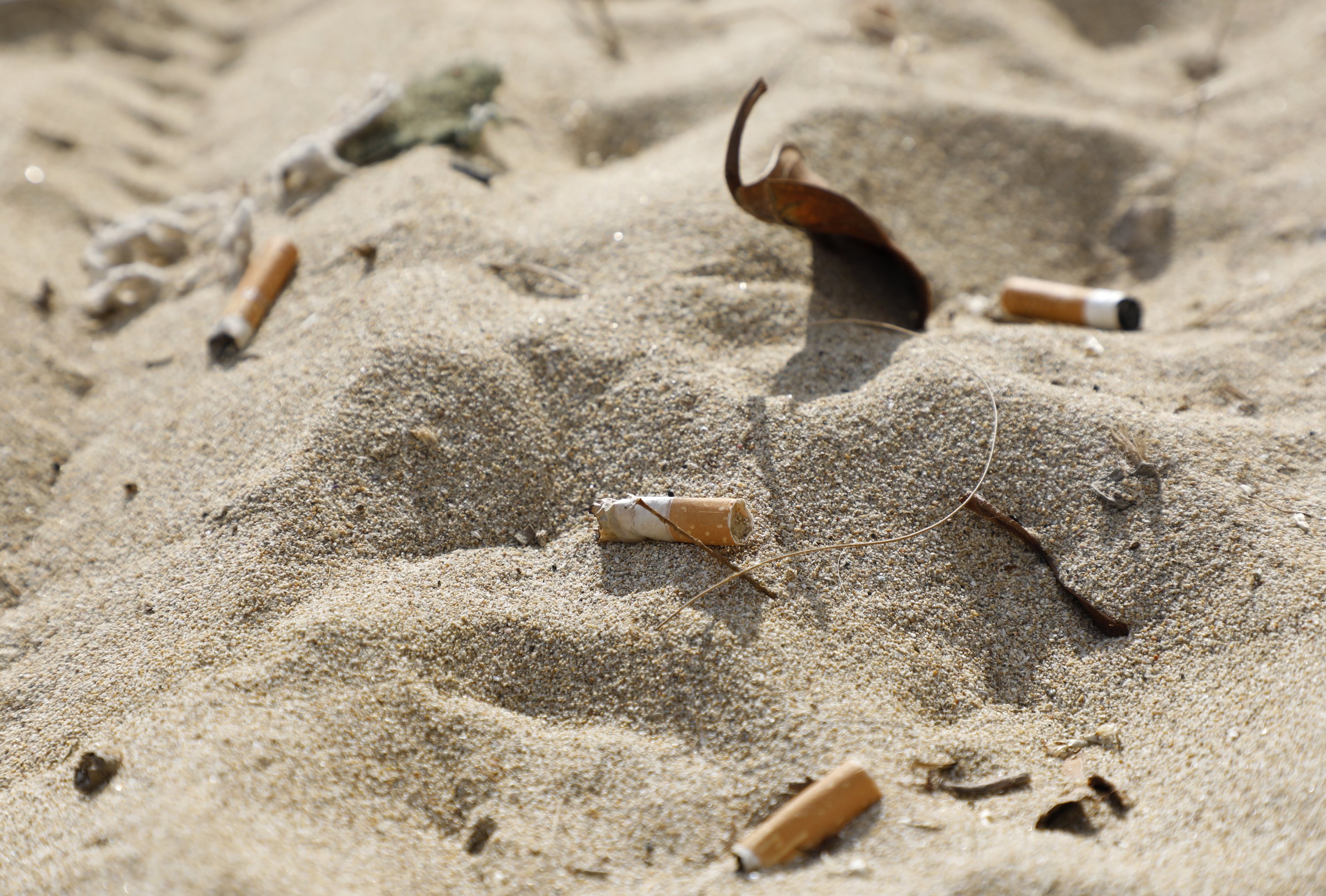
Smoking will be prohibited at several popular beaches in Antalya as authorities expand smoke-free zones and step up efforts to reduce environmental pollution along the country’s coastline.
Local officials said the effort is part of Antalya’s wider environmental agenda as the city prepares to host the COP31 climate conference later this year. The new restrictions will initially apply to Lara, Belek, Çamyuva and Beach Park beaches, marking the first phase of a broader initiative aimed at creating smoke-free public spaces.
The move comes as Turkish officials consider expanding nationwide tobacco restrictions. Draft legislation being prepared by lawmakers would ban smoking and other tobacco products, including hookahs, in a wider range of public areas, including beaches, children’s playgrounds, sports facilities, educational institutions, health care facilities and places of prayer.
İzzet Ünlü, president of the Antalya Maritime Platform, called for a nationwide ban on smoking at beaches and urged lawmakers to impose tougher penalties on people who discard cigarette butts in public spaces.
Ünlü pointed to Spain and France, two of Turkey’s main competitors in Mediterranean tourism, where smoking is prohibited on many beaches and violations can result in fines ranging from 30 euros ($34) to as much as 2,000 euros ($2,270).
He also warned that cigarette filters can remain in the environment for years and may contribute to water pollution when carried into rivers and waterways.
Under the proposed legislation, smoking would also be prohibited in outdoor sections of restaurants and cafes that serve food and beverages. Businesses would not be allowed to provide food or drink service in designated smoking areas.
The draft law would significantly increase penalties for violations. Individuals caught smoking in prohibited areas currently face a fine of 1,764 Turkish lira ($45). That penalty would increase to 5,000 lira ($128) under the proposal.
Businesses that violate the regulations could face fines ranging from 5,000 lira to 10 million lira ($255 to $255,000), as well as possible license revocation.