Home – CBSNews.com
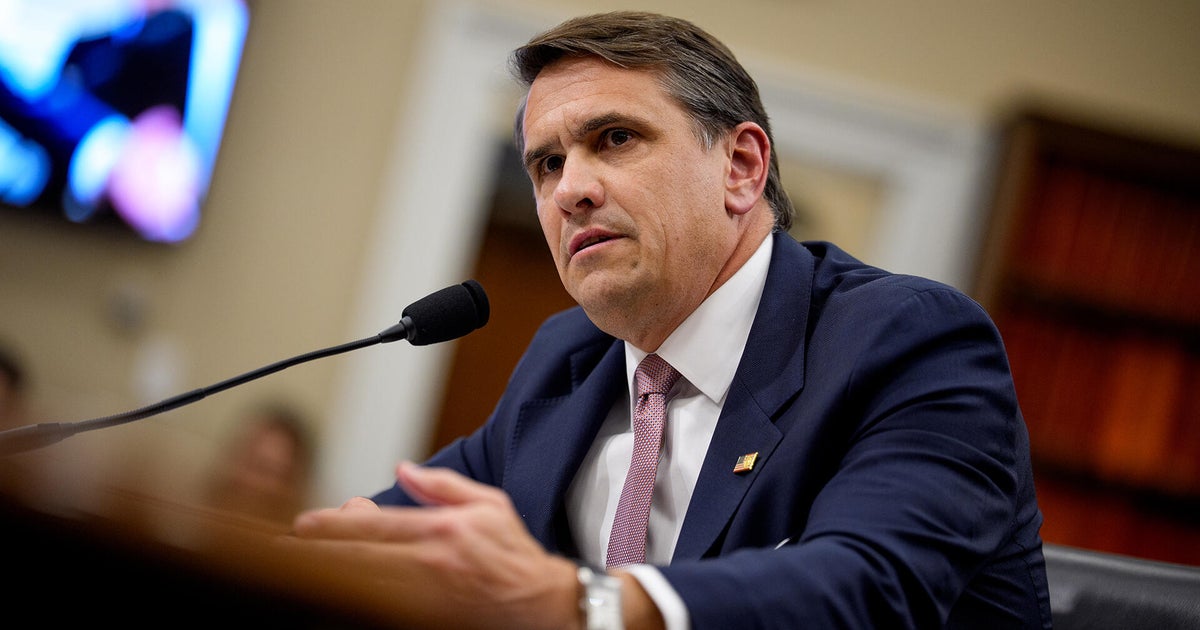
President Trump’s top economic adviser struck a positive tone on high gas prices as the summer travel season gets underway, saying they will fall once a deal is signed with Iran and the Strait of Hormuz reopens.
“The gas price story is a serious one,” National Economic Council Director Kevin Hassett told reporters on Friday. “We understand that people are hurting on that, and we’ve taken a number of measures to reduce the disruption, and we expect it to be temporary.”
The current average price for a gallon of regular is $4.22, according to AAA, about $1.10 more than a year ago at this time. But the prices have fallen recently, about 24 cents in the last month.
Hassett was also asked about the high price of fertilizer, which is made in part with oil, seriously impacting farmers in the U.S.
“You’re right that because of the closure of the strait, that the part of fertilizer that comes from oil, like the ammonia-based things and the sulfur, that those things are seeing skyrocketing prices,” he said. “But our expectation is that once we have a deal, then that’s something that can be fixed relatively quickly.”
However, it may not be all that fast. It may take until mid- to late-2027 for prices to reach pre-war levels, GasBuddy petroleum expert Patrick De Haan told CBS News earlier this week.
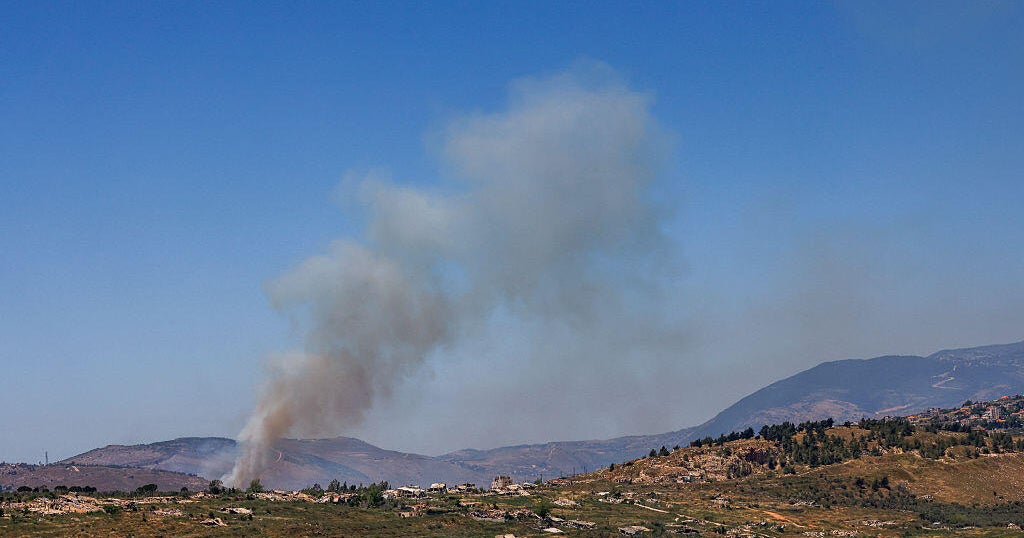
At least 32 people were killed in the last day in Lebanon amid the expanding war with Israel, according to the Lebanese Ministry of Public Health.
The overall death toll from the war, starting March 2, increased to 3,558 on Friday, the health ministry said. Another 10,870 people have been injured, an increase of 137 from Thursday’s update.
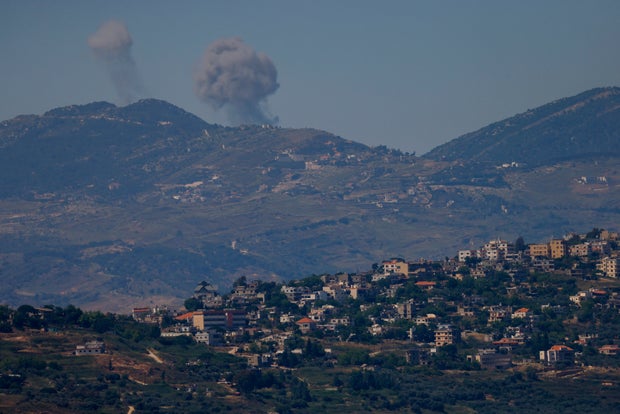
Jalaa Marey/AFP via Getty Images
The violence is ongoing in Lebanon after Hezbollah, the Iranian-backed militant group, rejected a ceasefire deal bartered by Israel and Lebanon, and mediated by the U.S., earlier this week.
The U.S. has redirected 129 commercial vessels attempting to leave or enter Iranian ports since the start of the blockade, U.S. Central Command said.
The total is an increase of two ships in the last 24 hours.
Six ships have been disabled to “ensure compliance” with the blockade, the U.S. said, most recently the M/T Lexie on Tuesday.
Lebanon’s prime minister said the ongoing fighting between Hezbollah and Israel is a war “that is not being fought for our sake, but on our land and at the expense of our people.”
Addressing a humanitarian appeal conference in Beirut, Nawaf Salam criticized Iran, which backs Hezbollah, saying it is using Lebanon as a bargaining chip in negotiations with the U.S.
“Have mercy on our south and stop treating it and its people as merely a card to improve the terms of your negotiations,” Salam said in a speech.
He added that Hezbollah’s rejection of the latest ceasefire agreement between Israel and Lebanon will worsen the humanitarian crisis in the country. Salam said the Lebanese state had helped nearly one million people displaced in the conflict.
The prime minister also called on the ambassadors and representatives of international organizations to pressure Israel to spot attacking civilians and destroying villages.
Iran-backed Hezbollah claims it carried out around 20 attacks on Israeli troops in southern Lebanon on Friday, according to a Telegram channel associated with the group.
The attacks were said to be in response to what Hezbollah claims were Israeli ceasefire violations and previous strikes on Lebanese villages which caused civilian casualties.
The continued fighting comes after Hezbollah on Thursday rejected the latest ceasefire agreement between Lebanon and Israel.
U.S. Central Command has denied reports that its ships were fired at or attacked on Friday, after the Iranian Revolutionary Guard Corps released a statement saying it had done so.
In a statement on social media, CENTCOM said: “U.S. forces continue to operate freely in regional waters while fully enforcing the ongoing blockade against Iran.”
Iran claimed it has fired “warning shots” toward U.S. destroyers in response to “hostilities” and the “seizure of commercial vessels.”
Lebanon’s President Joseph Aoun has accused Iran of exploiting his country as a bargaining chip in the ongoing war with the U.S. and Israel. In an interview with CNN, he also delivered a rare criticism of Iran-backed Hezbollah, saying “the Lebanese people are not your people.”
Speaking to CNN’s Christiane Amanpour, Aoun said “[it’s] our people being killed, our houses being destroyed… It’s unacceptable.”
He said Hezbollah must understand there’s “no other way to solve this problem and to save what’s left except through negotiation and diplomacy.”
The Iranian Navy has fired a missile and a drone as warning shots against two U.S. destroyers in the Sea of Oman, according to an Islamic Revolutionary Guard Corps statement on Friday.
The IRGC said this was in retaliation for the “hostilities” and “seizure of commercial vessels” by the U.S. Navy in the region.
Overnight, U.S. forces boarded the sanctioned tanker vessel MT Davina in the Indian Ocean, according to a statement from U.S. Indo-Pacific Command.
In a post on social media, INDOPACOM said: “We will continue global maritime enforcement to disrupt illicit networks and interdict vessels providing material support to Iran.”
Lebanese parliament speaker and Hezbollah ally Nabih Berri said Friday that the Iran-backed group would withdraw from the area south of Lebanon’s Litani River if Israel pulls out and a comprehensive ceasefire is reached.
“I agree to … Hezbollah’s withdrawal from south of the Litani River in parallel with an Israeli withdrawal from the areas it occupies” and “a complete and comprehensive ceasefire without conditions,” Berri, who acts as Hezbollah’s mediator, said in a statement.
However, Berri criticized the current Lebanon-Israel ceasefire, saying it is “booby-trapped” and should have included an “unconditional ceasefire on land, sea, and air.”
The continued war in the Middle East is pushing millions of people in some of the world’s most vulnerable countries into hunger, according to projections by the United Nations’ World Food Programme (WFP).
A WFP report warned in March that if the regional conflict continued and the price of oil remained at around $100 per barrel, 45 million people could fall into acute food insecurity. An updated report now confirms that scenario is unfolding.
Countries already facing conflict and economic hardship are the most exposed to the crisis because they are highly dependent on imports as the prices for fuel, food, fertilizer and humanitarian aid continue to increase, the agency said.
The report also says that due to the crisis, an additional 2.5 million people in Somalia, 1.3 million in Sri Lanka and 2.3 million in Afghanistan are struggling to meet basic food needs.
Israel’s air force struck a Lebanese village on Friday following warnings for several areas of imminent attacks against Hezbollah, after the Iran-backed militants rejected a truce brokered by the United States.
The Israeli military’s Arabic-language spokesman Avichay Adraee on Friday warned residents of six towns and villages including south Lebanon’s Sarafand, a town on the coastal road between Tyre and Sidon, to immediately evacuate.
He earlier warned residents of three villages north of the Litani River in southern Lebanon to leave their homes.
Lebanon’s state-run National News Agency reported mass displacement from the three villages named in the warning, and it subsequently reported a strike on one of the villages, Arqoun.
Overnight, Israeli strikes killed seven people in the southern Lebanese city of Tyre, a source from Lebanon’s civil defense told AFP.
Iran’s Deputy Foreign Minister for Legal and International Affairs, Kazem Gharibabadi, told Iranian state broadcaster IRIB that any agreement with the United States must fully safeguard the country’s interests, stressing that Tehran will not sign or accept any understanding unless all concerns are resolved.
Gharibabadi emphasized Iran’s independence in decision-making, saying the Islamic Republic “does not wait for the green light of any country” and acts strictly according to what it considers its own interests. He also pointed to Iran’s recent military response to the U.S. and Israel, describing it as a decisive show of strength.
In a recorded phone call from inside Iran’s Evin Prison, Iranian-American journalist Reza Valizadeh made a plea to the U.S. government to obtain medical help for him and other Americans detained in Tehran’s notorious prison.
“Even if treating our diseases is a big demand, it would have at least asked the Iranian authorities to reduce not all the physical pressure and mental torture against us in captivity, but at least some of it,” Valizadeh said in the recording recently obtained by CBS News.
Since the U.S. and Israel launched airstrikes against Iran three months ago, the country has been under a near-total internet blackout, imposed by the regime, with little to no communication between the detained American and his advocates. Valizadeh’s message was transmitted after the regime loosened those restrictions last week.
Despite a statement from Hezbollah saying it had rejected the terms of a ceasefire in Lebanon, President Trump insisted Thursday, “Hezbollah called us and said, ‘How about stopping?'”
“I think you’re gonna see things happen over there,” Mr. Trump told reporters Thursday in the Oval Office. “That’s been like a little bit of a different world, but it’s interconnected with Iran. And it would be really nice if Lebanon could have some peace. Lebanon’s been under attack for so many years. They’re always like an underdog. And it would be really nice if it could end.”
Iran has said any lasting peace deal with the U.S. and Israel would also have to include an end to hostilities in Lebanon.
Mr. Trump said he has spoken with Israeli Prime Minister Benjamin Netanyahu, Lebanese leadership and Hezbollah leadership about ending the conflict there.
If Iran doesn’t voluntarily give up its stockpile of highly enriched uranium, President Trump appeared skeptical Thursday of the idea of sending troops into Iran to remove it.
Iran’s near-weapons-grade uranium is a key point of contention in its talks with the U.S., and Mr. Trump has pushed for Iran to agree to have it removed in exchange for any longer-term deal.
Asked by a reporter if he had considered sending in Navy SEALs or Army Rangers to remove the uranium, Mr. Trump responded: “Yeah, but I didn’t want to be Jimmy Carter,” likely referring to a failed Carter-era mission to rescue American hostages in Iran.
Mr. Trump said his administration considered a special operation to take Iran’s uranium early in the war, but he decided that Iran “would’ve found out,” and an operation of its kind would have taken weeks and required heavy equipment to be dropped into Iran.
He also said “there’s no reason” to carry out such a mission.
Speaking to reporters in the Oval Office on Thursday, President Trump reiterated a claim he’s made several times that the U.S. has “essentially wiped out” Iran’s military.
“There’s some missiles left, but very few compared to what they had,” he said.
Mr. Trump said if Iran were to kill U.S. troops, he would consider that “a good reason” to restart the war, which the U.S. says is still in a ceasefire despite recent missile attacks from both Iran and the U.S. military. “If they kill U.S. troops, I think I would [restart the war] very quickly,” he said.
Iranian Foreign Minister Abbas Araghchi, in an interview with Lebanese media outlet Al Mayadeen, said the war “became a source of strength for Iran.”
“Yes, we suffered many losses, but from a strategic standpoint, we achieved major accomplishments,” he said, according to a translation from the outlet.
Araghchi also said Iran’s response to the initial U.S.-Israeli strikes in late February surprised many.
“No one expected us to be able to endure and resist for 40 days,” he said, adding it was “no small matter” for Iran to “compel them to seek negotiations and request a ceasefire.”
The House rejected a war powers resolution on Thursday to constrain President Trump in Lebanon after Democratic leaders came out against it.
The resolution, introduced by Democratic Rep. Rashida Tlaib of Michigan, directs the president to remove U.S. armed forces “from Lebanon” within seven days of the measure’s adoption. It failed in a 92 to 324 vote, with two voting present.
“Currently, there are no U.S. servicemembers involved in combat operations or hostilities in Lebanon,” House Minority Leader Hakeem Jeffries, Democratic Whip Katherine Clark and Democratic Caucus Chair Pete Aguilar said in a statement before the vote.
Democratic leaders said another war powers resolution introduced Wednesday by Tlaib with updated language was “the best legislative vehicle to keep U.S. troops out of Lebanon” and they would work with her to “build consensus” on it. They noted the new version had the support of Rep. Gregory Meeks of New York, the top Democrat on the House Foreign Affairs Committee who has led the push in the lower chamber to rein in Mr. Trump’s ability to wage war without congressional authorization.
wp:paragraph
هلدینگ کاسپین استانبول | خرید ملک در ترکیه | صرافی معتبر ایرانی در ترکیه | خرید و فروش طلا در ترکیه | مهاجرت به ترکیه | واردات و صادرات در ترکیه | نیازمندیهای ترکیه | اخبار ترکیه | اخبار جهانی | توریست ایران | خدمات توریستی در ایران | تورهای گردشگری ایران | هلدینگ اول | خدمات کاریابی و فریلنسری و شغل | مرجع اطلاعات ایران (همه چیز در ایران) | کیف پول و خدمات مالی و پرداخت یار | اخبار ایران | تابلو زنده قیمت ارز در ترکیه و استانبول | صرافی آنلاین ترکیه | قیمت طلا و نقره در ترکیه | سرمایه گذاری در ترکیه | جواهرات در ترکیه | نرخ لحظه ای ارزها در استانبول | قیمت دلار امروز در ترکیه | قیمت دلار استانبول امروز | قیمت لحظه ای دلار | اخبار روز ترکیه استانبول | اپلیکیشن ISTEX | اپلیکیشن قیمت لحظه ای دلار و یورو و لیر و ارزها در ترکیه
/wp:paragraph wp:paragraph /wp:paragraph
About the Author