Fears of a return to a full-scale regional war in the Middle East eased on Monday as Israel and Iran said they had halted attacks on each other after an appeal from Donald Trump to “immediately stop shooting”.
Benjamin Netanyahu, Israel’s prime minister, acknowledged the halt in fighting with Iran in a televised speech, but vowed to respond “with force” to future attacks.
“At present, the fire on this front has been halted, because after the terrorist regime in Tehran was struck, it stopped attacking us,” Netanyahu said. “If that terrorist regime makes the mistake of attacking us again, we will respond with force.”
The recent wave of Iranian ballistic missile attacks on Israel and retaliatory strikes by Israeli warplanes on Iran marked the most direct confrontation since an April ceasefire. Yemen’s Iran-aligned Houthi rebels also fired at Israel and warned they would target Israeli-affiliated ships in the Red Sea, further escalating tension.
Any new “ceasefire within the ceasefire” is very fragile, analysts say, with multiple flashpoints that could lead to fresh exchanges of strikes and missile barrages at any moment.
Israeli officials have rejected repeated Iranian efforts to link any definitive ceasefire to Israel stopping its offensive in Lebanon against Hezbollah, which has close ties with Tehran.
On Monday, Israel’s defence minister said Israel would continue to operate against Hezbollah in Lebanon and strike Beirut if the militant Islamist movement attacked Israel. “Any Iranian attempt to link Lebanon and Iran and attack Israel will be met with great force, as happened yesterday,” Israel Katz said.
Israel’s attacks on the southern suburbs of Beirut, a stronghold of Hezbollah, triggered Iran’s missile barrages on Sunday.
Iran also remained defiant. Mohammad Bagher Ghalibaf, Iran’s parliamentary speaker and most senior negotiator, said on Monday that Tehran would not tolerate what it called “repeated violation”. “So long as you lack a genuine willingness to build trust, Iran’s response will remain the same,” he posted on X.
Trump has leaned on Israel to stop its attacks in Lebanon to allow room for a deal to end the wider war with Iran, including an obscenities-filled rebuke of Netanyahu in a phone call last week.
However, the Israeli prime minister faces an election later this year and is under domestic pressure to continue efforts to degrade Hezbollah’s ability to attack Israel.
On Monday, there were reports of new launches of rockets by Hezbollah – which has been armed and funded by Iran for decades – into northern Israel, and of a strike by Israel near Tyre in southern Lebanon.
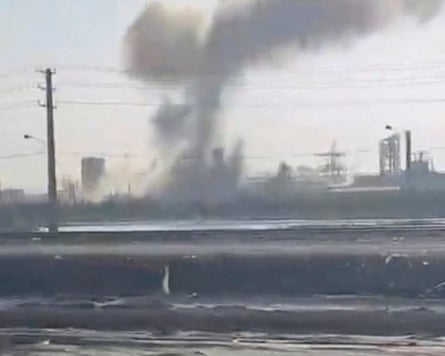
Israel’s recent attacks on Iran included a strike on an Iranian petrochemical complex. The Israeli military said it had also struck and dismantled Iran’s defence systems deployed across several areas in the country. Iranian state television reported the sound of explosions in Isfahan, Karaj, Tabriz and Tehran.
Iran’s military headquarters said it had “delivered a painful response” to Israel for its attacks on Lebanon, including Sunday’s strikes on the outskirts of Beirut.
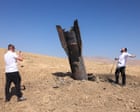
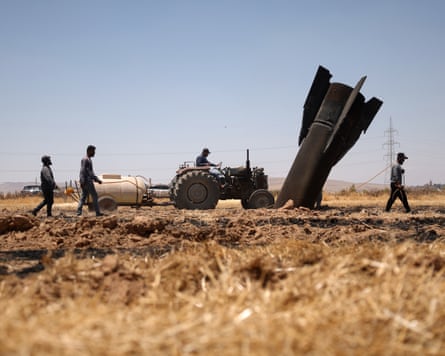
Iran’s Islamic Revolutionary Guard Corps said it had targeted two military bases in Israel. An Iranian missile fragment caused damage to several homes in a West Bank settlement, but no injuries were reported.
The sudden surge of violence shook financial markets, sending oil prices up 5% and threatening further price rises for fuel around the world. Stocks rose when both sides appeared to agree to halt the exchanges for now.
The new violence has also complicated Trump’s push to end the war, launched by the US and Israel on 28 February with strikes that killed the then supreme leader, Ayatollah Ali Khamenei. A ceasefire announced two months ago paused all-out warfare though sporadic clashes in the Gulf have continued.
In one of a flurry of social media posts, Trump on Monday said Israel and Iran both wanted “an immediate CEASEFIRE! Final negotiations on ‘Peace’ are proceeding, subject to ignorance or stupidity getting in its way.” He added that a US blockade of Iranian ports would remain in place until a final deal was reached.
Esmail Baghaei, a Iranian foreign ministry spokesperson, said Tehran was exchanging messages with Washington in an atmosphere of “extreme suspicion”. Israel’s actions in Lebanon, whether carried out with US knowledge and consent or not, had been aimed at sabotaging diplomacy, he added.
“No one believes that the Zionist regime would carry out any action without prior coordination and cooperation with the United States … It is perfectly natural that the diplomatic process initiated to put an end to this imposed war would be affected,” he said.
Iran also threatened to expand the conflict further, with potentially disastrous consequences for the world economy.
The Houthis, the Yemen-based militia movement with close ties to Tehran, pledged in a statement to stop Israel’s maritime navigation in the Red Sea, and said they had also fired missiles at Israel in recent days.
The Houthis have so far largely stayed out of the regional war. They control the mouth of the Red Sea, which has gained significance as an alternative route for millions of barrels a day of Middle East oil otherwise blocked by Iran’s closure to most shipping of the strait of Hormuz.
Fifteen people were injured across Iran in the latest Israeli attacks – 14 of them in Mahshahr county – but no deaths had been reported, Iran’s national emergency organisation said. The Israeli ambulance service said no casualties had been reported from the missile launches toward Israel.
Israel invaded Lebanon in March after Hezbollah fired across the border in solidarity with Tehran at the beginning of the current war. More than 3,500 people have been killed by Israeli strikes in Lebanon, while Hezbollah has killed at least 29 Israeli soldiers in Lebanon and three Israeli civilians.
Iran’s negotiating demands include a ceasefire in Lebanon and the withdrawal of Israel forces, the unfreezing of half of Iran’s frozen overseas assets and a form of Iranian management over the strait of Hormuz, which before the war carried a fifth of the world’s crude oil and liquefied natural gas.
Tehran also wants to postpone any detailed discussions about how Iran might assure the US it is not seeking a nuclear weapon, such as by down-blending its highly enriched uranium stockpile.
Iranian negotiators have been under internal pressure from a small but vocal group of hardliners in the parliament to abandon the talks altogether. Others claim specific aspects of the deal are too ambiguous and need to be tightened.
Danny Orbach, a military historian at Israel’s Hebrew University, said that, in launching the strikes, Israel had sent a message to Washington that no final agreement with Iran could be reached if Israel’s interests were ignored.
“Because if it tramples too heavily on Israeli interests, Israel can overturn the table,” Orbach said.
The Guardian wp:paragraph
هلدینگ کاسپین استانبول | خرید ملک در ترکیه | صرافی معتبر ایرانی در ترکیه | خرید و فروش طلا در ترکیه | مهاجرت به ترکیه | واردات و صادرات در ترکیه | نیازمندیهای ترکیه | اخبار ترکیه | اخبار جهانی | توریست ایران | خدمات توریستی در ایران | تورهای گردشگری ایران | هلدینگ اول | خدمات کاریابی و فریلنسری و شغل | مرجع اطلاعات ایران (همه چیز در ایران) | کیف پول و خدمات مالی و پرداخت یار | اخبار ایران | تابلو زنده قیمت ارز در ترکیه و استانبول | صرافی آنلاین ترکیه | قیمت طلا و نقره در ترکیه | سرمایه گذاری در ترکیه | جواهرات در ترکیه | نرخ لحظه ای ارزها در استانبول | قیمت دلار امروز در ترکیه | قیمت دلار استانبول امروز | قیمت لحظه ای دلار | اخبار روز ترکیه استانبول | اپلیکیشن ISTEX | اپلیکیشن قیمت لحظه ای دلار و یورو و لیر و ارزها در ترکیه
/wp:paragraph wp:paragraph /wp:paragraph
About the Author


