A Turkish barber whose shop was attacked during anti-immigrant unrest in Northern Ireland said Turkish authorities and diplomatic representatives quickly reached out following the incident, assuring him that he had not been left alone.
Özer Soysüren, originally from Izmir, western Türkiye, and co-owner of a barbershop in the town of Ballyclare, spoke to Anadolu Agency (AA) after his business was targeted during disturbances that erupted across Northern Ireland on Tuesday night.
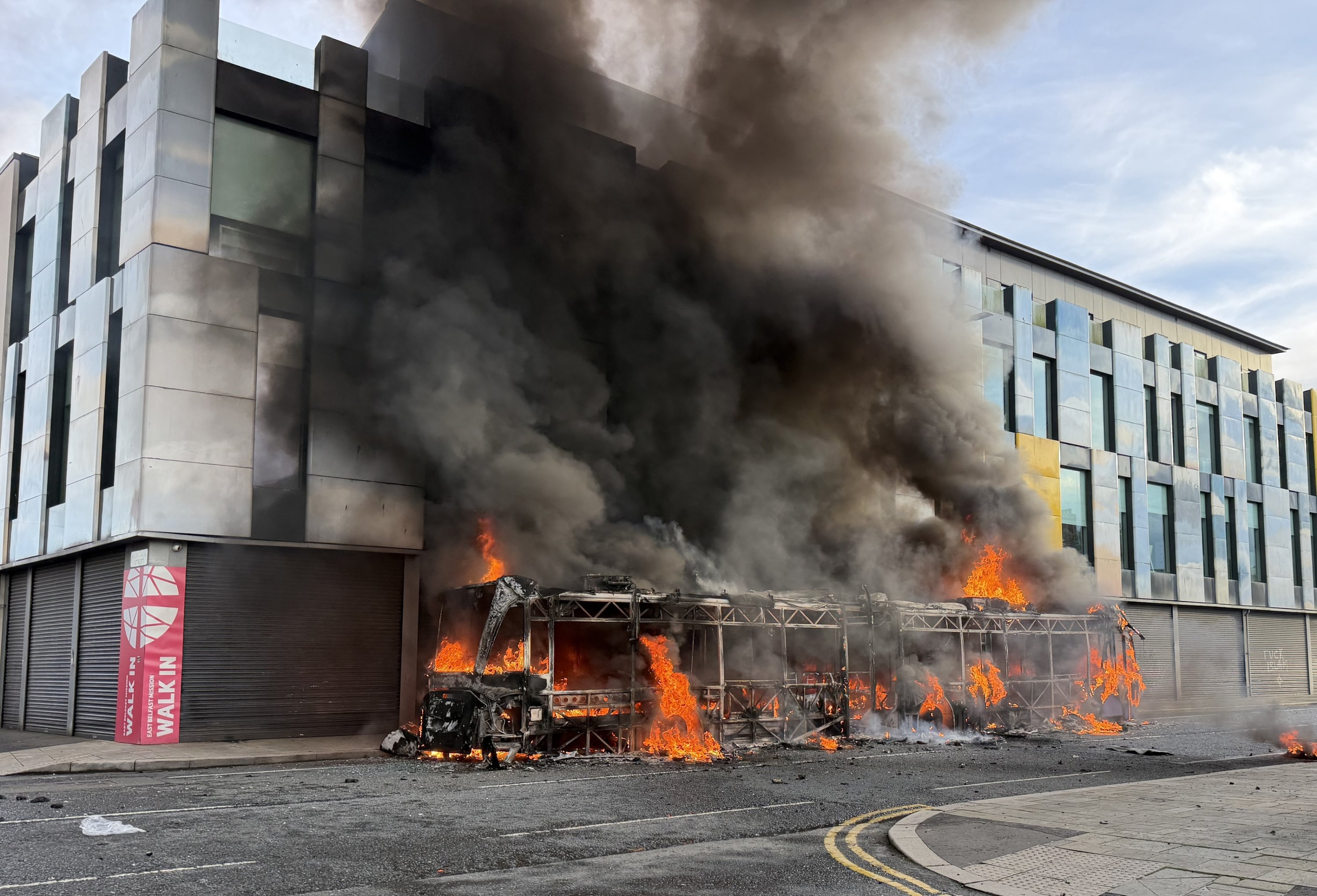
The unrest followed a stabbing attack in Belfast on June 8, after which anti-immigrant demonstrations spread to several areas, resulting in attacks on homes, businesses and vehicles belonging to foreigners. Some properties and cars were set on fire, while police and public vehicles were also damaged. Soysüren’s barbershop was among the businesses targeted.
Describing the attackers, Soysüren said those involved were mostly young people. Despite the attack, Soysüren said local residents showed solidarity and support.
“We have been working as barbers in Ballyclare for nearly 20 years and have always been part of the community. Three of our windows were broken. We have repair and cleaning costs that may reach around 1,500 pounds ($2,000),” he said.
Soysüren added that the incident revealed the strength of support from the local community.
The Turkish businessman said he received calls from Turkish officials and diplomatic representatives shortly after the attack.
“We received support from the British Democratic Unionist Party. Türkiye’s Consulate General in London contacted us. My partner was also contacted by the Presidency through the Foreign Ministry. Representatives from the consulate visited us as well. There was significant interest. We were not left alone,” he said.
The disturbances followed the arrest of a 30-year-old suspect reported to be Sudanese and granted refugee status in 2023. The suspect allegedly seriously injured an Irish citizen in a knife attack in north Belfast on June 8.
The incident prompted widespread condemnation across Northern Ireland, while some far-right groups used the attack to call for stricter immigration measures and mass deportations.
Anti-immigrant demonstrations later escalated into violence in Belfast and other parts of Northern Ireland, with foreign-owned homes and businesses coming under attack.
Soysüren said he hoped tensions would ease soon and stressed that the overwhelming response from both local residents and Turkish authorities had helped them cope with the aftermath of the attack.