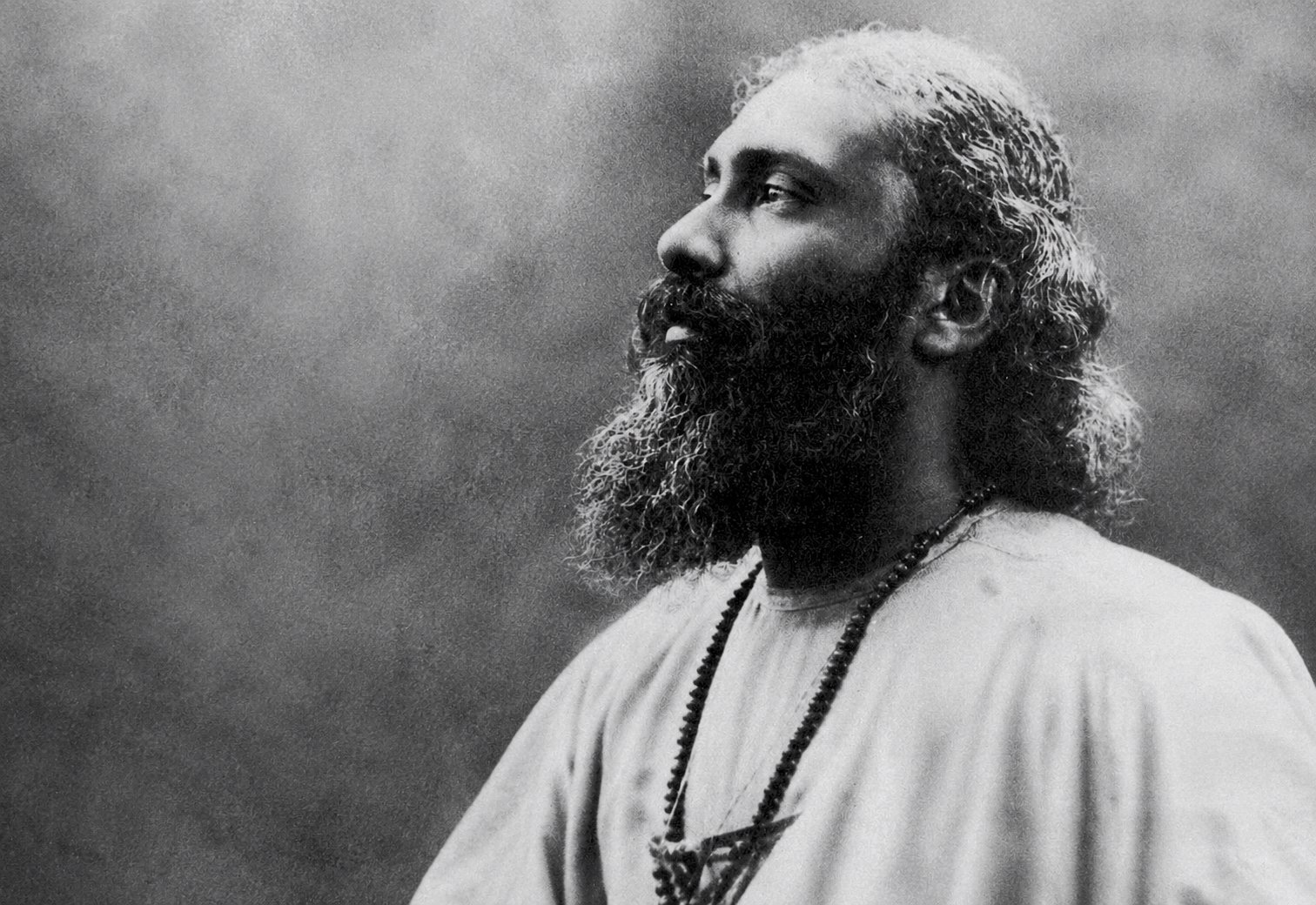
In the 20th century, many Sufi and mystical figures transmitted Sufism and its teachings to Western audiences through their own methods and experiences. In doing so, they encouraged spiritual journeys and self-inquiry among Western seekers. One of the most well-known among them is Inayat Khan, who went to the West in 1910.
Alongside him, figures such as Idries Shah (and his followers), George Gurdjieff and Ahmed al-Alawi can also be mentioned. Although these names became well known in the West, they remained relatively little known in the East. With the exception of Ahmad al-Alawi, most of these figures formed movements or communities rather than traditional Sufi orders.
Inayat Khan, early Western Sufism
Apart from Guenonian circles and Ian Dallas, Inayat Khan stands out as an important figure in early European Sufism. In the early 1900s, he was one of the few Eastern Sufi masters living in the West.
He belonged to the Chishti Order, a tradition that – like the Mevlevi Order – places strong emphasis on music. Inayat Khan not only learned within this tradition in India but also developed his own independent teaching system and established a separate spiritual community.
He did not require his students to convert to Islam and gave women significant roles within his movement. His approach aimed to present Sufism in a universal language, accessible to modern people regardless of religious affiliation.
Arrival in West as musician
Inayat Khan first went to America not as a Sufi teacher but as a musician. In 1910, he traveled to the West with his brothers and introduced classical Indian music in Europe, Russia and America.
However, he did not achieve the success he expected. Western audiences were largely unaccustomed to Eastern music, and as a result, Indian classical music did not attract much interest. Eventually, he had to give up performing the music he loved most, as his Western audiences failed to appreciate it.
There is a well-known anecdote from a concert in Moscow. During the performance, Inayat Khan’s sitar went out of tune. Since the instrument has many sympathetic strings and is sensitive to environmental changes, he spent about 15 minutes tuning it on stage. When he finished and looked at the audience, he found that the hall was empty. The audience had assumed that the tuning process was part of the performance and left, thinking, “How can such meaningless music exist?”
From music to spiritual teaching
After this period, during concerts, Inayat Khan began to speak between musical pieces. Audiences who came for his music became deeply influenced by his personality and worldview, often preferring his talks to his performances.
Since he came from a Sufi tradition, he gradually began to explain Sufism through lectures at the request of his audience. His listeners were mostly Western intellectual and elite groups – people who were often dissatisfied with Christianity and searching for alternative spiritual systems such as Theosophy.
Because he had both traditional and modern education, Inayat Khan understood both the strengths and limitations of modern Western society. He recognized the appeal of materialism in early 20th-century India and foresaw its growing global dominance. Rather than rejecting modernity, he sought to offer an alternative that complemented it – one that modern individuals could understand without rejecting their lived reality.
Universal form of Sufism
In the Western context in which he lived, Inayat Khan could not teach Sufism as it was traditionally embedded within Islamic practice. His students generally had no Islamic education and were unfamiliar with Islamic customs and rituals.
Even though he was affiliated with the Chishti Order and held the authority to guide disciples, he worked in a cultural environment that was not only open to Islam but often unconsciously resistant to it. In this context, he emphasized the universal dimension of Sufism.
He did not require his students to become Muslims. Instead, he guided them through advice, teaching and shared spiritual experience.
After his death, his son Vilayat Inayat Khan continued his teachings. Together with Shams Friedlander, he visited Konya and the tomb of Rumi. There, they met the Cerrahi Sufi sheikh Muzaffer Ozak, who told Vilayat Khan:
“May God be pleased with you. You are preparing people in the West to become Muslims. It is our task to bring them into Islam.”
Popularity of the Masnavi
Today in the United States, it is widely noted that the best-selling religious work after the Bible is the Masnavi by Rumi. Americans initially approached the Masnavi not out of interest in Sufism, but because of its poetic quality. Its lyrical style appealed to them.
Only later did they learn that Rumi was a Sufi master. The Masnavi resonates with many readers – artists, scholars and ordinary people alike – because it speaks to universal human experience.
In the West, Sufism is often perceived both as an alternative way of life and as an alternative form of therapy, healing and psychology. Western Sufi groups tend to organize themselves into institutions or associations that support these practices.
For many Western seekers, Sufism offers not only a search for truth but also an engagement with poetry, music and therapeutic techniques. These are seen as tools for coping with the difficulties of modern life.
New practices have developed by drawing on musical traditions, sema (whirling rituals) and other Sufi forms, especially from Mevlevi heritage.
Among those who successfully adapted Sufism to this modern Western context, Inayat Khan is considered one of the most significant figures.
Universal voice
Inayat Khan spent the last 16 years of his life (1910-1926) in the West and passed away in India in 1927. He possessed deep knowledge of both music and Sufism and his teaching style was remarkably simple and accessible. Even the most complex Sufi concepts were explained in an unusually clear way.
People from different religions and cultural backgrounds who encountered his teachings often felt that they transcended their own identities and traditions. His universality stemmed from his ability to speak directly to the human spirit.
Many of his lectures and talks have since been compiled into volumes of books. In all of them, he combined spiritual experience with practical methods adapted to the understanding of his audiences, offering guidance that was both experiential and accessible.
DAILYSABAH
هلدینگ کاسپین استانبول | خرید ملک در ترکیه | صرافی معتبر ایرانی در ترکیه | خرید و فروش طلا در ترکیه | مهاجرت به ترکیه | واردات و صادرات در ترکیه | نیازمندیهای ترکیه | اخبار ترکیه | اخبار جهانی | توریست ایران | خدمات توریستی در ایران | تورهای گردشگری ایران | هلدینگ اول | خدمات کاریابی و فریلنسری و شغل | مرجع اطلاعات ایران (همه چیز در ایران) | کیف پول و خدمات مالی و پرداخت یار | اخبار ایران | تابلو زنده قیمت ارز در ترکیه و استانبول | صرافی آنلاین ترکیه | قیمت طلا و نقره در ترکیه | سرمایه گذاری در ترکیه | جواهرات در ترکیه | نرخ لحظه ای ارزها در استانبول | قیمت دلار امروز در ترکیه | قیمت دلار استانبول امروز | قیمت لحظه ای دلار | اخبار روز ترکیه استانبول | اپلیکیشن ISTEX | اپلیکیشن قیمت لحظه ای دلار و یورو و لیر و ارزها در ترکیه
About the Author