Following Israel’s occupation of East Jerusalem in 1967, an arrangement known as the “status quo” was established regarding the status of the Al-Aqsa Mosque compound, also known as Al-Haram Al-Sharif. According to this arrangement, only Muslims are permitted to worship at the Al-Aqsa Mosque, while non-Muslims may visit at specific times. The administration of the site is carried out by the Jerusalem Islamic Waqf Council, which is affiliated with the Jordanian Ministry of Awqaf. However, the current status quo has been violated numerous times since its implementation, and Al-Haram Al-Sharif has faced many attacks.
History of hatred
In 1969, Austrian Denis Michael Rohan set the Al-Aqsa Mosque on fire. The pulpit, which had been preserved in its original form since the time of Saladin, was destroyed, and numerous historical elements within the compound were damaged. These events caused a major uproar in the Islamic world and led to the establishment of the Organisation of Islamic Cooperation (OIC).
Al-Haram Al-Sharif has also become a target of radical groups in subsequent years. Under the leadership of Yoel Lerner, a member of the Kahanist movement and the Jewish Defense League, various groups devised plans in 1974, 1977 and 1983 to blow up the Al-Aqsa Mosque and the Dome of the Rock in the compound to remove the Islamic structures in the area and prepare the ground for the construction of the Third Temple.
In 1984, a group called the Jewish Underground (HaMakhteret HaYehudit), founded by leading members of Gush Emunim, sought to destroy the Dome of the Rock using weapons and explosives obtained from the Israeli army or to launch an attack on the same site using planes loaded with explosives. This attack attempt, which was thwarted at the last moment, was also carried out to awaken the Jews and rebuild the Third Temple.
The same year, members of a messianic group called Sons of Judah (B’nei Yehuda) infiltrated Al-Haram Al-Sharif and attempted to blow up the site. This attempt was thwarted when Waqf officials noticed the situation.
In 1990, the Temple Mount Faithful (Ne’emanei Har Habayit) movement called for the laying of the cornerstone for the Third Temple, leading to serious clashes in which many Palestinians lost their lives. The opening of the Western Wall Tunnel in 1996 was viewed as an activity that could cause the site to collapse. Similarly, then-leader of the right-wing Likud party, Ariel Sharon’s entry into Al-Haram Al-Sharif in 2000, accompanied by party members, was viewed as a major violation and sparked the Second Intifada.
In 2017, the installation of metal detectors at the entrances for security reasons was interpreted as an intervention in the site and an attempt to alter entry and exit procedures.
Again in 2021, following Israeli attacks on the Al-Haram Al-Sharif compound, flames rose from the Al-Aqsa Mosque, while some Jewish groups gathered at the Western Wall, also known as the Wailing Wall, and celebrated with songs.
Gathering of radicals
All these events form the backdrop to the long-standing steps, continuous visits, raids by radical groups, incremental violations, legal disputes and statements by Israeli politicians. Their aim is to erode the status of the Al-Aqsa Mosque and Al-Haram Al-Sharif, to eliminate Islamic heritage and rebuild the Temple of Solomon.
Although the leaders of the Israeli Cabinet state their commitment to the status quo in every contentious process, many ministers, far-right politicians within Israel, Jewish settler circles, and groups such as the Temple Institute, Temple Mount Faithful, Beyadenu, Students for the Temple Mount and Returning to the Mount, aim to gradually alter the current order at Al-Haram Al-Sharif, establish visible and permanent Jewish worship within the site, and legitimize the idea of rebuilding the Temple.
Some of these groups are also connected to Christian Evangelical organizations that attribute theological significance to the idea of the Third Temple. Certain organizations seeking to rebuild the Third Temple are engaged in efforts to produce ritual objects in their original forms, as described in the Torah and other texts of Jewish history. Indeed, a life-sized golden menorah made of pure gold, crafted by the Temple Institute, is on display in the Jewish Quarter near Hurva Square, facing the Western Wall.
Since they believe they will resume sacrificial rituals and the practices of Solomon’s Temple, along with the temple, they are providing priestly training to members of the Levite and Kohenic lineages. Operating across a wide range of activities, from the garments they must wear according to religious law to the production of required objects, some of these organizations are even attempting to procure the red heifer necessary for purification rituals.
To build the 3rd Temple
Through their prominent rhetoric, these groups emphasize the idea that the construction of the Third Temple is now a feasible goal, both within Israel and in the international public sphere. These groups initially focus on activities targeting historical memory, preparing educational materials that emphasize the Temple of Solomon’s location within the Al-Haram Al-Sharif compound. They also strive to keep this narrative alive through organized tours and media coverage.
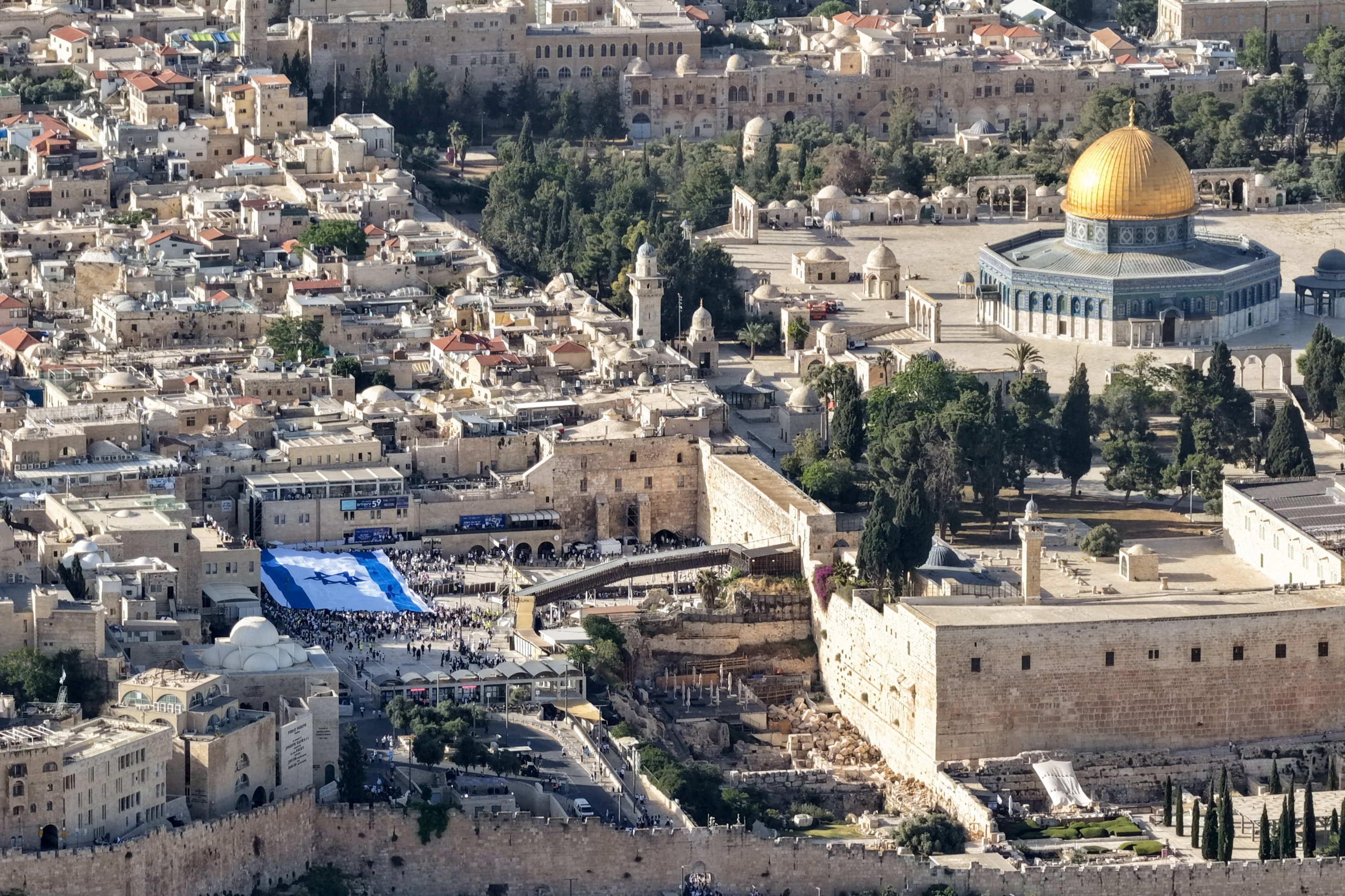
Subsequently, they aim to erode international legal norms and stances regarding the Al-Haram Al-Sharif compound as a sacred site belonging to the Islamic world. To this end, Jewish groups enter the compound en masse at specific times and on certain Jewish holy days, organize processions in large groups, and engage in worship and prayer within the compound despite this being contrary to the status quo.
In the final stage, they employ political and legal pressure tactics. Through statements made in the Knesset, individual worship cases brought before the courts, raids on the Al-Aqsa Mosque by ministers and politicians, and police measures and restriction orders, the boundaries of the current status quo are being pushed. Thus, even though those at the helm of the Israeli Cabinet emphasize that the status quo has not changed, the current order is being altered step by step in practice.
The temple planned for construction is conceived not merely as a place of worship, but in connection with narratives from the era of the monarchy in Jewish sacred texts, a phase marking the beginning of the Messianic era, and a narrative centered on Jerusalem.
It is also being used as a symbolic element uniting scattered settler groups, religious, Zionist and nationalist circles, as well as Jews whose origins stem from diverse geographies and traditions. It also conveys a message that Israel is the sole and fully sovereign state over Jerusalem in its foreign policy.
The fact that the Al-Haram Al-Sharif is a sacred site belonging to the Islamic world is emphasized as the “occupation by other elements” of the Temple Mount awaiting resolution. At the same time, the rise of ultra-radical groups, the religious-nationalist faction, and the settler movement within Israeli politics has shifted the goal of the Third Temple from the periphery to the center of state policy.
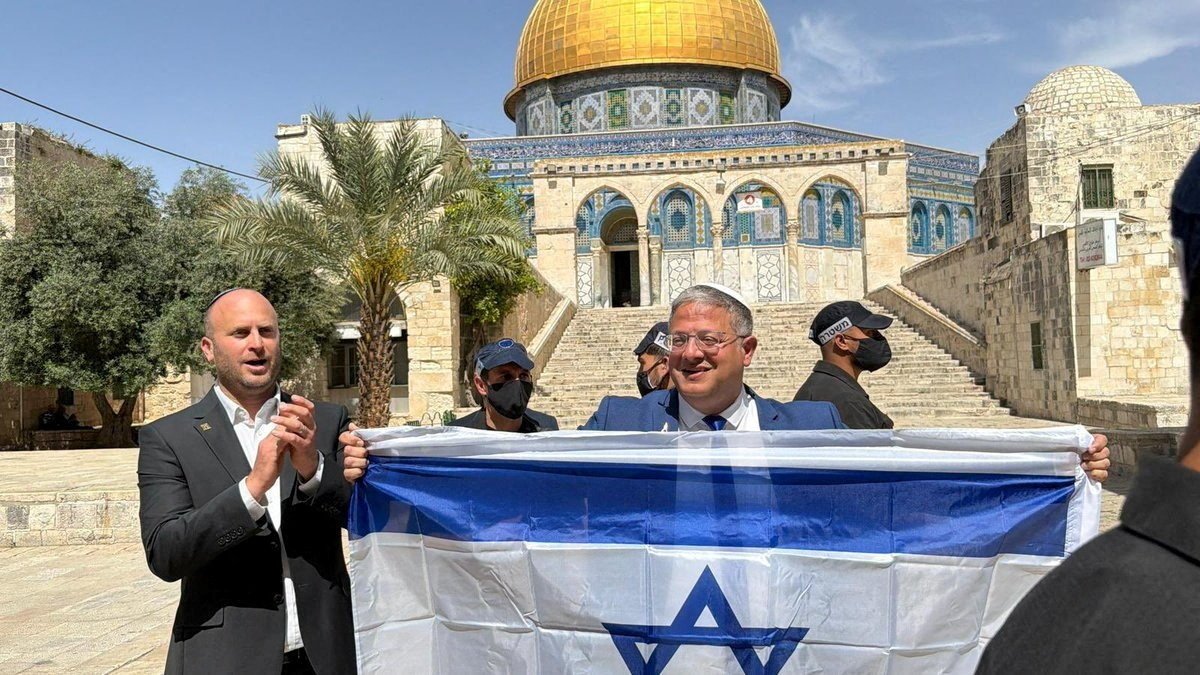
Prime Minister Benjamin Netanyahu’s statements regarding the days of the Messiah, National Security Minister Itamar Ben-Gvir’s remark, “We are the hosts here,” during the Al-Aqsa Mosque raid, and Finance Minister Bezalel Smotrich’s response to Jerusalem Mayor Moshe Lion, “I will provide the funds, you will build the Temple,” demonstrate that this goal has become a central element.
It is clear that a mindset that cannot tolerate centuries-old settlement names, renaming Al-Majdal to Ashkelon, Jaffa to Tel Aviv, Bi’r as-Sabi’ to Be’er Sheva, and Umm al-Rashrash to Eilat, will not abandon the idea of building the Third Temple.
In the broadest sense, Temple activists, the organizations that mobilize them, settler circles, religious Zionist parties, far-right politicians, the architects of security measures that facilitate their activities and the institutions, including those in archaeology, education, tourism and media, are reshaping the historical narrative, along with the ideological and financial networks providing external support. They are working to normalize the frequent, large-scale and highly visible entry of Jews into Al-Haram Al-Sharif more frequently, in larger numbers, and in a more visible manner.
Their objective is to establish the acceptance of Jewish worship both de facto and de jure, thereby erasing the boundary between visitation and worship, to divide the area or allow its use at different times, and finally, to remove Islamic structures within the Al-Haram Al-Sharif area in order to construct the Temple of Solomon.
Activities carried out in this direction pose a serious threat, such as transforming the Al-Aqsa Mosque from a sacred site of the Islamic world into a mere spatial problem to be resolved. Furthermore, the demographic pressure on neighborhoods surrounding Al-Haram Al-Sharif, property acquisition activities in East Jerusalem, archaeological projects in Silwan and its surroundings, increased security checks at entry gates, and age-based restrictions on worshippers are all steps taken toward their ultimate objectives.
Any attempt to alter the status of Al-Haram Al-Sharif compound, to partition it or to demolish it and build another place of worship in its place is an unacceptable endeavor from religious, historical, legal, political and moral standpoints.
Al-Haram Al-Sharif compound is one of the primary issues of concern to the entire Islamic world, rather than merely being a matter related to the Palestinian issue or the situation of the Palestinians.
Israel’s actions in Jerusalem are being carried out for ideological purposes under the narrative of a “historical homeland.” Yet, the Islamic civilization and millions of Muslims have been the dominant force in the Middle East for centuries.
From the perspective of international law, there is no legitimacy for any unilateral step aimed at altering the current status of Al-Haram Al-Sharif. Recent developments, in particular, indicate that a systematic plan is being advanced to its next stages.
Given that the Al-Aqsa Mosque and the Al-Haram Al-Sharif area are under even greater threat than they have ever been, all the Muslims states and organizations must adopt resolute decisions with strong deterrent effects.
The views and opinions expressed in this article are solely those of the author. They do not necessarily reflect the editorial stance, values or position of Daily Sabah. The newspaper provides space for diverse perspectives as part of its commitment to open and informed public discussion.
DAILYSABAH
هلدینگ کاسپین استانبول | خرید ملک در ترکیه | صرافی معتبر ایرانی در ترکیه | خرید و فروش طلا در ترکیه | مهاجرت به ترکیه | واردات و صادرات در ترکیه | نیازمندیهای ترکیه | اخبار ترکیه | اخبار جهانی | توریست ایران | خدمات توریستی در ایران | تورهای گردشگری ایران | هلدینگ اول | خدمات کاریابی و فریلنسری و شغل | مرجع اطلاعات ایران (همه چیز در ایران) | کیف پول و خدمات مالی و پرداخت یار | اخبار ایران | تابلو زنده قیمت ارز در ترکیه و استانبول | صرافی آنلاین ترکیه | قیمت طلا و نقره در ترکیه | سرمایه گذاری در ترکیه | جواهرات در ترکیه | نرخ لحظه ای ارزها در استانبول | قیمت دلار امروز در ترکیه | قیمت دلار استانبول امروز | قیمت لحظه ای دلار | اخبار روز ترکیه استانبول | اپلیکیشن ISTEX | اپلیکیشن قیمت لحظه ای دلار و یورو و لیر و ارزها در ترکیه
About the Author