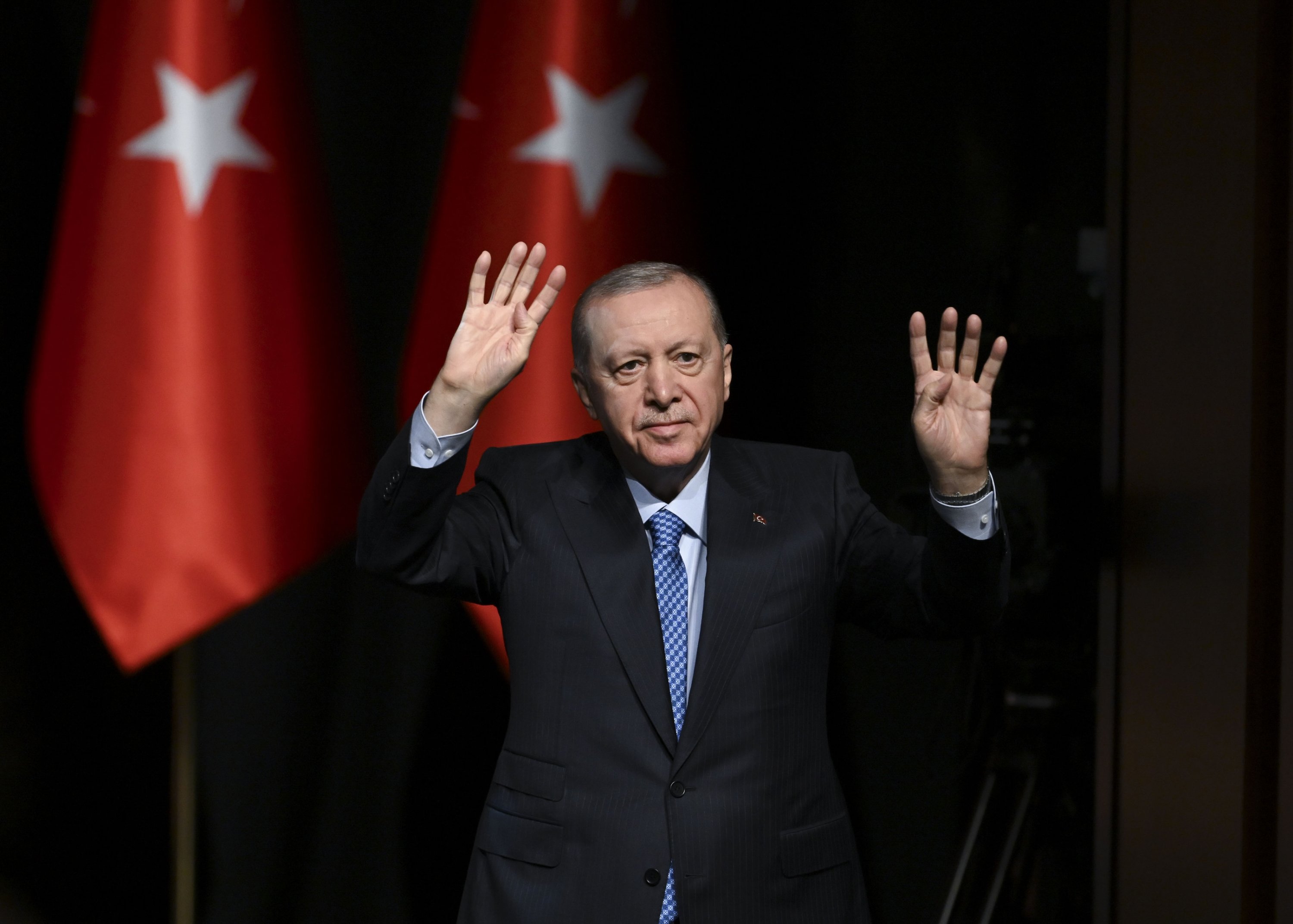
In international relations, there has long been a debate between hard power and soft power. Türkiye’s position, however, is beyond both of these approaches.
Unlike colonial powers, Türkiye’s foreign policy tradition is rooted in a culture of solidarity that takes into account not only its own interests but also those of the countries with which it engages.
Of course, Türkiye is not a country that neglects hard power. On the contrary, it continues to strengthen its capabilities day by day. In recent years, assessments have suggested that European states have struggled to establish a common security ecosystem. Türkiye has been comparatively more successful in this regard and has drawn considerable attention.
Yet Türkiye’s foreign policy extends far beyond military and diplomatic instruments. It is represented across the world through a broad social network encompassing the humanitarian activities of civil society organisations; the work of institutions such as Turkish Cooperation and Coordination Agency (TIKA), the Yunus Emre Institute (YEE), the Presidency for Turks Abroad and Related Communities (YTB), and the Maarif Foundation; the presence of international students at Turkish universities; and even the migrant communities arriving from Iraq, Syria and many other countries.
Türkiye has, in recent years, become one of the world’s most preferred destinations for international students.
There is a frequently cited example in diplomacy. Despite being the world’s second-largest economy for many years, Japan never succeeded in generating a global foreign-policy influence comparable to that of the U.K.
So, where does Türkiye’s influence come from?
When the Ottoman Empire withdrew from the stage of history, the principal objective of the occupying powers was to confine Türkiye to the role of a small nation-state detached from its historical memory. Much of the cultural imperialism pursued over the past century was built upon this objective.
As President Recep Tayyip Erdoğan often emphasizes, the names of our states may change. However, the understanding of the eternal continuity of the state and our historical mission endures. The Republic of Türkiye was not the first state established on these lands; it represents the latest link in a much longer chain.
Strong leadership
There is a reason why strong leadership deserves to be mentioned at the very top of this list. It has been strong leadership that has reconnected this nation with its historical mission. The rediscovery of historical roots that transcend the narrow nation-state framework defined by the West has directed Türkiye toward broader horizons.
Every nation possesses its own religion, history, and culture. The revival of the vision of a greater Türkiye, viewed through the lens of its own civilizational heritage, has opened unexpected opportunities before the country.
At the heart of Erdoğan’s understanding of power lie three principles: standing with the oppressed, defending justice, and upholding fairness. This approach has led many countries to regard Türkiye as a natural partner.
Through a rational approach to governance, Justice and Development Party (AK Party) governments have undertaken the investments the country required at the appropriate time, bringing about major transformations in transportation, health care, education, energy, justice, and urban infrastructure.
There is a phrase I have frequently used in recent times: the stronger a country’s infrastructure, the stronger its diplomacy becomes.
Foreign policy ecosystem
Twenty years ago, Türkiye’s foreign policy agenda revolved around only a handful of issues. Today, one can identify at least fifty distinct areas of foreign policy engagement from A to Z.
Much has been written about the rise and decline of states. We know how the West rose and how it colonized much of the rest of the world. Today, however, Türkiye occupies a prominent place among the world’s rising powers.
Nearly a quarter-century of sustained effort has shaped the foundations of this diplomatic ascent.
Following the Peace of Westphalia, the Ottoman Empire became part of the European state system. Today, the relative weakening of major European powers and the fragmentation within Europe are creating new opportunities for Türkiye.
Türkiye continues to cultivate diplomatic and economic relations with each European country individually. The fact that this process is unfolding at a time when Europe is experiencing relative decline while Türkiye is on the rise adds further momentum to Türkiye’s multidimensional diplomacy.
One of the striking findings of the GENAR Türkiye Report is the perception of Türkiye as a regional and global center of power. Another is the strong public support for deepening relations within the Organisation of Turkic States (OTS).
Türkiye’s African diplomacy encompasses dozens of subfields. Relations with countries such as Libya, Egypt, Somalia, and Sudan alone would each warrant separate articles.
After two centuries, African states have found themselves engaging with a country that is neither colonial nor exploitative, but rather a friend and partner. This foreign policy approach is unique to Türkiye and has yielded productive results.
Türkiye’s relations with Syria should be viewed within a broader regional framework. While each country in the region has its own distinctive relationship with Türkiye, the idea of reviving the Hejaz Railway, together with transportation and energy corridors extending from the Gulf to Istanbul and onward to Europe, points toward a new perspective of regional integration.
When the Iraq Development Road Project is added to this equation, the scale of the emerging ecosystem becomes even clearer.
Recent discussions concerning relations among these countries have largely focused on security cooperation. Yet security cannot be separated from economics. Economic integration and trade networks enhance the durability of security partnerships.
Türkiye manages its relations with Russia, the U.S., and China simultaneously through a multidimensional diplomatic approach. This strategy enables Türkiye to maintain balance among competing global centers of power.
A vast diplomatic network now stretches from Canada to the U.K., from Japan and South Korea to China and Latin American countries. The boundaries of this network have become increasingly difficult to define.
Today, the diversity of Türkiye’s foreign policy engagements has reached a level comparable to that of major global actors such as the U.S., China, Russia, and the U.K. From this point onward, this should be seen not merely as a temporary success but as a permanent foreign policy ecosystem built through sustained leadership.
The views and opinions expressed in this article are solely those of the author. They do not necessarily reflect the editorial stance, values or position of Daily Sabah. The newspaper provides space for diverse perspectives as part of its commitment to open and informed public discussion.
DAILYSABAH
هلدینگ کاسپین استانبول | خرید ملک در ترکیه | صرافی معتبر ایرانی در ترکیه | خرید و فروش طلا در ترکیه | مهاجرت به ترکیه | واردات و صادرات در ترکیه | نیازمندیهای ترکیه | اخبار ترکیه | اخبار جهانی | توریست ایران | خدمات توریستی در ایران | تورهای گردشگری ایران | هلدینگ اول | خدمات کاریابی و فریلنسری و شغل | مرجع اطلاعات ایران (همه چیز در ایران) | کیف پول و خدمات مالی و پرداخت یار | اخبار ایران | تابلو زنده قیمت ارز در ترکیه و استانبول | صرافی آنلاین ترکیه | قیمت طلا و نقره در ترکیه | سرمایه گذاری در ترکیه | جواهرات در ترکیه | نرخ لحظه ای ارزها در استانبول | قیمت دلار امروز در ترکیه | قیمت دلار استانبول امروز | قیمت لحظه ای دلار | اخبار روز ترکیه استانبول | اپلیکیشن ISTEX | اپلیکیشن قیمت لحظه ای دلار و یورو و لیر و ارزها در ترکیه
About the Author