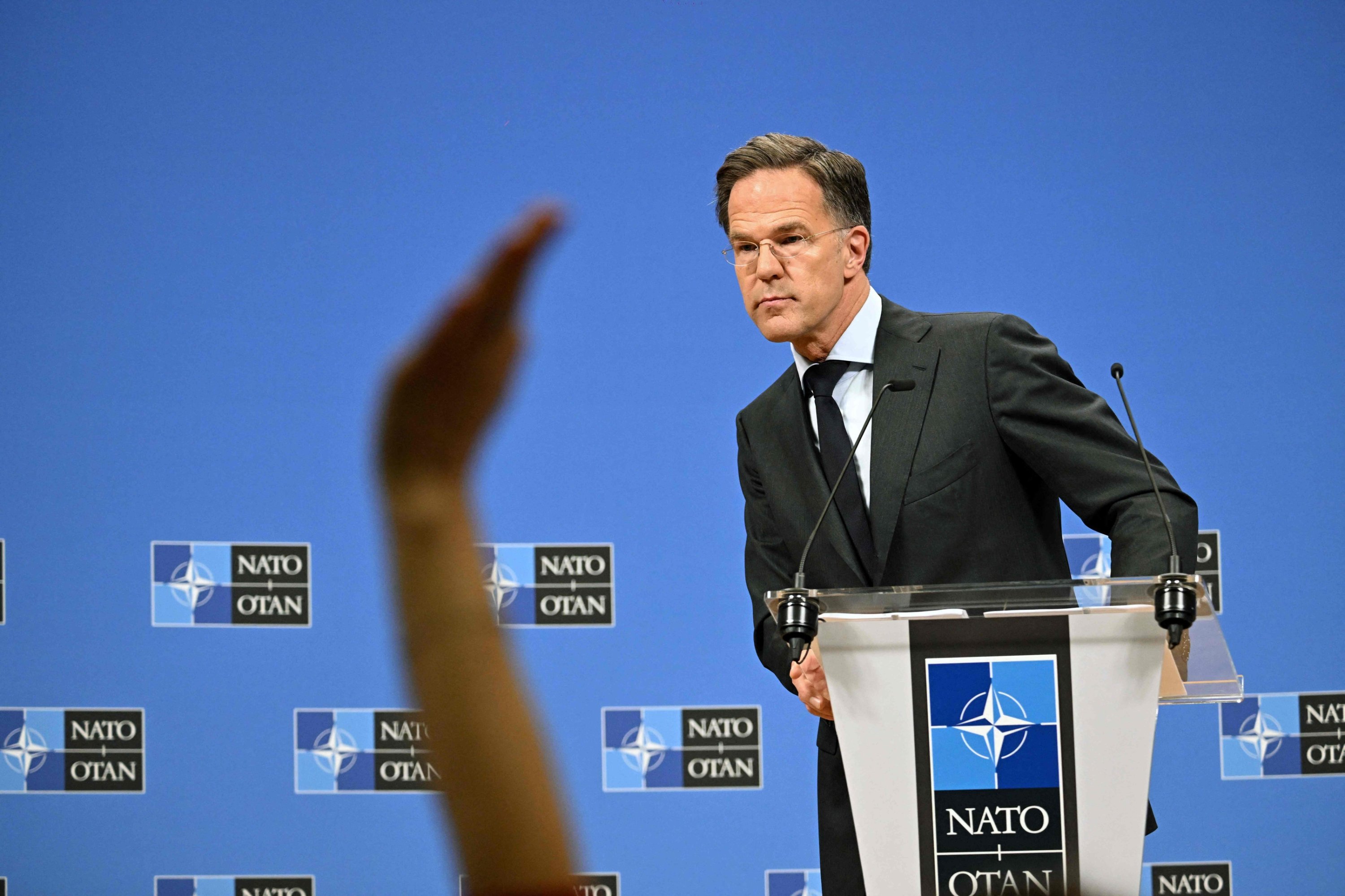
NATO Secretary-General Mark Rutte said Wednesday that other NATO members have boosted their contributions to the alliance’s crisis forces to help fill gaps left by recent U.S. reductions in commitments.
The U.S. told its allies last month that it had decided to shrink the pool of national military capabilities committed to the transatlantic alliance in a crisis, raising urgent questions as leaders prepare for a NATO summit in Ankara on July 7-8.
“There are … areas that require more work, but the overall picture is looking good,” Rutte told reporters at NATO headquarters in Brussels ahead of a meeting of alliance defence ministers Thursday.
He did not provide further details. U.S. Air Force Gen. Alexus Grynkewich, NATO’s top commander and the head of U.S. forces in Europe, said this month that Washington expects European allies and Canada to swiftly boost the number of aircraft and ships that they commit to the alliance’s defense plans.
The U.S. did not publicly disclose details of its reductions, but they range from refuelling aircraft to fighter jets, drones and ships, according to figures provided to Reuters by a military source.
The number of U.S. F-15 and F-15E fighter jets available to NATO will fall by a third to 99 and the number of MQ-4 and MQ-9 Reaper drones by half to 12, according to the source.
The number of KC-135 and KC-46 refueling aircraft falls to 63 from 79, while only one strategic bomber and aircraft carrier would be allocated, rather than two.
The number of maritime patrol aircraft goes down to 15 from 26, the number of destroyers falls to nine from 17, and the only submarine carrying cruise missiles is also cut from the commitments.
The NATO alliance is under unprecedented strain, with some European countries concerned that Washington may fulfil repeated threats by U.S. President Donald Trump to withdraw.