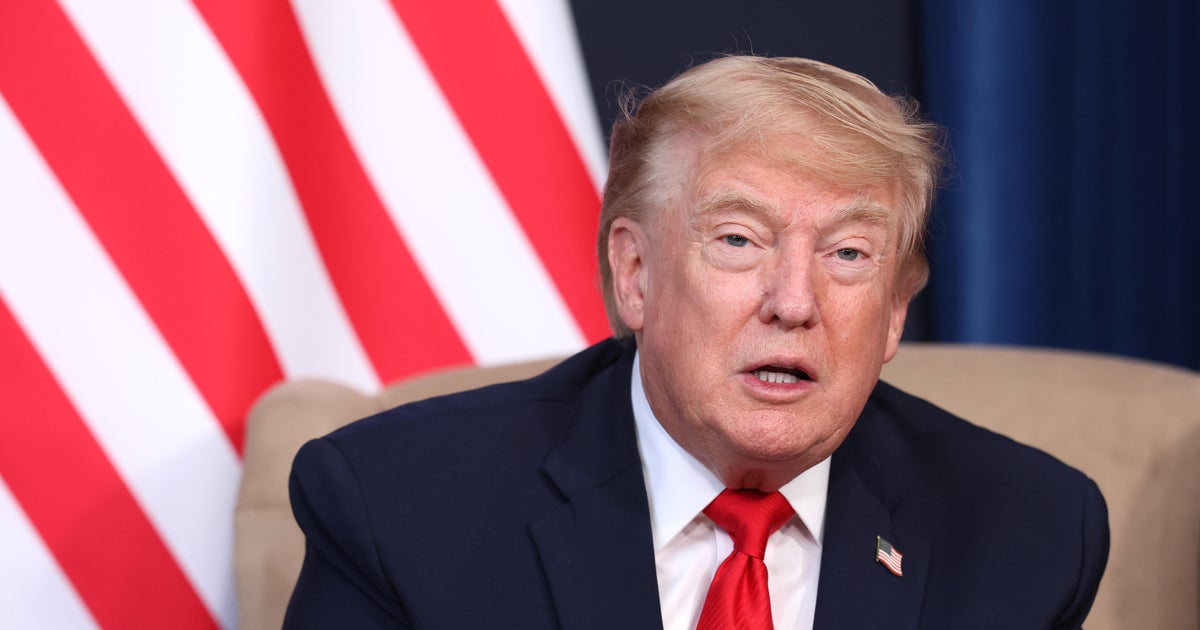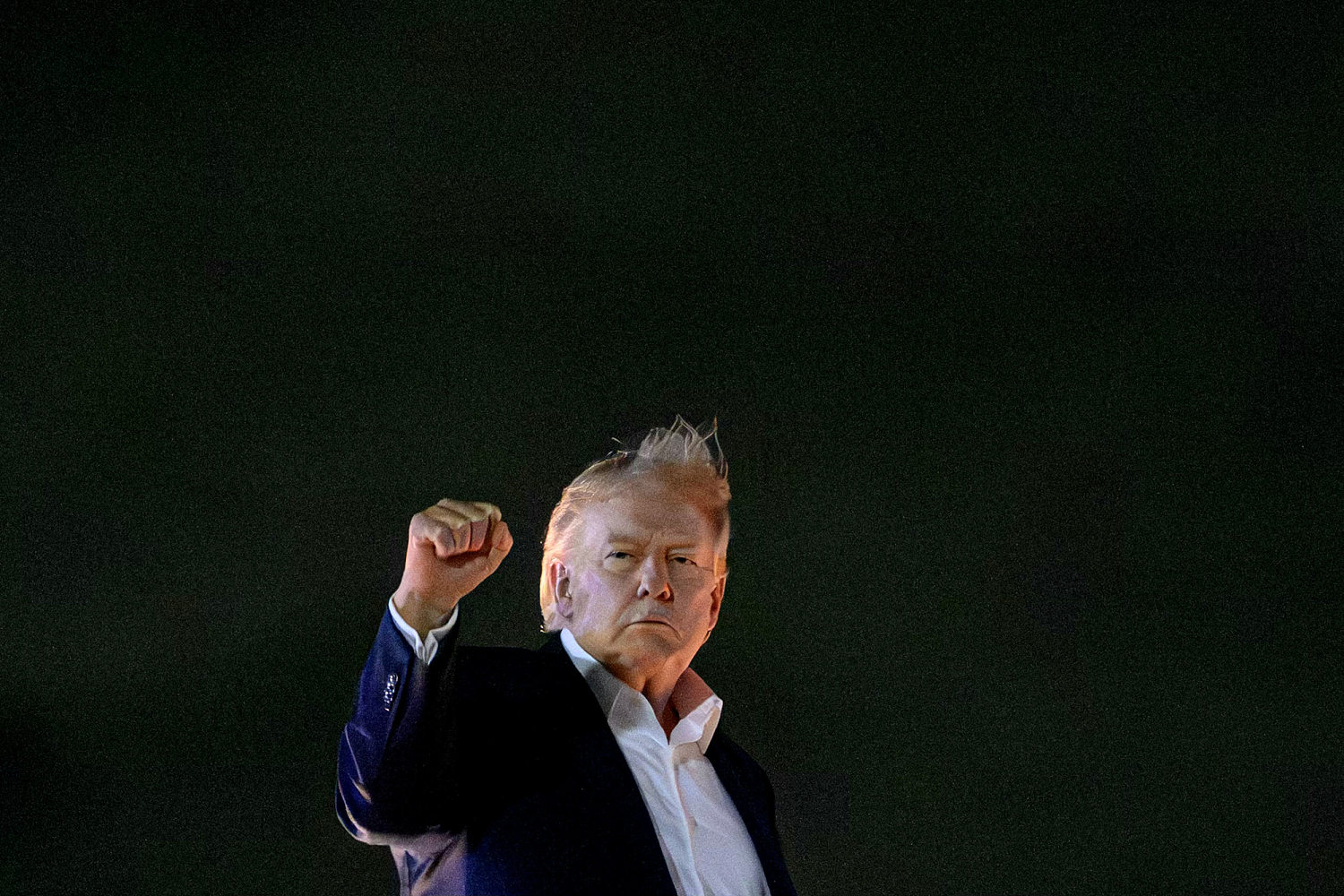
President Donald Trump is framing a tentative peace deal with Iran as a victory for the U.S., but fractures in the Republican Party suggest that could be a hard sell both on Capitol Hill and in the run-up to November’s midterm elections.
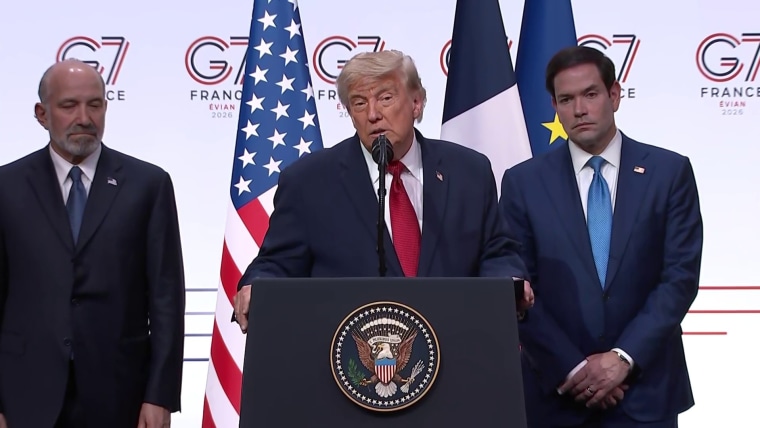
“It’s a very strong deal,” Trump said at the G7 summit in France on Wednesday, seated across from Egyptian President Abdel Fattah el-Sisi. “Nobody knows what it is, but it’s very strong.”
The early response from Republican leaders and the conservative commentariat is mixed at best, in part because versions of a 14-point memorandum of understanding (MOU) between the two countries have been circulating around the globe while the White House has not shared the finer points with Congress or the public. On Wednesday, a senior U.S. official read the 14-point memorandum on a conference call with reporters.
“I think we’re all hoping to get more information, more detail about that,” Senate Majority Leader John Thune, R-S.D., told reporters Tuesday. “I expect that will be forthcoming.”
He said most Republicans agree that the administration “has taken steps” to diminish Iran as “an existential threat,” but added: “I’m hoping that when we get more information about the memorandum of understanding, we’ll have a better sense about what the path forward is.”
With Trump under pressure from Republicans wary of forever wars and those worried about inflation ahead of the midterm elections, the short-term gain for consumers and candidates is the MOU, which promises a tentative end to hostilities and a reopening of the Strait of Hormuz. Administration officials believe that will bring down prices for gas and other goods as freighters flow freely again through a major conduit in the global supply chain.
But cutting a preliminary deal to immediately reopen a seaway that was clear when the U.S. launched the war in late February — without ensuring enriched uranium is removed, effecting regime change or continuing to squeeze Tehran’s economy — is a “low-grade humiliation” for the president, a person close to the White House said.
“It’s an embarrassing way to get out of this, but I think everyone just wants to get out of it,” this person said.
The White House did not respond to a request for comment.
00:0000:00
A more comprehensive pact remains as elusive as it is politically fraught for the president. As much as voters want the U.S. out of Iran — and polls consistently show that they do — the price of getting Tehran to abandon its nuclear ambitions is giving the regime access to money. That’s a cost that many of the president’s supporters don’t want to bear, and it’s one that GOP candidates may have to wrestle with if a final agreement is ever reached.
“If this is true, Iran wins,” Nikki Haley, the U.S. ambassador to the United Nations during Trump’s first term, wrote on X on Tuesday after The Wall Street Journal reported that sanctions on Iranian oil would be lifted immediately as part of the MOU. “There should be zero sanctions relief day one.”
Former Trump adviser Steve Bannon, whose views generally differ from Haley’s, also criticized the possible lifting of economic sanctions during his “War Room” podcast on Tuesday.
“Keep the sanctions, because if we lose that, it will take forever to get back,” he said, adding that the president should not unfreeze billions of dollars in captured Iranian assets. “Just walk away, but keep their money.”
Those concerns come as even top Republican leaders on Capitol Hill have been kept in the dark about the details of the emerging pact. Still, GOP lawmakers are divided over whether now is the time to end the war, according to Sen. Eric Schmitt, R-Mo.
“I think you have a couple of camps,” Schmitt said. “You have the camp that wants us to lose. And then you have the camp that wants a forever war. And President Trump is not in either one of those camps. And neither am I.”
Presidents are typically reluctant to be the face of policies that split their base, and Trump is no different. That means the job of selling the plan to the public may eventually fall more fully on Vice President JD Vance, who was the lead negotiator for the U.S., and Trump’s most stalwart supporters in Congress. The announcement of a deal coincided with the launch of a Vance media tour to promote his new book, making him a more frequent TV presence than usual.
“It’s going to be interesting to observe as all of the people who pushed hardest for the war and celebrated the president’s sublime judgment are now going to hate the deal,” one person close to the administration said. “And they’re going to turn on Vance because he’s a useful proxy because they don’t want to turn on the president.”
Among Trump’s top advisers, Vance was the most hesitant about the launch of the war at the end of February, but the president designated him to help bring an end to it, along with envoys Steve Witkoff and Jared Kushner, Trump’s son-in-law. So far, that has yielded the MOU, which would set the framework for further negotiations over Iran’s nuclear program, sanctions relief and other issues.
A senior administration official said Trump, who has been meeting with world leaders this week at a G7 summit in Geneva, will be fully engaged in pitching the MOU to the American people.
“The president has been selling it all day,” the official said Tuesday, noting that Trump has posted about the agreement on Truth Social and planned to take questions about it at a news conference Wednesday.
“The alternative would be a worldwide depression,” Trump said in Geneva, citing the economic devastation wrought by Tehran’s closure of the strait, which was precipitated by U.S. military strikes on Iran and followed by an American naval blockade that prevented Iran from using the waterway while blocking access to others.
Some in Trump’s orbit are optimistic that the reviews will improve once the details are better fleshed out and the full impact is felt.
“People are understandably focused on the immediate provisions of the deal, but the president’s approach is centered on the long-term strategic position of the U.S.,” one person familiar with the administration’s perspective said. “The broader objective is to strengthen American influence, reinforce critical defense and technology partnerships, maintain U.S. leadership against competitors such as China and Russia, and create durable advantages that may not always be apparent in the initial public debate.”
Several Republican aides who spoke with NBC News said early reporting of its contents have exacerbated tensions within the caucus between those who want to wrap the war as soon as possible to mitigate the political impacts at home and those committed to seeing the conflict advance their long-standing foreign policy aims.
“Obviously everybody wants this to be over,” one aide to a Senate Republican said, adding that the White House has asked senators for backup in defending the new agreement. “Gas prices are way too high. This is a politically toxic issue.”
However, this person said they are concerned that the deal will be similar to the Obama-era nuclear deal with Iran, called the Joint Comprehensive Plan of Action, that Republicans pilloried for years. Trump withdrew from the JCPOA during his first term and has sought to push back on the idea that the agreements are similar.
Sen. Lindsey Graham, R-S.C., who speaks frequently with the president and is among his most consistent defenders on Capitol Hill, gave his blessing to the first phase of a deal with the caveat that he is not convinced that Iran will ultimately give up its nuclear-weapons program and its funding of proxy militias.
“We’re off to a good start — opening up the strait, having a framework,” Graham told NBC News. “I want to see the MOU. But if we can pull this off as described by the Trump administration, it’d be a good deal. The only question I have is, will Iran actually go there? But time will tell.”
Asked how the deal is different from the JCPOA, Graham said it would be different if Iran had zero nuclear enrichment and got fully “out of the enrichment business for 15 years.” The original deal had a 10-year timeline and capped enrichment at 3.67%, far below the level needed for nuclear weapons.
But others are giving more full-throated endorsements.
Sen. Bernie Moreno, R-Ohio, called the MOU “really monumental” and said the president would get the benefit of the doubt from the Senate Republican Conference.
“He’s the leader of our party. We have to give him the grace and the space to do what he needs to do,” Moreno said in an interview. “He’s a phenomenal negotiator, better than anybody here in the Senate, times 100, and he’s doing what needs to be done. … With extraordinarily few exceptions, he’s got the full backing and support of the conference.”
He cited the fact that the JCPOA did not bear physical signatures as one key difference between that pact and Trump’s memorandum. The Obama-era deal, agreed to by the U.S., Iran, Russia, China, France and the United Kingdom, allowed for international weapons inspections in Iran, released frozen assets to Tehran and eased sanctions. It held until Trump unilaterally ended U.S. participation in 2018.
“Oh, my God, the world’s in a better position,” Moreno said of whether the war has benefited the U.S., adding his belief that further economic pain would have been inflicted had Iran obtained a nuclear weapon. “I mean we would be in a place that we can’t even imagine. President Trump prevented that. … Voters count on us to avoid problems, not just solve them.”
Moreno, like Schmitt, is not on the ballot in 2026. Republican House and Senate candidates in competitive races will have to decide whether they want to run on the war and the deal, run away from them, or simply put them on the back burner.
Tudor Dixon, the GOP gubernatorial candidate in Michigan in 2022 and the head of the political action committee United We Fund, said Republican candidates will take their cues from the president on the agreement.
“I don’t see a reason to shy away from it,” she said. “They trust his position.”
Aides to Republican senators, speaking on condition of anonymity to share candid insights, told NBC News that many lawmakers want to reserve judgment until the agreement is presented in full. One senior adviser to a senator said lawmakers are worried by the contrast between the Trump administration’s cautious discussion of the agreement compared with the Iranian government’s full-throated promotion.
“They don’t take the fact that the United States isn’t putting out anything about the deal as a sign of confidence that it’s a good deal,” this person said. “All of the leaks are coming from the Iranian side, trumpeting how good of a deal it is for Iran.”
Lawmakers are going to want to know as much as they can about the details, and “it would really behoove the administration to engage with Congress,” said Mark Bednar, a Republican strategist who served as a top aide to former House Speaker Kevin McCarthy, R-Calif.
Bednar said most candidates won’t emphasize the deal on the campaign trail because it’s “almost a Catch-22.”
“The more successful the Iran deal is, the less salient it will be in voters’ minds on a day-to-day basis,” he said. Instead, they may include it in their pitches as one example of “smart, sober, competent governance” by Republicans.
NBC News Top Stories wp:paragraph
هلدینگ کاسپین استانبول | خرید ملک در ترکیه | صرافی معتبر ایرانی در ترکیه | خرید و فروش طلا در ترکیه | مهاجرت به ترکیه | واردات و صادرات در ترکیه | نیازمندیهای ترکیه | اخبار ترکیه | اخبار جهانی | توریست ایران | خدمات توریستی در ایران | تورهای گردشگری ایران | هلدینگ اول | خدمات کاریابی و فریلنسری و شغل | مرجع اطلاعات ایران (همه چیز در ایران) | کیف پول و خدمات مالی و پرداخت یار | اخبار ایران | تابلو زنده قیمت ارز در ترکیه و استانبول | صرافی آنلاین ترکیه | قیمت طلا و نقره در ترکیه | سرمایه گذاری در ترکیه | جواهرات در ترکیه | نرخ لحظه ای ارزها در استانبول | قیمت دلار امروز در ترکیه | قیمت دلار استانبول امروز | قیمت لحظه ای دلار | اخبار روز ترکیه استانبول | اپلیکیشن ISTEX | اپلیکیشن قیمت لحظه ای دلار و یورو و لیر و ارزها در ترکیه
About the Author