Foreign Minister Hakan Fidan says Türkiye is an anchor country that can form its opinions separately from other members of the NATO alliance, and this may be helpful as the European members of the bloc mobilize amid a possible reduction in the role of the U.S., the biggest contributor to NATO.
Speaking to journalists on Thursday after a two-day visit to Russia, Fidan said European leaders trusted Türkiye, specifically President Recep Tayyip Erdoğan, to manage the process in July’s NATO summit in Ankara.
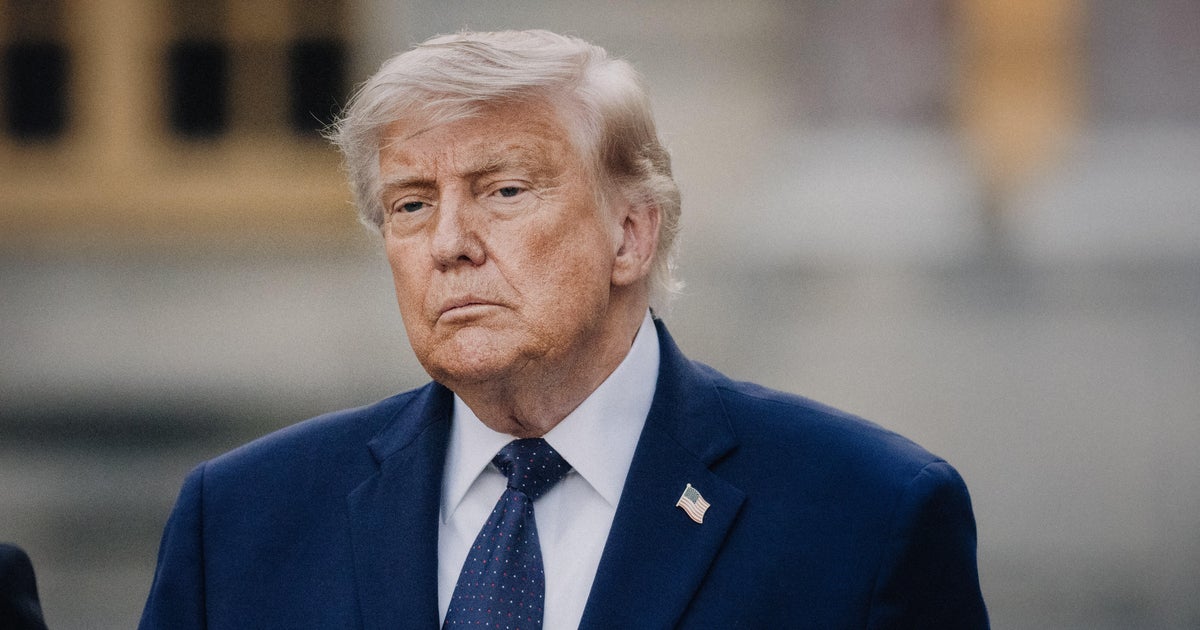
“There are many important issues to be discussed at the summit, and they wouldn’t be decided upon without the participation of the U.S. president. European countries believe that the most important factor ensuring Trump’s participation was the fact that the summit will be held in Türkiye. He wouldn’t come if it wasn’t for our president, for Türkiye, and his absence would be a declaration that he no longer attaches importance to (NATO),” he said. Trump often boasts about having a good relationship with Erdoğan and most recently heaped praise on the Turkish leader for “doing a good job in Syria’s recovery.”
Fidan stated that NATO roughly consisted of three groups: the United States, the European Union and other countries. “Türkiye is the only country forming its own opinion, acting as an anchor (in the third group),” the minister underlined. He added that the Ankara summit would reinforce Türkiye’s international role and its position in NATO.
U.S. Defense Secretary Pete Hegseth on Thursday hailed progress by NATO allies to meet defense spending vows, but said some must “do more,” as he struck a conciliatory tone at an alliance meeting.
“Many countries are following through, some that still need to do more, and we will be candid about that, both in private and in public,” Hegseth said ahead of talks with NATO defense ministers in Brussels. “I think that’s important, friends being honest with friends.”
The warm tone will likely reassure Washington’s allies ahead of the Ankara summit, after the mercurial leader lashed out at Europe over its response to his war on Iran.
NATO will look to showcase increased expenditure by Europe to prove to Trump it is progressing on a pledge last year to reach 5% of GDP on defense-related spending.
“When it comes to spending, what we are seeing is staggering amounts of money coming in,” NATO chief Mark Rutte said.
“Europe and Canada are spending in 2025 more than $90 billion extra compared to 2024, which is almost a 20% increase in defense spending.”
Despite the positive spin from the alliance, a NATO official said that three European countries, including Slovenia and Czechia, are currently on course to fall short of a crucial two percent threshold this year.
Washington has been clear with Europe that it wants NATO allies on the continent to take over primary responsibility for their own conventional defense as the U.S.’ focus shifts toward China. As part of that process, the Pentagon has told allies it is reducing the number of assets worldwide that it makes available to NATO. The U.S. move has sparked fear it could leave Europe vulnerable in the face of an aggressive Russia as allies still rely on Washington for some key weaponry. Rutte said that while the U.S. reductions were “immediate,” it didn’t mean that Washington wouldn’t be there if NATO faced an attack. “Then all allies, including the U.S., will max out what they can do to make sure we can fight the war,” he said.
U.S. and German media reported that the cuts include a third of the 150 U.S. F-16 and F-15 jets designated for NATO, plus refuelling and reconnaissance aircraft, bombers and drones. The reports said a submarine that can launch cruise missiles is also being taken out, along with one of two aircraft carrier groups. “By and large, we’ll be able to compensate for many things. But we need a bit more time, and that is the clear message,” German Defense Minister Boris Pistorius said.
“It is difficult and dangerous for the security of NATO territory in Europe if capabilities are withdrawn very quickly without it being clear when they can be offset.”
While NATO focuses on its own security, allies will also hold talks on bolstering support for Ukraine. Ukrainian President Volodymyr Zelensky will join a meeting of Kyiv’s military backers at NATO later in the day before heading to a summit of EU leaders. Ukraine is hoping to build on momentum from a positive meeting between Zelenskyy and Trump at the G-7 in Evian to secure more backing in its fight with Russia.
Russian-Turkish ties
Fidan also commented on his visit, where he met his counterpart Sergey Lavrov, was received by President Vladimir Putin, and held talks with top security officials and businesspeople. He described the visit as fruitful and assured that there was no change in Turkish-Russian relations. “Bilateral talks indicated that we have problems working together on regional issues. Both countries are willing to cooperate in every field,” he said.
The minister noted that Türkiye and Russia can frankly discuss tough, sensitive issues. “We developed a special relationship with Russians. Even in times of challenges in relations, we managed to build trust. Leaders of both countries have the same vision: defending their countries’ interests in the framework of certain principles. They are ready to adapt constructive stance,” he said.
On the Russia-Ukraine conflict, which Ankara sought to mediate, Fidan said Russia did not change its view of the conflict.
On regional cooperation in the South Caucasus, Fidan said that they agreed with Russians for implementation of the 3+3 mechanism, referring to a regional cooperation platform comprised Türkiye, Russia, Iran, Armenia, Azerbaijan and Georgia. “The cooperation should replace competition in the region. This is becoming more common now in light of the latest developments in the Middle East. This viewpoint may strengthen our economies and increase stability. The domination approach should end. Peace and stability will benefit everyone,” he said.
Fidan, on the other hand, acknowledged obstacles to the mechanism, stating that mutual distrust between some countries dramatically escalated. On the opposite side, he recalled last week’s trilateral meeting of foreign ministers of Azerbaijan and Georgia in Türkiye. “We can work especially on connectivity. We discussed linking the Middle Corridor to Türkiye, and we believe we can take important steps,” he said.
Ties with Armenia
On normalization with Armenia, Fidan noted that the Pashinyan government took important steps to that extent. “Thanks to the will of our president, many significant steps were taken, including direct trade and flights. As we stated after the recent parliamentary elections in Armenia, we hope that Armenia will take more steps and once circumstances are appropriate, we are ready for normalization,” he said.
During the tenure of Armenian Prime Minister Nikol Pashinyan, the two countries took significant steps for normalization.
In 2021, Türkiye’s former ambassador to Washington, Serdar Kılıç, was appointed as Türkiye’s special representative, while Rubinyan was appointed as Armenia’s counterpart.
Kılıç and Rubinyan met in Moscow in January 2022. Türkiye and Armenia agreed to continue negotiations aimed at the full normalization of relations without preconditions. This process was welcomed positively by the international community.
Flights between Armenia and Türkiye, which had ended in 2020, resumed on Feb. 2, 2022. An aircraft departing from Sabiha Gökçen International Airport in Istanbul landed at Zvartnots International Airport in Yerevan.
As of Jan. 1, 2023, direct air cargo trade between Türkiye and Armenia became possible.
Restrictions preventing users in Türkiye from accessing websites in Armenia were also removed, with the exception of websites belonging to Armenia’s official institutions.
While negotiations continued, both sides continued to send positive messages regarding the process. In 2024, Armenia announced that the Armenian side of the Alican Border Gate (the Margara Border Crossing) on the Turkish border had been completely renovated and made ready for service.
Under a decision taken by the two sides at the end of 2025, holders of diplomatic, service and special passports from Türkiye and Armenia became eligible to obtain free e-visas as of Jan. 1, 2026, providing greater visa facilitation.
Following talks on May 4 between Vice President Cevdet Yılmaz and Pashinyan, a memorandum of understanding was signed regarding the joint restoration of the Ani Bridge, with one end in Türkiye and the other in Armenia.
U.S.-Iran deal
On the key deal between the U.S. and Iran to end their conflict, Fidan said the two countries have reached an agreement in principle on key elements, but technical issues, including the fate of Iran’s enriched uranium and the implementation of a future enrichment moratorium, remain unresolved. He said technical teams still needed to determine how 400 kilograms of enriched uranium in Iran would be diluted, monitored and verified.
“There is a principled understanding regarding the dilution of 400 kilograms of enriched uranium in Iran. But who will carry out the dilution, who will oversee it, and how it will be verified still need to be discussed,” he said.
Fidan said wartime conditions, mutual distrust and regional developments, including Israel’s occupation of Lebanon, had slowed negotiations between Washington and Tehran.
“While the U.S. side could respond within an hour, the Iranians sometimes needed a week,” he said, adding that he had encouraged both sides to engage in direct talks.
The Turkish foreign minister also criticized Israel’s regional policies, calling them “a global problem.”
“Israel wants destruction in the region. It wants to occupy some countries and employ terrorism. This has consequences for global security as well as the economy. We are seeing Israel face increasing diplomatic backlash.
“We hope this diplomatic response will produce results and that all countries in our region will live in peace, stability and prosperity,” he said.
Fidan said the conflict involving Iran, the U.S. and Israel had shifted international attention away from Gaza but expressed hope regional countries would refocus on the enclave once the crisis eased. He added that efforts to reach a framework agreement for the second phase of Gaza cease-fire negotiations were continuing with the involvement of Türkiye’s National Intelligence Organization (MIT).
DAILYSABAH
هلدینگ کاسپین استانبول | خرید ملک در ترکیه | صرافی معتبر ایرانی در ترکیه | خرید و فروش طلا در ترکیه | مهاجرت به ترکیه | واردات و صادرات در ترکیه | نیازمندیهای ترکیه | اخبار ترکیه | اخبار جهانی | توریست ایران | خدمات توریستی در ایران | تورهای گردشگری ایران | هلدینگ اول | خدمات کاریابی و فریلنسری و شغل | مرجع اطلاعات ایران (همه چیز در ایران) | کیف پول و خدمات مالی و پرداخت یار | اخبار ایران | تابلو زنده قیمت ارز در ترکیه و استانبول | صرافی آنلاین ترکیه | قیمت طلا و نقره در ترکیه | سرمایه گذاری در ترکیه | جواهرات در ترکیه | نرخ لحظه ای ارزها در استانبول | قیمت دلار امروز در ترکیه | قیمت دلار استانبول امروز | قیمت لحظه ای دلار | اخبار روز ترکیه استانبول | اپلیکیشن ISTEX | اپلیکیشن قیمت لحظه ای دلار و یورو و لیر و ارزها در ترکیه
About the Author