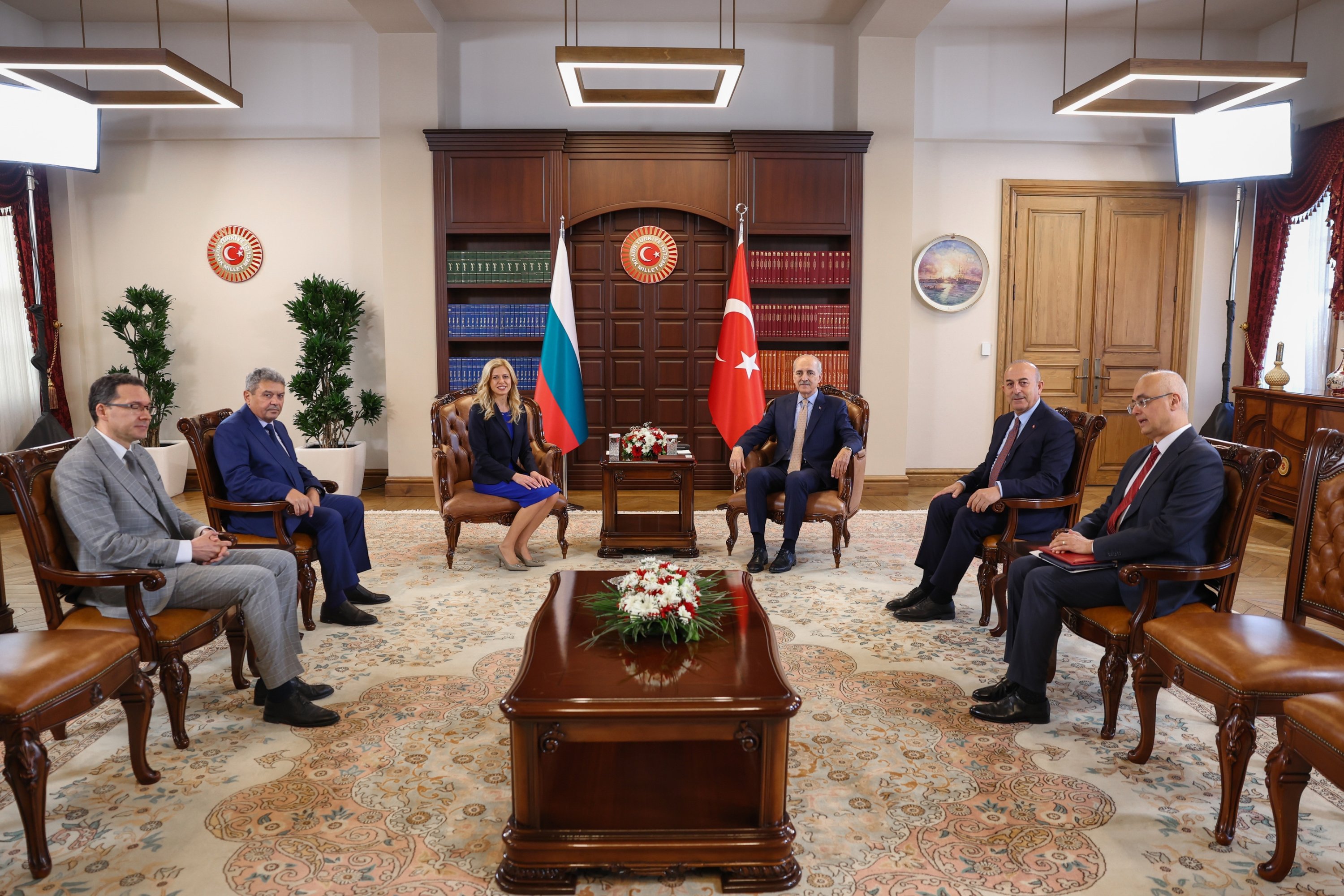
Parliamentary leaders from NATO member states called for stronger defense capabilities, greater allied unity and closer cooperation at the NATO Parliamentary Summit in Istanbul on Monday, underscoring the need for collective security, continued support for Ukraine and adherence to international law.
Speaking at the summit hosted by Türkiye, Bulgarian National Assembly Speaker Mihaela Dotsova said the NATO Summit to be held in Ankara presents “an opportunity to reaffirm our strong commitment to the alliance’s values, collective security and strengthening stability in the Euro-Atlantic region.”
She stressed that Bulgaria sees NATO as a cornerstone of security and pointed to growing instability and multiple conflicts in the current global environment.
Dotsova said Bulgaria continues to fulfill its commitments to collective defense and modernize its armed forces.
“Investing in defense means investing in security, resilience and the state’s ability to protect its citizens and national sovereignty,” she added.
Croatian Parliament Speaker Gordan Jandrokovic said Russia’s attacks on Ukraine, along with hybrid threats, disruptive technologies and intensifying strategic competition, are reshaping Europe’s security landscape and the functioning of societies.
“In this context, military power, of course, remains indispensable, but it is no longer sufficient on its own,” he said.
“Critical infrastructure, economic and technological progress, and political cohesion are equally important parts of the equation,” he added.
Jandrokovic stressed the need for stronger European defense capabilities in solidarity with a credible transatlantic bond.
He said Croatia is on track to allocate 3% of its gross domestic product (GDP) to defense spending by 2030 and is determined to raise that figure to 5% by 2035.
Emphasizing that NATO allies form a shared security space, Jandrokovic said any weakness within that space affects the security of all allies and underlined that the alliance must be prepared for future threats.
Dutch House of Representatives Speaker Thom van Campen said parliamentary diplomacy plays a “vital role” in building trust between countries, fostering mutual understanding and strengthening transatlantic solidarity.
“We are meeting in Türkiye, which serves as a bridge between continents and cultures, and this is no coincidence,” he said, calling on allies to continue supporting one another and demonstrate that NATO is “united, determined and ready to act.”
North Macedonian Parliament Speaker Afrim Gashi said “NATO 3.0” should be viewed from the perspective of a strategic restart of the alliance and stressed the need for balanced burden-sharing and increased national investments in defense capabilities.
He also said developments in the Middle East have serious implications for peace, energy markets and humanitarian conditions and called for continued diplomatic efforts to reduce tensions.
Norwegian Parliament Speaker Masud Gharahkhani said his country is increasing defense production and investing in new systems, including unmanned aerial vehicles and digital solutions.
“We need more coordination. We need to accelerate our industrial capacities and production to strengthen our collective security,” he said, adding that Norway’s long-term defense plan reflects a more serious security environment and lessons learned from the war in Ukraine.
Estonian Parliament Speaker Lauri Hussar said NATO members’ decision to allocate 5% of GDP to defense by 2035 was historic and stressed the need to deepen cooperation in regional defense planning and air defense.
“Peace is never free and weakness always comes at a cost. Unity is NATO’s center of gravity,” he said, while calling for increased pressure on Russia and continued support for Ukraine.
Finnish Parliament Speaker Jussi Halla-Aho said Finland wants to actively contribute to collective deterrence, emphasizing that NATO’s strength stems from the strength of its members and that Russia can only be persuaded to end its aggression if the economic and political costs become unsustainable.
Italian Chamber of Deputies (lower house) Speaker Lorenzo Fontana said security in the Euro-Atlantic region is shaped by interconnected crises stretching from the Mediterranean and the Middle East to the Red Sea and the Gulf.
“NATO is strong when it is united. It is credible not only when it reacts to crises but also when it can prevent them,” he said.
Polish Senate Speaker Malgorzata Kidawa-Blonska called for increasing resilience against Russia and said NATO’s defense preparedness and new formats of cooperation should be strengthened.
“We must support Ukraine with all our strength,” she said, adding that Poland and Türkiye play key roles as allies on NATO’s eastern flank.
Portuguese Parliament Speaker Jose Pedro Aguiar Branco said maintaining the alliance’s internal cohesion remains essential and stressed that support for Ukraine should continue to be a priority within the Euro-Atlantic security framework.
Slovak National Council Speaker Richard Rasi said Slovakia’s foreign and security policy is based on its European Union and NATO memberships and noted that the country plans to gradually increase defense spending to 5% of GDP while seeking conditions for a just and lasting peace in Ukraine.
British House of Lords Speaker Michael Forsyth described Türkiye as “a valuable partner in many fields at the intersection of Europe, the Middle East, Africa and Asia,” saying Ankara plays “a vital diplomatic role in connecting regions and mediating conflicts.”
Forsyth said deterrence is less costly than conflict and collective defense is more effective than acting alone, adding that NATO allies must adapt to changes brought by artificial intelligence and cyber technologies.
He also said Ukraine is bearing the burden of resisting Russian aggression on behalf of the broader alliance and said NATO members owe Ukrainians “a great debt of gratitude.”
U.K. House of Commons Deputy Speaker Judith Cummins also stressed the need for closer cooperation among allies, saying: “At this most dangerous point in our history, we NATO members need each other.”
She warned that current challenges are becoming increasingly unpredictable and pointed to growing competition and emerging technological threats.
French NATO Parliamentary Assembly delegation head Natalia Pouzyreff recalled that the situation in the Middle East and navigation through the Strait of Hormuz had been discussed at the recent G7 Leaders’ Summit in France, which also issued a joint statement recognizing Ukraine’s territorial integrity and calling for strengthened military assistance to Kyiv.
Pouzyreff said Ukraine’s future lies in NATO and stressed that the country’s Euro-Atlantic integration would directly contribute to regional security and stability.
Czech Senate Speaker Milos Vystrcil said every NATO member has a responsibility to allocate at least 2% of its GDP to defense spending.
“Europe should assume greater responsibility for NATO’s defense because a stronger Europe means a stronger NATO,” he said.
Vystrcil said NATO’s future rests on unity among allies, fulfilling commitments, and greater European support for collective defense.
“If we are to send one message from Istanbul, it is this: When it comes to defending our freedom and democracy, we all stand shoulder to shoulder,” he added.
Czech Chamber of Deputies Speaker Tomio Okamura said countries need to strengthen their defenses before crises emerge, stressing that every nation has both the right and the duty to defend its territory, citizens, borders, and way of life.
He also called for the war in Ukraine to end as soon as possible.
Danish Parliament Speaker Soren Gade said Euro-Atlantic security has become increasingly complex and underlined the importance of maintaining NATO’s strength and intervention capability.
“As a former defense minister, I have seen firsthand the immense pressure NATO is under, but NATO remains the strongest and most successful alliance in history,” he said.
“Although the international security situation is under great pressure, I believe NATO has the necessary tools to address the challenges ahead,” Gade added.
Spanish Senate First Deputy Speaker Javier Maroto said all NATO countries should defend respect for international law in every conflict, “whether in Ukraine or the Middle East.”
He also argued that NATO reform should not mean “less U.S.” but rather greater European responsibility, regional leadership, and a larger share of the traditional defense burden.
Swedish Parliament Third Deputy Speaker Kerstin Lundgren said the agenda of the upcoming NATO Leaders Summit in Ankara would include alliance capabilities, sustainable support for Ukraine, and increasing industrial production in the defense sector.
“NATO is an alliance founded on the view that democracy, human rights, the rules-based world order, and free trade are not only great ideals but also principles that make us strong today,” she said.
Albanian Parliament Foreign Affairs and European Affairs Committee Chairman Igli Hasani said security depends on the ability to act together and reiterated Albania’s support for Ukraine.
“Security is defended not only on the battlefield but also through sustained solidarity and determination,” he said, adding that investments in defense are a strategic step toward preparedness, resilience and deterrence.
NATO Parliamentary Assembly Greek delegation Deputy Head Dimitris Keridis described Istanbul as “magnificent” and said more than 2 million Turkish citizens are expected to visit Greece this year.
Keridis believes that Türkiye should be included in the Schengen Area, adding that Greece is sincere in extending a hand of friendship.
Dagur Eggertsson, member of parliament from the Social Democratic Alliance and the chair of Iceland’s NATO parliamentary delegation, said being in Istanbul, which has connected cultures, continents, and civilizations for centuries, is a privilege.
“This city reminds us that security is never built in isolation but through dialogue, cooperation, and shared responsibility,” he said.
Eggertsson said NATO exists not only to defend territories but also to protect the principles that make peace possible, stressing that trust in democratic institutions and shared values is the real foundation of the alliance.
NATO PA Montenegro delegation head Dusko Stjepovic said wars in Europe and the Middle East, cyberattacks, disinformation campaigns and attempts to weaken democratic institutions show that security can no longer be viewed only from a state-centered perspective.
He said NATO is more important than ever and voiced support for strengthening the alliance’s defense capacity and increasing defense investments.
The NATO Parliamentary Assembly Ukraine delegation head, Yehor Cherniev, thanked Türkiye for organizing the 2022 negotiations in Istanbul, while saying the talks did not succeed because the conditions were not fair or acceptable for Ukraine.
Cherniev said Ukraine is beginning to regain the initiative in the war and argued that Russia should not be given an opportunity to recover and rebuild its forces.
He also said Europe’s security would remain incomplete without Ukraine’s full NATO membership.
DAILYSABAH
هلدینگ کاسپین استانبول | خرید ملک در ترکیه | صرافی معتبر ایرانی در ترکیه | خرید و فروش طلا در ترکیه | مهاجرت به ترکیه | واردات و صادرات در ترکیه | نیازمندیهای ترکیه | اخبار ترکیه | اخبار جهانی | توریست ایران | خدمات توریستی در ایران | تورهای گردشگری ایران | هلدینگ اول | خدمات کاریابی و فریلنسری و شغل | مرجع اطلاعات ایران (همه چیز در ایران) | کیف پول و خدمات مالی و پرداخت یار | اخبار ایران | تابلو زنده قیمت ارز در ترکیه و استانبول | صرافی آنلاین ترکیه | قیمت طلا و نقره در ترکیه | سرمایه گذاری در ترکیه | جواهرات در ترکیه | نرخ لحظه ای ارزها در استانبول | قیمت دلار امروز در ترکیه | قیمت دلار استانبول امروز | قیمت لحظه ای دلار | اخبار روز ترکیه استانبول | اپلیکیشن ISTEX | اپلیکیشن قیمت لحظه ای دلار و یورو و لیر و ارزها در ترکیه
About the Author