
This month, an email from a consumerlanded in Martin Lewis’s inbox. It was from an elderly woman with a disability who had been scammed when she invested in a scheme purportedly endorsed by Lewis – and lost her life savings. “THEY ARE BASTARDS!” Lewis wrote at the top of his social media post about it. Even though the personal finance expert is a veteran campaigner against fraud, he says he had “tears running down my face”. He still sounds upset. “I felt a mixture of frustration, anger and sadness.” Not only for the plight of the woman, but for the “constant, ongoing deluge of shit from the scammers”.
Lewis never advertises anything. To hammer home the point, his social media profile picture has the words “I don’t do ads” tattooed on his forehead. But still, people fall victim to deepfake videos and frauds that appear to show him offering investments. The scale of harm is great enough that MoneySavingExpert (MSE), the company Lewis founded in 2003 and sold in 2012 for up to £87m – he is now its executive chair – has someone full-time handling these cases.
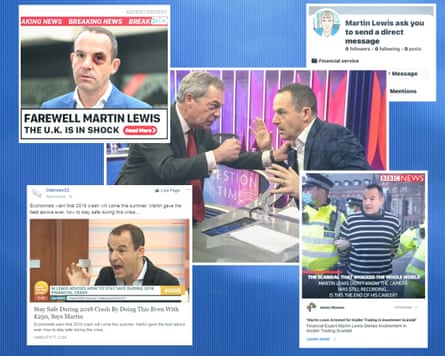
In consumer advocacy terms, Lewis is a sort of one-man Citizens Advice for financial wellbeing. He has built a career on trust – in the league table of national treasures, he is up there with David Attenborough. For more than 20 years, he has empowered individuals to stand up to big companies, racking up wins against unfair bank charges, mis-sold payment protection insurance, and “aggressive” billing and collection of council tax, to name a few. To have his reputation turned into a tool for harm is “like a slap in the face”, he says.
He wishes the case of the elderly woman was unusual, “but this is a mundane, everyday occurrence. I can’t cope with the number of people who are being scammed.” Maybe this is one battle he can’t win? “Do I feel I’m losing this one? Yes, I am losing it. That’s it. I’m losing it,” he says.
Lewis’s identity is one of the most frequently used in deepfake advertising. When MSE analysed research carried out in 2024 by Action Fraud, it suggested that victims have reported losing more than £20m to scams featuring Lewis, who topped the chart of famous faces in scam adverts, ahead of Taylor Swift and Elon Musk.
Actually, Lewis says, “scammers is not the right word”. It’s trivialising. “This is organised crime. And these are psychologically adept marketing systems. These people have the equivalent of dark web marketing agencies.”
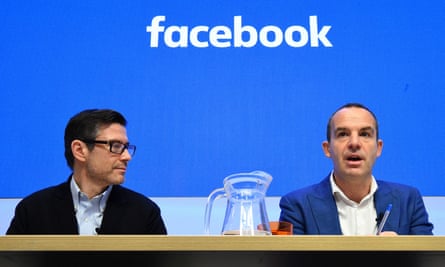
Despite campaigning against this type of fraud for nearly a decade – he settled a defamation case with Facebook for £3m donation to Citizens Advice in 2018, after it published adverts that used his image to market fraudulent investments – little has changed. Lewis campaigned successfully for scam advertising to be included in 2023’s Online Safety Act, which makes tech companies responsible for the adverts that appear on their platforms. But, he says: “Absolutely bugger all has been done. They said, unfortunately, because there were other priorities, the consultation would take time, but they’d start in early 2025. That became mid-2025. That became mid-2026.”
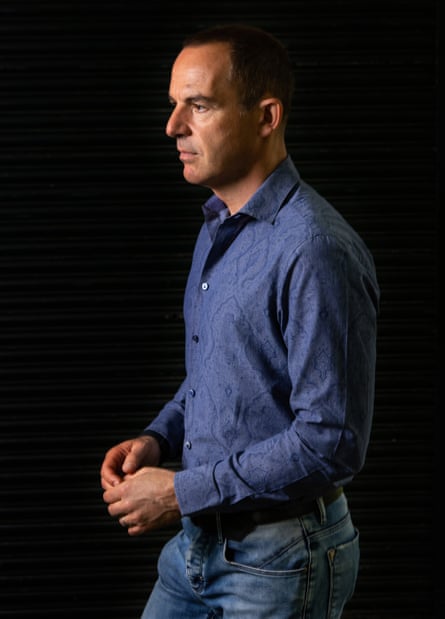
“I feel completely let down by the entire political classes,” Lewis says. “I would love them to get my mailbag. I’d love to see how they react to my mailbag day in, day out.”
Ofcom, the independent regulator responsible for enforcing the Online Safety Act, says it is “working at speed to develop new rules for paid-for fraudulent ads on the most widely used social media and search services”. Its 12-week consultation will start in July, with final policy statements due in mid-2027 at the latest.
Lewis has a lot of energy, and speaks quickly; he is walking while we talk on the phone, and his sentences seem to pace about and overtake each other. In May, he teamed up with the chief executive of Which? to write an open letter to Keir Starmer, “to express our concerns with the government’s lack of action to hold big tech accountable for the fraud that takes place on its platforms”. Has he had a reply?
“No. We haven’t heard back yet,” he says. “And I’ll tell you the thing that really sticks in my craw about that. This really does drive me nuts. When he [Starmer] was talking about the AI nudification issue, which is of course terrible, he said: ‘If you [the tech companies] profit from harm and abuse, you lose the right to self-regulate.’’’
At that point, “I’ll be honest,” Lewis says, “I metaphorically threw my sock at the television. AI nudification is terrible. But destroying people’s lives through stealing their money and stealing their mental health through scam ads is just as terrible, just as destructive. Yet it’s been ignored for a decade.”
Last year, Reuters reported on Meta’s internal projections, which showed that approximately 10% of its annual revenue in 2024 – or $16bn (£12.1bn) – would come from illicit advertising. (Meta said in response to the report that it had reduced user reports of scams by 58% over the last 18 months.) “If that isn’t the definition of profiting from harm and abuse, I don’t know what is,” Lewis says. “Yet we have done nothing. So, for me, [Starmer’s] was a fundamentally flaccid statement.”
Previous governments have been no better. Before the pandemic, when he was suing Facebook, Lewis had a private meeting with a secretary of state under the then Conservative government. “And he said to me: ‘Oh, it’s really good you’re suing Facebook because it’s a lot easier for you to act than us.’ I said: ‘What are you talking about? You’re the government! Don’t regulate with my money. Do it yourself!’”
Lewis has permitted himself a small amount of “wry amusement” at the media coverage given to the AI-generated footage of Nigel Farage fighting the head of the Bank of England, Andrew Bailey. “Before Farage was beating up the head of the Bank of England, he was beating me up,” he says. He offers to send me the AI-generated photograph.
In a funny way, that episode has given him some hope, he says. “The one thing the scammers are doing that I appreciate at the moment is showing Nigel Farage and Keir Starmer in some of the scams. Not because I want it to happen. I’m very anti-scam advert, so let’s be very clear how this is phrased. If it’s them, not me, maybe they’ll do something about it.”
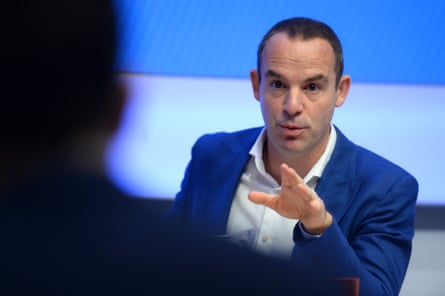
He can’t understand the lack of action, and these shortcomings colour everything. Even while he is “supportive” of the recently announced ban on social media for children under 16, Lewis can’t let himself feel completely happy. “So we’ve acted on this and we’ve acted on AI nudification. What is it about the people who have been victims of scammers that you don’t consider them, and don’t want to help them, and don’t feel that they need legislation and proper protection? Why is it that they’re missed out? Is it because you think it’s their own fault? Or you think there’s no votes in it? Or because it hasn’t happened to you?”
Lewis himself would hate to go into politics. “As I always say, I would rather wire my nipples to electrodes,” he says. But how does he think the government ought to “act”? “The first thing we need to do is to put the law [the Online Safety Act] in place that was designed and actually make it work,” he says.
“Ultimately, the way you stop scam adverts is very simple. You make it cost more to publish them than they make from publishing them.
“All these big tech firms believe in ‘frictionless advertising’. Anybody can advertise quickly. It means there are not sufficient checks and balances. Now, what I want to see is friction advertising. I want so much friction it burns them where it hurts.” He has something of a schoolboy’s sense of justice – those playground wrist twists come to mind – and a teacherly ability to break things down.
First, Lewis wants potential advertisers to register and be pre-vetted. “Second, I want to see big fines for [the tech companies] who publish them. I would also like to make them partially responsible for recompense to the individuals. That would soon stop them. Right? And they should be forced to put a prominent note to every single person who saw that scam advert [saying] that they saw a scam advert, in the same way as a newspaper has to apologise when it gets it wrong.”
The increasing sophistication of AI-generated content has made it harder not to believe what you see. “It’s brilliant and terrible at the same time,” Lewis says. And fraudsters often spend time building a personal relationship with their investors/victims. The experience is like being “brainwashed”. Lewis was confronted with the proof of this a couple of years ago when he ran into a caretaker at a building he frequented. They’d chatted occasionally, and this time, the caretaker told Lewis: “‘I just put money in your investments.’”
“I said: ‘I don’t have an investment.’ He said: ‘No, I put the 250 quid in your investment.’ I said: ‘No, no, it’s no investment scheme. It’s not true.’ He said: ‘Yes, it is.’ And he got it out to show me. He said: ‘Look, that’s you.’ And he argued with me, and he told me I was wrong.
“Now we just have to step back a second,” Lewis says. “He’s not talking to a friend who’s telling him it’s a scam. This is a Martin Lewis investment scam and he’s talking – I don’t mean to talk in the third person in a bad way – but he’s talking to Martin Lewis, who’s saying: ‘That isn’t my investment.’ It took me over 20 minutes to persuade him. Twenty minutes!” he exclaims.
As for the woman in her 70s who emailed Lewis, he says: “The worst thing is, we have gone back to her and she hasn’t replied.”
Lots of people have said, “Can we raise GoFundMe pages?, and all this type of stuff. Which I’m reticent to do, I’ll be honest. I’ve even had people saying I should pay it [the money they lost]. And, listen, if I were going to do something like that, I wouldn’t tell the public. But also, how do we pick and choose, of the hundreds and thousands of victims of this, who we pay for and who we don’t?”
Lewis has spoken before about the “horrendous” pressure he feels from giving financial advice and his “dark days, mental health-wise”. He tries not to read individual emails, to protect himself from “the despair and utter hopelessness you get from people when this has happened”.
The people whose experiences hurt him the most, he says, “are the ones who have not got to the point of understanding it’s a scam, and they write with a bit of anger at me. ‘You promised I’d get all my money back!’
“There’s an element of self-hatred. You can feel the depression and the loss of self-worth and self-image that comes from being a victim of this.”
I can’t help feeling sorry for him. It must be hard to sleep at night, with the weight of all these losses. “No, no. No, that’s wrong,” he says, even more exercised than usual. He sounds as if he has had to work hard to reach this understanding. “I have done nothing wrong. And I can promise myself – which is what matters – that I have done everything anyone feasibly can do to fight this and to get things changed. I will not allow these criminals to bite into my morality.”
The Guardian wp:paragraph
هلدینگ کاسپین استانبول | خرید ملک در ترکیه | صرافی معتبر ایرانی در ترکیه | خرید و فروش طلا در ترکیه | مهاجرت به ترکیه | واردات و صادرات در ترکیه | نیازمندیهای ترکیه | اخبار ترکیه | اخبار جهانی | توریست ایران | خدمات توریستی در ایران | تورهای گردشگری ایران | هلدینگ اول | خدمات کاریابی و فریلنسری و شغل | مرجع اطلاعات ایران (همه چیز در ایران) | کیف پول و خدمات مالی و پرداخت یار | اخبار ایران | تابلو زنده قیمت ارز در ترکیه و استانبول | صرافی آنلاین ترکیه | قیمت طلا و نقره در ترکیه | سرمایه گذاری در ترکیه | جواهرات در ترکیه | نرخ لحظه ای ارزها در استانبول | قیمت دلار امروز در ترکیه | قیمت دلار استانبول امروز | قیمت لحظه ای دلار | اخبار روز ترکیه استانبول | اپلیکیشن ISTEX | اپلیکیشن قیمت لحظه ای دلار و یورو و لیر و ارزها در ترکیه
/wp:paragraph wp:paragraph /wp:paragraph
About the Author