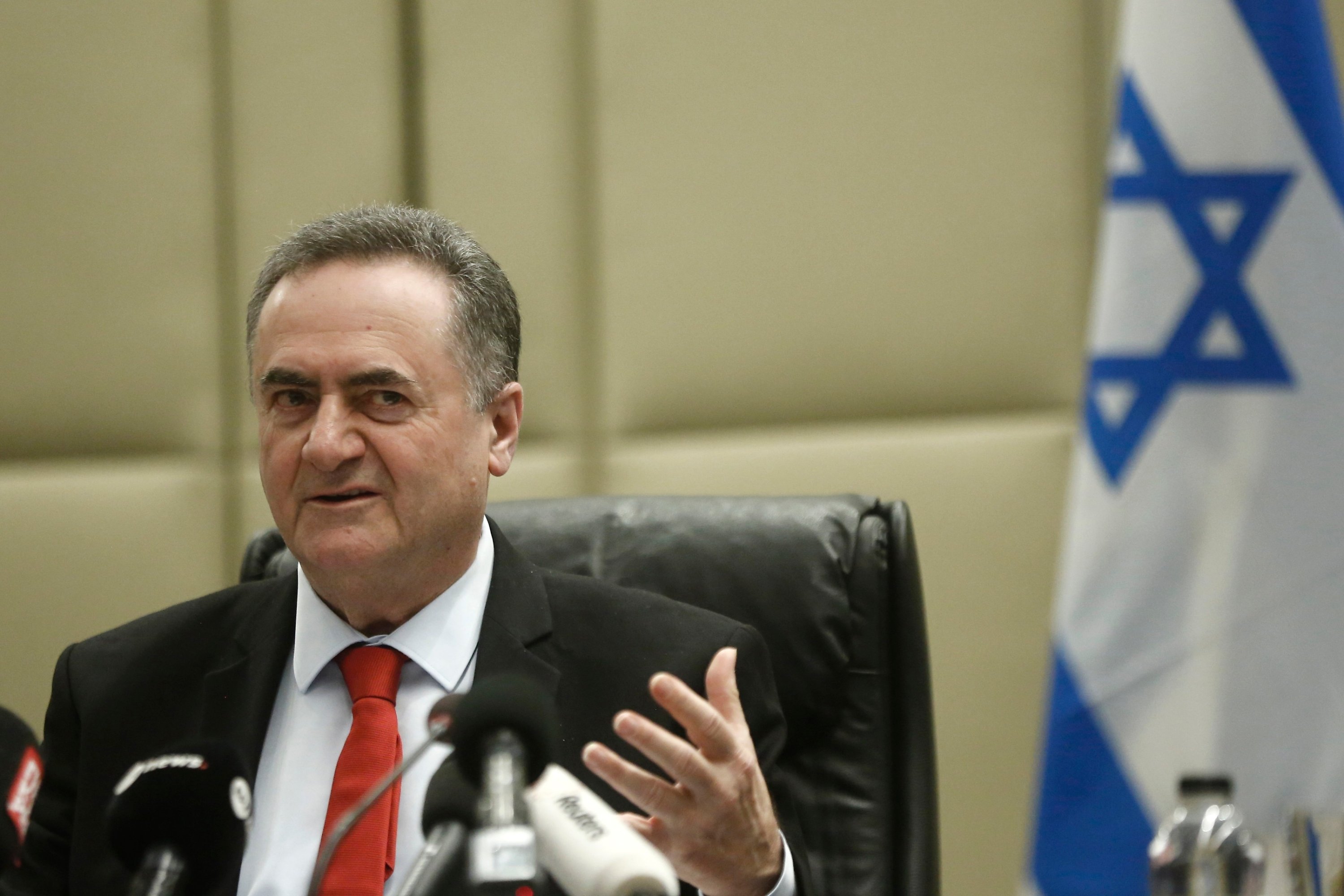
Israel Katz, Minister of Defense of Israel, is one of the prominent political figures who has emerged during a period in which the far-right security-focused rhetoric in Israel has become intertwined with the Jewish settler movements.
Regarding the Palestinian issue, Katz views increased military operations, political pressure, and demographic engineering as necessary, and consciously disregards the erosion of international law in pursuit of these goals. The ministerial positions he has held throughout his political career have enabled him to influence nearly all critical aspects of Israel’s current policies on infrastructure, settlements, borders, blockades, energy and war, which form the foundation of the genocide Israel is currently committing.
Throughout the Gaza genocide, while Türkiye has persistently emphasized the need for a ceasefire, humanitarian aid, a two-state solution, and respect for international law, Katz has maintained a stance defending Israel’s regional deterrence, the punishment of Gazans, the displacement of Palestinians, and the necessity of military operations.
As one of the longest-serving political figures in the Israeli cabinet, Katz has stood out for his ties to illegal Jewish settlers. He has viewed Palestinians struggling to live on their own land as the greatest security threat. He has turned the infrastructure projects he has overseen into tools of pressure for Israel’s regional policies. Following Oct. 7, he has made statements that give the impression of collective punishment and mass extermination, adopting a stance that has contributed to the deepening of crises in the region.
Thinking about efficiency
Katz, whose roots trace back to Maramures in present-day Romania, was born in Ashkelon in 1955 and grew up in the Kfar Ahim moshav.
In 1973, he joined the Israeli army and served in a paratrooper unit. After his discharge in 1977, he graduated from the Department of Political Science and International Relations at the Hebrew University of Jerusalem and went on to earn a master’s degree from the same university.
He has served in the Knesset as a member of the far-right Likud party since 1998.
The 1973 Arab-Israeli War, the Likud’s rise to power in 1977, and the growing influence of settler politics within Israel’s center-right beginning in the 1980s were developments that shaped Katz’s overall stance. He built his political career on a security-focused narrative but recognized early on the political impact of bureaucratic and infrastructure activities.
Raised in a moshav, an agriculture-based settlement, Katz often drew on themes such as land, water, infrastructure, energy, logistics and borders as central elements in his political rhetoric and ideological approach. In this regard, Katz played a significant role in transforming the illegal settlements in Palestinian territories from temporary security measures into a permanent Israeli population and infrastructure project.
Systematizing punishment
Shortly after entering the Knesset, he became a prominent figure in the Likud party. He has established himself as a politician who was able to read the balance of power in leadership struggles within Likud, involving figures such as former Prime Minister Ariel Sharon and current Prime Minister Benjamin Netanyahu, without experiencing a direct break with the party’s internal leadership.
In this regard, he has been one of the actors in Israeli politics who, alongside his ideological rigidity, has maintained a pragmatic loyalty to the leadership. This stance enabled him to hold various ministerial positions in numerous cabinets.
He served as Minister of Agriculture from 2003 to 2006, when he held a decision-making and executive role as Israel transformed the West Bank and Gaza into open-air prisons with its “separation walls,” intensified its operational activities in those areas, and withdrew from Gaza while imposing a blockade on the region.
In the Netanyahu governments formed after 2009, he further increased his political influence as Minister of Transportation. During this period, roads and infrastructure projects connecting the growing illegal settlements to the heart of Israel were carried out, forming the backbone of the system that divides Palestine into fragmented areas. The technical capacity of this expansionist system in Israel has evolved through Katz’s ministerial policies.
In Israel, where every policy works for legitimizing war crimes, Katz was among the first to emphasize, at the outset of the attacks on Gaza, that basic necessities of life could be used as weapons of war. Serving as Energy Minister at the time, Katz made statements such as, “No electrical switch will be turned on, no water hydrant will be opened and no fuel truck will enter into Gaza” until the hostages are released, which were interpreted by United Nations experts and the international community as collective punishment and a war crime. As a result, hospitals, schools, bakeries, sewage systems, and all the other foundations of civilian life came under attack. These statements by Israeli politicians, along with the inhumane practices carried out in Gaza, have formed the basis of the genocide case against Israel at the International Court of Justice.
Finding enemies for Israel
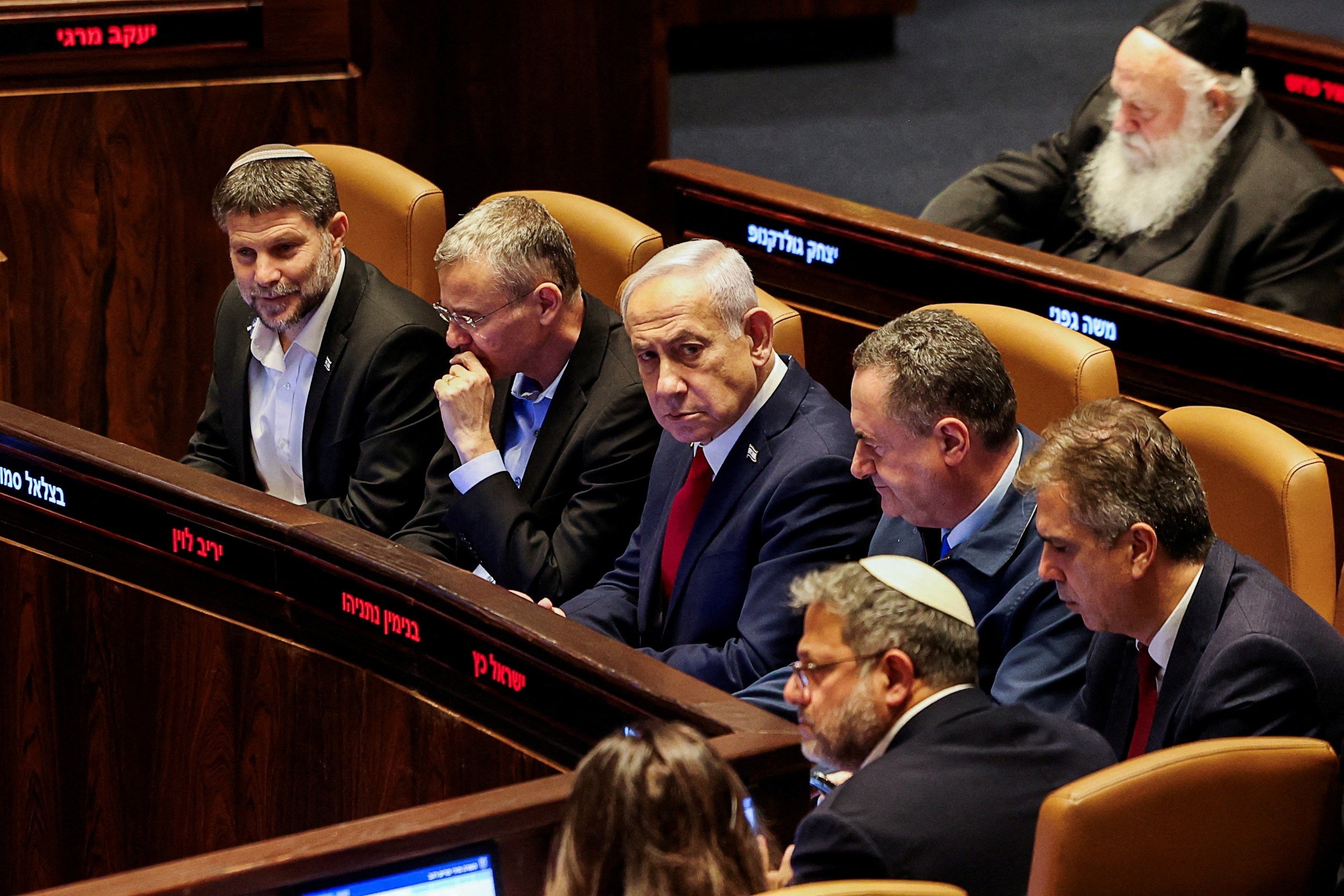
After 2015, in addition to serving as Minister of Transportation, he also held the posts of Minister of Intelligence, Minister of Foreign Affairs, Minister of Finance, and Minister of Energy. In his roles at these ministries, where issues about Syria, Lebanon, Iran, Gaza and the Eastern Mediterranean took center stage, Katz increasingly adopted a political rhetoric dominated by explicit threats and harsh rhetoric.
His statements, which escalated regional tensions, his defense of military operations, his remarks implying widespread regional destruction, and his provocative messages received extensive coverage in the international press. He has not hesitated to make inflammatory and unacceptable statements directed at President Recep Tayyip Erdoğan, who has strongly condemned Israel’s regional expansionism and the genocide taking place in Gaza, prioritized international law and humanitarian aid, and emphasized his desire to avoid tension and war in the region.
During his tenure as Foreign Minister, he worked to justify attacks against Iran and establish a diplomatic network. In his statements, he frequently called for sanctions against Iran’s missile program and for the Islamic Revolutionary Guard Corps (IRGC) to be designated as a terrorist organization.
He also stated, “I am leading a diplomatic offensive against Iran,” and in this context, he sent letters to 32 countries and held meetings with the foreign ministers of numerous nations in an effort to stop Iran.
He was also one of the key figures in the Israeli cabinet planning attacks on Lebanon, emphasized that Beirut would be held responsible for Hezbollah’s attacks on Israel, and that they would never accept a ceasefire proposal.
Planning the genocide
Katz’s stance, which escalated regional tensions, continued in 2024 when he succeeded Yoav Gallant as Minister of Defense. From that point on, he became the de facto architect of the events unfolding in Gaza.
He directed measures that included restricting Palestinians’ exit from Gaza or confining them to areas within Gaza that were subject to very strict surveillance and control. While U.S. President Donald Trump’s 2025 plan to relocate Gazans to other countries was being debated, Katz stated that he had instructed the Israeli military to prepare a plan to “cleanse” Gaza of Palestinians and depopulate the region.
He also advocated for the establishment of a large settlement area, which he termed a “humanitarian city,” subject to strict control near the Egyptian border, in southern Gaza around Rafah, and for the relocation of Gazans there.
In response to this plan, even Ehud Olmert, a former Israeli prime minister, reacted by stating that the “humanitarian city” would be a concentration camp, that forcibly relocating Palestinians there would amount to ethnic cleansing, that Israel was already continuing to commit war crimes in Gaza and the West Bank, and that the construction of this camp would mean taking this process to an even further stage.
Inventing reasons for expansionism
It is clearly evident that Israel is attempting to carry out destruction similar to that in Gaza in Lebanon as well. In a statement he made as Defense Minister, he indicated that all homes in southern Lebanon would be demolished, that Lebanese who leave the area would not be permitted to return until Israel is deemed safe, and that destruction similar to that in Gaza would be carried out. Katz’s decisions also played a role in Israel’s recent expansion of its de facto occupation in Lebanon, as it crossed the northern Litani River for the first time in 26 years.
Katz is also one of the main actors behind attacks on Syria’s territorial integrity. Following former regime leader Bashar Assad’s overthrow, Israel deployed military forces to the United Nations-monitored buffer zone in southern Syria and the area around Mount Hermon. Contrary to his previous statements, he said that Israel will not allow foreign elements to establish a presence in the security zone in southern Syria, and it will continue to remain indefinitely at the summit of Mount Hermon and in the buffer zone to “ensure the security” of the Golan Heights and the northern Israeli settlements.
Katz is a notable figure who demonstrates how the “security narrative” in Israel is increasingly creating a boundless sphere of authority and transforming into a tool of oppression. His rhetoric and actions legitimize the occupation of Palestinian territories, expansionist policies, demographic engineering, the transformation of infrastructure projects into instruments of oppression, and regional interventions.
Throughout his political career and his various ministerial posts, practices that break legal boundaries have been normalized in the Israeli state and ministerial positions have been turned into effective tools in the service of expansionist policies. In this process, the rule of law, diplomacy and a humanitarian approach have been sidelined, and a discourse centered on security and threats has become the fundamental basis for legitimizing all forms of military, administrative and demographic interventions. The political approach represented by Katz constitutes a clear example of the settler-colonial, exclusionist and expansionist tendencies that have long been gaining strength in Israeli politics.
DAILYSABAH
هلدینگ کاسپین استانبول | خرید ملک در ترکیه | صرافی معتبر ایرانی در ترکیه | خرید و فروش طلا در ترکیه | مهاجرت به ترکیه | واردات و صادرات در ترکیه | نیازمندیهای ترکیه | اخبار ترکیه | اخبار جهانی | توریست ایران | خدمات توریستی در ایران | تورهای گردشگری ایران | هلدینگ اول | خدمات کاریابی و فریلنسری و شغل | مرجع اطلاعات ایران (همه چیز در ایران) | کیف پول و خدمات مالی و پرداخت یار | اخبار ایران | تابلو زنده قیمت ارز در ترکیه و استانبول | صرافی آنلاین ترکیه | قیمت طلا و نقره در ترکیه | سرمایه گذاری در ترکیه | جواهرات در ترکیه | نرخ لحظه ای ارزها در استانبول | قیمت دلار امروز در ترکیه | قیمت دلار استانبول امروز | قیمت لحظه ای دلار | اخبار روز ترکیه استانبول | اپلیکیشن ISTEX | اپلیکیشن قیمت لحظه ای دلار و یورو و لیر و ارزها در ترکیه
About the Author