Every generation of artists likes to believe that it stands at the threshold of an undiscovered territory. It is an almost irresistible conviction, one that has accompanied artistic production from the workshops of Renaissance Florence to the algorithmic studios of the 21st century: the belief that somewhere beyond the horizon there still exists an image that has never been painted, a gesture that has never been performed, a concept that has never been imagined and that the responsibility of the contemporary artist is to become the first person courageous or fortunate enough to find it. Yet today, amid an unprecedented abundance of exhibitions, biennials, fairs, digital platforms and artificial intelligence, that confidence appears increasingly difficult to sustain. We produce more images than any civilization before us; we consume visual information at a speed unimaginable even two decades ago, and yet the persistent question remains unsettlingly simple: are we genuinely creating something new, or have we merely become exceptionally sophisticated at rearranging what already exists?
The anxiety surrounding originality is hardly a contemporary invention. In fact, originality itself is a surprisingly recent cultural ideal. For centuries, artists were celebrated not because they broke away from tradition but because they mastered it. Medieval painters rarely signed their works, Renaissance apprentices devoted years to imitating their masters, and even the great innovators of the High Renaissance considered themselves participants in an ongoing visual conversation rather than isolated geniuses inventing entirely new artistic languages. To imitate was not to plagiarize; it was to learn, to honor and ultimately to surpass one’s predecessors through refinement rather than rupture. The romantic image of the artist as a solitary creator producing unprecedented visions almost ex nihilo would emerge much later, becoming one of the defining myths of modernity.
Perhaps this is precisely where our current dilemma begins. We inherited an ideal of originality whose standards have become almost impossible to satisfy. After more than a century of relentless experimentation, after abstraction dismantled representation, conceptual art questioned the necessity of the object itself, performance art displaced the artwork into lived experience, digital technologies dissolved material boundaries, and artificial intelligence entered the creative process, one cannot help but wonder whether the frontier we continue to seek actually exists. The history of modern art may be read not merely as a succession of styles but as an accelerating race towards novelty, a race whose finish line becomes increasingly invisible the closer one believes oneself to be approaching it.
There is a paradox at the heart of contemporary artistic culture that deserves closer examination. Never before have artists been encouraged to be radically individual, yet never before have artistic practices appeared so strikingly familiar across continents. Visit a major biennial in Venice, São Paulo, Sharjah, Istanbul or Sydney, and despite the remarkable diversity of political contexts and cultural histories, one frequently encounters similar aesthetic strategies, comparable installation formats, analogous conceptual vocabularies and recurring social concerns. Climate change, migration, identity politics, post-colonial narratives, archives, memory, ecology, speculative futures and technological anxiety circulate almost seamlessly from one international exhibition to another. While each project undoubtedly carries its own nuances, the broader visual language often feels uncannily homogeneous, as though contemporary art has developed a global dialect whose fluency occasionally comes at the expense of genuine surprise.
This observation should not be mistaken for nostalgia. Every historical period develops dominant visual conventions. Impressionism eventually acquired its own recognizable formulas; Cubism, once revolutionary, became teachable; Minimalism generated its own aesthetic orthodoxy. Innovation has always risked becoming convention the moment it succeeds. What appears different today is the extraordinary speed with which novelty itself becomes institutionalized. A visual strategy introduced in one exhibition is replicated across social media within days, absorbed into curatorial discourse within months, incorporated into graduate programs within a year and, before long, transformed into another familiar aesthetic category. The lifespan of innovation has contracted dramatically, not because artists have become less imaginative, but because global communication accelerates the circulation of visual ideas to an unprecedented degree.
The irony is profound. The more connected the international art world becomes, the more difficult it becomes to remain genuinely isolated long enough for an entirely personal visual language to mature. Every artist today inhabits an environment saturated with references. Museums have digitized their collections. Archives have become searchable. Artificial intelligence can retrieve centuries of artistic production within seconds. Social media exposes emerging artists to thousands of exhibitions they may never physically visit. Inspiration, once dependent upon travel, scholarship, or direct encounter, has become immediate and inexhaustible. Yet abundance has its own consequences. When every image is accessible, every historical movement documented and every stylistic experiment archived, the challenge no longer lies in discovering visual precedents but in escaping them.
It is tempting to blame technology for this condition, yet doing so would overlook a more fundamental truth. Art has always been cumulative. Every masterpiece carries echoes of earlier masterpieces, every revolution grows from a previous tradition, and every artistic language emerges through dialogue rather than isolation. What distinguishes great artists is rarely the complete absence of influence; rather, it is their remarkable ability to transform influence into something inseparable from their own way of seeing. The belief that originality requires absolute novelty has perhaps misled us from the beginning. No painter invents color. No sculptor invents stone. No photographer invents light. Artists inherit materials, histories, symbols, and visual memories long before they begin to shape them.
This becomes especially significant when we consider the artists who are often celebrated as the most revolutionary figures in modern and contemporary art. Their greatness did not reside in creating something from nothing. Instead, it emerged through an extraordinary capacity to reorganize familiar realities so convincingly that subsequent generations could never perceive them in quite the same way again. Innovation, in other words, may have less to do with invention than with perception.
If that proposition is true, then perhaps the central question confronting contemporary art has been incorrectly formulated. Instead of asking whether everything has already been done, perhaps we should ask whether we have exhausted how reality itself may still be seen. The distinction appears subtle, yet it transforms the entire debate. For if originality is measured solely by unprecedented forms, then the future indeed looks increasingly limited. If, however, originality resides in the ability to reveal unnoticed relationships within an already familiar world, then the possibility of artistic innovation remains not only alive but inexhaustible.
To understand how we arrived at this crossroads, however, we must return to the artist who fundamentally altered the meaning of originality itself, not by creating a new style, but by redefining what could be called art in the first place. With that gesture, the entire trajectory of contemporary art changed forever.
Marcel Duchamp
If there is a single figure who fundamentally transformed our understanding of originality, it is undoubtedly Marcel Duchamp. Ironically, he did so not by inventing an entirely new artistic technique, but by questioning whether technical innovation was necessary at all.
When Duchamp presented Fountain in 1917, a standard porcelain urinal turned upside down and signed “R. Mutt,” he shattered one of the oldest assumptions in Western art: that originality resided primarily in craftsmanship. The work was not admired because of exceptional skill, aesthetic beauty or technical mastery. Its significance lay in a radical shift of perspective. Duchamp proposed that the artist’s greatest creative act might not be making an object, but redefining its meaning.
That single gesture permanently altered the trajectory of modern and contemporary art. From that moment onward, originality was no longer measured solely by the ability to paint better, sculpt more accurately or master increasingly sophisticated techniques. Instead, it became inseparable from ideas. Concept gradually began to outweigh execution and intellectual innovation often became more valuable than manual virtuosity. Nearly every major movement that followed inherited something from Duchamp’s revolution. Pop Art challenged the distinction between high culture and consumer culture. Conceptual artists questioned whether the artwork even needed a physical form. Installation, performance and digital art continued to expand the very definition of what an artwork could be. The medium changed repeatedly, yet the underlying question remained remarkably similar: can an ordinary object, image or action become extraordinary simply because an artist asks us to see it differently? Paradoxically, this liberation also created a new dilemma. Once every material, object and medium became available for artistic expression, the pursuit of originality became increasingly complex. When there are no longer clear formal boundaries to break, where does genuine innovation reside? If everything can be art, can anything still feel radically new? This question continues to shape contemporary artistic practice. The challenge facing today’s artists is no longer discovering an untouched medium, but offering an unfamiliar way of thinking within a world where nearly every visual strategy has already entered history.
From revolution to repetition
The generations that followed Marcel Duchamp did not reject his ideas; they expanded them. Yet in doing so, they also revealed one of the greatest paradoxes of contemporary art: every revolution, no matter how radical, eventually develops its own conventions.
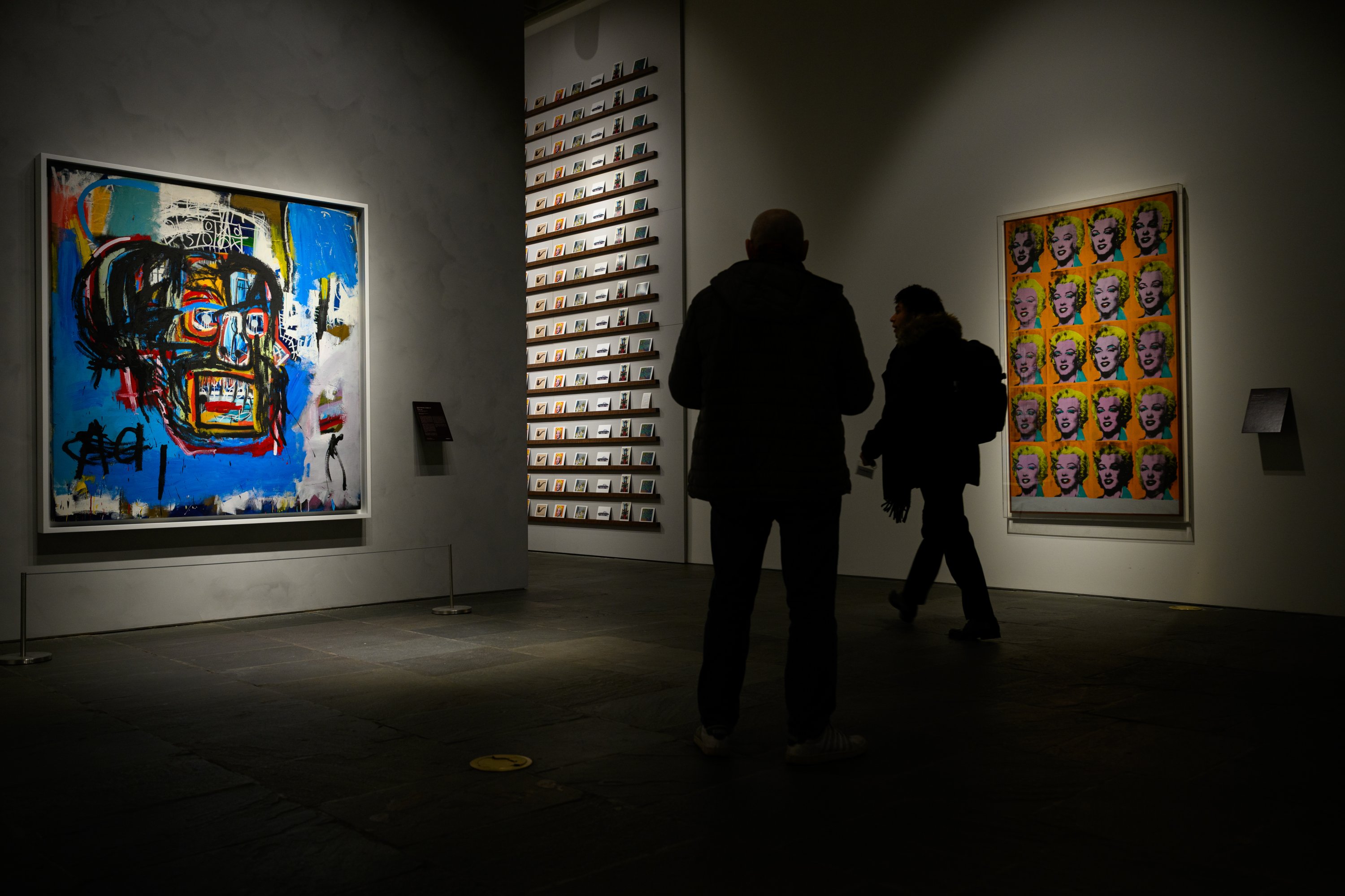
Andy Warhol blurred the boundaries between fine art and mass culture, transforming supermarket shelves, celebrity portraits and commercial imagery into museum-worthy subjects. What was once considered provocative has since become inseparable from contemporary visual culture. Jeff Koons elevated consumer objects into monumental sculptures, while Damien Hirst turned medicine cabinets, preserved animals and the aesthetics of scientific display into meditations on mortality, value and spectacle. Meanwhile, Maurizio Cattelan demonstrated that irony itself could function as artistic material, provoking debate as effectively as paint or marble. Each of these artists altered the vocabulary of contemporary art. Yet their greatest contribution may not have been the individual works they produced, but the permission they granted to future generations. They expanded the definition of what art could be, opening conceptual territories that countless younger artists would later inhabit.
This very success has made originality more elusive. Once the unconventional becomes accepted, it gradually loses its capacity to surprise. The conceptual strategies that once challenged institutions now circulate comfortably within them. A banana attached to a wall, an everyday object placed on a pedestal or an immersive installation questioning consumer society may still attract audiences, but they rarely produce the intellectual shock they once did. Their visual language has become familiar. This is not because these ideas were insignificant. On the contrary, they were so influential that they reshaped the expectations of the entire art world. Every generation inherits the innovations of the previous one and what once appeared revolutionary eventually becomes part of artistic common sense. Perhaps this explains why many contemporary works feel strangely familiar despite their apparent diversity. The issue is not a lack of talent or imagination, but the weight of history itself. Today’s artists are not creating in an empty landscape, they are working within a visual archive enriched by more than a century of uninterrupted experimentation. Under such conditions, originality becomes less a matter of inventing new forms than of discovering new ways to think through the forms we already know.
Comfort of the familiar
If originality appears increasingly elusive, artists alone cannot be held responsible. Contemporary art operates within a global ecosystem shaped by museums, biennials, galleries, collectors and market expectations, all of which inevitably influence what is produced, exhibited and ultimately remembered.
Cultural institutions often celebrate experimentation, yet they are also expected to minimize risk. Museums invest significant resources in exhibitions, biennials seek international visibility and galleries depend on collectors who are frequently more comfortable supporting artists with established reputations than emerging voices whose work has yet to be validated. As a result, the same artists, curators and conceptual frameworks tend to circulate across the world’s most influential exhibitions, reinforcing a visual language that audiences have already learned to recognize.
This does not suggest a lack of creativity within contemporary art. Rather, it reveals a system that naturally rewards familiarity alongside innovation. The consequence is subtle but significant: originality is not only a matter of artistic imagination, but also of institutional willingness to embrace uncertainty. In a cultural landscape increasingly shaped by visibility, funding and market confidence, genuinely unexpected ideas often require not only courageous artists, but equally courageous institutions willing to support them before they become fashionable.
What’s AI’s role?
Artificial intelligence has only intensified this discussion. While many fear that AI marks the end of originality, it may simply have exposed a truth that has always existed: creativity has never emerged from a vacuum. Like human artists, AI learns by absorbing existing images, styles and visual histories. The crucial difference is that artists contribute something no algorithm can fully replicate—their lived experiences, cultural memories, emotions and individual ways of seeing. If originality survives the age of artificial intelligence, it will not be because humans produce images machines cannot, but because they continue to ask questions that machines cannot truly experience.
Ultimately, the death of originality may be one of contemporary art’s greatest illusions. Throughout history, every artistic breakthrough has emerged from a dialogue with what came before rather than from complete isolation. Perhaps the true measure of originality has never been the invention of something humanity has never seen, but the ability to reveal what everyone else has overlooked. In an age saturated with images, that ability has become rarer and far more valuable than novelty itself. The question, then, is not whether contemporary art has run out of new ideas, but whether we have become too distracted by the elements of contemporary life to recognize them when they appear.
DAILYSABAH
هلدینگ کاسپین استانبول | خرید ملک در ترکیه | صرافی معتبر ایرانی در ترکیه | خرید و فروش طلا در ترکیه | مهاجرت به ترکیه | واردات و صادرات در ترکیه | نیازمندیهای ترکیه | اخبار ترکیه | اخبار جهانی | توریست ایران | خدمات توریستی در ایران | تورهای گردشگری ایران | هلدینگ اول | خدمات کاریابی و فریلنسری و شغل | مرجع اطلاعات ایران (همه چیز در ایران) | کیف پول و خدمات مالی و پرداخت یار | اخبار ایران | تابلو زنده قیمت ارز در ترکیه و استانبول | صرافی آنلاین ترکیه | قیمت طلا و نقره در ترکیه | سرمایه گذاری در ترکیه | جواهرات در ترکیه | نرخ لحظه ای ارزها در استانبول | قیمت دلار امروز در ترکیه | قیمت دلار استانبول امروز | قیمت لحظه ای دلار | اخبار روز ترکیه استانبول | اپلیکیشن ISTEX | اپلیکیشن قیمت لحظه ای دلار و یورو و لیر و ارزها در ترکیه
About the Author