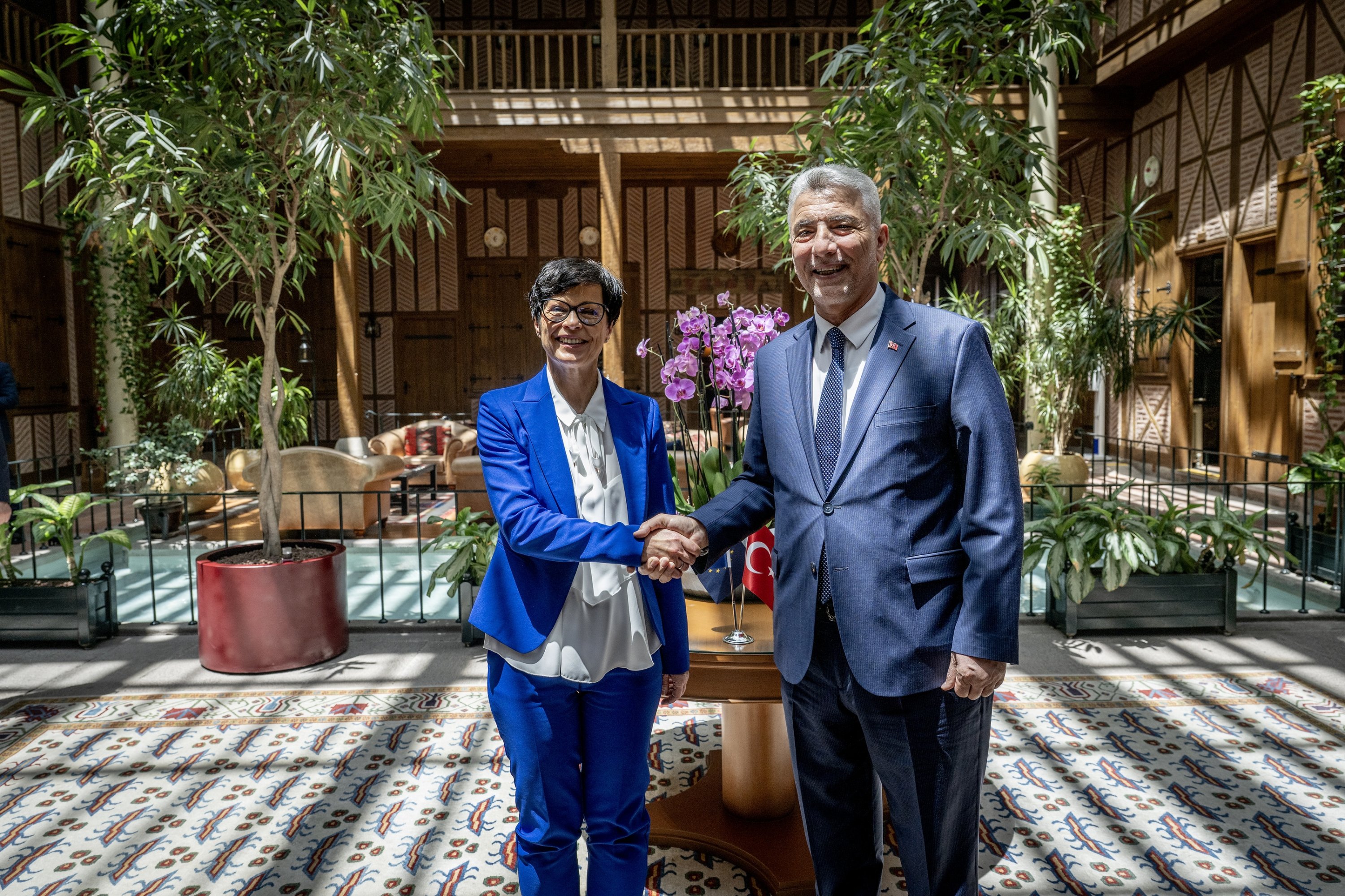
Türkiye is seeking easier access to the Schengen area despite improvements under the European Union’s phased visa system, Trade Minister Ömer Bolat said on Tuesday.
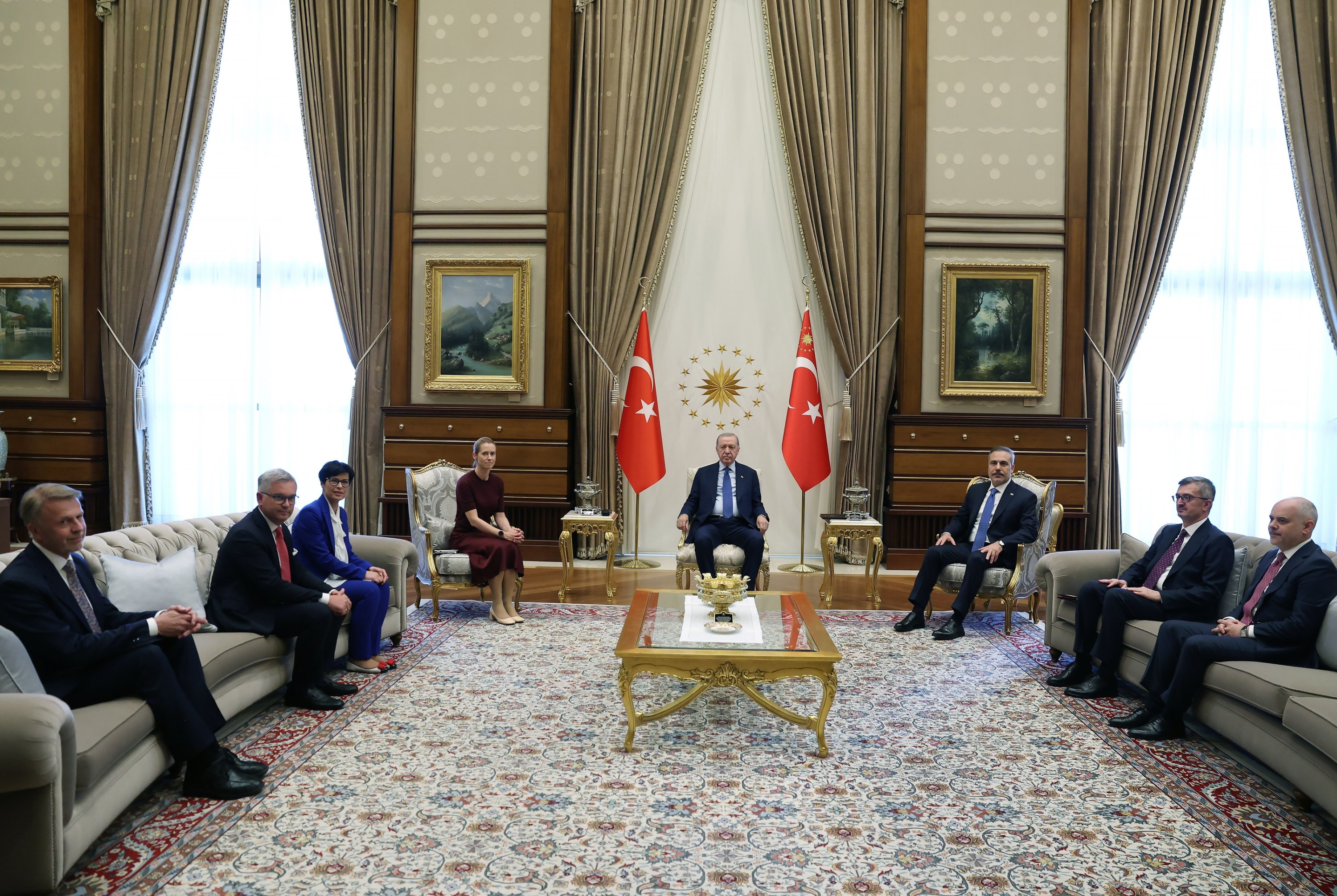
Bolat’s remarks came following talks with EU Commissioner for Enlargement Marta Kos, who arrived in Ankara as part of a top delegation that also included EU foreign policy chief Kaja Kallas and European Commissioner for Internal Affairs and Migration Magnus Brunner.
The delegation was received by President Recep Tayyip Erdoğan and was also scheduled to hold talks with other top officials, including Foreign Minister Hakan Fidan, Treasury and Finance Minister Mehmet Şimşek and Transport and Infrastructure Minister Abdulkadir Uraloğlu.
The recurring issue of Europe’s long-promised visa liberalization scheme was highly expected to hover over the talks as frustration grows in Türkiye over Schengen visa delays and rising rejections.
Last year, Turkish nationals submitted 1.25 million visa applications for the Schengen zone, up from 906,000 in 2019, European Commission figures show. Of that number, 1.07 million were approved.
But the rejection rate has also risen – from 9.7% in 2019 to 14.6% in 2025, prompting headlines decrying a “visa crisis.”
Bolat said the phased visa facilitation mechanism (visa cascade), introduced last year, had helped reduce application backlogs and increase the issuance of longer-term visas.
“However, growing trade, tourism and educational cooperation requires a visa-free environment. At the very least, our biggest expectation is that obtaining visas will be made easier,” he told reporters.
The minister noted that simplifying the visa application process is Ankara’s top diplomatic priority until full visa-free travel is achieved.
Talks with Kos prominently featured ongoing efforts to update the customs union agreement, said Bolat.
For decades, Türkiye and the bloc enjoyed good trade ties and cooperation on migration. However, relations have been strained over multiple issues, including the prolonged process of expansion of the scope of the customs union agreement and maritime issues with Greece and Greek Cyprus.
The deeper 1990s-era trade agreement would be expanded to services, farm goods and public procurement. The current deal only covers a limited range of industrial products.
Business groups have long argued that the deal is outdated and ill-suited for today’s trade environment.
Clarity sought on ‘Made in EU’ specifications
Bolat also said Türkiye had raised concerns over the EU’s evolving industrial policy and protectionist measures amid increasing competition with the United States and China.
Referring to the EU’s proposed Industrial Accelerator Act, Bolat said the European Commission had recently decided to treat Türkiye within the scope of the “Made in EU” industrial framework, but added that important details still needed clarification.
Bolat said Türkiye’s 30-year customs union integration with the EU and its status as a candidate country should prevent any measures that undermine the free movement of industrial goods or disrupt supply chains between Turkish and European manufacturers.
The minister also highlighted Türkiye’s strategic role as a logistics hub linking Europe, Asia and Africa, saying recent conflict in the Gulf had underscored the importance of alternative trade corridors.
He said both sides agreed that Türkiye’s transport infrastructure makes it “an excellent transit corridor” and added that EU officials acknowledged the country’s progress over the past two decades and its growing importance to Europe’s defense and industrial ecosystem.
The EU delegation’s visit comes ahead of key NATO summit in Ankara next week.
Türkiye will host 32 NATO leaders, as well as officials from the Gulf and Asia-Pacific region, on July 7-8 for a summit that it hopes will emphasize alliance unity and bolster deterrence.
U.S. President Donald Trump has threatened to pull his country out of the alliance while Washington has moved to withdraw troops, planes, ships and weapons from Europe due to tensions among allies over burden-sharing, defense spending, and U.S. complaints about allies’ lack of involvement in reopening the Strait of Hormuz during the U.S. and Israeli war with Iran.
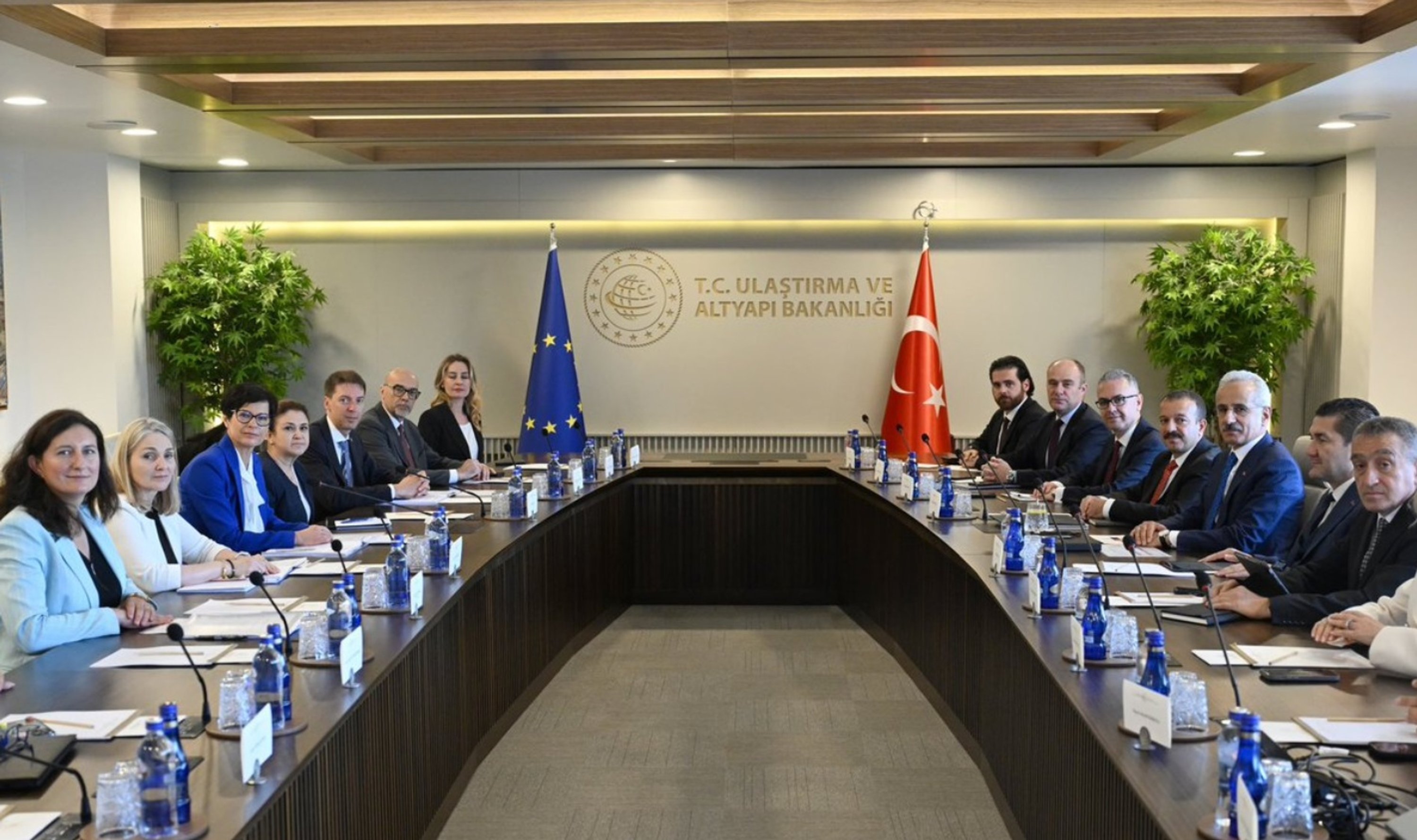
Earlier on Tuesday, Kos and Turkish Transport Minister Uraloğlu attended a closing meeting of the Strengthening Intermodal Transport Services in the Turkish Railway Sector (U-IMT) Project, a joint initiative co-financed by the EU and Türkiye.
“With the U-IMT Project, we achieved significant gains that will make our railway freight transport more competitive, increase the capacity of the Middle Corridor, and advance our cooperation with the European Union in the field of connectivity,” Uraloğlu said.
The project was designed to improve intermodal freight services in the Turkish railway sector and support a shift toward a safer, more environmentally friendly and balanced transport system.
It also aimed to prepare an action plan for intermodal freight services, identify strategic infrastructure needs, and strengthen the institutional capacity of relevant Turkish transport authorities.
DAILYSABAH
هلدینگ کاسپین استانبول | خرید ملک در ترکیه | صرافی معتبر ایرانی در ترکیه | خرید و فروش طلا در ترکیه | مهاجرت به ترکیه | واردات و صادرات در ترکیه | نیازمندیهای ترکیه | اخبار ترکیه | اخبار جهانی | توریست ایران | خدمات توریستی در ایران | تورهای گردشگری ایران | هلدینگ اول | خدمات کاریابی و فریلنسری و شغل | مرجع اطلاعات ایران (همه چیز در ایران) | کیف پول و خدمات مالی و پرداخت یار | اخبار ایران | تابلو زنده قیمت ارز در ترکیه و استانبول | صرافی آنلاین ترکیه | قیمت طلا و نقره در ترکیه | سرمایه گذاری در ترکیه | جواهرات در ترکیه | نرخ لحظه ای ارزها در استانبول | قیمت دلار امروز در ترکیه | قیمت دلار استانبول امروز | قیمت لحظه ای دلار | اخبار روز ترکیه استانبول | اپلیکیشن ISTEX | اپلیکیشن قیمت لحظه ای دلار و یورو و لیر و ارزها در ترکیه
About the Author