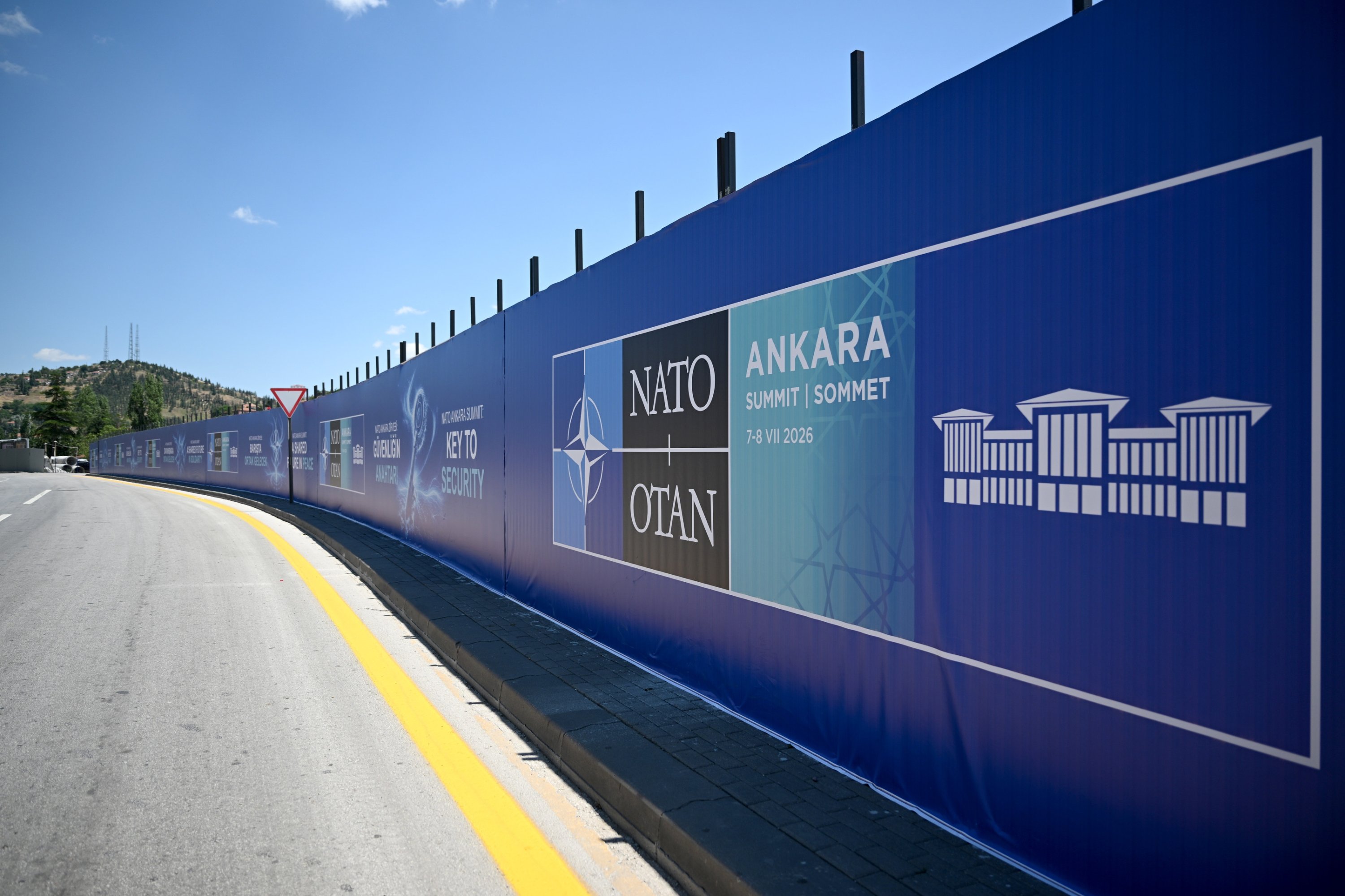
The upcoming Ankara Summit, which will be held on July 7-8, will not merely be a routine gathering of the allied heads of state. It represents a defining moment at which the political, strategic, and institutional direction of NATO for the coming decades must be determined. The Ankara Summit, which can be entitled as NATO’s “Ankara moment,” will be held at a critical period, a turning point for the future of the alliance.
The trans-Atlantic relationship has entered a period of structural tension under the weight of the Trump administration’s demands for burden-sharing. The expectation that European allies assume greater operational and financial responsibility for their own security is an operational reality. The gradual retrenchment of American strategic attention toward the Indo-Pacific theater has compelled European capitals to reconsider their defense architectures, industrial capacities, and threat assessments with a seriousness not seen since the early decades of the Cold War. Yet, this European strategic awakening carries its own risks, particularly the danger that the EU’s emerging defense architecture may develop in ways that structurally exclude non-EU NATO members, thereby undermining rather than reinforcing the alliance’s principle of indivisible security.
Furthermore, the U.S.-Israeli military attacks against Iran have fundamentally altered the strategic calculus of the broader Middle East and beyond. Iran’s closure of the Strait of Hormuz has disrupted global energy flows and exposed the deep vulnerability of alliance members to extra-regional shocks. These developments have simultaneously revealed both NATO’s institutional limitations and the divergences within the alliance over how to respond to crises. While Washington has pursued a confrontational and deterrence-centered posture toward Iran, most European allies have prioritized diplomacy, energy security, and regional stability. This divergence reflects fundamentally different strategic cultures and threat perceptions that have accumulated over decades and now demand institutional attention.
Within this complex landscape, Türkiye’s role has emerged as one of the most consequential and most debated questions of alliance politics. Ankara can no longer be adequately described as a southeastern flank state providing territorial depth. Its sustained operational contributions, its 360-degree security approach, its expanding defense-industrial ecosystem anchored by actors such as Aselsan, Turkish Aerospace Industries (TAI), Roketsan, and Baykar, and its demonstrated capacity for diplomatic intermediation across multiple theaters have repositioned Türkiye as a central, operationally indispensable ally. Yet this repositioning has not been fully reflected in the alliance’s political and institutional frameworks. Correcting this imbalance and recognizing Türkiye not merely as a troop-contributing member but as a strategic enabler and hub-state whose value derives from positionality as much as capability is among the most pressing tasks facing the Ankara Summit.
Türkiye’s expectations
When looked at closely, Türkiye has some political expectations from the summit. Türkiye is striving to ensure that the Ankara Summit creates positive momentum for both the future of NATO and the future of Türkiye-Western relations. First of all, Türkiye expects that the summit will contribute to the strengthening defense and deterrence capacity of the alliance. Especially, it expects the allies to underline the reaffirmation of Article 5 of the NATO agreement. Growing concerns and criticisms of NATO, both from the U.S. and from European countries like France, have begun to threaten the alliance’s future.
Second, Türkiye wants the summit to contribute to the preservation of the unity of the alliance in an increasingly fragmented world, especially the relationship between the trans-Atlantic members, the U.S., and the European states. The rising tensions and differing perspectives between different member states have created an identity crisis in the alliance. This identity crisis is the first of its kind in NATO’s history. NATO experiences an identity crisis nowadays mainly because of the differing perspectives of trans-Atlantic allies, namely the U.S. and the EU member states. This crisis has reached a point where the U.S. asked its European allies to fight their own potential war with Russia.
Besides the U.S.-EU members’ crises, there is another ongoing division between the EU members and Türkiye. Among others, several European member states are determined to exclude Türkiye from the European security arrangements. It is interesting to note that Türkiye’s exclusion from the future European security architecture will be self-defeating for Europe. Türkiye seeks to ensure that the principle of the indivisibility of NATO security remains operative. In other words, all alliance members must recognize that insecurity in one member state can generate insecurity across the alliance as a whole.
This does mean that all member states are identical. Preserving the unity of the alliance does not negate the reality that 32 NATO members may have different security concerns, priorities, threat perceptions and political challenges. Accordingly, states in different sub-regions may have common threat and security perceptions. However, above all else, NATO should remain at the heart of national security strategies of all member states.
Third, Türkiye wants the alliance to have accountability on defense investments. At the 2025 NATO Summit in The Hague, Allies committed to investing 5% of GDP annually in core defense requirements and defense- and security-related expenditure by 2035. At least 3.5% of GDP is to be allocated to core defense requirements and the fulfillment of NATO Capability Targets, while the remaining 1.5% may be directed towards defense and security-related investments, including critical infrastructure, resilience, civil preparedness, innovation, and the defense-industrial base. Engagement with the defense industrial ecosystem and becoming part of a resilient and innovative defense industrial ecosystem is important. Türkiye shares the concern over the preparedness and readiness of the alliance against both conventional and unconventional threats.
Fourth, Türkiye wants the alliance to accept a road map for the future direction of the alliance, since the alliance must adapt itself to the evolving global threats such as hybrid threats, new technologies including artificial intelligence, international terrorism, rapid proliferation of military AI, weaponized disinformation networks, energy security, critical resource scarcity, climate change, and forced migration. Furthermore, changes within the global system require NATO to adapt itself to the new global shifts. Differing Western perspectives and relations vis-à-vis China and Russia will be quite critical in the near future, because different NATO members may develop different relations with these two global powers. While acknowledging their differences, NATO members must understand that they need to develop a common approach to global threats and changes.
Fifth, consolidation of Türkiye-NATO relations is another expectation of Ankara. Türkiye, which is not only a benefactor but also a significant contributor to the alliance, contributes to the alliance with its military power, its experience in the struggle against terrorism, and its geographical and strategic location. It is the second-largest military and air force within the alliance. Many member states have begun to otherize Türkiye, especially after the purchase of S-400 from the Russian Federation. This purchase was not welcomed by the many NATO members. However, this reaction overlooks Türkiye’s prior efforts to procure an air and missile defense system from the U.S. and European countries. Those efforts did not produce a viable agreement. Facing an increasingly volatile regional security environment and the need to address missile threats emanating from its neighborhood, Türkiye ultimately sought to acquire an effective air and missile defense capability and purchased the S-400 system from Russia.
If approached with sufficient political resolve, the Ankara Summit can produce outcomes that extend beyond the management of immediate crises. For Türkiye, it offers an opportunity to consolidate its position as a strategically indispensable ally, to strengthen cooperation with its Western partners in the fields of deterrence, counterterrorism, defense innovation, and defense-industrial production, and to ensure that emerging European security arrangements remain compatible with the principle of indivisible allied security.
For NATO, the summit may provide a platform to renew the trans-Atlantic bargain, reinforce Article 5 commitments, establish a more credible framework for burden-sharing and collective preparedness, and develop a common strategic vision for an era defined by simultaneous conventional, hybrid, technological, and geopolitical challenges. Whether the Ankara Summit becomes a genuine moment of strategic renewal will depend on the allies’ capacity to translate shared concerns into durable political commitments and practical institutional reforms.
The views and opinions expressed in this article are solely those of the author. They do not necessarily reflect the editorial stance, values or position of Daily Sabah. The newspaper provides space for diverse perspectives as part of its commitment to open and informed public discussion.
DAILYSABAH
هلدینگ کاسپین استانبول | خرید ملک در ترکیه | صرافی معتبر ایرانی در ترکیه | خرید و فروش طلا در ترکیه | مهاجرت به ترکیه | واردات و صادرات در ترکیه | نیازمندیهای ترکیه | اخبار ترکیه | اخبار جهانی | توریست ایران | خدمات توریستی در ایران | تورهای گردشگری ایران | هلدینگ اول | خدمات کاریابی و فریلنسری و شغل | مرجع اطلاعات ایران (همه چیز در ایران) | کیف پول و خدمات مالی و پرداخت یار | اخبار ایران | تابلو زنده قیمت ارز در ترکیه و استانبول | صرافی آنلاین ترکیه | قیمت طلا و نقره در ترکیه | سرمایه گذاری در ترکیه | جواهرات در ترکیه | نرخ لحظه ای ارزها در استانبول | قیمت دلار امروز در ترکیه | قیمت دلار استانبول امروز | قیمت لحظه ای دلار | اخبار روز ترکیه استانبول | اپلیکیشن ISTEX | اپلیکیشن قیمت لحظه ای دلار و یورو و لیر و ارزها در ترکیه
About the Author