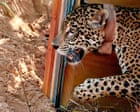
A tentative paw emerged from a steel cage on to the sandy riverbed deep in the Bolivian rainforest. Then, another. Slowly, the female jaguar looked right, left and right again, as if waiting to cross a busy road. Then, muscles stiff from the long journey, it strolled away and disappeared into the undergrowth.
Yaguara had been in captivity since August 2024, after being orphaned as an eight-month-old cub amid Bolivia’s worst recorded wildfire season. As the fires raged, burning more than 10% of the country’s surface area, authorities handed the cub over to a team of veterinarians from the Comunidad Inti Wara Yassi (CIWY), a wild-animal rescue centre.
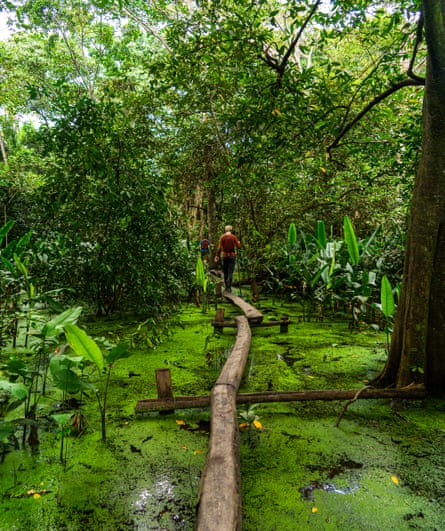
For nearly two years, the CIWY staff raised her in Ambue Ari, a 1,000-hectare (2,500-acre) jungle surrounded by ranchland. The oasis of dense vegetation, muddy trails and shaded pools is home to wild species whose surrounding habitats are shrinking, and to rescues. Macaws, toucans and parrots call from above. Howler monkeys and capuchins roam free across the reserve. Jaguars, pumas, ocelots and margays, a species of small cat native to Mexico, Central and South America, live out their days in spacious jungle enclosures.
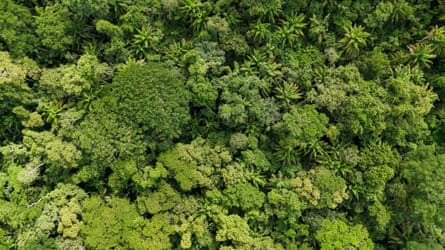
But until 5 June, none of CIWY’s jaguars had ever left their adopted home. In fact, before CIWY and partner organisations released Yaguara into the 1.5m-hectare Noel Kempff Mercado national park, no one in Bolivia had successfully rehabilitated a jaguar for release into the wild.
“Yaguara has changed the history of jaguar conservation in this country,” says Iván Márquez, the biologist overseeing post-release monitoring.
The jaguar, categorised by the WWF as near-threatened globally, is under particular pressure in Bolivia due to habitat loss, prey loss, poaching and human-wildlife conflict. “Its status is vulnerable in Bolivia, but the discussion to downgrade that status to endangered is ongoing,” says Damián Rumiz, wildlife researcher at the Noel Kempff Mercado Historic Museum in Santa Cruz de la Sierra.
Poachers kill an average of 61 jaguars in Bolivia each year, the highest number globally. Traffickers sell the teeth and other body parts, primarily supplying the Chinese market. Meanwhile, wildfires, many intentionally ignited to clear land for agriculture or cattle ranching, have significantly reduced the feline’s territory. In 2024, Bolivia became the country with the second-highest level of deforestation in the world, after only Brazil.
The threats to jaguars also affect the wider ecosystems they inhabit. As apex predators, jaguars regulate prey populations, helping to maintain ecological balance.
Despite their importance to biodiversity, rehabilitating captive jaguars for release into the wild is incredibly rare. Many jaguars in captivity can never be released. In CIWY’s Ambue Ari reserve, for example, a male jaguar named Kusiy will live out his life in his enclosure. Rescued at three months old after being kept as a pet, the jaguar is too accustomed to people and never developed the skills needed to survive on its own.
Volunteers used to walk jaguars unable to return to the wild on a leash, a practice that drew criticism.
CIWY says the organisation has changed its policies. Volunteers no longer walk jaguars, but they do walk other felines at the sanctuary, including pumas.
Yaguara is not the first captive jaguar released in the region. Successful rehabilitation programmes, such as Rewilding Argentina’s Iberá wetlands jaguar project, have made headlines for bringing back the jaguar after it went extinct locally. But of the 18 countries in the Americas where jaguars live, only a handful have successfully released captive jaguars back into the wild.
Jaguars used to humans are less likely to survive because they will not avoid inhabited areas, and jaguars have been killed after being released.
“If the problem is that a jaguar attacked livestock, it will probably attack livestock again wherever it is released,” says Rumiz.
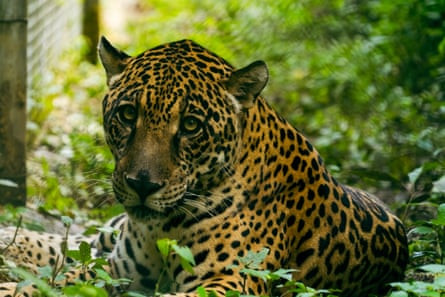
Jaguars caught as cubs also often lack the wild instincts needed to hunt, and reintroduced jaguars can also spread diseases picked up in captivity.
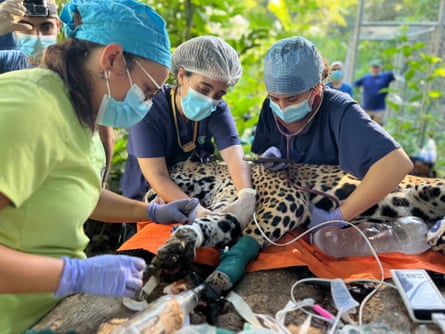
But to the delight of CIWY staff, Yaguara, unlike any other jaguar ever treated in Ambue Ari, was an ideal candidate for rehabilitation. She was healthy, had maintained her surival instincts, stayed away from humans and had learned to hunt small prey.
Nevertheless, the process was not easy.
As Bolivia had never released a jaguar before, CIWY, government institutions and conservation experts formed a committee to create rehabilitation protocols.
Ambue Ari staff built a 10,000-square metre enclosure with a pool for Yaguara to hone her instincts, at a cost of about $80,000 (£60,000). It mimicked the conditions of the national park where Yagura was destined to be released. To monitor her behaviour, staff installed camera traps.
According to Márquez, prey roamed into the enclosure on their own, giving her natural chances to hunt. Staff also supplemented her diet with roadkill.
“Her behaviour was always in line with that of a wild jaguar,” he says.
Through the camera traps, the vets also noticed that Yaguara began showing signs of mating behaviour.
“We recorded more than 600 direct interactions with a wild male jaguar,” says Márquez.
Once deemed ready for release, staff put Yaguara in a crate, loaded her on to a small aeroplane and flew her to a military base near the Bolivian-Brazilian border. From there, the team transferred Yaguara by boat into the national park where they released her, fitted with a satellite monitoring collar.
In total, CIWY says it spent about $120,000 on the release.
Given the high costs, some conservationists question whether releasing jaguars into areas with already healthy populations, such as the Noel Kempff Mercado national park, is the best use of scarce resources. Many alternatives exist and can be much more affordable.
“Funding more in situ conservation activities, improving training of park rangers, studying wild populations with camera traps … many of these measures could deliver better results and more knowledge than raising a jaguar and then releasing it to see if it survives,” Rumiz says.
But CIWY argues that the release can add to jaguar genetic diversity, contribute to scientists’ understanding of the species, and is “the fair, ethical, and morally right” thing to do.
“We want to give these animals, ripped from their habitat, a second chance,” says Márquez.
CIWY staff also point out that the future releases should be much cheaper. The enclosure, responsible for two-thirds of the price tag, is already built and can be reused in the future.
“We’ve laid the groundwork for many future [releases],” says Márquez. “Because, sadly, this is likely to be the first of many.”
Find more age of extinction coverage here, and follow the biodiversity reporters Rebecca Ratcliffe, Phoebe Weston, and Patrick Greenfield in the Guardian app for more nature coverage
The Guardian wp:paragraph
هلدینگ کاسپین استانبول | خرید ملک در ترکیه | صرافی معتبر ایرانی در ترکیه | خرید و فروش طلا در ترکیه | مهاجرت به ترکیه | واردات و صادرات در ترکیه | نیازمندیهای ترکیه | اخبار ترکیه | اخبار جهانی | توریست ایران | خدمات توریستی در ایران | تورهای گردشگری ایران | هلدینگ اول | خدمات کاریابی و فریلنسری و شغل | مرجع اطلاعات ایران (همه چیز در ایران) | کیف پول و خدمات مالی و پرداخت یار | اخبار ایران | تابلو زنده قیمت ارز در ترکیه و استانبول | صرافی آنلاین ترکیه | قیمت طلا و نقره در ترکیه | سرمایه گذاری در ترکیه | جواهرات در ترکیه | نرخ لحظه ای ارزها در استانبول | قیمت دلار امروز در ترکیه | قیمت دلار استانبول امروز | قیمت لحظه ای دلار | اخبار روز ترکیه استانبول | اپلیکیشن ISTEX | اپلیکیشن قیمت لحظه ای دلار و یورو و لیر و ارزها در ترکیه
/wp:paragraph wp:paragraph /wp:paragraph
About the Author