Wars are fought on battlefields, but they are won and lost in the minds of audiences. The recent confrontation between Iran and the U.S. demonstrated that military superiority does not automatically translate into narrative dominance. While the U.S. possessed overwhelming military capabilities, Iran appeared to outperform Washington in the realm of strategic communication. The reason lies in a principle often overlooked by policymakers: the most important element of strategic communication is not messaging, media reach or technological sophistication, but credibility.
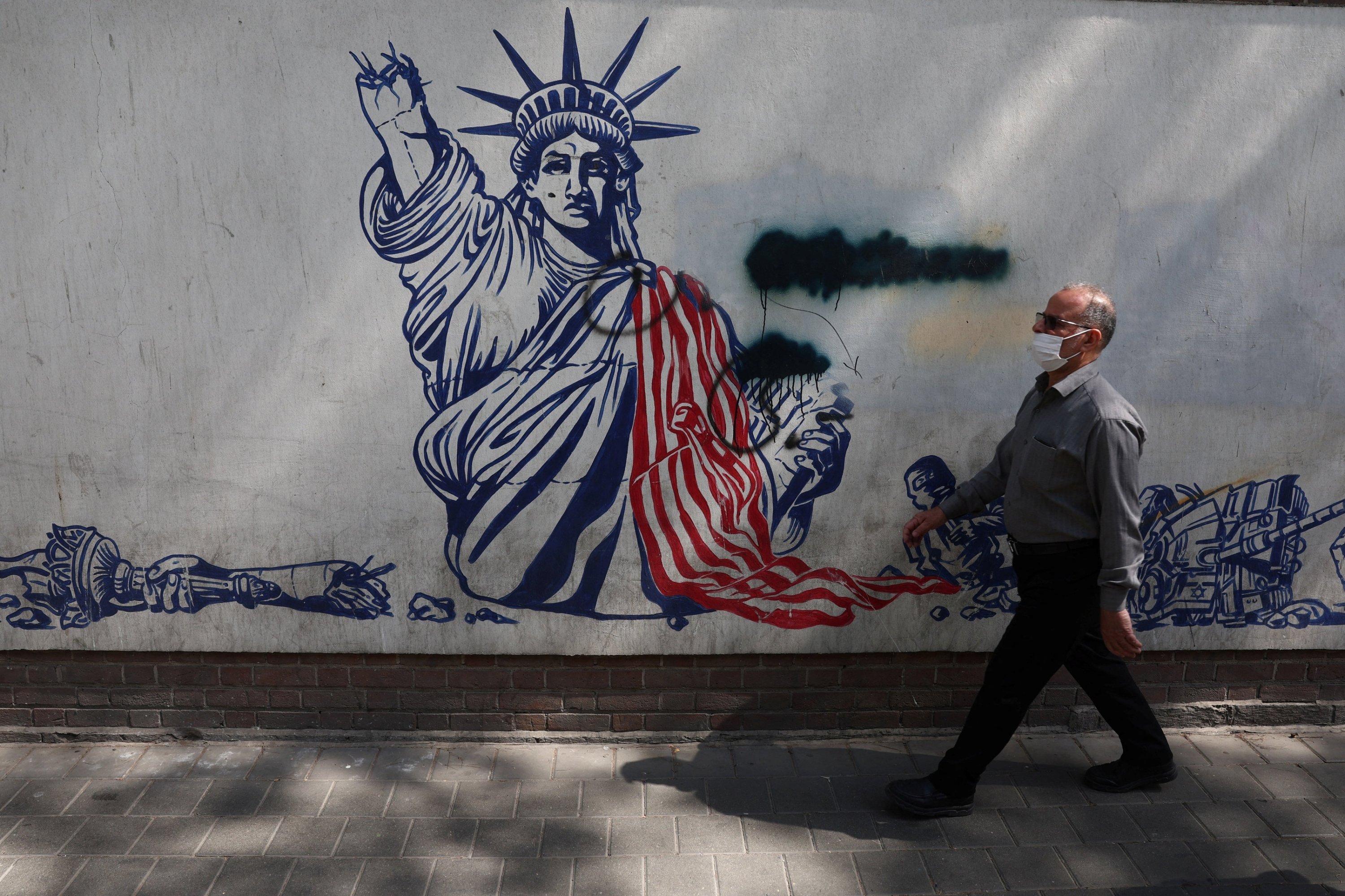
Strategic communication succeeds when words, images, symbols and actions reinforce one another. Throughout the conflict, Iran demonstrated remarkable narrative discipline. Its political leadership, military commanders, diplomats and state media consistently framed the conflict through the lens of sovereignty, resistance, resilience and national defense. Missile launches were accompanied by carefully crafted imagery, official statements, and diplomatic messaging that all pointed in the same direction. Whether one agreed with Tehran’s narrative was almost beside the point. The message remained coherent. The words matched the images, and the images matched the actions.
One of the most striking examples was the symbolic mission of Minab 168, the Iranian diplomatic aircraft that flew to Islamabad in April 2026 for indirect peace talks with the U.S. The aircraft’s designation carried symbolic significance, referencing the reported deaths of school children during U.S.-Israeli military operations. Images of the aircraft, widely circulated across traditional and social media platforms, generated a powerful emotional and cognitive effect. Strategic communication is ultimately about shaping perceptions, and in this case, the symbolism proved more influential than subsequent attempts to contest or reinterpret the narrative. Once an image resonates with audiences, it often leaves a stronger impression than official denials or clarifications.
Washington, in contrast, often appeared trapped in a cycle of contradictory messaging. U.S. President Donald Trump frequently shifted between declarations of overwhelming success, threats of escalation, and promises of diplomatic breakthroughs. On several occasions, different narratives emerged from the same administration within hours of one another. Strategic communication requires synchronization across institutions, yet the U.S. projected an image of internal fragmentation. Different agencies appeared to justify military action through varying rationales, while political rhetoric fluctuated between deterrence, punishment, negotiation and regime pressure. The result was not strategic ambiguity but strategic confusion.
Moreover, nothing illustrates this credibility problem more clearly than Operation Midnight Hammer. When the operation was launched in June 2025, it was presented as a decisive strike that had effectively neutralized Iran’s nuclear infrastructure. American officials portrayed the operation as a major strategic success, with some narratives suggesting that Iran’s nuclear ambitions had been crippled if not effectively eliminated. Yet less than a year later, the U.S. found itself once again confronting Iran over many of the same security concerns. This created an unavoidable credibility dilemma. If Iran’s capabilities had truly been neutralized, why was another major confrontation necessary only months later? If further military action was required, audiences were justified in questioning the sweeping claims that accompanied Operation Midnight Hammer. In strategic communication, credibility is not destroyed by failure; it is destroyed by contradictions.
The U.S. has also struggled to gain the confidence of the domestic audience before starting the war with Iran along with Israel. Several surveys have cautioned that the U.S. public was not satisfied with the decision and often referred to the strong Israeli lobby active in the U.S., which has convinced the Trump administration to take this unpopular decision. Case in point is the Quinnipiac University poll that claims that 48% of respondents said the U.S. backs Israel too much and that 60% of U.S. voters, including 93% of Democrats and 75% of Republicans, said this fight was not “worth it.”
Furthermore, the challenge for Washington was compounded by a broader crisis of narrative consistency. For decades, the U.S. has portrayed itself as the principal defender of liberal values, international law and the rules-based international order. Yet controversies surrounding coercive policies toward foreign governments, the treatment of political figures abroad, and actions perceived as violations of sovereignty have increasingly provided adversaries with opportunities to challenge these claims. Equally damaging was the perception that American policies generated friction not only with adversaries but also with partners and allies. Trump’s criticism of NATO allies and recurring public disputes, by calling them “cowards,” complicated Washington’s efforts to present itself as the anchor of a stable international order.
On the other hand, Iran recognized this vulnerability and exploited it effectively. Tehran understood that strategic communication is ultimately about perception rather than persuasion. It did not need to convince the world that it was right. It only needed to convince audiences that the U.S. was inconsistent. Every contradictory statement from Washington, every shift in declared objectives, and every discrepancy between rhetoric and action strengthened Iran’s narrative that American policy lacked coherence and credibility.
This should serve as a lesson for policymakers everywhere. In the information age, strategic communication is no longer a supporting component of military operations; it is a domain of competition in its own right. States can possess unmatched military power and still lose the battle for perception if their narratives are inconsistent. Audiences today are not persuaded simply by official statements. They compare claims against observable actions and judge credibility accordingly.
The recent conflict, therefore, revealed an uncomfortable reality for Washington. The U.S. may have possessed greater firepower, greater resources, and greater global reach, but Iran displayed a clearer understanding of the first rule of strategic communication: Credibility is the foundation upon which all narratives rest. Once credibility begins to erode, even the most powerful messages lose their force. In the contest for perceptions, Iran’s greatest advantage was not its missiles or its media apparatus. It was Washington’s inability to consistently align its words, images, symbols and actions. In modern warfare, that may be the most consequential strategic victory of all.
DAILYSABAH
هلدینگ کاسپین استانبول | خرید ملک در ترکیه | صرافی معتبر ایرانی در ترکیه | خرید و فروش طلا در ترکیه | مهاجرت به ترکیه | واردات و صادرات در ترکیه | نیازمندیهای ترکیه | اخبار ترکیه | اخبار جهانی | توریست ایران | خدمات توریستی در ایران | تورهای گردشگری ایران | هلدینگ اول | خدمات کاریابی و فریلنسری و شغل | مرجع اطلاعات ایران (همه چیز در ایران) | کیف پول و خدمات مالی و پرداخت یار | اخبار ایران | تابلو زنده قیمت ارز در ترکیه و استانبول | صرافی آنلاین ترکیه | قیمت طلا و نقره در ترکیه | سرمایه گذاری در ترکیه | جواهرات در ترکیه | نرخ لحظه ای ارزها در استانبول | قیمت دلار امروز در ترکیه | قیمت دلار استانبول امروز | قیمت لحظه ای دلار | اخبار روز ترکیه استانبول | اپلیکیشن ISTEX | اپلیکیشن قیمت لحظه ای دلار و یورو و لیر و ارزها در ترکیه
About the Author