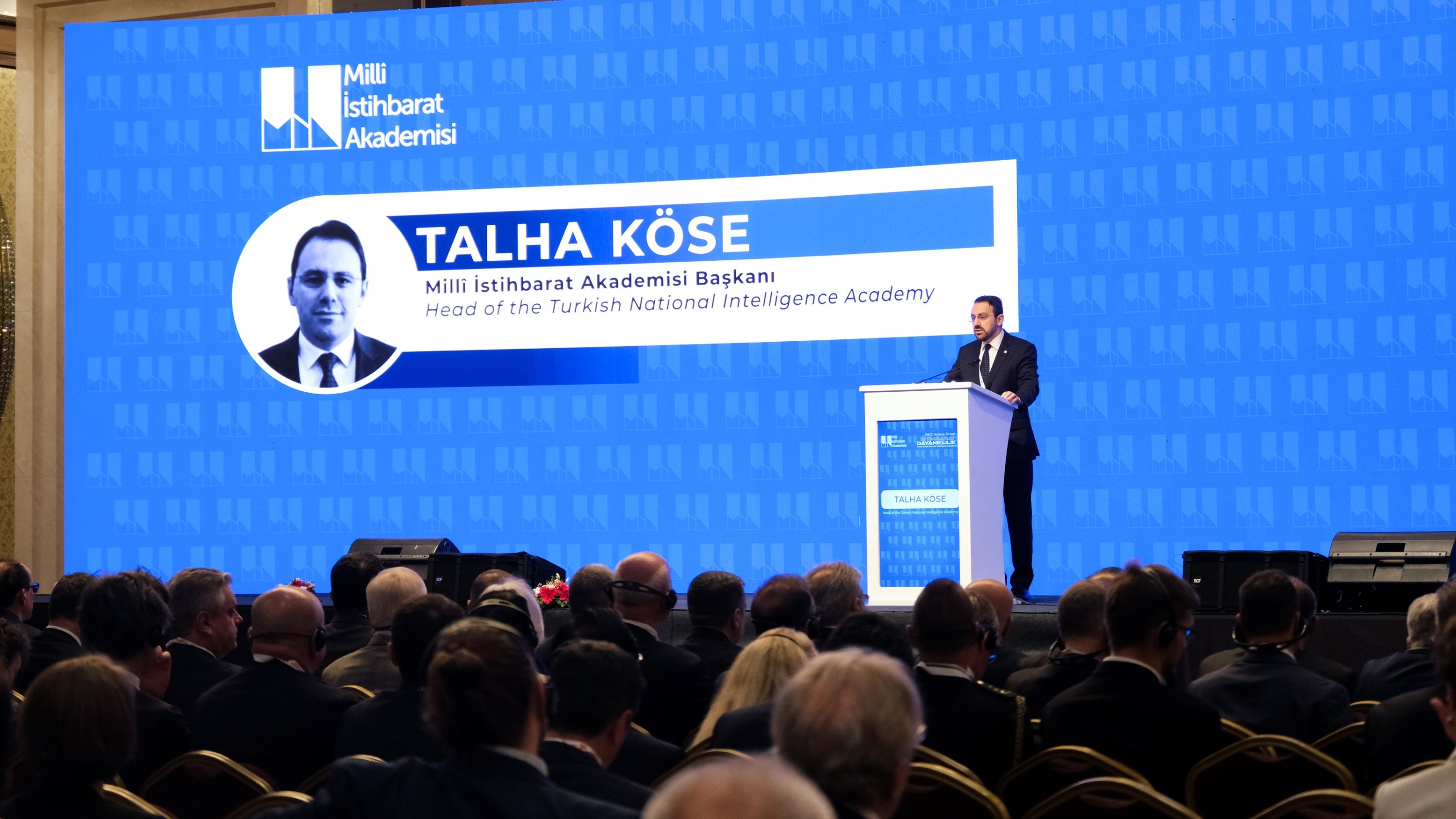
Türkiye’s National Intelligence Academy (MIA) has published a report describing the upcoming NATO summit in Ankara as a critical turning point for the alliance, arguing that NATO must adapt to an increasingly complex security environment shaped by great-power competition, hybrid threats and emerging technologies.
The report, titled “The Ankara Summit, NATO 3.0 Debates and Türkiye,” examines NATO’s evolving security architecture, the concept of “NATO 3.0” and Türkiye’s strategic role within the alliance ahead of the leaders’ summit.
The National Intelligence Academy, a graduate-level institution established under the National Intelligence Organization (MIT) in 2023, focuses on intelligence, national security research and postgraduate education.
According to the report released on Friday, the international security landscape has moved beyond the relatively predictable post-Cold War order toward a multipolar environment marked by heightened uncertainty and hybrid competition. It cites intensifying rivalry among major powers, China’s technological and economic rise, the Russia-Ukraine war, and the Israel-Iran conflict as developments that have fundamentally reshaped global security.
The report argues that security can no longer be defined solely in military terms, saying cyberattacks, disinformation, energy coercion and attacks on critical infrastructure have become strategic instruments of competition. It also emphasizes that societal resilience and what it describes as “cognitive security” have become integral components of national and collective defense.
Using the analytical framework of “NATO 3.0,” the report traces the alliance’s evolution from its Cold War focus on collective defense through the post-Cold War era of crisis management and out-of-area operations to a new phase centered on integrated deterrence and resilience. It notes that the term “NATO 3.0” is not an official NATO classification but an analytical concept reflecting the alliance’s changing strategic priorities.
The report says modern security now extends beyond land, sea and air to include cyberspace, outer space, the electromagnetic spectrum and the cognitive domain. It argues that collective deterrence increasingly depends on an integrated approach spanning defense industries, cyber capabilities, air and missile defense, artificial intelligence, critical infrastructure and societal resilience.
It also says NATO’s longstanding debate over burden-sharing has evolved beyond defense spending, focusing instead on which allies develop specific capabilities and assume greater responsibility during crises. As the U.S. shifts more of its strategic attention toward the Indo-Pacific, the report argues that Europe will inevitably shoulder greater responsibility for regional security.
The report describes strategic autonomy as a central element of the NATO 3.0 debate, arguing that stronger national capabilities in defense, technology, energy and critical infrastructure can reinforce the alliance if they remain interoperable with NATO planning.
The academy portrays Türkiye as a leading example of the type of ally NATO will increasingly require. It says the country has expanded its domestic defense capabilities, developed expertise in critical technologies and strengthened its ability to counter hybrid threats, allowing it to contribute greater strategic value to the alliance.
According to the report, Türkiye’s unique contribution lies in its ability to address security challenges on both NATO’s eastern and southern flanks simultaneously. It points to Ankara’s role in Black Sea security and the Montreux Convention alongside its engagement in security issues involving Syria, Iraq, Libya, the Eastern Mediterranean and the broader Middle East.
The report also highlights Türkiye’s defense industry, citing advances in unmanned aerial systems, electronic warfare, radar technologies, land and naval platforms, command-and-control systems and artificial intelligence-supported decision-making. It says these capabilities strengthen both Türkiye’s national security and NATO’s overall deterrence.
It adds that intelligence-sharing has become an increasingly important element of alliance cooperation, arguing that the MIT’s expanding operational capabilities have enhanced Türkiye’s contribution to NATO intelligence.
Looking ahead to the Ankara summit, the report says the meeting will serve not only as a forum to address current security crises but also as a defining moment for NATO’s institutional and strategic future.
It identifies defense spending, industrial production capacity, U.S.-European burden-sharing, the security priorities of NATO’s eastern and southern flanks, artificial intelligence, cybersecurity, space security and next-generation technologies as the alliance’s principal agenda items.
The report notes that NATO leaders agreed at last month’s Hague summit to raise the alliance’s defense spending benchmark to 5% of gross domestic product, but argues that the more important question is how effectively those resources are translated into military capabilities.
It also says resilience has become as important as deterrence, arguing that energy infrastructure, communications networks, financial systems, public opinion and societal psychology are now essential components of security. The report calls for NATO to adopt a “comprehensive resilience” approach as a core strategic principle.
For Türkiye, the report says hosting the summit represents more than a diplomatic event. It argues that Ankara is well positioned to help shape NATO’s evolving strategic framework by promoting a 360-degree approach to security, strengthening defense industrial cooperation, enhancing allied coordination against terrorism and contributing its experience in countering disinformation, cyber threats, irregular migration and attacks on critical infrastructure.
The report concludes that NATO’s long-term effectiveness will depend on its ability to convert higher defense spending into tangible military capabilities, redefine trans-Atlantic burden-sharing without weakening deterrence, balance the security priorities of its eastern and southern flanks, and place resilience at the center of collective defense.
DAILYSABAH
هلدینگ کاسپین استانبول | خرید ملک در ترکیه | صرافی معتبر ایرانی در ترکیه | خرید و فروش طلا در ترکیه | مهاجرت به ترکیه | واردات و صادرات در ترکیه | نیازمندیهای ترکیه | اخبار ترکیه | اخبار جهانی | توریست ایران | خدمات توریستی در ایران | تورهای گردشگری ایران | هلدینگ اول | خدمات کاریابی و فریلنسری و شغل | مرجع اطلاعات ایران (همه چیز در ایران) | کیف پول و خدمات مالی و پرداخت یار | اخبار ایران | تابلو زنده قیمت ارز در ترکیه و استانبول | صرافی آنلاین ترکیه | قیمت طلا و نقره در ترکیه | سرمایه گذاری در ترکیه | جواهرات در ترکیه | نرخ لحظه ای ارزها در استانبول | قیمت دلار امروز در ترکیه | قیمت دلار استانبول امروز | قیمت لحظه ای دلار | اخبار روز ترکیه استانبول | اپلیکیشن ISTEX | اپلیکیشن قیمت لحظه ای دلار و یورو و لیر و ارزها در ترکیه
About the Author